 Dec, 23 2025
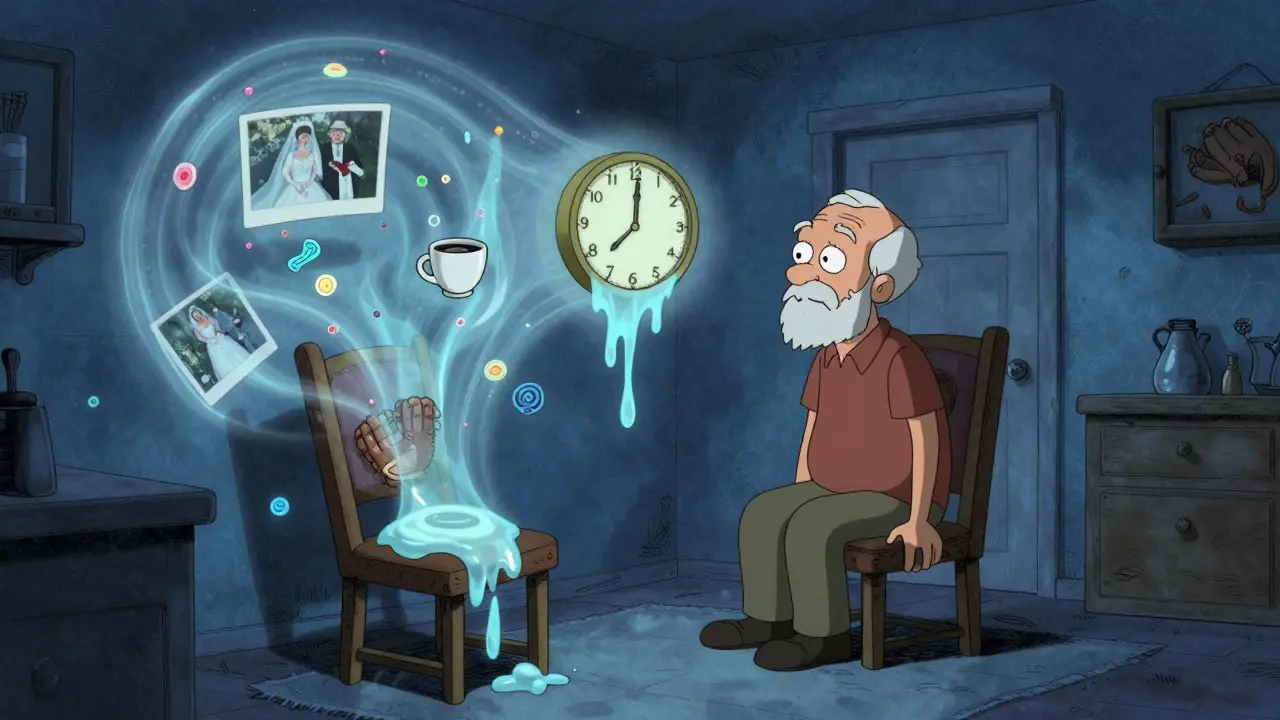
When someone you love starts forgetting names, repeating questions, or getting lost in their own neighborhood, it’s not just a bad day. It’s a signal. Alzheimer’s disease doesn’t announce itself with a bang-it creeps in, quietly unraveling memories, identities, and routines. By 2025, over 7 million Americans are living with Alzheimer’s, and that number keeps climbing. For families, it’s not just about medical treatment-it’s about learning how to hold on when the person you know is slipping away.
What Happens in the Brain?
Alzheimer’s isn’t normal aging. It’s a physical disease in the brain. Two toxic proteins build up over years: amyloid-beta plaques and tau tangles. These aren’t just clumps-they choke the connections between brain cells, especially in the hippocampus, the area responsible for forming new memories. By the time someone forgets where they put their keys, the damage has been growing for 10 to 20 years. That’s why early detection matters. New blood tests are now being developed that can spot these proteins before symptoms show, offering a chance to act earlier than ever before.The Three Stages of Memory Decline
Alzheimer’s doesn’t hit all at once. It moves in phases, each with its own challenges. Knowing what to expect helps families prepare-not just for care, but for emotional survival.Early Stage (Mild)
This is when things start to feel "off." Someone forgets recent conversations, misplaces keys constantly, or struggles to find the right word. They might repeat questions, lose track of time, or have trouble managing bills. But they can still drive, cook meals, and hold conversations. The key difference from normal forgetfulness? It’s persistent and getting worse. A person might remember their childhood perfectly but not recall what they had for breakfast. This stage can last 2 to 4 years. Many people are diagnosed here-sometimes by a doctor, sometimes by a spouse who notices the pattern.Middle Stage (Moderate)
This is the longest and often the most exhausting phase. Memory loss deepens. People forget personal history-names of children, where they lived, even their own birthdate. They get confused in familiar places, wander, or try to leave home at odd hours. Behavioral changes surface: suspicion (believing someone stole their things), agitation, aggression, or repetitive movements like hand-wringing. Bathing, dressing, and toileting become battles. A caregiver might spend hours each day reminding, guiding, and soothing. One caregiver shared: "She asked me the same question 20 times in an hour. I’d answer, then forget I’d answered. It wasn’t her fault-it was the disease. But it wore me down." This stage can last 2 to 10 years.Late Stage (Severe)
In the final phase, the brain can no longer control basic functions. Speech fades to single words-or silence. Movement becomes limited. People may no longer recognize loved ones, respond to names, or control bladder and bowel function. They become bedbound. Eating becomes risky; swallowing weakens, raising the chance of pneumonia. Pain is hard to express. Comfort becomes the goal. Many families find unexpected peace here-not because it’s easy, but because the person is no longer aware of their confusion. Music, touch, and familiar scents often reach them when words no longer can.
What Caregivers Really Need
Caregiving for someone with Alzheimer’s isn’t a job-it’s a full-time, unpaid, emotionally exhausting role. In 2023, the average caregiver spent 27 hours a week providing care. Thirty percent reported physical strain. Nearly 40% said their emotional stress was high or very high.Early-stage caregivers often feel guilty. "I should be doing more," they think. But the best thing you can do is help the person stay independent. Use calendars, labeled drawers, reminder apps, and simple routines. Avoid correcting them when they mix up facts. Instead, say, "That’s interesting, let’s look at the calendar together."
In the middle stage, safety becomes critical. Install door alarms. Remove throw rugs. Lock away sharp objects and medications. Create a calm environment-noise and clutter increase agitation. Use one-step instructions: "Let’s wash your hands," not "Go to the bathroom, turn on the water, use soap, dry off." Validation therapy works: if they think they need to go to work, don’t say, "You retired years ago." Say, "Let’s get you dressed for your shift." It reduces conflict and builds trust.
By late stage, care shifts to comfort. Turn them every two hours to prevent bedsores. Use soft music they loved in their youth-studies show it can trigger calm and even brief moments of recognition. Hold their hand. Speak gently. Even if they don’t respond, they still feel your presence.
What No One Tells You
Most caregivers believe the hardest part is the physical work. But many say the middle stage is the most painful-not because of the tasks, but because the person is still there, just… changed. They might yell, accuse you, or refuse help. It feels personal. It’s not. The disease is hijacking their brain. You’re not failing. You’re not alone.Respite care isn’t a luxury-it’s survival. Medicare covers up to five days of inpatient respite care per benefit period for those on hospice. Local adult day centers, volunteer programs, and even neighborhood friends can help. Taking a two-hour walk isn’t selfish. It’s necessary.
And don’t wait until you’re broken to ask for help. Join a support group. Talk to someone who’s been there. Online forums like the Alzheimer’s Association Community or Reddit’s r/dementia are full of people who understand the silent grief of watching someone fade.

New Hope on the Horizon
For decades, treatments only managed symptoms. That’s changing. In January 2023, the FDA approved lecanemab (Leqembi), the first drug shown to slow cognitive decline by targeting amyloid plaques. In clinical trials, it reduced decline by 27% over 18 months. Donanemab is expected to be approved in 2024. These aren’t cures-but they’re the first real steps toward stopping the disease, not just masking it.But access is uneven. These drugs cost tens of thousands a year. They require monthly infusions and frequent brain scans to monitor for dangerous side effects. Right now, they’re mostly available in major medical centers. Experts warn: without better insurance coverage and global equity, these advances could widen the gap between those who can afford care and those who can’t.
Meanwhile, research is moving fast. Blood tests that detect Alzheimer’s proteins with 95% accuracy are coming within five years. That means we might diagnose it before memory loss begins-like catching cancer early. Prevention could become possible.
What You Can Do Today
If you’re caring for someone with Alzheimer’s:- Write down routines and care notes-your memory will thank you.
- Set up automatic bill payments and medication reminders.
- Install motion sensors or door alarms to prevent wandering.
- Keep a playlist of their favorite songs from their 20s and 30s.
- Call your local Area Agency on Aging-they offer free caregiver training and respite referrals.
If you’re worried about your own memory: talk to your doctor. Don’t wait for a crisis. Early diagnosis means more time to plan, more access to support, and a better shot at new treatments.
Alzheimer’s takes memories. But it doesn’t take love. The moments that matter-holding a hand, hearing a familiar laugh, singing a song together-are still there. You don’t have to fix it. You just have to be there.
How do I know if memory loss is normal or Alzheimer’s?
Normal aging means forgetting where you put your keys but remembering later. Alzheimer’s means forgetting what keys are for, or forgetting you have keys at all. If someone repeatedly asks the same question, gets lost in familiar places, or can’t follow a conversation, it’s not normal. See a doctor. A simple memory test and blood work can rule out other causes like vitamin deficiency or thyroid issues.
Can Alzheimer’s be prevented?
There’s no guaranteed way to prevent Alzheimer’s, but certain habits lower risk. Regular exercise (even walking 30 minutes a day), a heart-healthy diet (like the MIND diet), quality sleep, managing blood pressure and diabetes, and staying socially active all help. Studies show people who stay mentally engaged-reading, playing music, doing puzzles-develop symptoms later. It’s not about stopping the disease, but delaying it.
Why do people with Alzheimer’s become aggressive?
Aggression isn’t personal. It’s fear. When someone can’t understand what’s happening, they panic. A loud noise, a stranger, or even being told "no" can feel like a threat. They may lash out because they can’t speak their fear. Stay calm. Reduce noise. Avoid arguing. Try to redirect-"Let’s go for a walk," not "Stop yelling." Often, the behavior stops once the person feels safe.
When should I consider a care home?
There’s no right time-only the right time for you. Signs include: you’re physically exhausted, the person wanders often or has fallen multiple times, you’re unable to manage incontinence or medication, or you’re neglecting your own health. A memory care unit isn’t giving up. It’s giving them safety and trained staff who know how to handle behavioral changes. Many families find relief and peace after the transition.
What’s the difference between Alzheimer’s and other types of dementia?
Alzheimer’s mainly affects memory first. Frontotemporal dementia often starts with personality changes-impulsiveness, lack of empathy, or strange eating habits. Lewy body dementia causes vivid hallucinations, tremors, and extreme confusion that fluctuates daily. Vascular dementia comes after strokes and often shows stepwise decline. A neurologist can tell them apart using brain scans and cognitive tests. Getting the right diagnosis means better care.
How long do people live after diagnosis?
It varies. On average, people live 4 to 8 years after diagnosis, but some live up to 20 years. Factors like age at diagnosis, overall health, and access to care matter. People diagnosed in their 60s often live longer than those diagnosed in their 80s. The cause of death is usually complications-pneumonia, infections, or heart failure-not Alzheimer’s itself.
Are there any medications that help?
Yes, but they don’t cure it. Donepezil, rivastigmine, and galantamine help with memory and thinking in early to middle stages. Memantine helps with confusion and agitation in middle to late stages. Lecanemab and donanemab are newer drugs that slow decline by removing amyloid plaques-but they’re only for early-stage patients and require careful monitoring. Talk to a specialist about whether these are right for your situation.
How can I help a friend or family member who’s a caregiver?
Don’t say, "Let me know if you need help." They won’t ask. Instead, say: "I’m coming over Tuesday to clean the kitchen," or "I’ll take your mom to her appointment this week," or "I’ve signed you up for a meal delivery service." Practical help matters more than sympathy. Send a gift card for groceries, drop off coffee, or just sit quietly with them while they cry. You don’t need to fix it. Just be there.
Alzheimer’s doesn’t end with the person who has it. It echoes through families, workplaces, and communities. But with knowledge, compassion, and the right support, we don’t have to face it alone.

Georgia Brach
December 25, 2025 AT 01:12The article romanticizes Alzheimer’s as some noble tragedy when in reality it’s a catastrophic failure of public health policy. The real issue isn’t lack of empathy-it’s the systematic underfunding of geriatric care for decades. We’re treating symptoms while ignoring the root cause: an aging population neglected by profit-driven healthcare systems. The $27 billion spent annually on amyloid-targeting drugs could have funded universal home care for millions. This isn’t science-it’s corporate PR dressed in grief.
Payson Mattes
December 26, 2025 AT 03:27Hey, I’ve been reading up on this and I think I’ve cracked it-Alzheimer’s isn’t even real. It’s just a cover-up for 5G brain damage. Look, I know it sounds wild, but my cousin’s neighbor’s dog walker’s nephew had the same symptoms after a cell tower went up near his house. They tested him and found weird protein spikes-but those aren’t plaques, they’re electromagnetic residue! The FDA’s hiding it because Big Pharma’s got a monopoly on the ‘disease’ narrative. Also, have you tried grounding mats? I swear, they helped my uncle stop forgetting his own name.
Steven Mayer
December 26, 2025 AT 11:49While the article presents a clinically descriptive framework for Alzheimer’s progression, it fundamentally neglects the neurochemical cascade dynamics underlying synaptic pruning inefficiency. The amyloid-beta hypothesis remains contentious, particularly given the low correlation between plaque burden and cognitive decline in longitudinal PET studies. Furthermore, tau propagation via prion-like templating is underemphasized in the staging model. The proposed interventions-music therapy, validation techniques-are palliative at best and lack robust neuroplasticity metrics. Without targeting microglial dysregulation and mitochondrial dysfunction, we’re merely delaying entropy, not altering trajectory.
Usha Sundar
December 26, 2025 AT 20:31My aunt went through this. She forgot my name. Then she forgot she had kids. Then she forgot how to eat. I held her hand. That was enough.
Harsh Khandelwal
December 27, 2025 AT 03:56Bro, this whole Alzheimer’s thing is just capitalism’s way of making you pay to watch your grandma vanish. They sell you $1000/month drugs that barely work, then charge you $200/hour for a nurse who doesn’t even know your name. Meanwhile, my cousin’s dad got a free AI voice bot that mimics his late wife’s voice-now he thinks she’s still alive and it’s kinda beautiful? The system’s rigged. But hey, at least we got Spotify playlists for dementia. Progress, I guess.
Spencer Garcia
December 27, 2025 AT 20:37One thing I’ve learned from working in memory care: consistency is everything. Same routine, same face, same song at dinner. Even if they don’t remember you, their body remembers safety. And yes, respite care isn’t selfish-it’s the only thing keeping caregivers from burning out. If you’re reading this and you’re tired, you’re not failing. You’re human.
Abby Polhill
December 29, 2025 AT 17:43As someone who grew up in a multigenerational household in rural California, I’ve seen how cultural norms shape care. In some communities, elders are never institutionalized-it’s a collective responsibility. Here, we outsource grief to nursing homes and call it progress. The real innovation isn’t in amyloid antibodies-it’s in rebuilding community care networks. Maybe we need to stop treating dementia like a medical problem and start treating it like a social one.
John Pearce CP
December 30, 2025 AT 01:52It is an abject disgrace that the United States of America, the greatest nation in human history, has allowed its most vulnerable citizens to be subjected to such a degrading, economically exploitative system of elder care. While foreign nations allocate resources to national dignity and familial cohesion, we outsource our grandparents to corporate facilities staffed by underpaid immigrants who do not even speak the language. This is not a medical crisis-it is a moral collapse of Western civilization. The FDA’s approval of lecanemab is a farce. We must return to the virtues of filial piety, self-reliance, and national sovereignty. No more foreign drugs. No more foreign caregivers. No more surrender.
Joe Jeter
December 31, 2025 AT 18:36Everyone’s acting like this is some tragic accident. But let’s be real-Alzheimer’s is what happens when you stop thinking for yourself. People who never read books, never learned a second language, never challenged their minds are the ones who end up like this. It’s not the disease’s fault-it’s their lifestyle. If you want to avoid it, stop watching TikTok and start doing crossword puzzles. And stop expecting the government to fix your bad habits.
siddharth tiwari
December 31, 2025 AT 19:01u/6233 u r right about 5g but also i think its the vaccines that did it. my bro in law got dementia after j&j shot. now he thinks he’s a 1970s rockstar. the doctors say its alz but i know better. also the food is laced with fluoride. drink rainwater. and pls dont trust the hospitals. they want you to pay for the pills. i saved my mom by giving her turmeric and yelling at her in hindi every morning. it worked. she remembered my name for 3 weeks. god bless.