 Jan, 18 2026
High blood pressure doesn’t always cause symptoms, but left untreated, it silently damages your heart, kidneys, and brain. That’s why millions of people take antihypertensive medications every day. Among the most common are beta-blockers, ACE inhibitors, and ARBs. Each works differently, has different side effects, and fits specific health needs. Choosing the right one isn’t just about lowering numbers-it’s about protecting your long-term health without making life harder.
How ACE Inhibitors Work (and Why Some People Can’t Tolerate Them)
ACE inhibitors like lisinopril, enalapril, and ramipril have been around since the 1980s. They block an enzyme that turns angiotensin I into angiotensin II-a chemical that tightens blood vessels and raises blood pressure. By stopping this, they relax arteries and reduce fluid buildup. That’s why they’re often the first choice for people with diabetes, kidney disease, or heart failure after a heart attack.
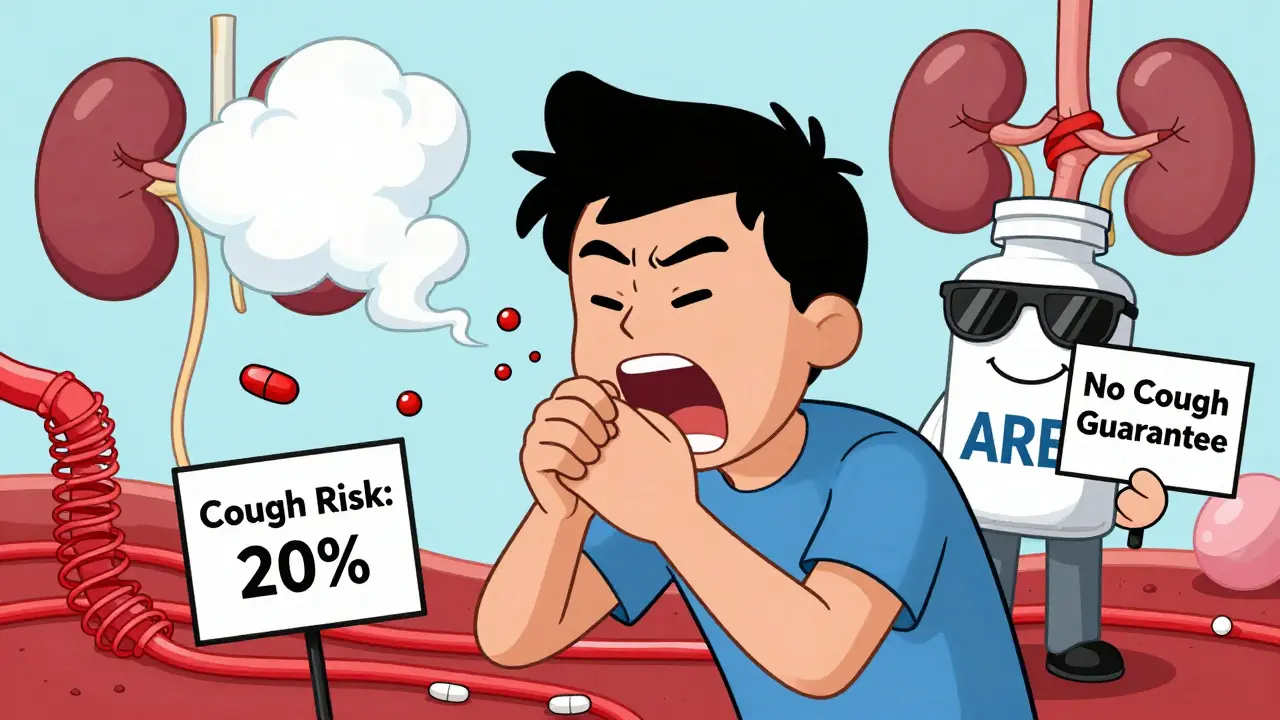
But here’s the catch: ACE inhibitors cause a buildup of bradykinin, a substance that triggers a persistent, dry cough in 10-20% of users. For some, it’s mild. For others, it’s unbearable-worse than the high blood pressure itself. A 2021 study of over 300,000 patients showed that people on ACE inhibitors were twice as likely to develop a cough compared to those on ARBs. And in rare cases (less than 1%), it can lead to angioedema-a dangerous swelling of the face, tongue, or throat.
That’s why many doctors now start new patients on ARBs instead. If you’ve been on lisinopril for months and suddenly can’t stop coughing, it’s not just in your head. It’s a known side effect. Switching to an ARB usually fixes it within days.
ARBs: The Better-Tolerated Alternative
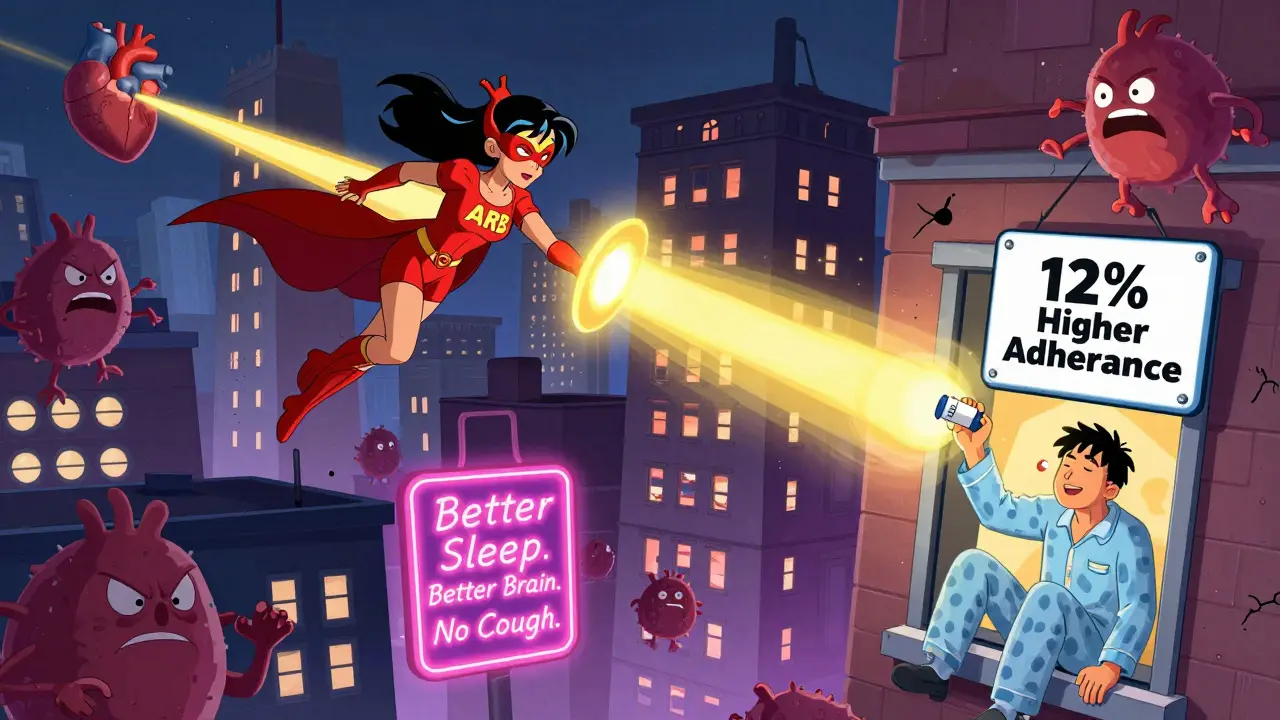
ARBs-like losartan, valsartan, and candesartan-do something similar to ACE inhibitors but without the cough. They block angiotensin II from binding to receptors in your blood vessels. Same goal: lower blood pressure. But they don’t touch bradykinin, so the cough almost never happens.
Studies show ARBs are just as effective as ACE inhibitors at preventing heart attacks, strokes, and kidney damage. In fact, a 2023 review of patient data found ARBs had a 12% higher adherence rate after one year. Why? Because people didn’t quit because of side effects. On Drugs.com, losartan has a 7.1/10 average rating. Lisinopril? 5.8/10. The difference? Mostly the cough.
Some experts argue ARBs should be first-line for everyone-not just those who can’t take ACE inhibitors. A 2018 paper in JACC pointed out that ARBs may even protect brain function better in older adults. One study found slower cognitive decline in patients on ARBs compared to those on ACE inhibitors. That’s not just about blood pressure-it’s about staying sharp as you age.
Beta-Blockers: Not Just for Heart Attacks Anymore
Beta-blockers like metoprolol, carvedilol, and bisoprolol work differently. Instead of relaxing blood vessels, they slow your heart rate and reduce how hard your heart pumps. That lowers blood pressure, yes-but they also reduce the workload on a damaged heart.
That’s why they’re still the gold standard after a heart attack. The COMMIT trial showed they cut cardiovascular death by 23% in post-MI patients. For people with heart failure and reduced pumping ability (HFrEF), carvedilol cuts death risk by 35%. That’s huge.
But here’s the problem: for most people with simple high blood pressure and no heart disease, beta-blockers are not the best first choice. The INVEST trial found they were linked to a 16% higher risk of stroke compared to calcium channel blockers. They can also make you tired, cause weight gain, raise triglycerides, and lower HDL (the good cholesterol). One Reddit user wrote: “Metoprolol made me so tired I couldn’t work.” That’s not rare. About 28% of people report fatigue. Some switch to nebivolol, which causes less tiredness.
Doctors still use them-but only when they’re needed. If you have atrial fibrillation, chest pain, or a history of heart attack, beta-blockers are essential. If you just have high blood pressure? There are better options.
When to Switch-and When Not To
There’s no one-size-fits-all. Your doctor doesn’t pick a drug because it’s popular. They pick it based on your health profile.
- If you have diabetes and protein in your urine (albuminuria), ACE inhibitors are still preferred. They protect your kidneys better than ARBs.
- If you’ve had a heart attack, ACE inhibitors or beta-blockers are critical. Don’t skip them.
- If you’re older and have high blood pressure but no heart disease, ARBs or calcium channel blockers are often better than beta-blockers.
- If you’re on an ACE inhibitor and have a dry cough? Switch to an ARB. No need to suffer.
- If you’re on a beta-blocker and feel constantly drained? Talk to your doctor about switching to nebivolol or lowering the dose.
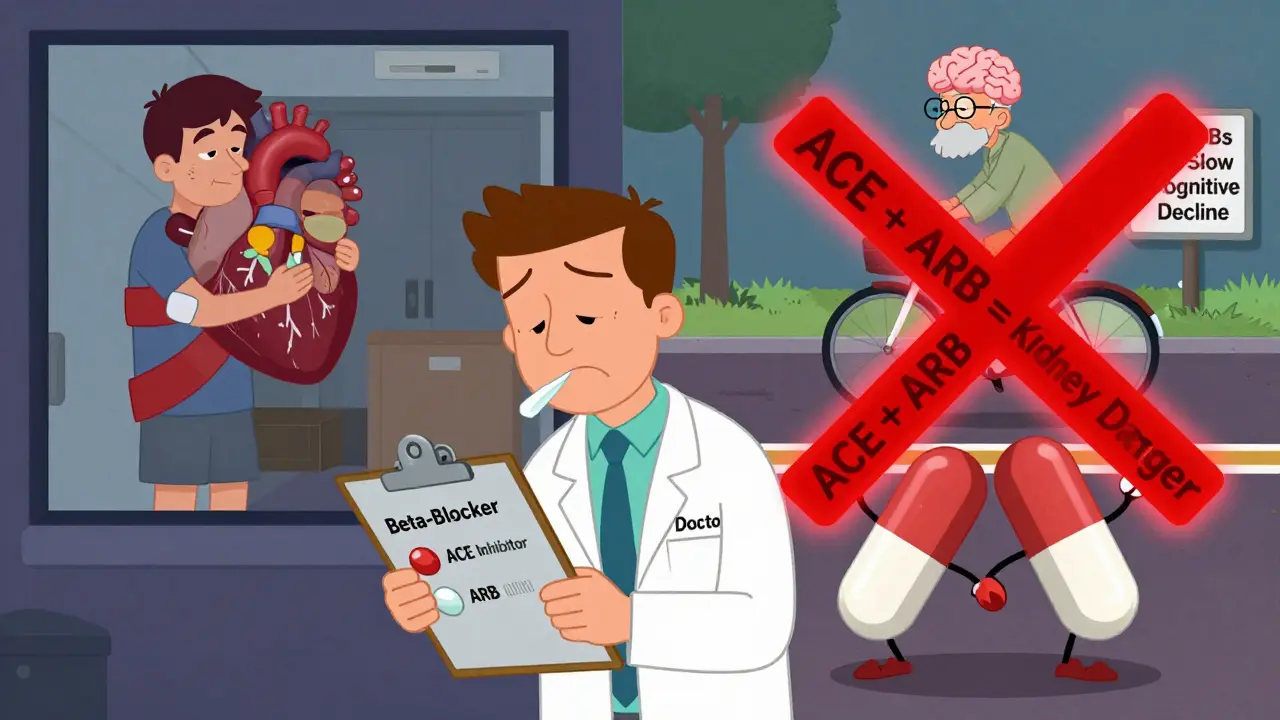
One big mistake? Combining ACE inhibitors and ARBs. The ONTARGET trial showed this combo increases kidney failure risk by 38%-and doesn’t help you live longer. That’s why doctors stopped recommending it over a decade ago.
What the Latest Guidelines Say
Guidelines vary slightly between countries. The American Heart Association still says ACE inhibitors are first-line for patients with kidney disease or after a heart attack. But the European Society of Cardiology now says ARBs are just as good for general high blood pressure. And the 2023 AHA update actually recommends starting with ARBs for new patients needing this class of drug-unless there’s a specific reason to use an ACE inhibitor.
Meanwhile, the FDA approved a new four-drug combo pill in 2023 for hard-to-treat high blood pressure. It includes valsartan (an ARB), which shows how much the field has shifted. ARBs aren’t just backups anymore-they’re becoming the default.
Real People, Real Experiences
Online forums are full of stories that textbooks don’t capture.
One man on Reddit switched from lisinopril to valsartan after six months of coughing so badly he couldn’t sleep. “Within three days, it was gone. I felt like I could breathe again.”
A woman in her 60s stopped metoprolol because it made her legs feel like lead. She switched to amlodipine and got her energy back. “I didn’t realize how tired I was until I wasn’t tired anymore.”
These aren’t outliers. They’re the norm. And they’re why adherence matters. A CVS Health study found 63% of people stayed on ARBs after a year. Only 57% stayed on ACE inhibitors. The main reason? Cough.
What to Ask Your Doctor
If you’re on one of these drugs, here’s what to ask:
- Why was this drug chosen for me specifically?
- Am I on it because it’s best for my condition-or just because it’s commonly prescribed?
- Are there side effects I should watch for?
- If I have a cough or feel tired, is there a better option?
- Should I be on a combination pill instead of multiple separate pills?
Don’t assume the first drug you’re given is the only one that works. Many people live with side effects for months because they think it’s normal. It’s not. There are alternatives.
The Bottom Line
ACE inhibitors, ARBs, and beta-blockers all lower blood pressure-but they don’t all do it the same way, and they’re not all equally good for everyone.
ACE inhibitors are powerful for heart and kidney protection but come with a cough risk. ARBs give you the same protection without the cough-and more people stick with them. Beta-blockers are lifesavers after a heart attack but often unnecessary-and sometimes harmful-for simple high blood pressure.
The goal isn’t just to take a pill. It’s to take the right pill. One that works, fits your life, and doesn’t make you feel worse than you did before.
Ask questions. Track how you feel. And don’t be afraid to ask for a change if something isn’t working. Your blood pressure isn’t just a number-it’s a sign of how well your body is being cared for.

Shane McGriff
January 19, 2026 AT 11:34Been on lisinopril for 5 years. Cough was brutal-like a smoker’s cough but worse. Switched to losartan and it vanished overnight. No more 3 a.m. coughing fits. I didn’t realize how much energy I was losing until I wasn’t coughing every time I breathed. Doctors act like it’s normal, but it’s not. You deserve to feel better.
Renee Stringer
January 21, 2026 AT 00:21It’s irresponsible to suggest ARBs are just as good for everyone. ACE inhibitors have decades of proven outcomes in diabetics. People who ditch them for convenience are gambling with their kidneys. This isn’t about comfort-it’s about survival.
Thomas Varner
January 21, 2026 AT 15:07Just read this… and I’m wondering… why is no one talking about the fact that beta-blockers are still being prescribed like candy for 40-year-olds with no heart issues? My cousin was on metoprolol for ‘stress hypertension’-and she gained 20 pounds, couldn’t climb stairs, and felt like a zombie. She switched to amlodipine and now she hikes on weekends. Why is this still happening?
Emily Leigh
January 23, 2026 AT 08:50So… ARBs are just ACE inhibitors but without the cough? That’s it? No magic? Just… less side effects? I feel like this whole debate is just pharma marketing dressed up as science.
Edith Brederode
January 23, 2026 AT 14:16Thank you for this. My mom switched from lisinopril to valsartan after 8 months of coughing. She cried when she could finally sleep through the night. It’s not just about numbers-it’s about dignity.
Courtney Carra
January 24, 2026 AT 18:10It’s funny how we treat medicine like a vending machine. Insert symptom, get pill. But the body isn’t a machine. It’s a symphony. ACE inhibitors? They’re not just lowering BP-they’re altering the entire neurohormonal orchestra. And sometimes… the cough is the body screaming, ‘I don’t want this note.’
Carolyn Rose Meszaros
January 24, 2026 AT 20:32My dad was on beta-blockers for 10 years for ‘high BP.’ He had no heart issues. Then he got off it and suddenly had more energy than when he was 50. He said he didn’t know he was tired until he wasn’t. Why do we keep giving these to people who don’t need them? 😔
Nadia Watson
January 25, 2026 AT 21:47As someone who works in public health, I see this every day. People stay on medications with side effects because they don’t know alternatives exist. Doctors assume patients are informed. They’re not. We need better patient education-not just more pills. The fact that 63% stay on ARBs versus 57% on ACE inhibitors? That’s a win for listening to patients.
Crystal August
January 27, 2026 AT 05:07Stop acting like ARBs are some miracle drug. They’re just the expensive version of ACE inhibitors with the same risks, just quieter. And don’t get me started on the FDA approving combo pills-this is just profit-driven medicine disguised as progress.
pragya mishra
January 28, 2026 AT 13:46Here in India, we rarely get ARBs unless you pay out of pocket. Most people are stuck with lisinopril. And yes, the cough is common. But we don’t have the luxury to switch. This article is for rich countries.
Manoj Kumar Billigunta
January 28, 2026 AT 16:54My uncle in Delhi took lisinopril for 7 years. Cough got so bad he stopped sleeping. We found a clinic that gave him losartan for half the price. He sleeps now. He eats. He laughs. Medicine should be about life, not just numbers.
Art Gar
January 30, 2026 AT 11:41Let’s be honest: this is all about patent cliffs. ACE inhibitors are generic. ARBs are still under patent in some forms. The ‘better tolerability’ narrative? Convenient timing. Don’t be fooled.
Arlene Mathison
January 30, 2026 AT 15:46If you’re tired on beta-blockers-don’t suffer. Talk to your doctor. Try nebivolol. Or switch. You’re not weak for wanting to feel normal. Your health isn’t a sacrifice. It’s your birthright.
Andy Thompson
January 31, 2026 AT 04:29Big Pharma wrote this article. They own the journals. They own the guidelines. They own your doctor’s paycheck. ARBs cost more. That’s why they’re ‘better.’ Not because they’re safer. Because they’re profitable.