 Jan, 28 2026
Aplastic Anemia Symptom Checker
Medication-induced aplastic anemia is rare but life-threatening. This tool helps you assess if your symptoms could indicate this condition. If you have severe symptoms or are taking high-risk medications, see a doctor immediately.
Medication Information
Symptom Assessment
When you start a new medication, you expect side effects like a headache or upset stomach-not a life-threatening collapse of your blood production. But for some people, common drugs can silently shut down bone marrow, leading to medication-induced aplastic anemia. It’s rare, but when it happens, speed saves lives. The difference between catching it early and missing it can mean the difference between recovery and death.
What Exactly Is Medication-Induced Aplastic Anemia?
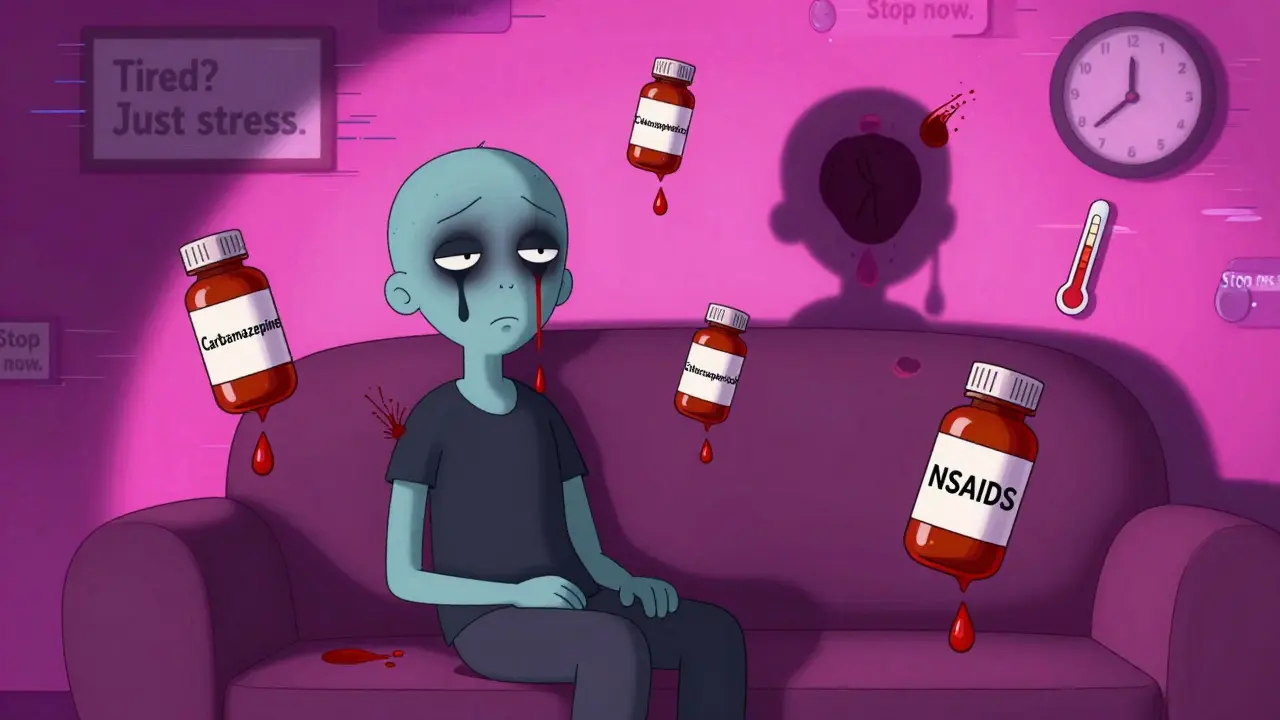
Aplastic anemia isn’t just low iron or vitamin deficiency. It’s when your bone marrow stops making red blood cells, white blood cells, and platelets-all of them. This is called pancytopenia. Normally, your bone marrow churns out billions of blood cells every day. In medication-induced cases, certain drugs damage the stem cells that do this job. The damage isn’t always obvious at first. You might feel tired for weeks, think you’re just stressed, and keep going-until you start bleeding for no reason or get a fever that won’t break.
It’s not the same as chemotherapy side effects, where bone marrow suppression is expected and temporary. True aplastic anemia means your marrow stays empty even after you stop the drug. Studies show that 70% of medication-triggered cases are classified as severe. That means your neutrophil count drops below 500 per microliter, your platelets fall below 20,000, and your reticulocyte count (new red blood cells) plummets. This isn’t something you can wait out.
Which Medications Are Most Likely to Cause It?
Not every drug causes this. But some have a proven, dangerous link. The most notorious is chloramphenicol-an old antibiotic rarely used today, but still prescribed in some countries. For every 24,000 to 40,000 people who take it, one develops aplastic anemia. That’s rare, but the risk is 30 to 60 times higher than in people who don’t take it.
Other high-risk drugs include:
- Carbamazepine and phenytoin (anti-seizure meds)
- Sulfonamides and penicillin derivatives (antibiotics)
- Gold compounds (used for rheumatoid arthritis)
- NSAIDs like phenylbutazone (no longer sold in the U.S. but still used elsewhere)
- Certain antipsychotics and immunosuppressants
Here’s the tricky part: some drugs cause direct toxicity. Others trigger your immune system to attack your own bone marrow. Carbamazepine, for example, binds to proteins in your marrow and tricks your body into thinking those cells are foreign. Your immune system then destroys them. That’s why stopping the drug isn’t always enough-you may need immune-suppressing treatment too.
Early Signs You Can’t Ignore
Most people don’t wake up one day with aplastic anemia. It creeps in. The first warning signs are often mistaken for the flu, stress, or aging.
Here’s what to watch for-especially if you’ve started a new medication in the past 6 weeks:
- Persistent fatigue that doesn’t improve with rest. Not just tired-you feel drained even after sleeping.
- Unexplained bruising, especially multiple bruises appearing at once without injury.
- Bleeding gums or nosebleeds that won’t stop easily.
- Recurrent low-grade fevers (99-101°F) that come and go for days.
- Shortness of breath during normal activities like walking to the mailbox.
- Unintentional weight loss (5-10 pounds over 2-3 weeks).
- Prolonged infections-a cold that won’t clear, or a minor cut that gets infected easily.
Here’s what patients often say: “I thought I was just run down.” That’s the most common response in surveys. In fact, 68% of patients with medication-induced aplastic anemia report symptoms for 4 to 6 weeks before diagnosis. And in 72% of cases, their doctor first thought it was a virus.
Why Timing Is Everything
Dr. Neal Young from the NIH says this clearly: “Early recognition is the single most important factor determining survival.” If you catch it within two weeks of symptoms starting, your survival rate is under 10%. If you wait eight weeks? It jumps to 45%.
Why? Because your body is running out of defenses. Platelets keep you from bleeding. Neutrophils fight infections. When those numbers crash, you’re one cough away from sepsis. And once you get a serious infection with neutrophils below 500, you need hospitalization-fast.
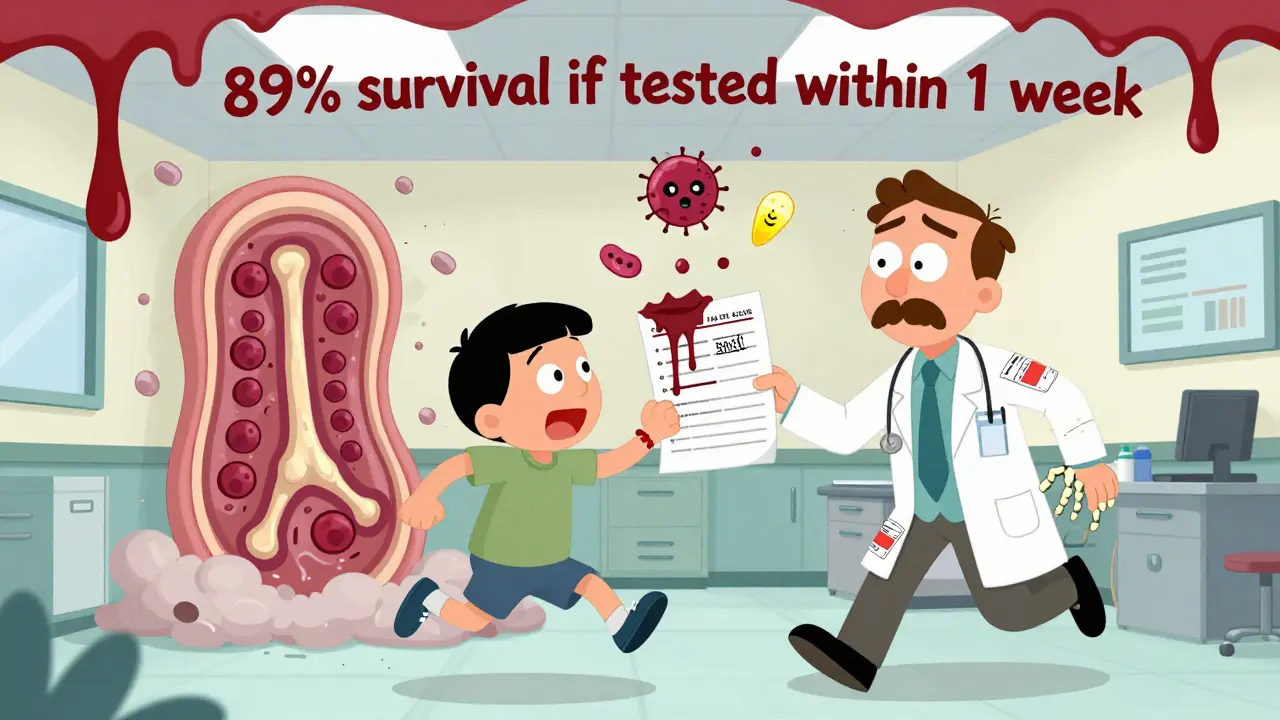
One study showed that patients who got a blood test within one week of noticing symptoms had an 89% survival rate. Those who waited three weeks? Only 62%. That’s not a small gap. That’s life or death.
What To Do Immediately If You Suspect It
If you’re on one of these high-risk medications and you’re experiencing two or more of the early signs above, here’s what you do-right now:
- Stop taking the medication. Do not wait for a doctor’s appointment. Call your prescriber or pharmacist immediately. Discontinuing the drug is the first and most critical step. In mild cases, blood counts can bounce back in four weeks.
- Get a CBC (complete blood count) within 24 hours. Don’t wait for a routine check-up. Go to an urgent care or ER if your clinic can’t do it same-day. Look for hemoglobin under 10 g/dL, platelets under 150,000/μL, or neutrophils under 1,500/μL. These are the red flags.
- If platelets are below 50,000/μL, see a hematologist immediately. If they’re below 10,000/μL or you’re bleeding, you need transfusions. Don’t delay.
- If you have a fever above 100.4°F (38°C), go to the ER. Now. This is a medical emergency. You could be developing a life-threatening infection with no immune defense.
- Bring your full medication list. Include supplements, herbal products, and over-the-counter drugs. Many cases are missed because doctors don’t know you’re taking something like an NSAID or an antibiotic you got abroad.
And here’s something patients rarely think to do: keep a written record of every medication you’ve taken in the last 12 months. One study found that having this list reduced diagnostic delays by over six days. That’s six days you might have saved your life.
What Happens After Diagnosis?
If your CBC shows pancytopenia, you’ll need a bone marrow biopsy. That’s the only way to confirm aplastic anemia. The marrow should be less than 25% full of cells. Normal marrow is 60-80% full. If it’s empty, you have aplastic anemia.
Treatment depends on severity:
- Mild cases: Just stopping the drug and monitoring. Blood counts often recover on their own.
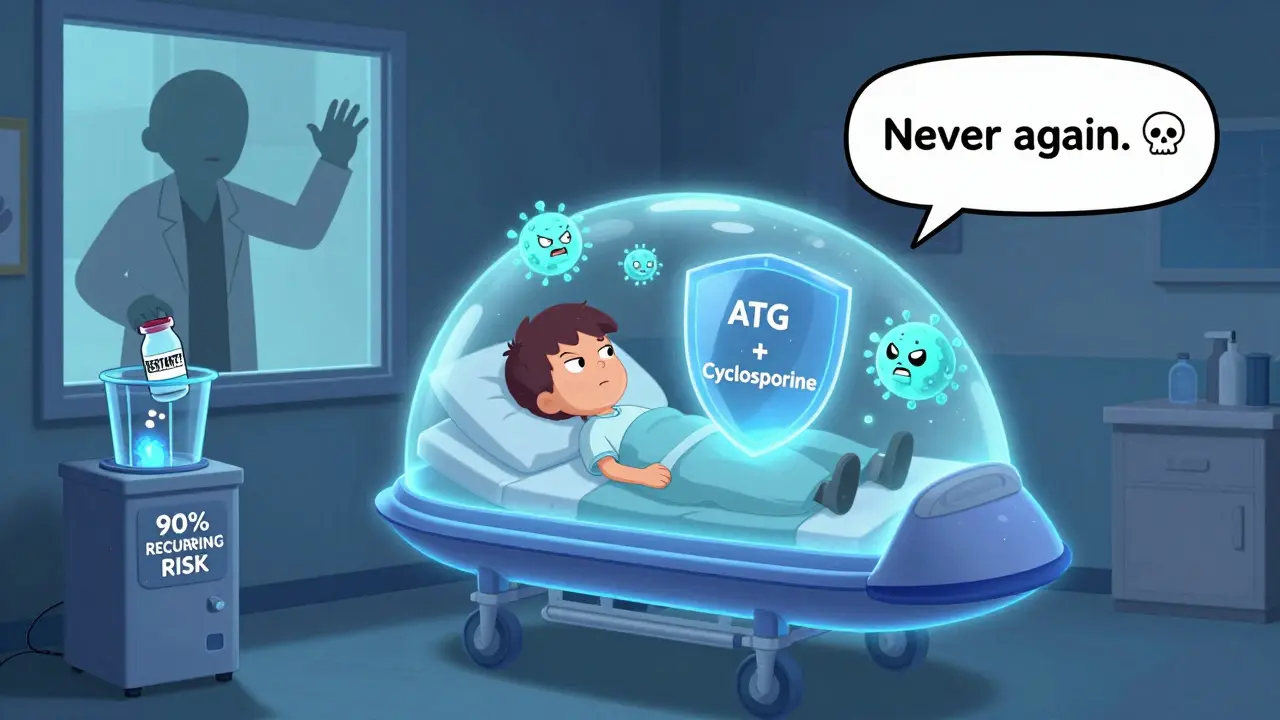
- Severe cases: Immunosuppressive therapy-usually horse anti-thymocyte globulin (ATG) plus cyclosporine. This stops your immune system from attacking your marrow. Response rates are around 78%.
- Very severe cases: Bone marrow transplant, especially if you’re under 40 and have a matched donor. This is the only cure.
And here’s a hard truth: if you restart the drug that caused it-even after you’ve recovered-there’s a 90% chance you’ll get it again, and worse. Never take it again. Not even once.
How to Protect Yourself Before Starting High-Risk Drugs
If you’re about to start carbamazepine, chloramphenicol, or any other drug linked to bone marrow failure, ask your doctor:
- “Is there a safer alternative?”
- “Can we do a baseline CBC before I start?”
- “Will you schedule weekly blood tests for the first month?”
Most clinics don’t do this automatically. But according to the American Society of Hematology, patients who get pre-treatment education are 3.5 times more likely to recognize symptoms early. Ask for a printed handout. Save it. Know what to look for.
Some hospitals now use electronic alerts that flag high-risk prescriptions and auto-schedule follow-up blood work. But not all do. If yours doesn’t, you have to be your own advocate.
What’s Changing in 2026?
There’s new hope. In 2023, the AAMDS Foundation launched a mobile app that lets patients log symptoms and blood counts. Early users saw a 40% drop in diagnostic delays. The NIH is testing a genetic test that can predict who’s at highest risk before they even take the drug. And AI systems are being trained to spot early patterns in blood counts-before doctors even notice.
Regulatory agencies are also acting. The European Medicines Agency now requires stronger warnings on carbamazepine labels. The FDA is pushing drugmakers to monitor bone marrow toxicity during clinical trials. But these changes take time. Right now, the best protection is still you.
Medication-induced aplastic anemia isn’t common. But when it happens, it’s fast, silent, and deadly. The good news? You can stop it-if you know the signs, act fast, and don’t wait for someone else to tell you it’s serious. Your body is giving you signals. Listen.
Can you get aplastic anemia from over-the-counter drugs?
Yes. While most cases are linked to prescription drugs like carbamazepine or chloramphenicol, some over-the-counter NSAIDs-especially phenylbutazone-have been tied to aplastic anemia. Even common painkillers like ibuprofen or naproxen carry a very low risk in rare cases, particularly with long-term, high-dose use. The key isn’t whether a drug is prescription or not-it’s whether it’s known to affect bone marrow.
How long after taking a drug does aplastic anemia start?
It usually appears between 2 and 12 weeks after starting the medication. Some cases show up as early as 10 days, especially with drugs like chloramphenicol. Others take months. The timing varies by drug and how your body reacts. That’s why monitoring blood counts weekly for the first month is critical if you’re on a high-risk drug.
Is aplastic anemia from medication reversible?
In mild cases, yes-if you stop the drug early. Many patients see their blood counts return to normal within 4 to 8 weeks. But in severe cases, the damage is often permanent without treatment like immunosuppressive therapy or a bone marrow transplant. The key is catching it before the marrow is too damaged to recover.
Can you get aplastic anemia from antibiotics like amoxicillin?
Amoxicillin is not a common cause, but penicillin derivatives and sulfonamides (like Bactrim) are. While amoxicillin carries minimal risk, any antibiotic can trigger an immune reaction in rare cases. The risk is higher with older drugs like chloramphenicol or sulfa-based antibiotics. Always report unusual fatigue or bruising after starting any antibiotic.
Should I get my blood tested if I’m on carbamazepine?
Absolutely. Carbamazepine increases your risk of aplastic anemia by about 15 times. Guidelines recommend a baseline CBC before starting, then weekly blood tests for the first 4 weeks. After that, monthly checks for at least 6 months. Many doctors skip this. Don’t assume they’ll order it-ask for it.
Can children get medication-induced aplastic anemia?
Yes. Children are not immune. In fact, 65% of pediatric cases are delayed because symptoms are mistaken for normal childhood illnesses-like a virus or growing pains. If your child is on an anti-seizure drug like carbamazepine or phenytoin and develops unexplained tiredness, bruising, or frequent infections, get a CBC right away.

Alex Flores Gomez
January 29, 2026 AT 13:15So let me get this straight - you’re telling me I should stop my carbamazepine because I’m ‘a little tired’? Bro, I’ve been up since 4 AM working three jobs. If every time I feel like crap I quit my meds, I’ll be on a 7-day cycle of withdrawal seizures and existential dread. This post reads like a pharmaceutical horror novel written by someone who’s never met a real patient.
Jasneet Minhas
January 30, 2026 AT 14:35Wow 🤯 this is the kind of post that makes me believe in humanity again. Seriously - someone took the time to write this with *actual data* and *actionable steps*? 🙏👏 If you’re on any of these meds, DO NOT IGNORE THE SIGNS. Your life isn’t a ‘maybe next week’ situation. Save yourself. Share this. 💪❤️
Megan Brooks
January 31, 2026 AT 22:33While the urgency conveyed here is valid and necessary, I wonder how accessible these recommendations are for individuals without reliable healthcare access. A CBC within 24 hours? An ER visit for a fever? For many, these are not options - they’re luxuries. The systemic failure to prioritize preventive hematologic monitoring in primary care is as dangerous as the drugs themselves. This post saves lives - but only if you already have a safety net.
Robin Keith
February 2, 2026 AT 14:39It’s not just the drugs - it’s the epistemological collapse of modern medicine, where pharmaceutical companies, with their billion-dollar R&D budgets and regulatory capture, have turned the human body into a probabilistic algorithm - a statistical outlier to be ignored until it’s too late. We’ve outsourced our intuition to algorithms and guidelines, and now we’re surprised when the system fails? The marrow doesn’t lie - but the FDA’s warning labels? Those are written in corporate legalese. And we wonder why people die quietly in their apartments, thinking they’re just ‘stressed’? It’s not negligence - it’s nihilism disguised as protocol.
Sheryl Dhlamini
February 3, 2026 AT 03:11I had a cousin who got this from phenylbutazone. She was 22. Thought she had the flu. Went to the doctor three times. They gave her antibiotics. Then she passed out in the grocery store. Three weeks later - bone marrow transplant. She’s alive now. But she’ll never run again. Never. And the worst part? She never even knew she was on a drug that could do this. I’m sharing this everywhere. Please. Please. Read this. Then talk to someone.
Doug Gray
February 3, 2026 AT 14:48Interesting. The statistical risk is low, but the cognitive dissonance is high. We’re told to trust pharmaceuticals, yet the very systems that approve them have structural blind spots regarding idiosyncratic toxicity. The ‘act now’ advice is pragmatic, but it’s also a Band-Aid on a hemorrhage. The real issue? Pharma liability avoidance via vague labeling. The system incentivizes silence. You’re not supposed to know. That’s the real tragedy.
Kristie Horst
February 5, 2026 AT 01:08While I appreciate the clinical precision of this post, I must say - the tone borders on alarmist. That said, I’m not dismissing it. In fact, I’ve already emailed my primary care provider to request baseline CBCs for any future prescriptions. I think this is exactly the kind of information that should be mandatory in patient intake packets. Thank you for writing this with such clarity. I hope it reaches the right people.
LOUIS YOUANES
February 5, 2026 AT 19:40Let’s be real - if you’re taking anything that’s not FDA-approved, you’re already playing Russian roulette with your bone marrow. And if you’re on antibiotics from some sketchy online pharmacy? You’re not a patient. You’re a walking尸块. This isn’t medicine. It’s a carnival ride with no seatbelt.
Laia Freeman
February 6, 2026 AT 09:32OMG I JUST STARTED CARBAMAZEPINE LAST WEEK AND I’VE BEEN FEELING LIKE A ZOMBIE 😱 I THOUGHT IT WAS JUST THE ‘NEW MED FEELING’ BUT NOW I’M SCARED AF. I’M CALLING MY DOCTOR RIGHT NOW. THANK YOU FOR THIS. I’M TAKING A SCREENSHOT AND SENDING IT TO EVERYONE I KNOW ON MEDS. THIS IS LIFE OR DEATH.
rajaneesh s rajan
February 7, 2026 AT 12:43Interesting how we treat drug-induced aplastic anemia like an anomaly, when it’s really a symptom of our broader medical culture - reactive, not preventive. We wait for collapse before we act. Why not make baseline CBCs standard for all high-risk meds? Why not require mandatory patient education before prescribing? The science is here. The will? Not so much. But maybe this post will spark a conversation - and that’s the first step.
paul walker
February 7, 2026 AT 20:38I didn’t know this was a thing until my sister got it from Bactrim. She’s fine now, but I swear I check my blood counts every time I take ibuprofen for more than a week. This post saved me from being another statistic. Thanks.
Frank Declemij
February 7, 2026 AT 23:00Well-written. Accurate. Necessary. The data is clear and the action steps are practical. The only addition I’d make is to note that some cases of drug-induced aplastic anemia can be delayed by up to 18 months - especially with immunomodulatory agents. Monitoring shouldn’t end after 6 months.
Pawan Kumar
February 8, 2026 AT 16:48Let me guess - this was written by someone who works for the FDA. Or maybe Big Pharma is funding this ‘awareness campaign’ to make us feel safe while they quietly bury the real data. Did you know that chloramphenicol was pulled in the US because it was too profitable to ban? The bone marrow deaths? Collateral damage. They just moved production to India and China. You’re being manipulated. Don’t trust the system. Trust nothing.