 Feb, 7 2026
When you pick up a prescription at the pharmacy, you might not think twice about whether it’s the brand-name drug or a generic. But behind that simple choice is a rigorous scientific process that keeps millions of patients safe every day: bioequivalence testing. This isn’t just a regulatory checkbox-it’s the foundation of trust in generic medications. Without it, switching from a brand-name drug to a cheaper generic could mean the difference between effective treatment and dangerous side effects.
What Bioequivalence Really Means
Bioequivalence isn’t about whether two pills look the same or cost the same. It’s about whether they work the same inside your body. The technical definition is simple: two drugs are bioequivalent if they deliver the same active ingredient at the same rate and to the same extent. That means your bloodstream gets the same amount of medicine, at the same speed, whether you take the brand or the generic.
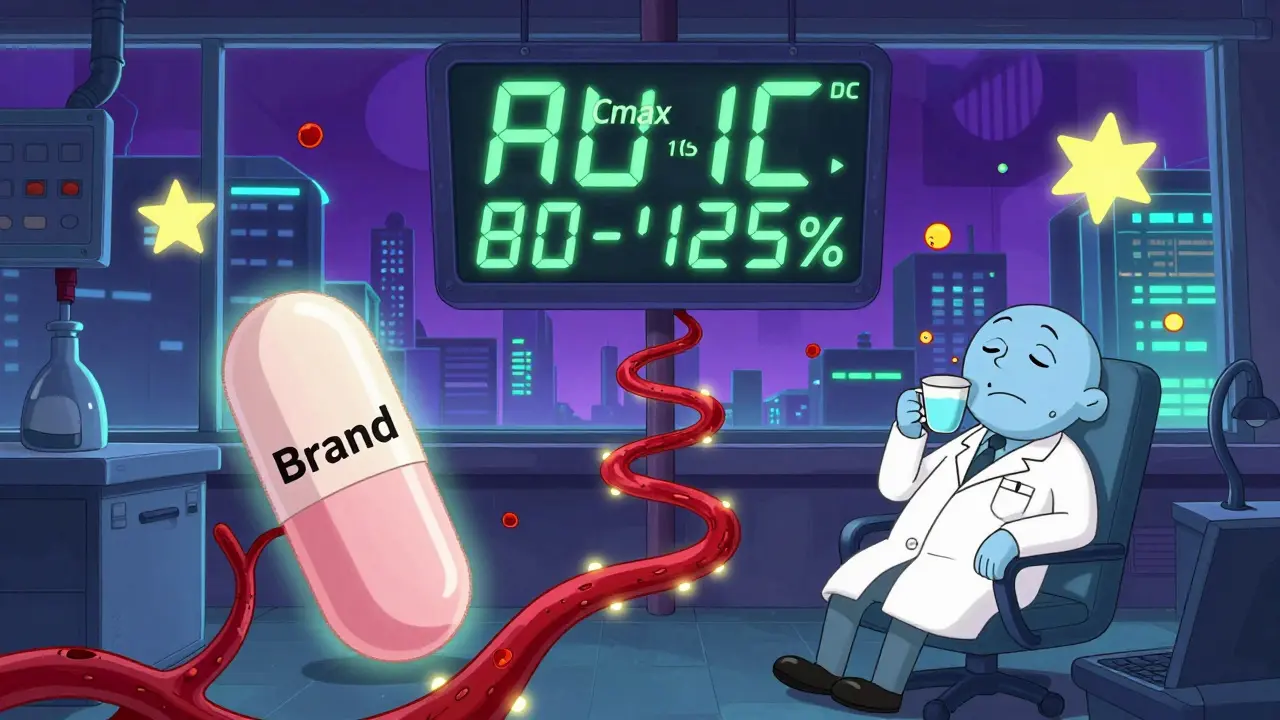
This isn’t guesswork. It’s measured through blood tests. In a typical bioequivalence study, healthy volunteers take a single dose of the brand-name drug, then later take the generic version. Researchers draw blood samples over several hours to track how much of the drug enters the bloodstream and how long it stays there. Two key numbers are compared: AUC (total drug exposure over time) and Cmax (the highest concentration reached). If the generic’s values fall within 80% to 125% of the brand’s, it’s approved. That range isn’t arbitrary-it’s based on decades of clinical data showing that drugs within this range produce the same therapeutic effect.
Why This Range Works-And When It Doesn’t
For most drugs, the 80-125% window is perfect. It accounts for normal biological variation between people. Your body absorbs medicine differently than your neighbor’s. But for drugs with a narrow therapeutic index-where the difference between a helpful dose and a toxic one is tiny-this range isn’t enough. Think warfarin, lithium, or levothyroxine. Too little, and the drug doesn’t work. Too much, and you risk a stroke, seizure, or heart rhythm problem.
That’s why regulators tighten the rules for these drugs. For some, the acceptable range shrinks to 90-111%. In 2012, the FDA overhauled its standards for generic levothyroxine after reports of under- and over-treatment. The new requirements forced manufacturers to prove their versions matched the brand’s absorption profile much more closely. The result? Fewer thyroid-related hospital visits and more stable patient outcomes.
Even trickier are drugs with active metabolites. Take losartan, a blood pressure medication. The parent drug barely works-it’s the metabolite EXP-3174 that lowers blood pressure. So bioequivalence studies for losartan don’t just measure the original pill. They also track the metabolite. If the generic doesn’t produce the same level of EXP-3174, it fails, no matter how well the parent drug performs.
How Testing Protects Patients
Imagine a world without bioequivalence testing. Generic manufacturers could make pills with different fillers, coatings, or particle sizes. One batch might dissolve too slowly. Another might release all its drug at once. Both could cause harm. In the 1980s, before strict bioequivalence rules, there were real cases of patients suffering after switching to poorly made generics. One infamous case involved a generic version of the epilepsy drug phenytoin. Some batches released the drug too quickly, triggering seizures. Others released it too slowly, leading to breakthrough seizures. The fix? Bioequivalence testing.
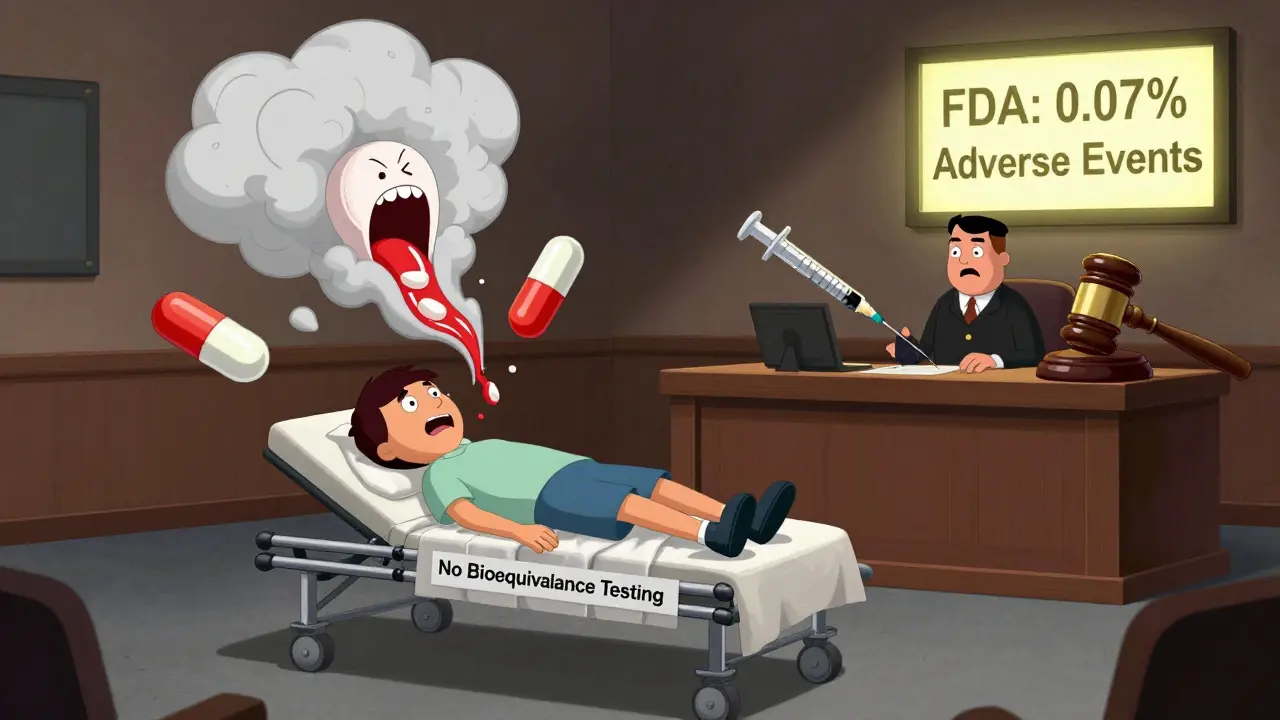
Today, the system works. The FDA tracks adverse events through its FAERS database. From 2020 to 2023, only 0.07% of all drug-related adverse events involved generics that had passed bioequivalence testing. Compare that to 2.3% for brand-name drugs-which aren’t tested the same way because they’re the original reference. The fact that generics show fewer safety issues isn’t luck. It’s proof that the testing works.
The Real-World Impact: Cost, Access, and Trust
Generic drugs make up 90% of all prescriptions filled in the U.S. But they cost only 23% of what brand-name drugs do. In 2020 alone, generics saved the American healthcare system $313 billion. That’s money that goes back into hospitals, into patients’ pockets, into preventive care.
And it’s not just about money. For people on fixed incomes, chronic conditions, or without insurance, generics are often the only option. A 2022 survey by the National Community Pharmacists Association found that 87% of patients felt generics worked just as well as brand-name drugs. On Drugs.com, 58% of users who reviewed generic levothyroxine said it worked the same as the brand.
But some patients still worry. Reddit threads pop up with stories like “Generic Switch Caused Problems.” One user said their anxiety worsened after switching from brand to generic sertraline. But here’s the catch: pharmacists and researchers have seen this before. These aren’t usually bioequivalence failures. They’re nocebo effects-where expecting a problem makes you feel one. The FDA has seen no pattern of increased adverse events tied to specific generic versions that passed testing. When a real problem emerges, like with a contaminated batch, the agency recalls it fast.
What Happens When Standards Vary
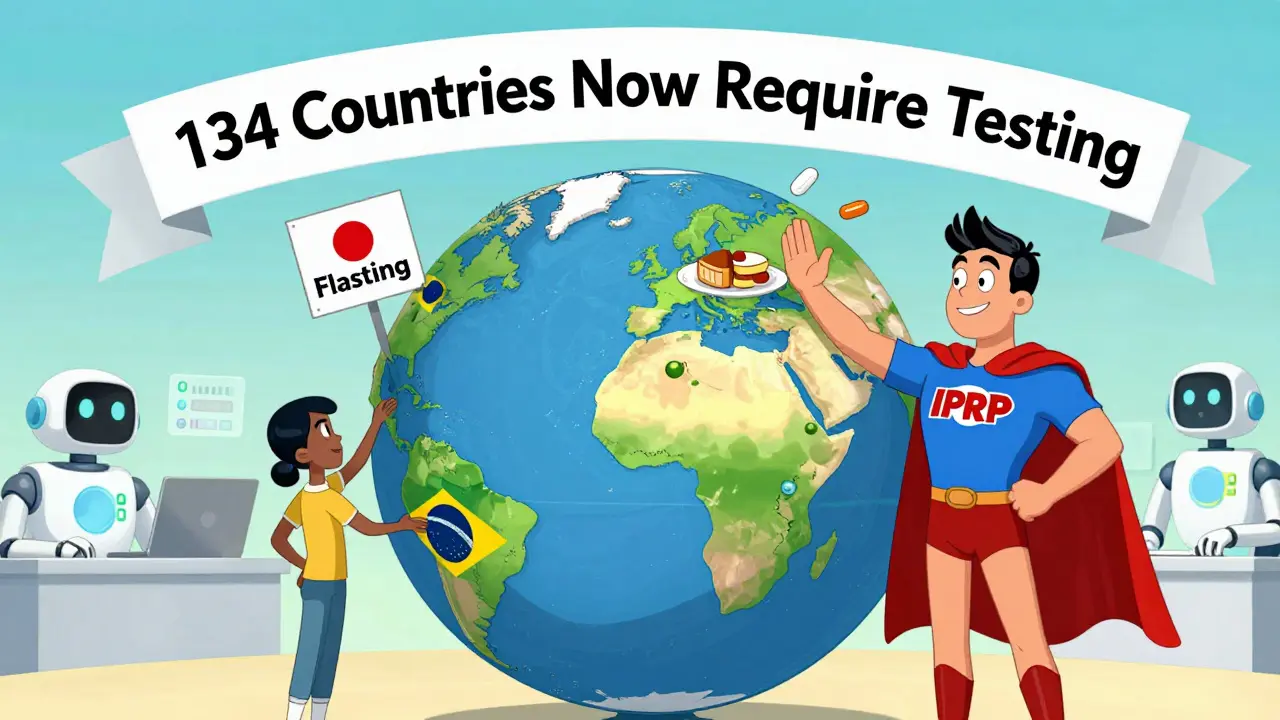
Not every country tests the same way. Japan requires fasting studies even if the brand-name drug is meant to be taken with food. The EU asks for both fasting and fed-state tests. Brazil mandates certain medical exams no matter the study design. These differences don’t just confuse manufacturers-they create risks. A generic approved in one country might not meet the standards of another. That’s why global companies spend millions more on multiple studies to cover all markets.
The International Pharmaceutical Regulators Programme (IPRP) is working to fix this. Since 2023, 16 countries have aligned their testing protocols. But gaps remain. For topical creams, inhalers, and eye drops, measuring absorption is harder. The skin doesn’t release drugs into the blood like the gut does. That’s why the EMA introduced new in-vitro methods in 2023, and the FDA launched its Complex Generic Drug Products initiative. These aren’t just bureaucratic updates-they’re life-saving upgrades.
The Future of Bioequivalence
Scientists are now using artificial intelligence to predict bioequivalence without running full human trials. Instead of testing 24 volunteers for months, researchers can feed data from dissolution tests, particle size, and chemical structure into AI models. The FDA accepted 17 such submissions in 2022-up from just 3 in 2018. If this trend continues, we could cut study costs by half and speed up access to generics.
But experts warn against over-reliance. Dr. Lawrence Yu, former FDA deputy director, says topical products like corticosteroid creams still need real-world testing. “You can’t model how a cream spreads on skin or how long it stays in the top layer,” he says. So while AI helps, human studies aren’t going away.
One thing is clear: bioequivalence testing isn’t slowing down. The WHO reports 134 countries now require it-up from 89 in 2015. That’s because patients and governments alike have seen the proof: when you test rigorously, you save lives and money.
What Patients Should Know
You don’t need to understand pharmacokinetics to trust generics. But you should know this: if a generic is approved by the FDA, EMA, or other major regulator, it has been proven to act like the brand. If your doctor switches you to a generic, it’s not a downgrade-it’s a smart, science-backed decision.
Still, if you notice a change in how you feel after switching, tell your doctor. Don’t assume it’s your fault. Sometimes, a small formulation difference (like a new filler) can affect absorption, especially in sensitive patients. Your provider can check if the generic you’re taking matches the brand’s bioequivalence profile.
And remember: the system works. It’s not perfect. But it’s based on real data, real science, and real patient outcomes. Every time you choose a generic, you’re not just saving money-you’re supporting a system that keeps millions of people safe every day.
Are generic drugs as safe as brand-name drugs?
Yes, if they’ve passed bioequivalence testing. The FDA, EMA, and other regulators require generics to prove they deliver the same amount of active ingredient at the same rate as the brand. Once approved, generics are monitored just like brand-name drugs. From 2020 to 2023, only 0.07% of adverse drug events involved generics that passed testing-far lower than the rate for brand-name drugs.
Why do some people say generics don’t work for them?
Sometimes, it’s not the drug-it’s the mind. A 2023 Reddit thread on sertraline generics had 342 comments, with 37 people reporting worse anxiety. But pharmacists in the thread pointed out that when the FDA tracks adverse events, no pattern emerges across generic versions. This is likely the nocebo effect: expecting a problem makes you feel one. Rarely, a formulation change (like a new coating) can affect absorption, especially in sensitive patients. If you notice a change, talk to your doctor.
Do all countries test generics the same way?
No. Japan requires fasting studies even if the brand is taken with food. The EU requires both fasting and fed-state tests. Brazil mandates specific medical exams regardless of protocol. These differences force manufacturers to run multiple studies, increasing costs. But global efforts through the IPRP are helping align standards across 16 countries, making it easier to produce safe, consistent generics worldwide.
Are there drugs that are harder to make generic versions of?
Yes. Drugs with narrow therapeutic indexes-like warfarin, lithium, and levothyroxine-require tighter bioequivalence limits (90-111%). Topical creams, inhalers, and eye drops are also challenging because their absorption isn’t measured through blood tests. For these, regulators now use advanced in-vitro tests and real-world clinical data. The FDA’s 2022 initiative specifically targets these complex products to ensure safety.
How much does bioequivalence testing cost?
A single bioequivalence study typically costs $1-2 million and takes 12-18 months. It requires specialized labs, trained staff, and strict protocols. For complex drugs, costs can be higher. But this investment is what keeps generics affordable. Without testing, regulators couldn’t approve generics-and patients would pay far more for the same medicine.

Randy Harkins
February 7, 2026 AT 23:51Just wanted to say how much I appreciate posts like this. So many people think generics are just "cheap knockoffs," but the science behind bioequivalence is actually really elegant. The 80-125% range? It’s not arbitrary-it’s built on real human data. I’ve been on generic levothyroxine for years and never had an issue. Trust the process.
Elan Ricarte
February 9, 2026 AT 07:02Oh great, another FDA shill post. Let’s be real-this whole bioequivalence thing is a glorified shell game. They let generics pass with 80-125%? That’s a 45% swing! I’ve seen people go from stable to seizures after switching. And don’t even get me started on how they cherry-pick healthy volunteers for these studies. Real patients aren’t 25-year-old gym bros. They’re 72-year-olds with kidney disease and three other meds. You think a drug that works for a college kid is gonna behave the same in someone who’s metabolizing everything slower than molasses? Bullshit.
And don’t hand me that "0.07% adverse events" stat. FAERS is a black hole. Most doctors don’t report anything unless someone dies. Meanwhile, Big Pharma’s got generics on the shelf while they jack up brand prices. This isn’t science-it’s corporate theater.
Marie Fontaine
February 11, 2026 AT 00:04Lyle Whyatt
February 11, 2026 AT 18:01Let me tell you something that nobody else seems to be talking about-the real crisis isn’t bioequivalence testing, it’s the lack of post-market surveillance for generics. The FDA approves a generic, and then it’s like, "Cool, go forth and multiply." But what happens when the manufacturer switches fillers? Or changes the coating? Or outsources production to a factory in Mumbai that doesn’t have the same QA standards? We don’t track that. Not really. Not like we do for brand-name drugs.
I work in pharmacy and I’ve seen it. A patient comes in, says "My generic isn’t working," and we check the label-same manufacturer, same lot number. But the pill looks slightly different. Turns out, the supplier changed the microcrystalline cellulose. Not a big deal on paper. But for someone with a sensitive GI tract? That’s enough to throw off absorption. We don’t have a system to catch that. We have a system to catch contaminated batches after 500 people get sick. That’s not a system-that’s triage.
And yeah, AI models are cool. But you can’t model how a 68-year-old with gastroparesis digests a pill. That’s not a variable in a spreadsheet. That’s a human being. And we’re treating them like data points.
Tatiana Barbosa
February 12, 2026 AT 19:11Ken Cooper
February 13, 2026 AT 15:14MANI V
February 14, 2026 AT 07:04You people are naive. The FDA doesn’t protect patients-it protects profits. Who owns the big generic manufacturers? Big Pharma. Same CEOs. Same boardrooms. They make the brand, then make the generic, then profit from both. Bioequivalence? A farce. They test in labs with perfect conditions, then sell pills made in China with 30% variation. You think your thyroid is stable? You’re just lucky. Most people don’t get blood drawn after switching. They just suffer in silence.
And don’t mention levothyroxine. That’s the most manipulated drug on the market. I’ve seen 7 different generics from the same company-each one different. But the FDA says "within range" so it’s fine. Fine for whom? Not for the 70-year-old woman who’s now dizzy and fainting.
Ryan Vargas
February 16, 2026 AT 00:49Think about this: if bioequivalence is so perfect, why do we still have drug shortages? Why do we have recalls? Why are there lawsuits over generic insulin that causes hypoglycemia? The system isn’t broken-it’s designed to fail quietly. They don’t want you to know that the "80-125%" window is based on data from the 1980s. That’s when we had fewer comorbidities, fewer polypharmacy patients, and no obesity epidemic. Today, 60% of Americans are on at least three meds. A drug that works fine in isolation might interact catastrophically with a new SSRI or statin. But bioequivalence studies? They test one drug, in one person, in one state. That’s not safety. That’s theater.
And AI? Don’t be fooled. The same algorithms that predict bioequivalence are the same ones that predict stock prices. They’re trained on biased data. The FDA approved 17 AI submissions in 2022? That’s not innovation-that’s desperation. They’re running out of volunteers. And soon, they’ll approve generics without ever testing on a human. And you’ll be the one taking it.
Sam Dickison
February 16, 2026 AT 05:44Just a quick note from the trenches: bioequivalence testing for inhalers is a nightmare. You can’t draw blood to measure lung deposition. So we use in-vitro cascade impactors, laser diffraction, and computational fluid dynamics. The EMA’s guidelines from 2023? Actually decent. But the FDA’s still playing catch-up. And don’t get me started on nasal sprays-those are the wild west. I’ve seen generics with identical active ingredients but different spray patterns. Patient gets one batch, then the next, and suddenly their sinuses are dry as a bone. No one’s tracking that. And yeah, it’s probably not lethal-but it’s still a failure.
Joshua Smith
February 16, 2026 AT 23:22