 Jan, 22 2026
Biologic drugs like Humira, Enbrel, and Keytruda have changed how we treat cancer, autoimmune diseases, and chronic conditions. But they’re also some of the most expensive medicines in the world. Why? One big reason: biologic patent protection keeps cheaper alternatives off the market for over a decade. Unlike generic pills, which can appear within years of a brand-name drug’s launch, biosimilars - their closest equivalents - face a maze of legal and regulatory hurdles before they can even be considered. So when exactly can these lower-cost versions enter the U.S. market? The answer isn’t simple, and it’s not just about patents.
The 12-Year Lockdown: How the BPCIA Delays Competition
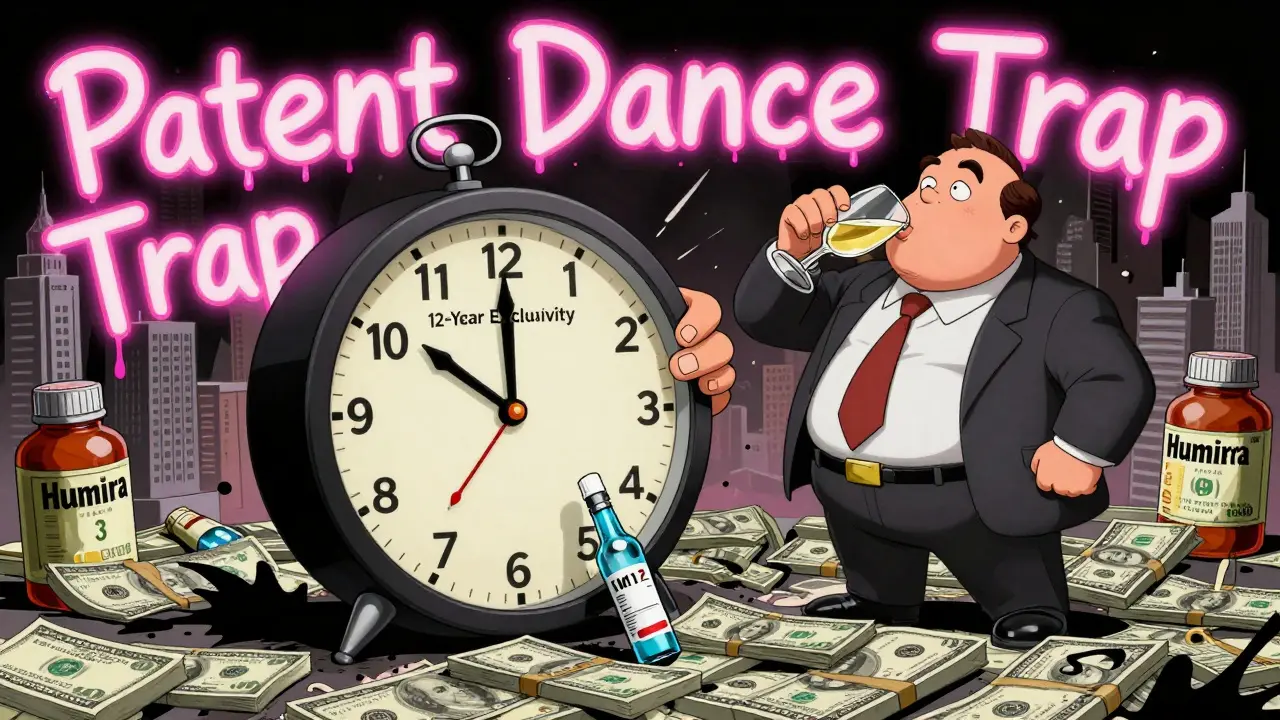
In 2010, Congress passed the Biologics Price Competition and Innovation Act (BPCIA) to create a path for biosimilars without breaking the innovation model. But the law didn’t just open the door - it built a long hallway with locked doors. Under the BPCIA, once a biologic gets FDA approval, the manufacturer gets 12 years of market exclusivity. That means no biosimilar can be approved until that clock hits 12 years. Even worse, biosimilar makers can’t even file their application until four years after the original drug’s approval. So for the first four years, no one can submit paperwork. For the next eight, applications sit in a queue, waiting for approval. That’s not a patent - it’s a government-backed monopoly. This isn’t just theory. Humira, the top-selling drug in U.S. history, got approved in 2002. Its first biosimilar didn’t hit the market until 2023 - 21 years later. Why? Because the 12-year clock started at approval, not at patent expiration. The original patent expired in 2016, but the FDA still couldn’t approve a copy until 2023. That’s 7 years of lost competition, and billions in extra costs for patients and insurers. Compare that to Europe. The EU gives only 10 years of data exclusivity plus one year of market exclusivity - 11 total. Humira’s first biosimilar arrived there in 2018. American patients paid nearly $100 billion more for the same drug over that time.The Patent Dance: A Legal Trapdoor
Even after the 4-year waiting period, biosimilar companies don’t just file paperwork and wait. They’re forced into something called the “patent dance.” It sounds technical, but it’s really a legal game of chicken. Within 20 days of submitting their application, the biosimilar maker must hand over their entire manufacturing plan to the original drug company. That’s right - they give away their secrets before they even know if they’ll get approved. Then the original company has 60 days to name every patent they think might be violated - sometimes hundreds. The biosimilar maker responds with legal arguments for why each patent doesn’t apply. Then both sides get 15 days to pick which patents to fight over in court. This process can take years. And it’s not just about one or two patents. Companies like AbbVie, maker of Humira, piled on over 160 patents for a single drug. Some were legitimate. Many were thin - just tweaks to delivery devices or dosing schedules. But they all bought time. In 2017, the Supreme Court ruled that biosimilar makers could skip the patent dance, but most still don’t. Why? Because if you skip it, you risk getting sued for every patent the original company owns - and losing could mean years of delays or massive fines. So most play along, even though it’s a slow, expensive, and risky process.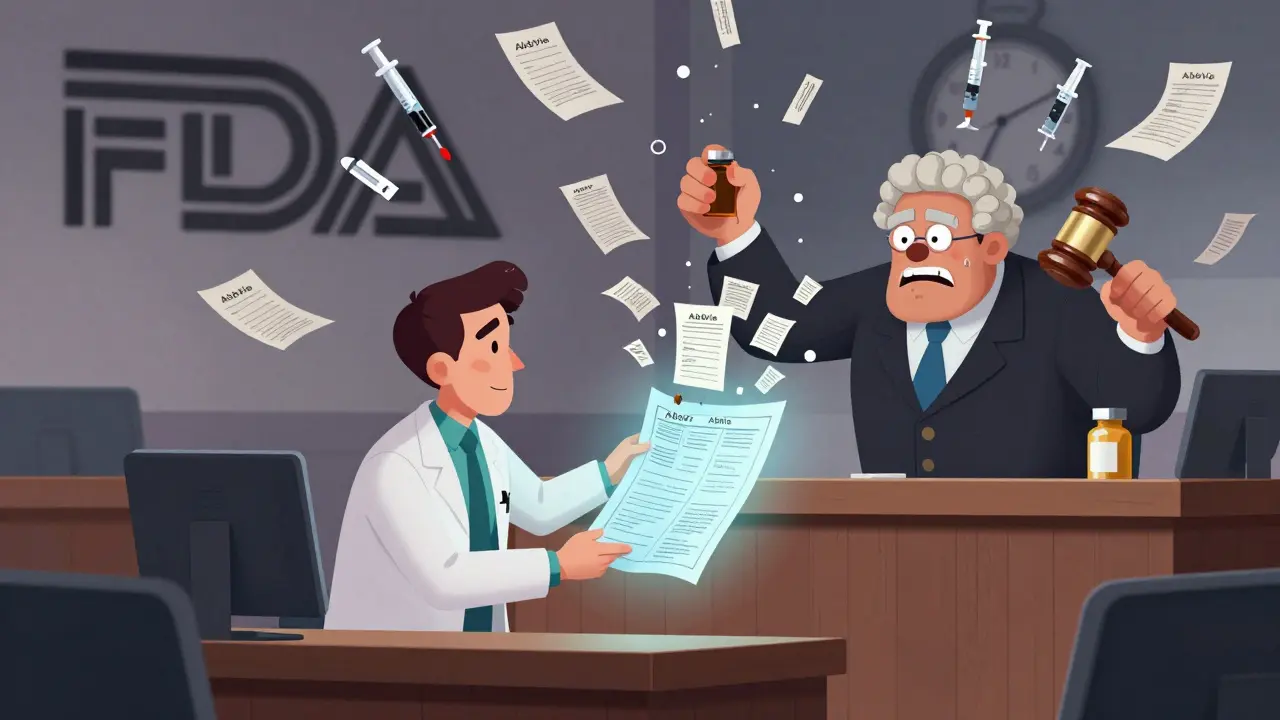
Why Biosimilars Cost So Much to Make
You can’t just copy a biologic like you copy a pill. Biologics are made from living cells - proteins, antibodies, complex molecules that change based on tiny shifts in temperature, pH, or manufacturing conditions. A generic aspirin is chemically identical no matter who makes it. A biosimilar? It’s “highly similar,” but never identical. That’s why the FDA requires massive testing: analytical studies, animal trials, pharmacokinetic data, and sometimes even new clinical trials to prove it works the same way. Pfizer estimates developing a biosimilar takes 5 to 9 years and costs over $100 million. For complex biologics like antibody-drug conjugates or cell therapies? That number jumps to $250 million and 10 years. Compare that to a generic pill: $1-2 million and two years. That’s why only 12 of the 118 biologics set to lose exclusivity between 2025 and 2034 currently have biosimilars in development. Most companies just don’t see the return. And here’s the kicker: 88% of the biologics losing protection in the next decade have orphan drug status - meaning they treat rare diseases with tiny patient pools. Why invest $200 million to treat 5,000 people when you could make more money on a common drug? That’s why so many critical therapies - especially for rare cancers and autoimmune conditions - will stay expensive for years.Who’s Losing? Patients and the System
The delays aren’t just legal or financial - they’re personal. Dr. Peter Bach from Memorial Sloan Kettering found U.S. patients pay three times more than Europeans for the same biologic. A patient on Humira in the U.S. might pay $7,000 a month. In Germany, with biosimilars available since 2018, the same drug costs under $2,000. That’s not a price difference - it’s a life-or-death gap. The National Community Pharmacists Association found 63% of pharmacists have patients who quit their biologic treatment because they couldn’t afford it. Arthritis Foundation reports patients skipped doses, split pills, or went without treatment - all because the price stayed high. Meanwhile, the list price of Humira rose 470% between 2012 and 2022, even as its production cost barely changed. The Congressional Budget Office estimates that if biosimilars entered faster, the U.S. could save $158 billion over the next decade. Under current rules? Just $71 billion. That’s $87 billion in lost savings - money that could go to cancer care, insulin access, or mental health services.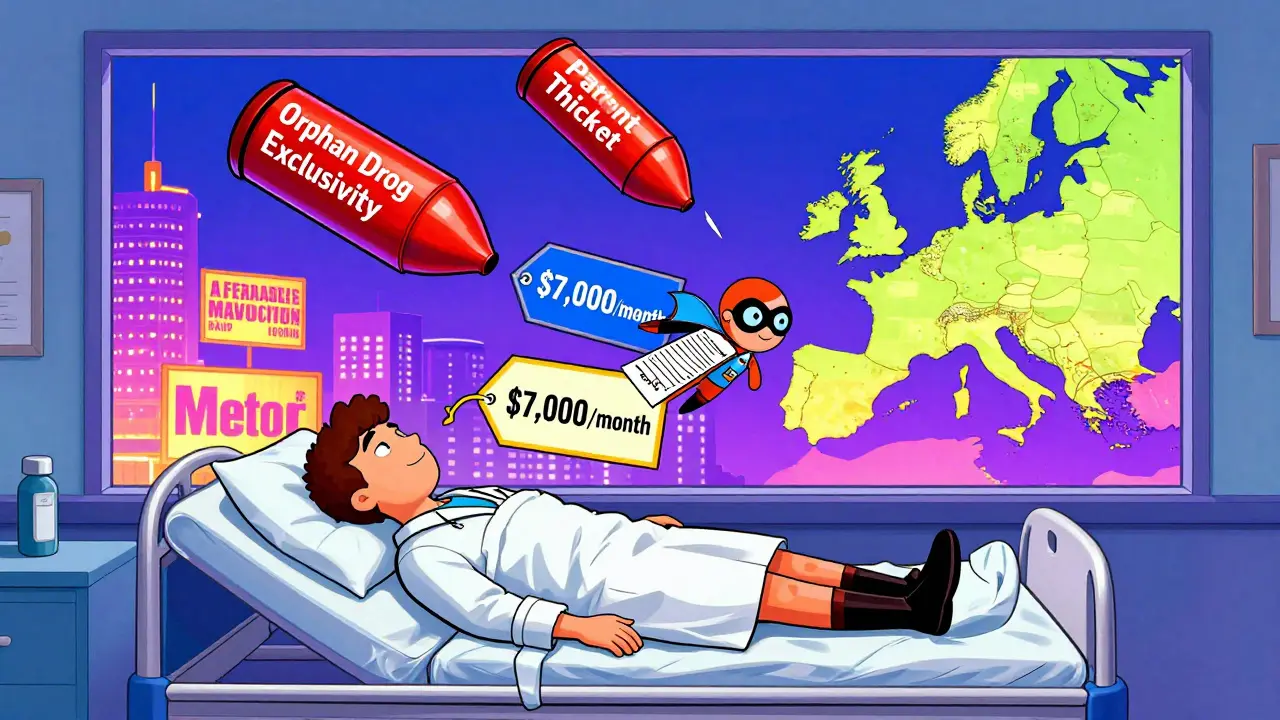
What’s Changing? And What’s Not
The FDA has tried to help. Their 2022 Biosimilars Action Plan promised better communication, faster reviews, and more support for developers. But progress has been slow. Since 2015, the U.S. has approved only 38 biosimilars. Europe? 88. And most of those are for simpler biologics. The complex ones - the ones that treat the most serious diseases - still have almost no competition. Legislation like the Biosimilars User Fee Act of 2022 aimed to speed things up by letting the FDA charge fees to fund faster reviews. But it stalled in Congress. Without policy changes, the system stays stuck. Some companies are trying to break the mold. Pfizer, Samsung Bioepis, and Amgen have pushed forward with biosimilars for major drugs like Enbrel and Herceptin. But they’re the exception. Most developers wait until the last possible moment - right before the 12-year mark - to file, hoping to avoid years of litigation.What Comes Next? The Biosimilar Void
Between 2025 and 2034, over $234 billion in biologic sales will be up for grabs. But only a fraction will have biosimilars ready. The “biosimilar void” isn’t just a gap - it’s a crisis. Without intervention, patients will keep paying inflated prices for cancer drugs, rheumatoid arthritis treatments, and rare disease therapies. The answer isn’t just shortening the exclusivity period - though many experts agree 7-8 years would be fair. It’s also about changing how patents are used. Courts need to stop allowing patent thickets. The FDA needs to make approval faster for complex biologics. And payers need to stop favoring the original drug just because it’s “brand name.” The technology exists. The science is proven. The savings are real. What’s missing is the political will to let competition in.How long must a biologic company wait before a biosimilar can be approved in the U.S.?
A biosimilar cannot be approved by the FDA until 12 years after the original biologic’s first approval date, as required by the BPCIA. Even though biosimilar manufacturers can submit their application after 4 years, the FDA is legally barred from approving it until the full 12-year exclusivity period ends. This 12-year window starts on the date of the reference product’s initial licensure, not the patent expiration date.
Why can’t biosimilars be approved like generic drugs?
Generic drugs are chemically identical copies of small-molecule drugs, which are easy to replicate. Biologics are large, complex proteins made from living cells. Even tiny changes in manufacturing can alter how they work. So biosimilars must prove they’re "highly similar" with no clinically meaningful differences in safety or effectiveness - requiring extensive testing, analytical studies, and sometimes clinical trials. That’s why the approval process is longer and more expensive.
Do other countries have the same 12-year exclusivity period?
No. The U.S. has one of the longest exclusivity periods. The European Union offers 10 years of data exclusivity plus 1 year of market exclusivity (11 total). Japan gives 8 years of data exclusivity plus 4 years of market exclusivity (12 total). South Korea provides 10 years of data exclusivity with no additional market exclusivity. These differences explain why biosimilars enter markets like Europe years before the U.S., leading to lower prices and faster patient access.
What is the "patent dance" and why does it delay biosimilars?
The "patent dance" is a series of information exchanges and legal negotiations between a biosimilar applicant and the original drug company, required under the BPCIA. After the biosimilar submits its application, it must share its manufacturing data. The original company then lists patents it believes are infringed. Both sides negotiate which patents to litigate. This process can take years and often leads to multiple lawsuits. Many companies use it to drag out delays - even when patents are weak - to protect market share.
Why are so few biosimilars in development for rare disease drugs?
About 64% of biologics losing exclusivity between 2025 and 2034 treat rare diseases, known as orphan indications. Developing a biosimilar costs over $100 million, but if the patient population is small - sometimes just a few thousand - the return on investment is too low. Only one orphan biologic, eculizumab, currently has a biosimilar in development. As a result, 88% of orphan biologics set to expire won’t have competitors, keeping prices high for patients with few treatment options.
