 Jan, 26 2026
Chronic pain isn’t just pain that won’t go away. It’s a disease that rewires your body, steals your sleep, and quietly erodes your ability to live normally. If you’ve been hurting for more than three months, you’re not alone-and you’re not imagining it. The International Association for the Study of Pain is the global authority that defines chronic pain as lasting longer than three months, a standard adopted by the World Health Organization in 2022. This isn’t a vague guideline-it’s a diagnostic threshold that separates temporary discomfort from a long-term condition requiring specialized care.
What Makes Chronic Pain Different?
Acute pain is your body’s alarm system. It tells you something’s wrong-like a sprained ankle or a bad sunburn-and then fades as you heal. Chronic pain is different. It’s like the alarm got stuck on, even after the fire’s out. The IASP requires three things to diagnose chronic pain: the pain lasts over three months, it causes emotional distress or interferes with daily life, and it’s not better explained by another condition.
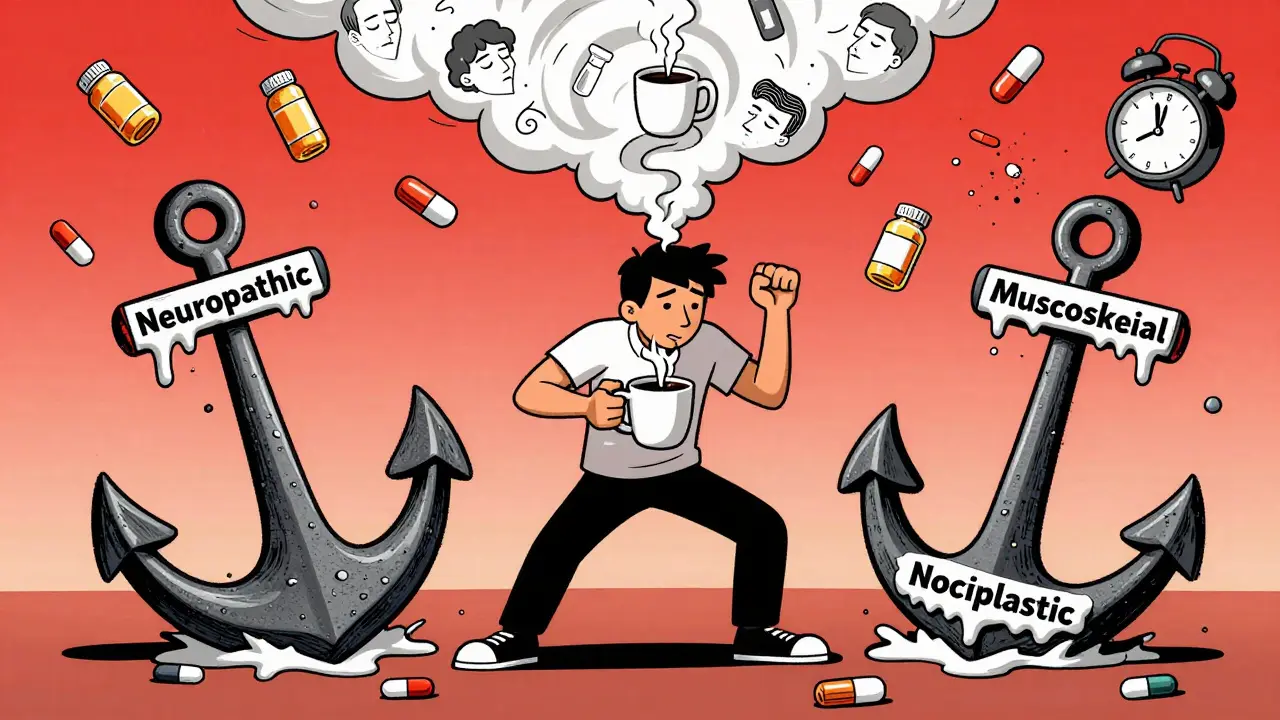
That last part matters. Many people are told their pain is "just stress" or "all in your head." But chronic pain isn’t psychological-it’s biological. It can come from nerve damage (neuropathic), muscle and joint issues (musculoskeletal), internal organ problems (visceral), or from the nervous system itself misfiring (nociplastic). In fact, musculoskeletal pain makes up 45.7% of all chronic pain cases, followed by neuropathic at 22.3%. Fibromyalgia, a common nociplastic condition, requires widespread pain for at least three months and affects both sides of the body above and below the waist.
How It Takes Over Your Days
Think about your typical day: getting out of bed, making coffee, walking the dog, working, cooking dinner. Now imagine doing any of that while your body feels like it’s been hit by a truck every morning. That’s reality for millions.
A 2022 U.S. survey of 33,500 adults found people with chronic pain missed 9.2 workdays a year on average-nearly double the 4.1 days missed by those without chronic pain. For those with severe pain, it’s 16.7 days. One Reddit user, u/TiredOfPain, shared that he quit two jobs because he couldn’t stand for more than 20 minutes. Now he works remotely as a content editor-but still misses two to three days a month when his pain flares.
Sleep? Nearly 83% of chronic pain patients report disrupted sleep. Over 60% get fewer than five hours of quality rest per night. That’s not just tiredness-it’s a cycle. Poor sleep lowers pain tolerance, which makes pain worse, which makes sleep harder. It’s a loop that drains energy, focus, and mental health.
Household chores? 78% say chronic pain interferes with them. Social life? 65% avoid gatherings. Even personal care like showering or dressing becomes a struggle. On PatientsLikeMe, a health platform with 750,000 chronic pain members, 55% say they need help with basic self-care tasks on bad days.
The Treatment Gap
Most people with chronic pain don’t get the right care. A 2021 study of over 12,000 patients found that 76% were misclassified as having a symptom-not a disease-leading to delayed or inadequate treatment.
Doctors often default to pills. But NSAIDs only reduce pain by 20-30% in 45% of users, and carry serious risks like stomach bleeding. Opioids? The CDC says they offer just 10-15% more relief than non-opioid options, but 8-12% of people become addicted after 90 days. That’s why guidelines now rank opioids as a last resort.
The real solution? Multimodal care. Cognitive behavioral therapy (CBT) helps 65% of patients reduce pain by 30-50% after 12 weekly sessions. Physical therapy improves function in 70% of patients within 8-12 weeks. Interdisciplinary pain programs -combining therapy, movement, education, and mental health support-show 55-65% success rates.
One patient, u/PainFreeSince2022, spent $12,500 out of pocket on a four-week program at Mayo Clinic. Their pain dropped from 8/10 to 3/10. They returned to teaching full-time. It wasn’t cheap, but it worked.
Why So Many Feel Abandoned
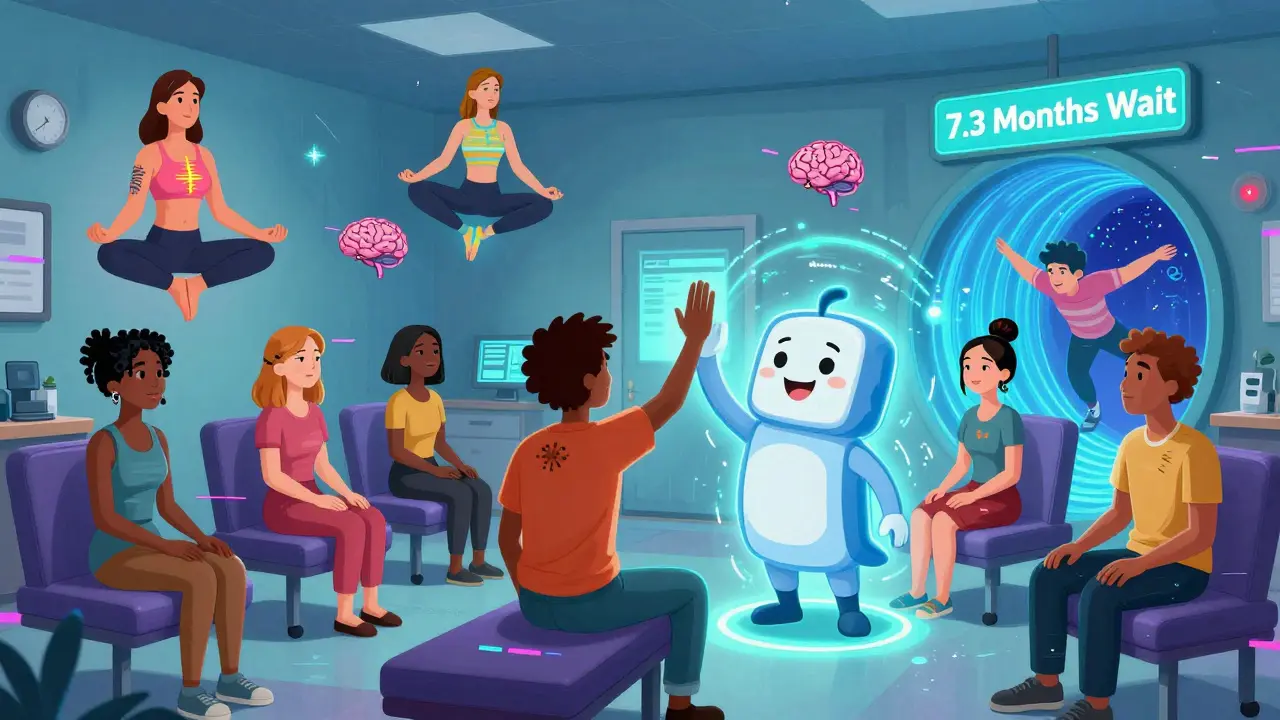
Chronic pain patients are often treated like they’re lying. A 2023 survey of 4,820 patients found 69% felt misunderstood by doctors. Over half said they were labeled "drug-seeking" in emergency rooms. That stigma causes delays-on average, it takes 7.3 months from first symptoms to proper referral.
And access? It’s uneven. Urban areas have one pain specialist for every 75,000 people. Rural areas? One for every 500,000. That means over 40% of rural patients drive more than 50 miles just to see someone who understands their pain.
There are only 3,200 board-certified pain specialists in the U.S.-that’s 0.3% of all doctors. Most general practitioners don’t have the training to manage chronic pain beyond prescribing pills. That’s why the American Board of Pain Medicine requires 1,000 hours of clinical experience and 150 hours of continuing education just to become certified.
What’s Changing-And What’s Coming
Things are shifting. In 2023, Medicare started covering 80% of the cost for digital pain apps that have proven results. Platforms like Curable and Reflect are helping thousands manage pain through science-backed exercises, mindfulness, and education. Curable has 250,000 users and a 4.7/5 rating. Reflect has 180,000 users and a 4.6/5 rating.
Kaiser Permanente slashed opioid prescriptions by 47% in just one year by expanding access to physical therapy, CBT, and interventional procedures. They didn’t cut care-they improved it.
The NIH is investing $1.8 billion in non-addictive pain research. That includes $315 million for non-drug therapies and $427 million for new painkillers that don’t cause addiction. The All of Us Research Program is collecting genetic and lifestyle data from 125,000 chronic pain patients to build personalized treatment plans by 2027.
What You Can Do Now
If you’ve been in pain for over three months:
- Don’t accept "just live with it." You deserve better.
- Ask for a referral to a pain specialist or multidisciplinary pain clinic.
- Start with non-drug options: physical therapy, CBT, or a digital program like Curable.
- Track your pain: location, intensity, triggers, sleep, mood. This helps your doctor see patterns.
- Find support. Online communities like r/ChronicPain aren’t just forums-they’re lifelines.
Chronic pain doesn’t have to control your life. It’s complex, yes. But it’s treatable-with the right approach, the right team, and the right time.
Is chronic pain the same as acute pain?
No. Acute pain is short-term and linked to a specific injury or illness-it usually goes away as you heal. Chronic pain lasts longer than three months and often continues even after the original injury has healed. It’s not just pain that won’t quit-it’s a condition where the nervous system itself becomes overactive and misfires.
Can chronic pain be cured?
For many, chronic pain can’t be fully eliminated, but it can be managed effectively. The goal isn’t always zero pain-it’s regaining function, improving sleep, reducing emotional distress, and returning to meaningful activities. Many people reduce their pain by 50% or more with multimodal treatment and live full, active lives.
Why are opioids not recommended for chronic pain?
Opioids offer only 10-15% more pain relief than non-opioid options over the long term, but carry high risks: addiction occurs in 8-12% of users after 90 days, and overdose risk increases with prolonged use. Guidelines now say opioids should only be used in rare cases, after other treatments have failed, and never as a first-line option.
What’s the best non-drug treatment for chronic pain?
There’s no single best option-it depends on the person. But research shows the most effective approach combines physical therapy, cognitive behavioral therapy (CBT), and movement-based practices like tai chi or yoga. Multidisciplinary pain programs that include all three have the highest success rates, with 55-65% of patients reporting meaningful improvement.
How do I find a pain specialist near me?
Start by asking your primary doctor for a referral. You can also search through the American Board of Pain Medicine’s directory or contact major hospitals with pain clinics (like Mayo Clinic, Johns Hopkins, or Kaiser Permanente). If you’re in a rural area, telehealth options are expanding rapidly, and Medicare now covers many digital pain programs.
Are pain apps worth it?
Yes-if they’re science-backed. Apps like Curable and Reflect are based on clinical research and have thousands of users reporting real improvements. They’re not magic, but they’re affordable, accessible, and proven to reduce pain and improve quality of life. Medicare now covers 80% of the cost for approved digital therapeutics, making them more accessible than ever.

April Williams
January 27, 2026 AT 14:51Ugh, another one of these "chronic pain is real" posts. I’ve seen this exact same article shared 12 times on Facebook. People act like they just discovered this, but we’ve known for decades that doctors suck at pain management. And now you want me to pay $12,500 for a "program"? Yeah, right. I’m supposed to believe this isn’t just Big Pharma’s latest cash grab wrapped in feel-good jargon? 🤡
Kirstin Santiago
January 28, 2026 AT 11:47I’ve been living with fibromyalgia for 11 years. The worst part isn’t the pain-it’s how people look at you like you’re faking it when you cancel plans. I used to feel guilty. Now I just say, "My body’s on strike today." CBT helped me stop blaming myself. Physical therapy didn’t cure me, but it gave me back mornings. You don’t need to be fixed to be worthy of living well.
And yes, apps like Curable? They’re not magic, but they’re cheaper than ER visits. I’ve used them for 3 years. Still on bad days. Still alive. Still trying.
Desaundrea Morton-Pusey
January 28, 2026 AT 23:30Why are we letting these people turn chronic pain into a woke cause? This isn’t a social justice issue-it’s a medical failure. The government’s throwing billions at apps and yoga while real people in rural areas can’t even get a damn referral. And don’t get me started on Medicare covering "digital therapeutics"-next they’ll be paying for TikTok dance therapy. This is all performative nonsense.
Harry Henderson
January 28, 2026 AT 23:38Listen. If you’ve been hurting for three months and someone tells you to "just push through," they don’t know what they’re talking about. I was told that for 18 months. Then I found a pain clinic. Three months of PT, CBT, and learning how to breathe through flare-ups-and I walked my daughter down the aisle last year. Not pain-free. But present. That’s the win.
Stop waiting for a cure. Start building a life that fits around the pain. You’re not broken. You’re adapting. And that’s fucking brave.
suhail ahmed
January 30, 2026 AT 15:37In India, we call chronic pain 'the silent thief'-it steals your dignity before it steals your mobility. I work as a mechanic, and for years I hid my back pain because I didn’t want to be seen as weak. But when I started doing simple yoga flows before dawn, something shifted. Not because it erased the pain-but because it gave me back my rhythm. No magic pills. No expensive clinics. Just consistency. And a lot of chai.
And yes, I know the stats. But sometimes, the smallest daily act of care is the most revolutionary thing you can do.
Candice Hartley
January 31, 2026 AT 02:40Just had a flare-up. Couldn’t shower. Had to ask my roommate to hand me a towel. 😔
Kathy McDaniel
January 31, 2026 AT 13:28so i tried curable like 6 months ago and honestly? it was kinda life changing? not like poof pain gone but i stopped feeling so guilty about resting. and i sleep like 2 hours more now? idk man. maybe its placebo but i’ll take it 😅
Paul Taylor
January 31, 2026 AT 23:23Let me tell you something about the medical system. It’s not broken. It’s designed this way. The system doesn’t want you to heal. It wants you to keep coming back. Every pill, every scan, every specialist visit-it’s all a revenue stream. Multimodal care? That’s expensive. That’s time-intensive. That doesn’t scale. So they give you opioids and send you on your way. The $1.8 billion NIH investment? That’s a drop in the bucket. The real money’s in keeping you dependent. You think they want you to get better? No. They want you to keep paying.
And don’t even get me started on the digital apps. They’re just digital gatekeepers for the same broken system. They collect your data. They sell your habits. They track your pain levels so insurance companies can deny you later. You’re not being helped. You’re being monetized.
Murphy Game
February 2, 2026 AT 04:24They’re lying. All of them. The IASP? A front for pharmaceutical lobbying. The WHO endorsement? Coincidence? No. The three-month threshold was chosen because it’s the exact point where disability payments kick in. That’s why they pushed it in 2022-right after the pandemic. They need more people on disability to justify the new pain clinics that are owned by the same companies that make the drugs. This isn’t medicine. It’s a welfare-to-pharma pipeline. And you’re being used.
John O'Brien
February 3, 2026 AT 19:33Bro I was in the ER last week with a flare-up and the nurse literally said "you don’t look like you’re in pain". I wanted to throw my crutches at her. But I just smiled and said "thanks for your concern". I’ve learned to shut up and nod. It’s easier than explaining why my knees look fine but my body feels like it’s on fire from the inside.
Also-CBT worked for me. Not because I’m "mentally weak" but because my brain stopped screaming at me that every twinge meant something worse. That alone saved my job. And my marriage. So yeah. It’s real. And it’s not just in your head. It’s in your nerves. And your damn insurance won’t cover it.