 Jan, 12 2026
Drug Withdrawal Checker
Check Medication Status
Find out if your medication has been withdrawn or recalled by the FDA.
Every year, dozens of prescription drugs disappear from pharmacy shelves-not because they’re outdated, but because they’re dangerous or don’t work. The process behind these removals is complex, slow, and often too late. In 2022, the FDA withdrew approval for an oncology drug after a confirmatory trial proved it didn’t extend life, even though thousands of patients had already taken it for over four years. This isn’t rare. It’s the rule.
How Drugs Get Approved-And Why That’s Not Enough
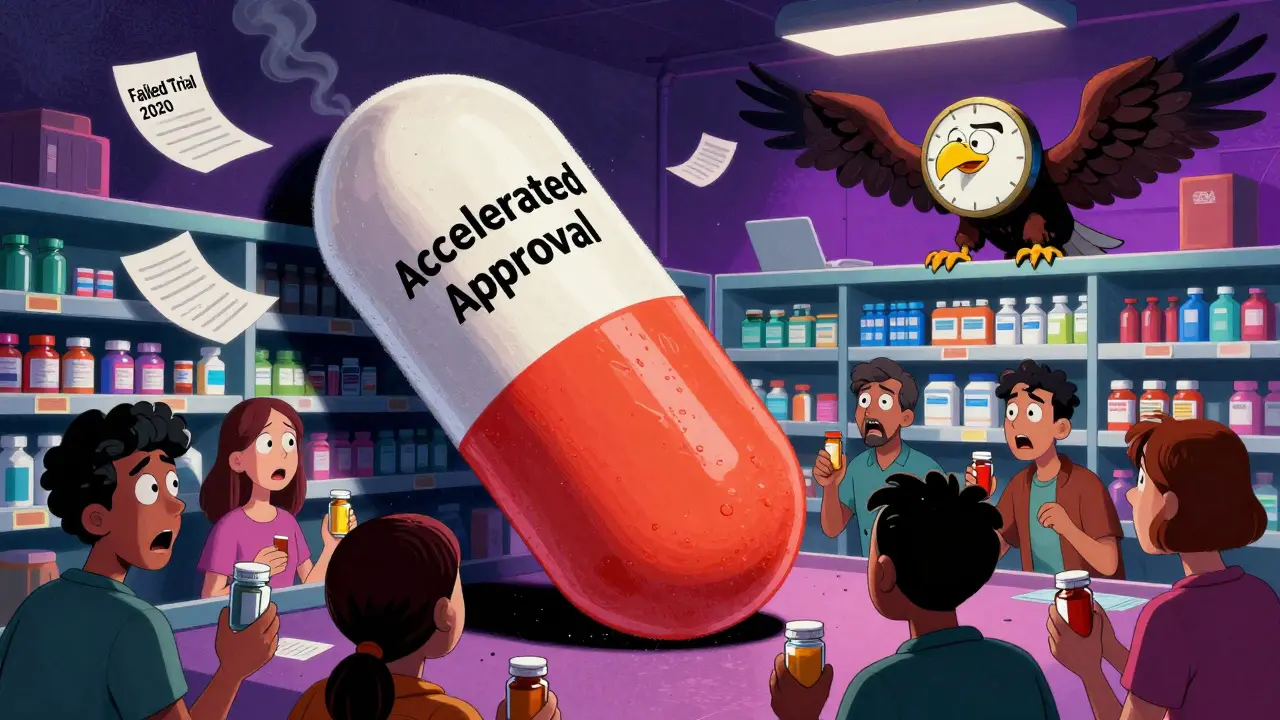
The FDA doesn’t require drugs to prove they save lives before approving them. For many serious conditions, especially cancer, the agency allows what’s called accelerated approval. This means a drug can reach patients based on early signs of benefit-like shrinking tumors-without waiting for proof that it actually helps people live longer or feel better. It’s meant to speed up access to hope. But hope isn’t a cure. Between 2010 and 2020, nearly 13% of drugs approved under this fast-track system were later pulled because they failed to deliver on their promises. In one case, a drug for small cell lung cancer was given to 41% of eligible patients before being withdrawn. None of them lived longer because of it. The FDA approved it in 2018. The trial proving it didn’t work came out in 2020. The drug stayed on the market until 2022.The Long Wait: Why Withdrawals Take Years
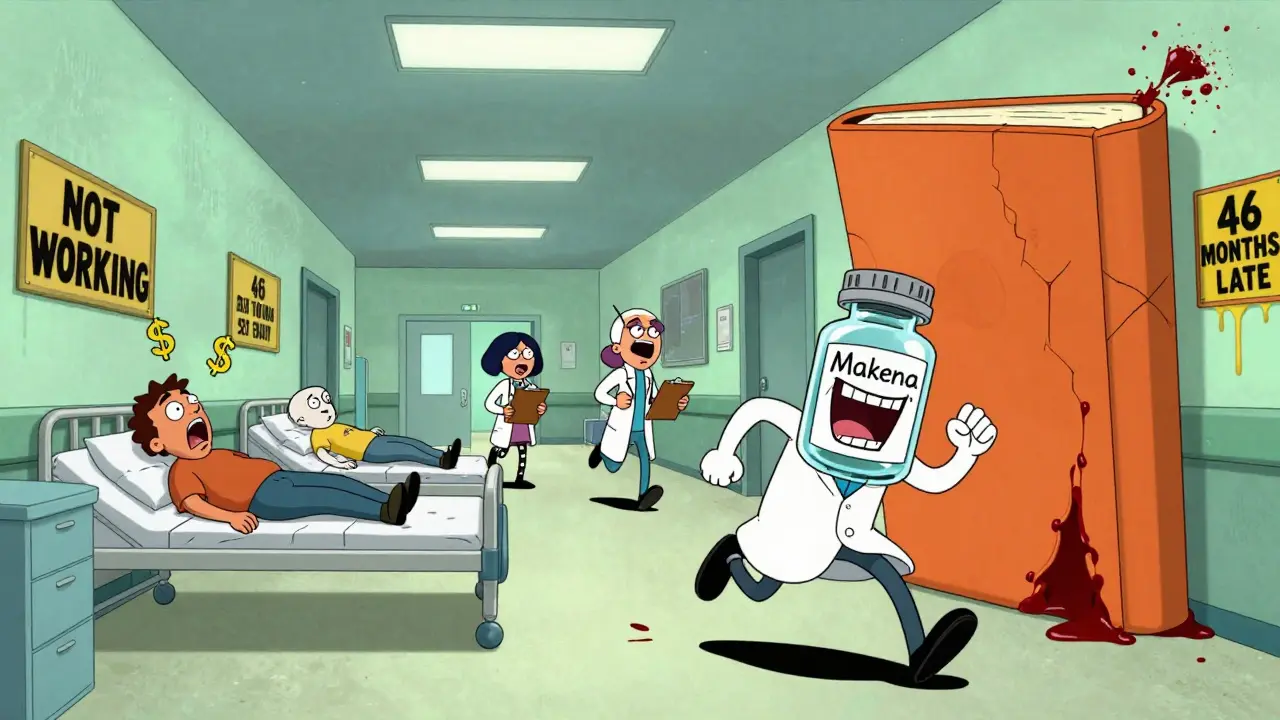
Before 2023, the FDA had no real deadline to pull a drug. Once a study showed a drug wasn’t effective, the agency could take up to 46 months-almost four years-to remove it. That’s longer than it took to approve the drug in the first place. Take Makena, a drug meant to prevent preterm birth. It was approved in 2011 based on a small, flawed study. By 2020, a major trial proved it didn’t work. But the FDA didn’t pull it until 2022. During those two years, over 150,000 women were given a drug that did nothing. Why? The process was broken. The FDA had to wait for the manufacturer to respond, hold meetings, accept appeals, and publish notices-all while the drug kept being prescribed. Patients didn’t know. Doctors didn’t know. Pharmacists didn’t know. The Orange Book, the official list of approved drugs, didn’t clearly flag which ones were under review for withdrawal. A 2022 survey found 63% of pharmacists couldn’t tell if a drug was withdrawn just by looking at the listing.The 2023 Fix: A New Ruleset for Drug Safety
In December 2023, Congress passed the Consolidated Appropriations Act, giving the FDA real power to act faster. Now, if a drug approved under accelerated approval fails its confirmatory trial, the FDA can start the withdrawal process within weeks-not years. The new law sets clear triggers:- The drug sponsor doesn’t conduct required follow-up studies on time
- The follow-up study proves the drug doesn’t work
- Independent data shows the drug is unsafe or ineffective
- The company lies about the drug’s benefits in marketing
Who Gets Hurt When Drugs Stay Too Long
It’s not just the patients who take the drug. It’s everyone around them. Oncologists report that 30% of their patients on accelerated approval drugs between 2015 and 2020 received treatments later withdrawn. One patient, diagnosed with metastatic breast cancer, took a drug for 18 months. Her oncologist told her it was standard care. When the trial failed, she was told the drug didn’t work. She had endured nausea, fatigue, and $15,000 in out-of-pocket costs for nothing. Family members carry the emotional weight. A Reddit thread on r/oncology with over 140 comments showed 87% of respondents feared being prescribed a drug that might later be pulled. Many said they’d never trust another accelerated approval drug. And the financial cost? When a drug is withdrawn, insurers often refuse to pay for follow-up care. Patients who switched to alternatives after withdrawal faced delays, higher co-pays, and sometimes no coverage at all.Voluntary vs. Mandatory Withdrawals: What’s the Difference?
Not all withdrawals are forced. Sometimes, companies pull their own drugs. That’s called a voluntary withdrawal. It usually happens when:- Sales are too low to justify production
- Manufacturing problems arise
- The company decides the drug isn’t profitable anymore
How Doctors and Pharmacies Are Adapting
Hospitals and clinics are scrambling to keep up. When a drug is withdrawn, doctors have to switch patients to alternatives-fast. Oncology practices report they have an average of 72 hours to find a new treatment plan once a withdrawal is announced. That’s not enough time to research options, check insurance coverage, or explain the change to patients. Pharmacists are now trained to check the FDA’s monthly “Determination of Safety or Effectiveness” list. But many still struggle. A 2023 FDA audit found only 42% of withdrawal notices included clear instructions for patient transitions. No one told doctors when to stop prescribing. No one told patients when to stop taking it. Some hospitals now use automated alerts in their electronic health records to flag drugs under review. But that’s only in big systems. Smaller clinics still rely on email newsletters and word of mouth.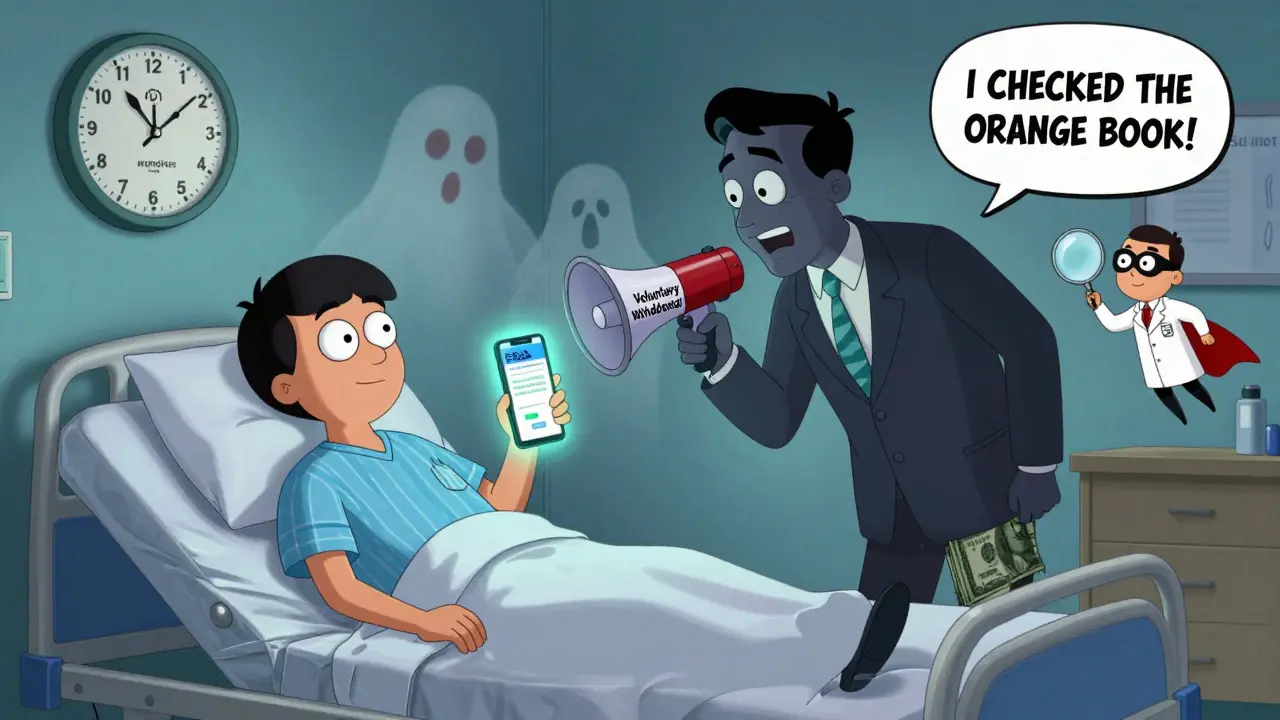
What’s Next? Real-World Data and Faster Decisions
The FDA is now testing a new system that uses real-world patient data to spot problems faster. Starting in January 2024, they’re partnering with Flatiron Health to track how patients respond to drugs after approval. Instead of waiting for a formal trial, they’ll watch what happens in real clinics. If a drug shows a pattern of poor outcomes across thousands of patients, the FDA can act before a formal trial even finishes. This could cut withdrawal times even further. But there’s a risk. Some drug companies warn that faster withdrawals could scare off innovation. If a company knows it might lose approval after just one bad year, they might avoid high-risk areas like rare diseases or aggressive cancers. The FDA says it’s balancing speed with fairness. But the test will be how quickly they act when the evidence is clear.What You Should Know as a Patient
If you’re on a drug for cancer, rare disease, or another serious condition, ask these questions:- Was this drug approved under accelerated approval?
- Has a confirmatory trial been completed?
- Is there any public record of the drug being reviewed for withdrawal?
What’s the difference between a drug recall and a withdrawal?
A recall happens when a specific batch of a drug is pulled due to contamination, mislabeling, or manufacturing defects. The drug itself may still be safe and effective. A withdrawal means the FDA has determined the drug is unsafe or ineffective as a whole-and it’s removed from the market permanently. Recalls are about quality. Withdrawals are about safety and benefit.
Can a withdrawn drug ever come back to the market?
It’s extremely rare. Once a drug is withdrawn for safety or effectiveness reasons, the FDA won’t reapprove it unless the manufacturer submits entirely new data proving it works and is safe. Even then, the bar is very high. Most withdrawn drugs stay off the market for good.
How do I know if a drug I’m taking was recently withdrawn?
Check the FDA’s website for the monthly “Determination of Safety or Effectiveness” list. You can also ask your pharmacist to verify the drug’s status in the Orange Book. If you’re on a high-risk medication like an oncology drug, ask your doctor every six months if there have been any new safety alerts.
Why don’t doctors always know when a drug is pulled?
Because the FDA’s notices aren’t always clear or timely. Many withdrawal notices don’t include specific guidance for prescribers. A 2023 audit found nearly 60% of notices lacked transition instructions. Doctors rely on medical journals, pharmaceutical reps, and hospital alerts-which can be slow or inconsistent.
Are generic versions of withdrawn drugs still available?
No. Once a brand-name drug is withdrawn for safety or effectiveness, its generic versions are automatically removed from the market too. The Orange Book updates monthly to reflect this. If you’re prescribed a generic and the brand version was pulled, your pharmacy should flag it.

Ben Kono
January 13, 2026 AT 02:13The FDA is a joke they let drugs sit for years after proving they dont work then act surprised when people die
My uncle took that cancer drug for 2 years and wasted his last savings on it
They knew it was garbage in 2020 but waited till 2022 to pull it
Thats not oversight thats murder by bureaucracy
Cassie Widders
January 13, 2026 AT 08:35I read this and just felt so sad
People are trusting their lives to systems that dont care enough to act fast
It’s not just about money or politics
Its about someone’s mom or dad taking a pill every day thinking it’s helping when it’s not
Konika Choudhury
January 14, 2026 AT 19:15USA always slow to act while other countries fix things fast
India pulls unsafe drugs in weeks not years
Why do Americans let their government get away with this
Its disgraceful
Darryl Perry
January 15, 2026 AT 19:14Accelerated approval was always a flawed compromise. The FDA traded patient safety for political optics. The 2023 reform is a necessary corrective, but it’s too little too late for the thousands already harmed. Accountability must be institutionalized, not reactive.
Windie Wilson
January 16, 2026 AT 23:49So the FDA lets people take a drug that doesn’t work for four years… and now they’re proud of themselves for cutting it to 180 days?
Wow. What a hero.
My grandma took Makena. She didn’t even know it was useless until her OB told her after the fact.
Thanks for the update, guys. Next time maybe try not killing people first?
Daniel Pate
January 18, 2026 AT 09:45There’s a deeper philosophical problem here. We treat medicine like a product line instead of a covenant between healer and healed. The system rewards speed over truth, marketing over mortality. When hope becomes a commodity, ethics become optional. The FDA’s new rules don’t fix the culture-they just make the bureaucracy slightly less slow. The real question is: why did we ever let hope be sold like a subscription?
Amanda Eichstaedt
January 19, 2026 AT 04:09I work in a clinic and this hits home. We had a patient on that lung cancer drug-she was so hopeful, kept a journal of how she was feeling. When it got pulled, she cried for an hour because she thought she was getting better. We had zero warning. No email. No alert. Just a pharmacy call saying ‘sorry, this is gone now.’
Patients deserve better than this silence. We’re not just prescribing pills-we’re prescribing trust. And we’ve broken it.
Jose Mecanico
January 19, 2026 AT 06:44It’s good the FDA is finally moving faster. But I worry about the unintended consequences. If companies fear withdrawal too much, they’ll stop trying for breakthroughs in rare cancers. We need speed-but also room for risk. Maybe a tiered system? High-risk drugs get monitored harder from day one, not just after failure.
Alex Fortwengler
January 20, 2026 AT 05:06Of course the drug companies are behind this. They own the FDA. You think they let a drug stay on the market for 4 years by accident? Nah. They paid off the reviewers. The ‘confirmatory trial’? A joke. They faked the data for years. And now they’re pretending they care? Wake up. This is all theater. The real fix? Ban pharma lobbying. Burn the whole system down.
jordan shiyangeni
January 21, 2026 AT 14:34It’s not just the FDA’s failure-it’s the moral collapse of modern medicine. We have turned healing into a profit-driven transaction, where human life is a line item on a balance sheet. The fact that 150,000 women were given Makena while regulators dithered isn’t negligence-it’s criminal malfeasance. Every doctor who prescribed it without demanding confirmatory data is complicit. Every pharmacist who dispensed it without question is an accomplice. And every patient who trusted them? A victim of a system that values corporate liability over human dignity. This isn’t a policy problem. It’s a spiritual one.
Abner San Diego
January 21, 2026 AT 22:47They pulled the drug in 2022 but the Orange Book still didn’t flag it? That’s not incompetence, that’s corruption. Pharma’s got fingers in every pie. The FDA’s new team of 12? Cute. They’re gonna need 1200 to keep up with the lies. And don’t get me started on how many generics are still floating around under different names. You think your $5 pill is safe? Maybe. Maybe it’s the same junk in a new bottle.
Eileen Reilly
January 21, 2026 AT 23:10Okay but like… why are we even surprised? Pharma is the most powerful lobby in the US. They spend billions to keep these drugs on shelves. The FDA doesn’t have a chance. And the worst part? Nobody tells you until it’s too late. I found out my chemo drug was pulled because my insurance denied it. Not because my doc warned me. Not because the pharmacy said anything. Just… denied. So now I’m on something new and I have no idea if it’s better or just another time bomb.
Monica Puglia
January 23, 2026 AT 02:02Thank you for writing this. I’ve been a nurse for 18 years and I’ve seen this happen too many times. 🫂
Patients deserve to know the truth-even if it’s scary. I start every new treatment with: ‘This was approved fast. We’re watching closely. Let’s talk every month.’
It’s not perfect, but it’s honest. And honesty is the first medicine we should always give.
Cecelia Alta
January 24, 2026 AT 08:29Let’s be real-this whole system is a circus. They let drugs on the market with barely any data, then act shocked when people die? And now they’re patting themselves on the back for cutting withdrawal time from four years to six months? That’s not progress, that’s just catching up to where they should’ve been in 2010.
And don’t even get me started on the ‘voluntary’ withdrawals-those are just corporate PR moves disguised as ethics. Companies pull drugs when sales dip or lawsuits loom, not because they care about patients. Meanwhile, the Orange Book? Still a mess. Pharmacists are still guessing. Doctors are still clueless. And patients? Still taking pills they shouldn’t be. This isn’t reform. It’s a Band-Aid on a hemorrhage.