 Dec, 11 2025
Elderly Hydration Calculator
Personalized Hydration Recommendations
Calculate your daily fluid needs based on age, medication, and health conditions
Key Recommendations:
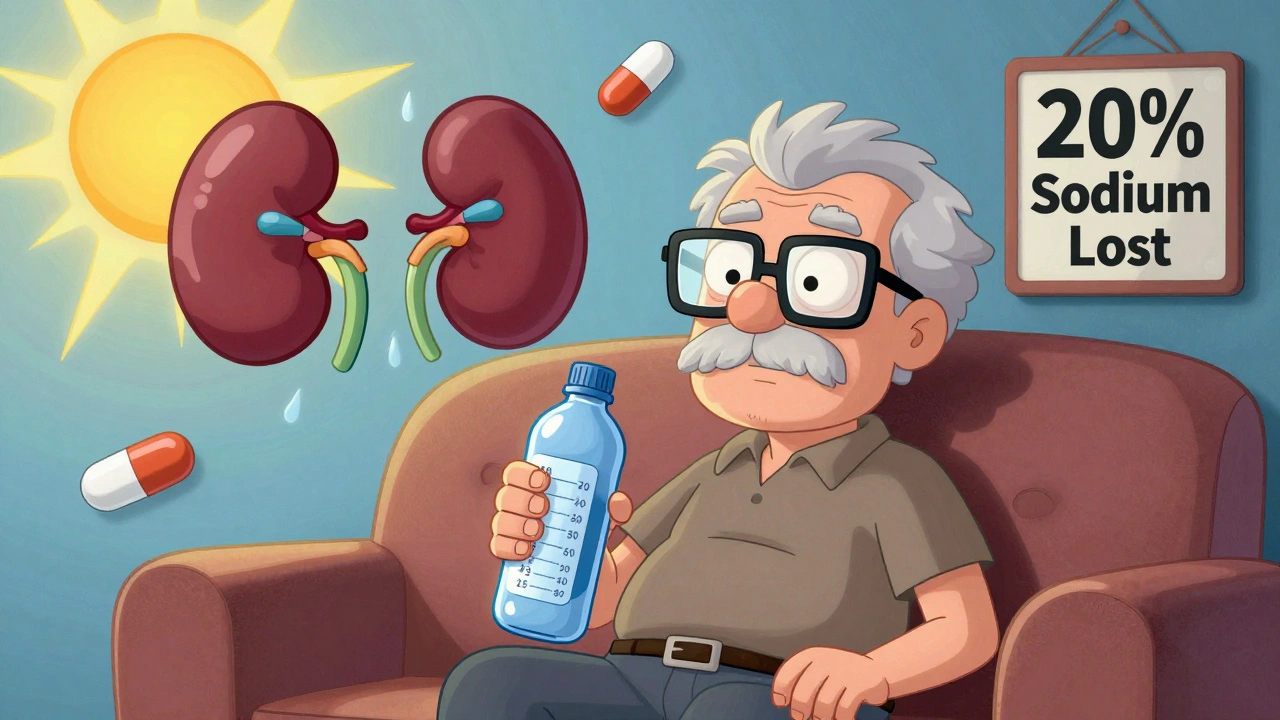
Every year, tens of thousands of older adults end up in the hospital because their kidneys suddenly stop working properly. Many of them are on diuretics - medications meant to help with high blood pressure or heart failure. But here’s the problem: diuretics can push the body into dehydration faster than you think, especially in people over 65. And when that happens, the kidneys pay the price.
Why Seniors Are at Higher Risk
Your kidneys change as you age. By the time you hit 70, your body can’t concentrate urine the way it used to. A young adult can make urine as thick as syrup - up to 1200 mOsm/kg. But in someone over 65, that number drops to 500-700 mOsm/kg. That means your kidneys are losing more water with every trip to the bathroom. Diuretics make this worse. They force your body to flush out even more sodium and fluid, and your kidneys can’t hold onto what’s left.On top of that, your sense of thirst fades. Studies show that people over 65 feel 40% less thirsty than younger adults. So if you’re not forcing yourself to drink, you won’t notice you’re drying out until it’s too late. You might feel dizzy, tired, or confused - but not necessarily thirsty. That’s why so many elderly patients don’t realize they’re dehydrated until they’re already in the ER.
And it’s not just the diuretics. Most seniors take multiple medications. About 75% of adults over 65 are on at least two drugs that affect fluid balance - blood pressure pills, heart meds, even painkillers like ibuprofen. Combine that with chronic conditions like diabetes (which affects nearly 27% of older adults), and you’ve got a perfect storm.
How Diuretics Hurt the Kidneys
Not all diuretics are the same. The most common ones are loop diuretics like furosemide and thiazides like hydrochlorothiazide. Loop diuretics are strong - they make you pee out 20-25% of the sodium your body filters. Thiazides are milder, but they can cause low sodium levels (hyponatremia) in 14% of elderly users. Both can trigger acute kidney injury (AKI), especially if fluid intake drops below 1 liter a day.AKI doesn’t always show up with obvious symptoms. It’s often detected by a rise in creatinine - just 0.3 mg/dL higher than normal can mean your kidneys are struggling. In one study, elderly patients on diuretics who drank less than 1.2 liters daily had nearly five times the risk of being hospitalized for kidney failure compared to those who drank 1.5-2.0 liters. That’s not a small difference. That’s life-changing.
Even worse, some seniors are told to drink less fluid because they have heart failure or advanced kidney disease. But cutting water too much can backfire. The CKD-REIN study found a U-shaped curve: too little fluid (<1L) and too much (>3L) both speed up kidney decline. The sweet spot? 1.5-2.0 liters a day for most seniors on diuretics.
What You Need to Watch For
Early signs of dehydration in older adults aren’t what you’d expect. Dry mouth? Only 32% of seniors recognize it as a warning. Dizziness? Yes. Confusion? Absolutely. A sudden drop in blood pressure when standing up? That’s a red flag. And if urine output drops below 400 mL in 24 hours - that’s oliguria, and it’s serious.One caregiver on AgingCare.com shared how her 82-year-old mother’s creatinine jumped from 1.2 to 2.8 in just two days after a beach trip. She drank water, but not enough - and the heat, combined with furosemide, pushed her kidneys into failure. That’s not rare. It’s common.
Another warning sign: weight loss. A drop of more than 2 kg (about 4.5 lbs) in a week is a signal to call the doctor. Daily weight checks are simple, free, and one of the most reliable ways to catch fluid loss early.
What Works: Real Strategies That Help
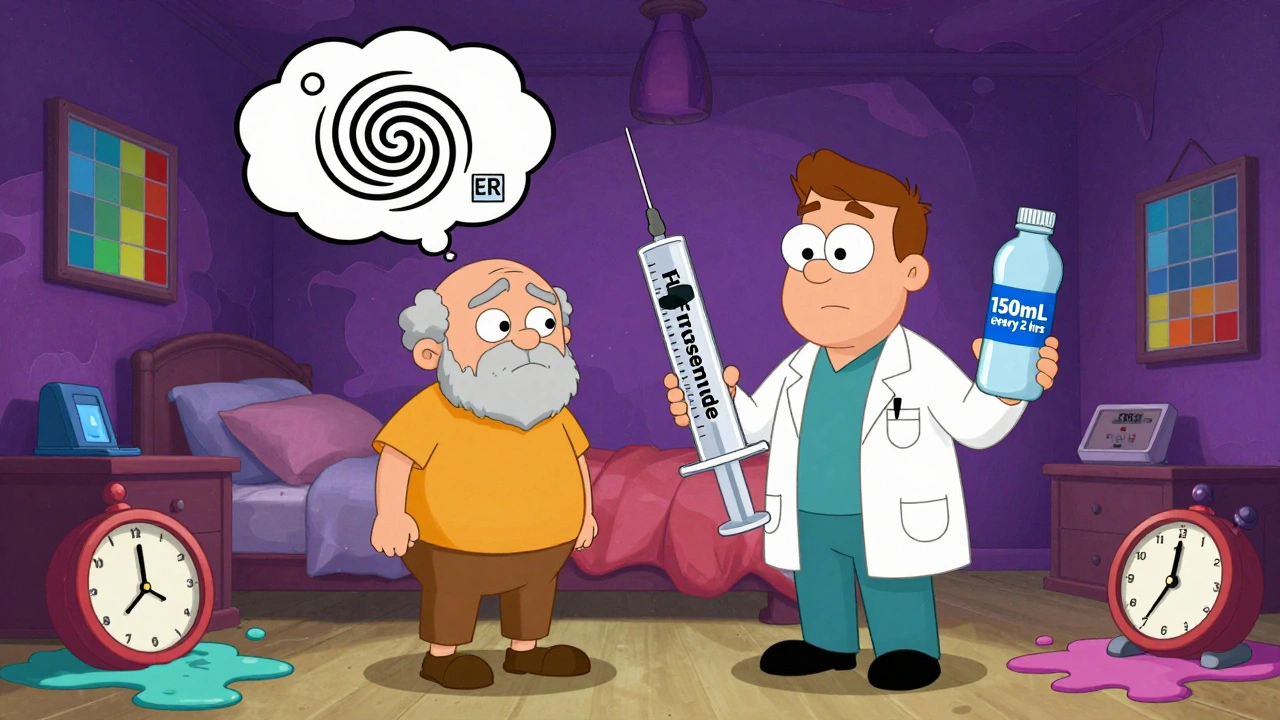
There’s no magic pill. But there are proven, practical steps that reduce hospital visits by nearly a third.- Drink on a schedule - not when you’re thirsty. Aim for 150 mL (about 5 oz) every two hours while awake. That’s roughly 6-8 small cups a day. Set phone alarms. Use a marked water bottle. One caregiver reported her dad’s falls dropped to zero after he started drinking every two hours.
- Choose hydrating foods - watermelon, cucumbers, oranges, broth, and yogurt count. They’re easier to eat than chugging water, especially for those with swallowing issues.
- Monitor urine color - pale yellow is ideal. Dark yellow or amber? You’re behind. Urine specific gravity under 1.020 is the clinical target. Many nursing homes now use dipstick tests to check this daily.
- Avoid NSAIDs - ibuprofen, naproxen, and other painkillers can increase AKI risk by 300% in seniors on diuretics. Use acetaminophen instead, if approved by the doctor.
- Don’t overcorrect - if someone is dehydrated, don’t give them a big glass of water all at once. Rapid rehydration can cause dangerous drops in sodium levels. Slow, steady intake is safer.
Technology is helping too. Smart water bottles like HidrateSpark PRO sync with apps and remind caregivers when their loved one hasn’t drunk enough. Wearable monitors like GYMGUYZ’s Hidrate (FDA-cleared in 2023) track hydration in real time and can even alert clinicians if levels drop. In early trials, these devices cut emergency visits by 33%.
When to Talk to the Doctor
If your loved one is on a diuretic, don’t wait for a crisis. Ask these questions at every check-up:- Is the diuretic dose still right? Many seniors need doses cut by 30-50% after 75, even if kidney numbers look okay.
- Are we checking electrolytes every 3-6 months? Sodium, potassium, and creatinine need regular monitoring.
- Could we switch to a different medication? SGLT2 inhibitors like dapagliflozin lower dehydration risk by 24% - but they cost $550 a month versus $8 for hydrochlorothiazide. Insurance may cover them if kidney function is declining.
- Is there a better way to manage heart failure or blood pressure without diuretics? ACE inhibitors like lisinopril carry lower dehydration risk - but they can still harm kidneys if the person gets dehydrated. It’s a trade-off.
Medicare now requires hydration status to be checked during the Annual Wellness Visit. If your doctor doesn’t bring it up, ask. You’re not being pushy - you’re protecting their kidneys.

The Bigger Picture
Diuretics are prescribed to over 42 million Medicare beneficiaries every year. Dehydration-related hospitalizations cost Medicare $1.87 billion annually. That’s not just money - it’s lost independence, longer recovery times, and higher risk of death.But here’s the good news: this isn’t inevitable. A 2022 study showed that structured hydration plans cut ER visits by 27% and saved $4,200 per patient each year. That’s not just a medical win - it’s a quality-of-life win.
Seniors don’t need to drink gallons. They don’t need complicated plans. They need consistency. Small sips, regular reminders, and a team that pays attention. The kidneys don’t ask for much. Just enough water to keep doing their job.
Can drinking more water hurt seniors on diuretics?
For most seniors on diuretics, drinking 1.5-2.0 liters daily is safe and protective. But if someone has advanced kidney disease (stage 4 or 5) or severe heart failure, too much fluid can cause swelling in the lungs or legs. Always follow your doctor’s guidance - hydration needs vary by individual health.
What’s the best way to track hydration in elderly parents?
Use a marked water bottle and record intake daily. Weigh them every morning before breakfast - a drop of more than 2 kg in a week means they’re losing fluid. Check urine color - pale yellow is good. Dark yellow means more fluids are needed. Urine specific gravity under 1.020 is the clinical goal.
Should I stop my parent’s diuretic if they’re dehydrated?
Never stop or change a diuretic without talking to the doctor. Stopping suddenly can cause fluid buildup in the lungs or worsen heart failure. Instead, focus on increasing fluid intake gradually and checking kidney and electrolyte levels. Your doctor may lower the dose instead.
Are there alternatives to diuretics for seniors with high blood pressure?
Yes. ACE inhibitors, calcium channel blockers, and SGLT2 inhibitors are options with lower dehydration risk. SGLT2 inhibitors like empagliflozin also protect the kidneys and reduce heart failure hospitalizations. But they’re expensive. Talk to your doctor about cost, insurance coverage, and whether the benefits outweigh the price for your situation.
Why do some seniors get confused when dehydrated?
Dehydration reduces blood flow to the brain and alters electrolyte balance, especially sodium. This can cause confusion, dizziness, or even hallucinations - symptoms often mistaken for dementia or infection. It’s one of the most common reasons elderly people are rushed to the ER. Restoring fluids often clears the confusion within hours.
Is it safe to use electrolyte drinks for elderly diuretic users?
It depends. Most sports drinks are high in sugar and sodium, which can be risky for diabetics or those with heart failure. Electrolyte-enhanced hydration gels or low-sodium oral rehydration solutions are better options. Always check with the doctor first, especially if the person has kidney disease or takes potassium-sparing diuretics like spironolactone.
How often should kidney function be tested in seniors on diuretics?
Every 3-6 months is standard. But if someone is sick, has recently changed meds, or has signs of dehydration, test sooner. Blood tests should include creatinine, sodium, potassium, and ideally cystatin C - which is more accurate than creatinine in older adults. Many clinics now use cystatin C for better kidney assessment in seniors.
What to Do Next
Start today. Grab a water bottle, mark it with times, and set reminders. Ask your doctor for a recent lab report - check the creatinine and sodium levels. If you’re unsure what they mean, call the clinic. Don’t wait for a fall, a hospital visit, or a confused loved one to act.Protecting kidneys in older adults isn’t about big changes. It’s about small, steady habits. A sip every two hours. A daily weight check. A conversation with the doctor. These things add up. And they save lives - not just from dehydration, but from the chain of events it triggers: kidney injury, hospital stays, loss of independence.
Your parent or loved one doesn’t need more pills. They need more water - and someone who remembers to give it to them.

Audrey Crothers
December 12, 2025 AT 00:18My mom’s on furosemide and I started using a marked water bottle with alarms-game changer. She went from dizzy and confused to her old self in a week. I didn’t even know dehydration could look like dementia 😭
Donna Anderson
December 12, 2025 AT 12:01urine color is such a simple hack but no one talks about it. my grandma used to say ‘if its brown, drink up’ and she was right. now i keep a color chart taped to the fridge 😊
Reshma Sinha
December 13, 2025 AT 19:41As a geriatric nurse in Delhi, I see this daily. Elderly patients on diuretics often refuse water because they fear incontinence. We use small sips every 90 mins + scheduled toileting. It cuts AKI by half. Also, avoid NSAIDs like the plague. Acetaminophen is safer. 💡
Adam Everitt
December 14, 2025 AT 16:21so… we’re just supposed to ignore the fact that fluid restriction is sometimes medically necessary? i mean… if you’ve got stage 4 CKD and ascites… drinking 2L is gonna kill you faster than dehydration. this feels like oversimplified wellness nonsense
Laura Weemering
December 16, 2025 AT 07:41It’s not just the diuretics… it’s the entire pharmaceutical-industrial complex exploiting aging bodies for profit. We’re medicating normal aging into pathology, then selling hydration solutions as the fix. The real issue? We’ve abandoned holistic elder care for pill-based convenience. 💔
Stacy Foster
December 17, 2025 AT 05:03Who approved this article? The FDA? Big Pharma? Because I know what’s really happening-hospitals profit from AKI admissions. They push diuretics to keep seniors ‘stable’ then bill for ER visits when they crash. This isn’t medicine-it’s a revenue stream. 🕵️♀️
Lawrence Armstrong
December 17, 2025 AT 14:39Smart water bottles? HidrateSpark? I’ve used one. It works. My dad’s creatinine dropped from 1.9 to 1.3 in 3 months. Also, cystatin C is way more accurate than creatinine in seniors-ask your doctor for it. 📊
sandeep sanigarapu
December 18, 2025 AT 11:44This is excellent. In India, many elders avoid fluids due to fear of frequent urination. We teach them: small sips, seated posture, and scheduled drinking. No need for expensive gadgets. Consistency beats technology. Simple, safe, effective.
Robert Webb
December 19, 2025 AT 20:51I want to add something important: many seniors are on multiple meds that interact with diuretics. For example, ACE inhibitors + diuretics can cause dangerous drops in blood pressure if hydration isn’t managed. And SGLT2 inhibitors? They’re amazing, but they increase UTI risk. It’s not just about water-it’s about the entire pharmacological ecosystem. Every change needs a full review. Don’t just adjust one thing. Look at the whole picture.
Rob Purvis
December 21, 2025 AT 04:32Can we talk about the fact that most doctors never check urine specific gravity? They look at creatinine, which is unreliable in elderly patients, and then say ‘your kidneys are fine’-but if your urine is 1.035, you’re dehydrated. I’ve seen this happen three times. Request a dipstick test. It’s free. It’s fast. It’s life-saving.
Levi Cooper
December 21, 2025 AT 16:14Why are we letting people drink water like it’s a magic cure? In my family, we’ve seen too many ‘wellness’ trends ruin health. If your kidney function is bad, you don’t just chug water-you follow your doctor’s orders. This article sounds like it was written by a yoga instructor with a blog. Not a clinician.
Ashley Skipp
December 22, 2025 AT 03:03My uncle died from hyponatremia after drinking too much water on his diuretics. The doctor told him to drink more. He did. He died. Don’t just tell people to drink more. You need to monitor sodium. You need labs. You need a plan. This is not a self-help article. This is medical advice. And it’s dangerous if taken out of context.
nikki yamashita
December 24, 2025 AT 00:44My grandma’s hydration routine changed everything-marked bottle, morning weigh-in, no NSAIDs. She hasn’t been to the ER in 2 years. You don’t need to be perfect, just consistent. A sip every 2 hours? Easy. Worth it. 💕
wendy b
December 25, 2025 AT 00:03While the hydration strategy is reasonable, the article fails to acknowledge the structural inadequacies of Medicare’s Annual Wellness Visit. It’s a 15-minute checklist, not a clinical evaluation. To expect meaningful hydration management within this framework is naive. The system is broken. The advice is sound. The context? Missing.