 Jan, 19 2026
When you hear about GLP-1 agonists, you’re probably thinking about the dramatic weight loss stories on social media. People are dropping 50, 70, even 100 pounds - not with extreme diets or grueling workouts, but with a weekly injection. But behind the headlines are real science, real side effects, and real questions about cost, access, and long-term use. This isn’t magic. It’s medicine. And understanding how it works - and what it really does to your body - is the only way to decide if it’s right for you.
How GLP-1 Agonists Actually Work
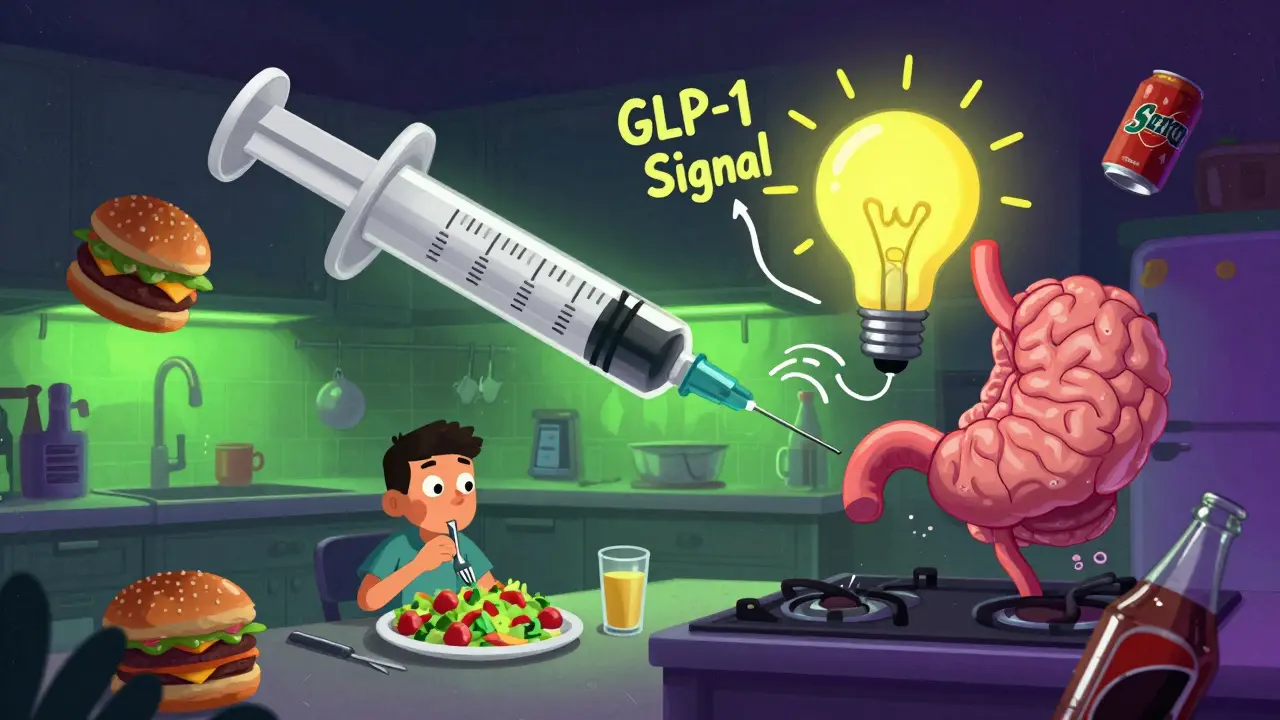
GLP-1 agonists mimic a hormone your body already makes. When you eat, your gut releases glucagon-like peptide-1, or GLP-1. That hormone tells your pancreas to release insulin, slows down how fast your stomach empties, and sends a signal to your brain: you’re full. GLP-1 agonists like semaglutide (Wegovy, Ozempic) and tirzepatide (Zepbound, Mounjaro) are lab-made versions that stick around longer than the natural hormone. They don’t just trick your body - they amplify its own signals.What does that look like in real life? You eat a meal, and instead of feeling hungry again two hours later, you feel satisfied for much longer. Your stomach empties slower, so food stays in you longer. Your brain gets a stronger fullness signal, which cuts cravings and reduces how much you eat - without making you feel deprived. It’s not an appetite suppressant like old-school diet pills. It’s more like your body finally getting the message it’s been ignoring for years.
Studies show these drugs don’t just help you lose weight - they improve your metabolism. Blood sugar drops. Blood pressure improves. Triglycerides and liver fat decrease. In the SUSTAIN-6 trial, people on semaglutide had a 26% lower risk of heart attack, stroke, or heart-related death. That’s not a side effect. That’s a core benefit.
How Much Weight Can You Really Lose?
Numbers matter. And the data on GLP-1 agonists is some of the strongest in obesity medicine.In the STEP 4 trial, people using semaglutide (Wegovy) lost an average of 15.8% of their body weight over 68 weeks. That’s not 10 pounds. That’s 30, 40, or even 60 pounds for someone who weighs 200. In the SURMOUNT-2 trial, tirzepatide (Zepbound) hit 20.9% - nearly a fifth of total body weight. For comparison, the most popular older weight loss pill, orlistat (Xenical), typically delivers 5-10% weight loss. Phentermine-topiramate (Qsymia) gets you to 7-10%. GLP-1 agonists aren’t just better - they’re in a different league.
And it’s not just the scale. In clinical trials, 50.5% of people on semaglutide lost 15% or more of their body weight. Only 4.9% of people on placebo did. That’s the difference between losing enough weight to improve sleep apnea, joint pain, and insulin resistance - and barely moving the needle.
But here’s the catch: these results happen with medical supervision, gradual dosing, and lifestyle support. People who just take the shot and keep eating the same way don’t get the same results. The drug helps you eat less. It doesn’t replace the need to eat better.
The Side Effects Nobody Talks About
Let’s be honest. The biggest downside isn’t the cost. It’s how you feel in the first few months.Between 70% and 80% of people on GLP-1 agonists get nausea. For many, it’s mild. For others, it’s brutal. In the first 4 weeks, up to 40% report moderate to severe nausea. Vomiting hits 40-50%. Diarrhea and abdominal pain are common too. One Reddit user wrote: “Weeks 3 to 8 were hell. I almost quit. Then it got better.” That’s not unusual.
Why does this happen? The drug slows your stomach. Food sits there longer. If you eat too fast, too much, or too fatty - boom, nausea. The fix? Eat smaller meals. Avoid fried food. Drink water. Don’t skip meals. Most people find symptoms drop sharply after 8 to 12 weeks.
There’s also the risk of gallbladder problems. Studies show a small increase in gallstones with rapid weight loss. Pancreatitis is rare but possible. And while rodent studies showed thyroid tumors with high doses, no human cases have been confirmed. The FDA still lists it as a black box warning - just in case.
These drugs aren’t for everyone. If you or a family member has medullary thyroid cancer or MEN2 syndrome, you can’t use them. If you’re pregnant or planning to be, you need to stop. The data on pregnancy is too limited. And if you have a history of severe GI disorders like gastroparesis, your doctor will likely say no.
Cost and Access: The Real Barrier
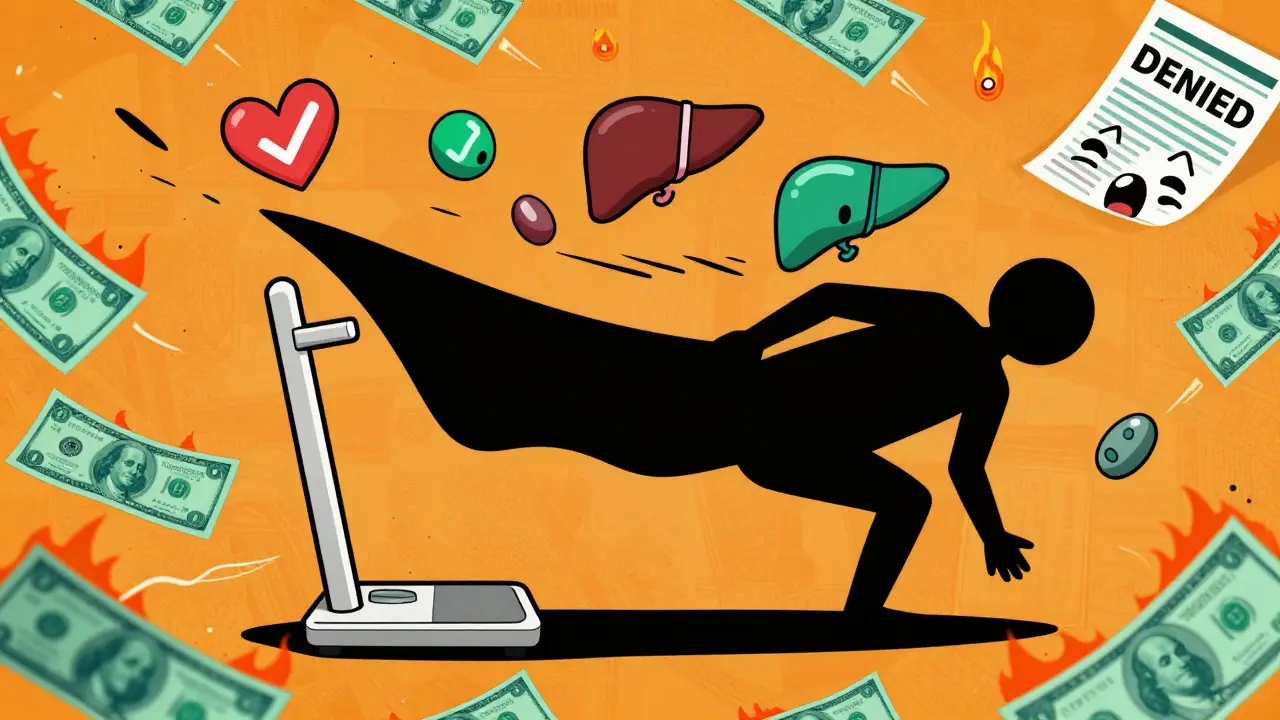
Wegovy costs about $1,349 a month without insurance. Ozempic, the same drug for diabetes, is $936. Tirzepatide (Zepbound) is priced similarly. That’s more than a mortgage payment for many. And insurance? Only 37% of commercial plans in the U.S. cover Wegovy for weight loss as of 2023. For diabetes? 89% do.That’s not a glitch. It’s policy. Insurance companies see obesity as a lifestyle issue, not a medical one - even though the science says otherwise. Many patients report being denied coverage despite having a BMI over 30, high blood pressure, or type 2 diabetes. Some try patient assistance programs. Others pay out-of-pocket for a few months, then quit when the bills pile up.
And it’s not just the drug. You need regular doctor visits. Blood tests. Monitoring. That adds up. A 2023 IQVIA report showed 2.1 million Americans were using GLP-1 agonists for weight loss - but demand far outstrips supply. Novo Nordisk, the maker of Wegovy, had 18-month backorders in late 2023. You can’t get what’s not in stock.
How It Compares to Other Weight Loss Drugs
| Medication | Typical Weight Loss | Dosing | Key Side Effects | Cost (Monthly, U.S.) |
|---|---|---|---|---|
| Semaglutide (Wegovy) | 15.8% | Weekly injection | Nausea, vomiting, diarrhea | $1,349 |
| Tirzepatide (Zepbound) | 20.9% | Weekly injection | Nausea, diarrhea, constipation | $1,300+ |
| Liraglutide (Saxenda) | 6.4% | Daily injection | Nausea, fatigue | $1,200 |
| Phentermine-Topiramate (Qsymia) | 7-10% | Daily pill | Cognitive fog, tingling, birth defects | $150 |
| Orlistat (Xenical) | 5-10% | Daily pill | Oily stools, gas, urgency | $100 |
GLP-1 agonists are more effective than anything else on the market. But they’re also more expensive and require injections. Pills like Qsymia or Xenical are cheaper and easier to take - but less effective and carry their own risks. Qsymia can cause memory issues and is dangerous in pregnancy. Xenical makes your butt leak oil. GLP-1 agonists? They make you nauseous - but they also lower your risk of heart disease.

What Happens When You Stop?
This is the part most people skip. You lose weight. You feel amazing. Then you stop.Studies show you regain 50% to 70% of the weight within a year of stopping. The STEP 4 trial tracked people after they quit Wegovy. Their weight crept back up - fast. That’s not weakness. It’s biology. Obesity is a chronic condition. Like high blood pressure or diabetes, it often needs ongoing treatment.
Dr. John Morton from Yale put it bluntly: “These drugs don’t replace lifestyle change. They support it. But if you stop taking them, your body goes back to its old habits.” That’s why experts say: if you start, plan to stay on long-term. That means budgeting, finding insurance, and building habits that last.
How to Start - and Succeed
If you’re considering a GLP-1 agonist, here’s what actually works:- See a doctor who specializes in obesity medicine. Not just your primary care provider. Look for someone trained in metabolic health.
- Get screened for thyroid cancer history or MEN2 syndrome. This is non-negotiable.
- Start low. Wegovy begins at 0.25 mg weekly. It takes 16 to 20 weeks to reach 2.4 mg. Rushing it makes nausea worse.
- Change how you eat. Eat slowly. Choose lean protein, vegetables, and whole grains. Avoid greasy, sugary foods - they’ll make side effects worse.
- Stay hydrated. Drink water before meals. It helps with fullness and reduces nausea.
- Use anti-nausea meds if needed. Ondansetron (Zofran) can help during the first few weeks.
- Track your progress. Weigh yourself weekly. Note energy levels, sleep, hunger. These matter as much as the scale.
- Plan for the long haul. This isn’t a 6-month fix. It’s a new way of managing your health.
And if you can’t afford it? Ask about patient assistance programs. Novo Nordisk and Eli Lilly offer them. Some clinics offer sliding-scale fees. Or wait - oral versions of semaglutide are in phase 3 trials and could be available by 2025. They won’t be cheap, but they’ll be easier to take.
The Future of GLP-1 Agonists
The market for these drugs is exploding. By 2030, it could hit $100 billion a year. New players are coming. Pfizer has an oral GLP-1 drug in trials. More combinations are being tested. The American Diabetes Association now recommends GLP-1 agonists as first-line treatment for type 2 diabetes - even if weight isn’t the main issue.Real-world data from Sweden shows people who stayed on these drugs for three years kept off 12-15% of their weight. That’s not just losing weight. That’s changing your health trajectory.
But access remains broken. Supply chains are strained. Insurance policies are outdated. And while the science is clear, the system isn’t ready.
GLP-1 agonists aren’t the end-all. They’re not a cure. But for millions of people with obesity, they’re the most powerful tool we’ve ever had. And if you’re willing to use them right - slowly, safely, and long-term - they can change your life.
Do GLP-1 agonists work for everyone?
No. They work best for people with obesity (BMI ≥30) or overweight with weight-related health issues like high blood pressure or prediabetes. They’re not effective for everyone - some people don’t respond well, and others can’t tolerate the side effects. Genetic factors, metabolism, and lifestyle all play a role.
Can I take GLP-1 agonists if I have type 2 diabetes?
Yes - and in fact, many people start with Ozempic or Mounjaro for diabetes and end up losing significant weight as a bonus. These drugs are now recommended as first-line treatment for type 2 diabetes, especially if you also have obesity or heart disease. They lower blood sugar and reduce cardiovascular risk at the same time.
Are there oral versions of GLP-1 agonists?
Rybelsus is an oral version of semaglutide approved for type 2 diabetes, but not yet for weight loss. Oral GLP-1 drugs for obesity are in late-stage trials and could be available by 2025. They’re not as potent as injections yet, but they’ll be easier to take - and may improve access.
How long do I need to stay on the medication?
Most experts recommend staying on long-term. Obesity is a chronic condition. Stopping usually leads to 50-70% weight regain within a year. If you’re seeing results and tolerating the side effects, continuing is the best way to keep the weight off - and protect your heart and metabolism.
Is it safe to use GLP-1 agonists for years?
Current data shows they’re safe for at least 3 years, with no new major safety signals emerging. Ongoing trials tracking patients for 5 to 7 years will give us more long-term data. So far, the benefits - including reduced heart attacks and improved blood sugar - outweigh the risks for most people with obesity.

Jarrod Flesch
January 21, 2026 AT 03:51Been on Ozempic for 8 months now. Nausea was brutal at first-like, ‘why did I do this’ brutal. But after week 10? Gone. Lost 42 lbs, my A1c dropped from 7.1 to 5.6, and I can actually run without my knees screaming. It’s not magic, but it’s the closest thing I’ve found that actually works with my body, not against it.
Uju Megafu
January 21, 2026 AT 20:27Ugh, another one of these ‘miracle drug’ posts. People act like GLP-1s are some kind of divine intervention, but it’s just another way for Big Pharma to profit off people’s desperation. You think you’re ‘saving your life’-but you’re just trading one addiction for another. And don’t even get me started on the insurance denials. This isn’t healthcare, it’s a luxury good now.
Ben McKibbin
January 22, 2026 AT 12:34Uju, you’re missing the point. This isn’t about ‘addiction’-it’s about chronic disease management. We don’t call insulin an ‘addiction.’ We don’t call blood pressure meds a ‘luxury.’ Obesity is a metabolic disorder, not a moral failing. The fact that insurance treats it like a vanity issue is the real tragedy. These drugs don’t just change your waistline-they lower your risk of stroke, heart failure, and early death. That’s not marketing. That’s science.
Rod Wheatley
January 23, 2026 AT 05:26For real-start low, go slow! I went from 0.25mg to 1.7mg over 16 weeks. Nausea? Barely. If you jump to 2.4mg like some Instagram influencer, you’re gonna regret it. Also-protein first, carbs last. It makes a HUGELY difference. And drink water like it’s your job. I swear, half the side effects are just dehydration + rushed eating.
Coral Bosley
January 24, 2026 AT 09:27I lost 68 lbs on Wegovy. Then I got cut off from insurance. Now I’m back to 180 lbs. I cried in the grocery store yesterday because I couldn’t afford the shot. They call this ‘medicine’? It’s a cruel joke. I’m not lazy. I’m not undisciplined. I’m just poor. And this system doesn’t care.
Alex Carletti Gouvea
January 26, 2026 AT 04:17Why are we letting Big Pharma dictate our health? We need to ban these drugs. They’re making people dependent on foreign-made injections while American farmers grow all the food. This is a cultural collapse. We used to eat real food and walk. Now we’re all just waiting for our next shot like zombies. Wake up, people.
Ben McKibbin
January 27, 2026 AT 19:03Alex, you’re conflating corporate greed with medical progress. The problem isn’t the drug-it’s the insurance system, the supply chain, and the stigma. You don’t fix a broken system by banning tools that save lives. You fix it by demanding policy change. These drugs are saving people from amputations, dialysis, and heart attacks. If you want to fight pharma, fight the insurers. Not the patients.
Kelly McRainey Moore
January 28, 2026 AT 06:40Just wanted to say-thank you for writing this. I’ve been terrified to talk about this because people think I’m ‘giving up’ on ‘willpower.’ But this? This is the first time I’ve felt seen. I’m on week 12, still nauseous sometimes, but I’m sleeping through the night for the first time in 10 years. That’s worth it.
Kevin Narvaes
January 29, 2026 AT 16:46so like… i got on this stuff and i lost 50 lbs but now i cant eat pizza anymore and my dog looks at me like i betrayed him. also my mom says im ‘not the same person’ anymore. is that normal? or am i just… becoming a robot?
Yuri Hyuga
January 31, 2026 AT 12:50There’s a quiet revolution happening here-not in labs, but in kitchens, in parking lots outside pharmacies, in the quiet tears of people who finally feel like their bodies aren’t their enemy. GLP-1 agonists aren’t a cure. But they’re the first tool in decades that lets us treat obesity like the chronic disease it is-without shame, without judgment, without pretending willpower is all that matters. The real miracle? We’re finally listening to the science instead of the stigma. 🌱