 Feb, 2 2026
Statins & Grapefruit Interaction Checker
Why Grapefruit Can Turn Your Statin Into a Hidden Danger
If you take a statin to lower your cholesterol, you might think a glass of grapefruit juice is a healthy start to your day. But for some statins, that juice isn’t just a drink-it’s a silent risk factor that can push your medication into dangerous territory. This isn’t a myth or a warning from an overcautious doctor. It’s backed by hard science, FDA warnings, and real cases of hospitalization. The problem isn’t grapefruit itself. It’s what grapefruit does to your body’s ability to process certain statins. And the consequences can be serious.
How Grapefruit Changes How Your Body Handles Statins
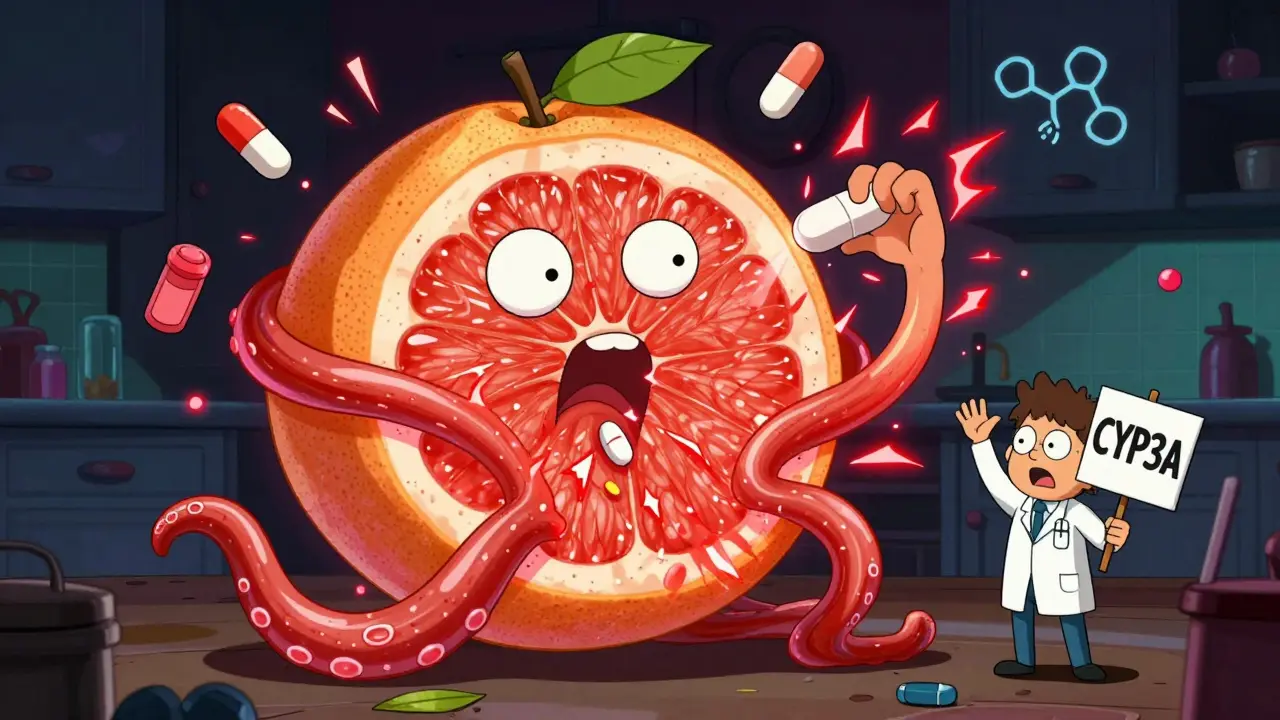
Statins like simvastatin, lovastatin, and atorvastatin are broken down in your gut by an enzyme called CYP3A4. This enzyme acts like a gatekeeper-it limits how much of the drug gets into your bloodstream. Grapefruit contains chemicals called furanocoumarins. These don’t just slow down the enzyme. They shut it down permanently, at least for a while. Once CYP3A4 is blocked, your body can’t break down the statin the way it should. That means more of the drug enters your blood than intended. The result? Your statin dose suddenly becomes much higher than what your doctor prescribed.
One landmark study from 1998 showed that drinking just 200 mL of grapefruit juice with simvastatin increased the drug’s concentration in the blood by up to 16 times. That’s not a small bump. That’s the equivalent of taking a 20 mg dose and getting the effect of a 320 mg dose. And it doesn’t matter if you drink the juice hours before or after your pill. The enzyme stays blocked for up to 72 hours. So even if you have your grapefruit in the morning and your statin at night, you’re still at risk.
Which Statins Are Safe? Which Are Not?
Not all statins react the same way to grapefruit. The risk varies depending on how much the drug relies on CYP3A4 for metabolism.
- High risk: Simvastatin (Zocor), lovastatin (Mevacor), and atorvastatin (Lipitor) are the biggest concerns. These are among the most commonly prescribed statins, which makes this interaction especially widespread.
- Low or no risk: Fluvastatin (Lescol), pitavastatin (Livalo), pravastatin (Pravachol), and rosuvastatin (Crestor) are metabolized through other pathways. They don’t rely on CYP3A4, so grapefruit won’t significantly affect them.
The FDA requires warning labels on simvastatin, lovastatin, and atorvastatin packaging that say: “The coadministration of simvastatin and grapefruit juice is not recommended.” That’s not a suggestion. It’s a medical red flag. If you’re on one of these, grapefruit-even in small amounts-should be off-limits.

The Real Danger: Muscle Damage and Kidney Failure
The most common side effect of too much statin is muscle pain. It’s often mild and dismissed as just being sore from exercise. But when grapefruit pushes statin levels too high, that pain can turn into something far worse: rhabdomyolysis.
Rhabdomyolysis is a rare but life-threatening condition where muscle tissue breaks down and spills its contents-like myoglobin-into your bloodstream. Your kidneys try to filter it out, but the overload can cause acute kidney failure. Symptoms include severe muscle pain, weakness, and dark, tea-colored urine. In one documented case, a 40-year-old woman developed rhabdomyolysis after eating grapefruit every day for 10 days while taking simvastatin. She ended up in the hospital.
While rhabdomyolysis affects fewer than 1 in 10,000 statin users annually, that number rises sharply with grapefruit consumption. The risk is even higher if you’re taking a high dose of simvastatin (like 80 mg) or drinking more than one grapefruit a day. And here’s the scary part: you might not feel any warning signs until it’s too late.
What Should You Do If You Love Grapefruit?
You don’t have to give up citrus entirely. The problem is specific to grapefruit, Seville oranges (used in marmalade), and pomelos. Regular oranges, lemons, limes, and tangerines are completely safe. If you’re on a high-risk statin, you have two clear options:
- Avoid grapefruit completely. This is the safest choice if you’re on simvastatin or lovastatin. Even a small amount can have a lasting effect.
- Switch to a safer statin. If you really can’t give up grapefruit, talk to your doctor about switching to pravastatin or rosuvastatin. These work just as well for lowering cholesterol, and grapefruit won’t interfere.
Never stop taking your statin on your own. Stopping increases your risk of heart attack or stroke more than grapefruit ever could. The goal isn’t to eliminate your medication-it’s to eliminate the interaction.
Why Most People Don’t Know About This Risk
Despite the FDA warnings and decades of research, this interaction is still under-recognized. A 2021 survey found that only 42% of primary care doctors routinely ask patients if they drink grapefruit juice when prescribing high-risk statins. Only 28% of patients said they were ever told about the danger. Pharmacists are often the first line of defense-studies show pharmacist-led interventions cut dangerous grapefruit-statin combinations by 78% in Medicare patients. But not everyone sees a pharmacist when they pick up their prescription.
Part of the problem is that grapefruit is seen as a healthy food. People assume if it’s good for you, it’s safe with your meds. But this isn’t about nutrition. It’s about chemistry. Grapefruit isn’t the villain-it’s the accidental trigger. The real issue is the lack of clear communication between doctors, patients, and pharmacists.
What’s Next? A Grapefruit Without the Danger?
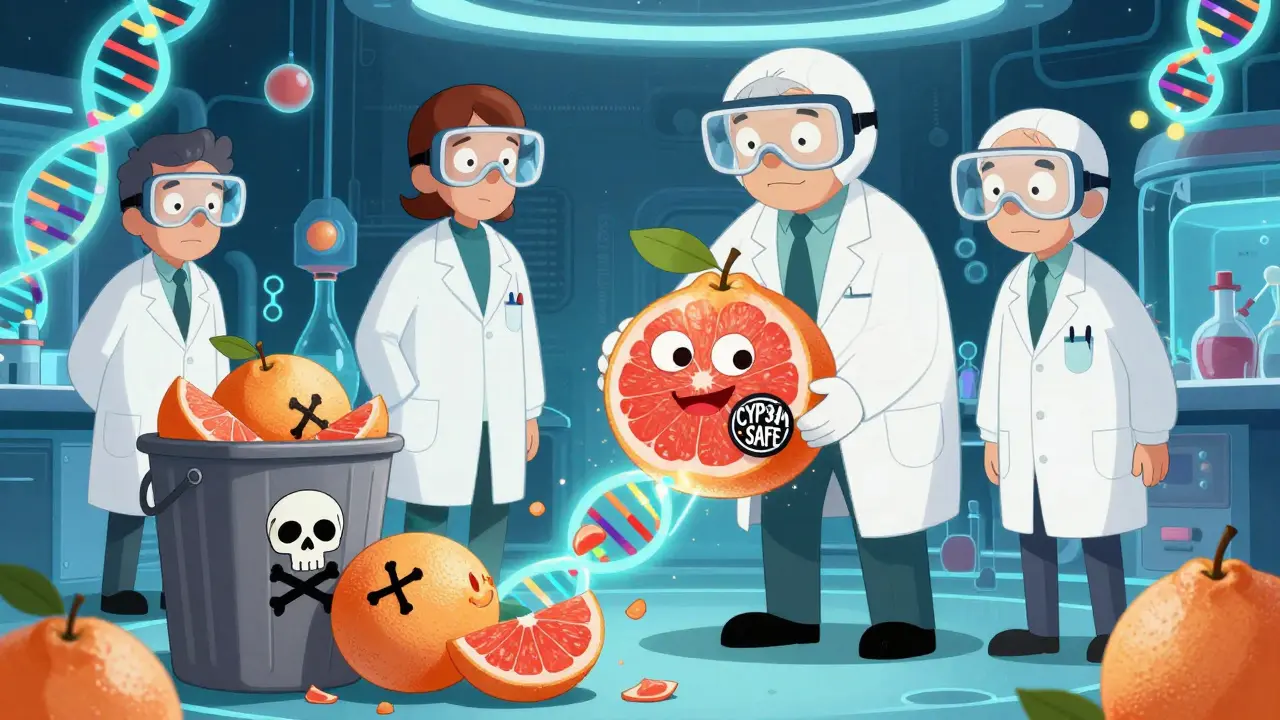
Scientists aren’t just warning people-they’re trying to fix the problem at the source. Researchers at the University of Florida are breeding new varieties of grapefruit with much lower levels of furanocoumarins. Early results show these modified fruits keep their taste, color, and vitamin C content, but don’t interfere with CYP3A4. If this works, we could one day have grapefruit that’s safe with statins. It’s still years away, but it’s proof that science is working on a solution.
Bottom Line: Know Your Statin, Know Your Juice
If you take a statin, here’s what you need to do right now:
- Check the name of your statin. Is it simvastatin, lovastatin, or atorvastatin? If yes, avoid grapefruit completely.
- If you’re on pravastatin, rosuvastatin, fluvastatin, or pitavastatin, you’re fine. Enjoy your grapefruit.
- Don’t assume you’re safe just because you haven’t had side effects. The interaction builds up silently.
- Ask your pharmacist or doctor to confirm your statin’s risk level. Don’t rely on memory or old advice.
- Remember: other citrus fruits are safe. Only grapefruit, Seville oranges, and pomelos are risky.
This isn’t about fear. It’s about control. You’re taking your statin to protect your heart. Don’t let grapefruit undo that. A simple change-knowing which statin you’re on and whether grapefruit is safe with it-can keep you healthy, safe, and in control of your health.
Can I drink grapefruit juice if I take rosuvastatin?
Yes. Rosuvastatin (Crestor) is not broken down by the CYP3A4 enzyme, so grapefruit juice won’t interfere with it. You can safely drink grapefruit juice while taking rosuvastatin. Other statins like pravastatin, fluvastatin, and pitavastatin are also safe with grapefruit.
How long does grapefruit affect statins?
The effect lasts up to 72 hours. Grapefruit doesn’t just slow down the enzyme-it permanently disables it for about three days. Even if you drink grapefruit juice in the morning and take your statin at night, you’re still at risk. That’s why spacing them out doesn’t help.
Is a small amount of grapefruit safe?
No, if you’re on simvastatin or lovastatin. Even one small glass (200 mL) can trigger a dangerous rise in statin levels. The interaction isn’t dose-dependent in a linear way-it’s all-or-nothing. There’s no safe threshold. Avoid it completely.
What if I accidentally ate grapefruit while on simvastatin?
One small accidental exposure is unlikely to cause immediate harm, but don’t make it a habit. Monitor for muscle pain, weakness, or dark urine. If you experience any of these, contact your doctor right away. Going forward, avoid grapefruit completely and talk to your doctor about switching to a safer statin.
Can I switch from simvastatin to a safer statin?
Yes. Many people switch from simvastatin to rosuvastatin or pravastatin without losing cholesterol-lowering benefits. These alternatives are just as effective and don’t interact with grapefruit. Talk to your doctor about the switch-it’s a simple change that removes a major risk.

Gary Mitts
February 4, 2026 AT 01:19Chinmoy Kumar
February 4, 2026 AT 04:08Solomon Ahonsi
February 6, 2026 AT 03:07Akhona Myeki
February 6, 2026 AT 11:56Matt W
February 8, 2026 AT 09:38Sandeep Kumar
February 8, 2026 AT 11:39George Firican
February 8, 2026 AT 19:53clarissa sulio
February 8, 2026 AT 21:48Anthony Massirman
February 10, 2026 AT 00:52Brett MacDonald
February 10, 2026 AT 20:27