 Jan, 5 2026
Altitude Sedative Risk Calculator
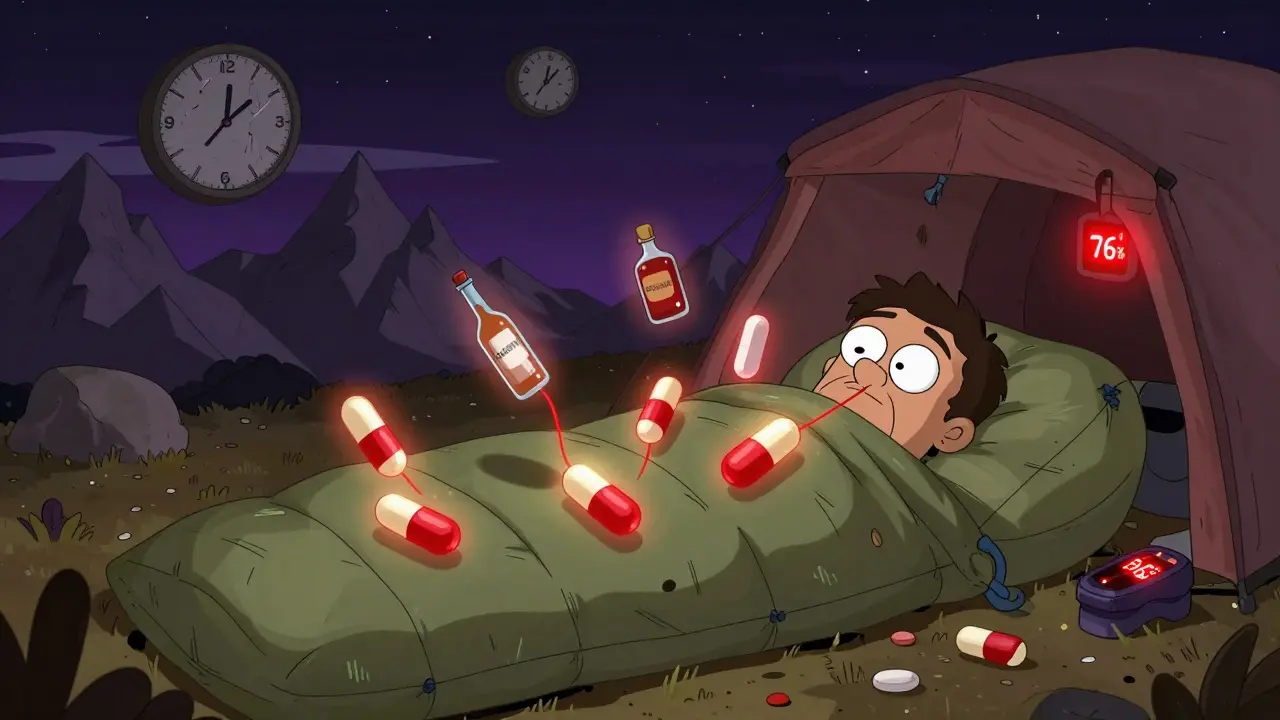
When you’re heading up into the mountains-whether for trekking, skiing, or just to see the view-your body is already under stress. Less oxygen. Thinner air. Your breathing changes. Your sleep gets weird. And if you’re thinking of reaching for a sleeping pill, a glass of wine, or even a mild anxiety med to help you relax, you’re putting yourself at serious risk. This isn’t just a cautionary tale. It’s a medically proven danger that’s killed people before.
Why Altitude Alone Is Enough to Disrupt Your Breathing
At 2,700 meters (about 9,000 feet), nearly 75% of people start experiencing something called periodic breathing. That’s when you breathe fast for a while, then pause for 10-20 seconds, then breathe fast again. It’s not normal sleep-it’s your body struggling to adjust. Your brain senses low oxygen and tries to compensate by increasing your breathing rate. But that pushes too much carbon dioxide out of your blood, making it too alkaline. That, in turn, tricks your brain into thinking you don’t need to breathe as much. So you stop. Then you gasp. Then it repeats.
This cycle is harmless for most healthy people. But when you add a sedative, it doesn’t just make it worse-it can turn it deadly.
Sedatives Silence Your Body’s Lifesaving Response
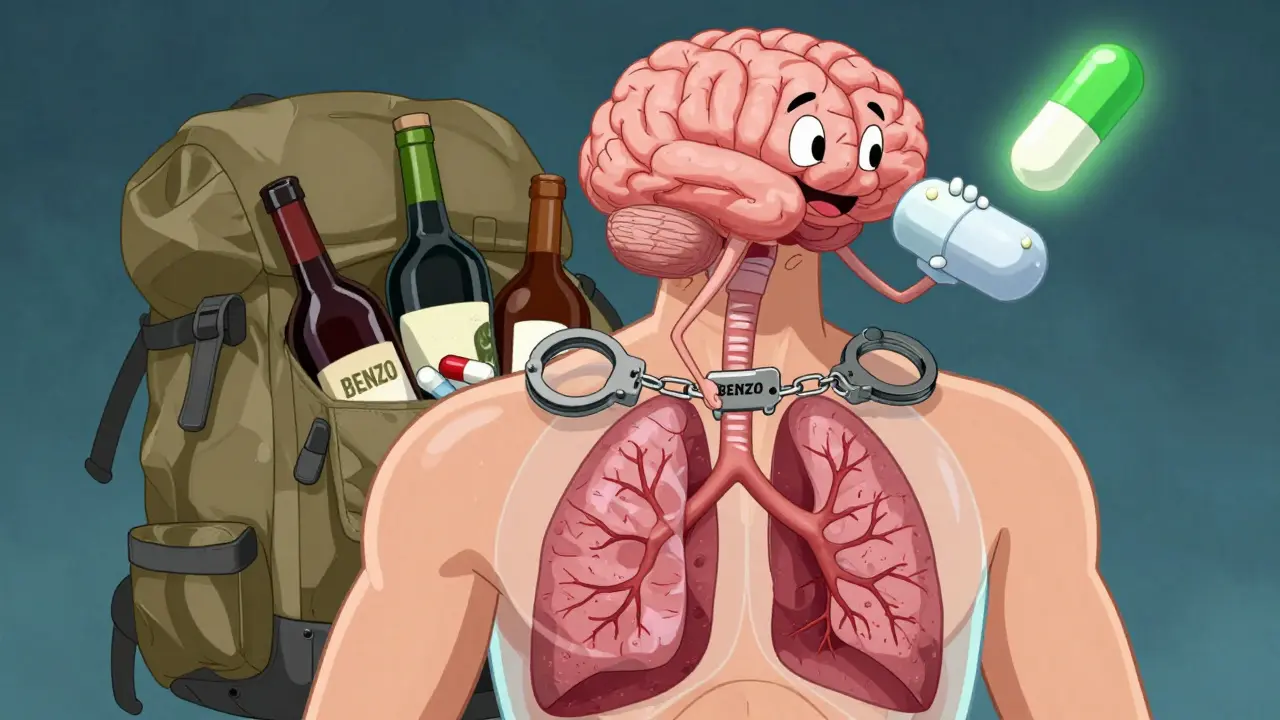
Your body’s natural defense against low oxygen is called the hypoxic ventilatory response. It’s what tells you to breathe harder when oxygen drops. Sedatives-especially benzodiazepines, alcohol, and opiates-suppress this response. They don’t just make you sleepy. They slow down the part of your brain that controls breathing.
Here’s what happens when you combine altitude and sedatives:
- Alcohol: Even one drink reduces your breathing response by 25%. At 3,500 meters, it can drop your nighttime oxygen levels by 5-10 percentage points.
- Benzodiazepines (like diazepam or lorazepam): Studies show they reduce ventilation by 15-30% at altitude. One hiker in Nepal saw his oxygen saturation plunge from 88% to 76% after taking 0.5 mg of lorazepam at 4,200 meters.
- Opiates: Even prescribed painkillers like codeine or oxycodone can cause oxygen levels to fall below 80% at 4,500 meters. That’s dangerously low.
The CDC, Cleveland Clinic, Healthdirect Australia, and the Wilderness Medical Society all say the same thing: avoid sedatives at high altitude. Not "be careful." Not "use sparingly." Avoid them.
What About Melatonin or Zolpidem? Are They Safe?
People ask this all the time. "I can’t sleep. What can I take?" The answer isn’t simple.
Melatonin (0.5-5 mg) is often suggested as a natural alternative. Small studies show it doesn’t suppress breathing like other sedatives. Some trekkers report better sleep with no side effects. But the CDC says it hasn’t been properly studied for altitude use. It’s not a magic fix, but it’s the safest option we have right now.
Zolpidem (5 mg), the non-benzodiazepine sleep aid, has been studied more. One 2017 trial found it only lowered oxygen saturation by 2.3% at 3,500 meters-far less than diazepam. The CDC says it’s "generally safe" if you wait at least 8 hours before doing anything physical. But here’s the catch: one Reddit user taking just 5 mg at 4,000 meters saw his oxygen drop to 79%. That’s still dangerous.
So even "safer" options aren’t risk-free. Your body’s reaction is personal. You can’t predict how you’ll respond.
What’s the Real Risk? Altitude Sickness Gets Worse
Acute mountain sickness (AMS) affects 15-40% of people who sleep above 8,000 feet. Symptoms: headache, nausea, dizziness, fatigue. It’s bad enough on its own. But sedatives make it worse.
A 2021 survey of 1,247 trekkers found that 68% of those who drank alcohol during their first 48 hours at altitude reported worse AMS symptoms. One traveler in Peru went from a mild headache to vomiting and confusion after two beers at 3,500 meters. That’s not coincidence. Sedatives make your body less able to adapt. They delay acclimatization. They deepen hypoxia. And they mask symptoms-until it’s too late.
What Should You Do Instead?
You don’t need pills to sleep at altitude. You need time.
Slow your ascent. Don’t go from sea level to 3,500 meters in one day. Give yourself 24-48 hours to adjust before going higher.
Hydrate. Dehydration makes altitude sickness worse. Drink water like it’s your job.
Use acetazolamide. This is the only medication the CDC recommends for altitude sleep issues. It doesn’t sedate you. It helps your body breathe better by correcting blood pH. Take 125 mg twice a day, starting the day before you ascend.
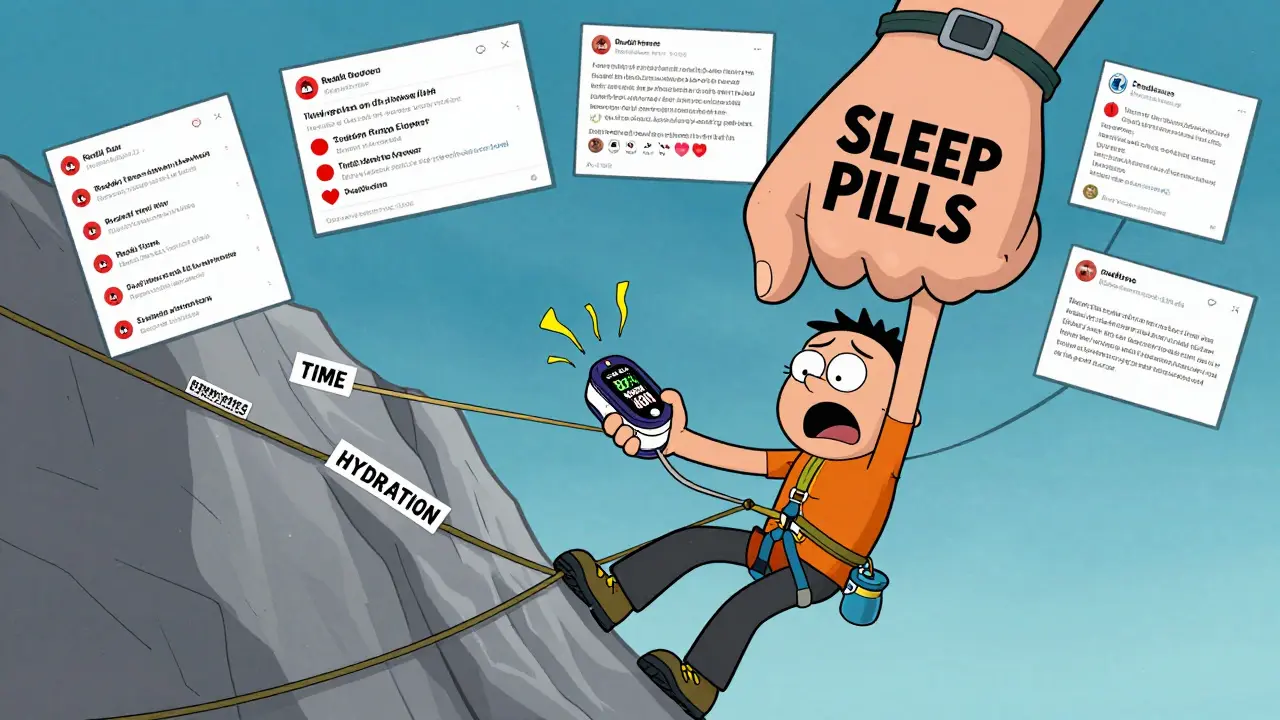
Get a pulse oximeter. These cost under $50. They measure your blood oxygen level in real time. If your SpO2 drops below 85% while resting, you’re in danger. You need to descend or get help.
Stick to natural sleep aids. Dark room. No screens. Cool temperature. Deep breathing. These work better than pills.
Who’s Most at Risk?
It’s not just first-timers. People with sleep apnea, COPD, heart failure, or a history of altitude illness are at higher risk. But even young, fit athletes aren’t immune. One professional climber collapsed at 5,000 meters after taking a benzodiazepine for jet lag. He survived-but barely.
And here’s the scary part: no country bans sedatives at altitude. No airline warns you. No hotel leaves a note. Most people don’t know. That’s why you have to know for yourself.
The Bottom Line: Don’t Risk It
You didn’t climb 4,000 meters to sleep poorly. But you also didn’t come here to risk your life for a few extra hours of sleep.
The science is clear. Sedatives interfere with your body’s ability to survive at altitude. Alcohol, benzodiazepines, opiates-avoid them all. Even "safer" options like zolpidem carry risk. Melatonin is your best bet, but even that isn’t guaranteed.
Your best medicine? Time. Patience. Hydration. And listening to your body. If you’re struggling to breathe at night, that’s your body screaming for help. Don’t silence it with a pill. Let it adjust. Let it breathe. Your life depends on it.
Can I drink alcohol at high altitude if I only have one glass?
No. Even one drink reduces your body’s ability to respond to low oxygen by 25%. At altitude, that’s enough to cause dangerous drops in blood oxygen levels and worsen altitude sickness. There’s no safe amount. Avoid alcohol entirely for the first 48 hours.
Is melatonin safe for sleep at high altitude?
Melatonin appears to be the safest option among sleep aids. Studies show it doesn’t suppress breathing like benzodiazepines or alcohol. Some trekkers report improved sleep with 0.5-3 mg taken before bed. But it hasn’t been studied extensively for altitude use, so it’s not a guaranteed fix. Still, it’s far safer than prescription sleeping pills.
Why is acetazolamide recommended instead of sleeping pills?
Acetazolamide doesn’t sedate you. It helps your body adapt faster by making your blood slightly more acidic, which tricks your brain into breathing more deeply and regularly. This improves oxygen levels and reduces periodic breathing. It’s the only medication proven to help with altitude acclimatization-not just sleep.
Can I use a sleeping pill if I’m already at altitude and can’t sleep?
Avoid all sedatives unless it’s a medical emergency. Even zolpidem, which is sometimes considered safer, has caused dangerous drops in oxygen levels in real-world cases. If you can’t sleep, try hydration, cooling your room, and breathing exercises. If symptoms worsen, descend. Don’t mask the problem with a pill.
Do I need a pulse oximeter for high-altitude travel?
Yes, if you’re going above 3,000 meters. A pulse oximeter tells you your blood oxygen level in real time. If your SpO2 falls below 85% while resting, you’re at risk of severe altitude illness. Many guides now carry them. You should too. They’re cheap, easy to use, and could save your life.

Tiffany Adjei - Opong
January 6, 2026 AT 08:14Okay but have you ever tried to sleep at 14,000 feet without anything? Try it. You’ll be wide awake for 6 hours gasping like a fish out of water. I’ve been to the Himalayas twice-no meds, no alcohol, just pure panic breathing. Melatonin? Maybe. But honestly? I just stared at the ceiling and counted yaks. It worked. Sort of.
Ryan Barr
January 7, 2026 AT 07:00Alcohol at altitude? Amateur hour.
Cam Jane
January 8, 2026 AT 09:59Y’all need to stop treating altitude like a weekend camping trip. This isn’t ‘oh I’ll just pop a pill and sleep it off.’ Your body’s fighting for oxygen like it’s in a war zone. I’ve guided groups up Kilimanjaro-people showing up with Ambien and wine. I had to confiscate half their bags. You don’t need sleep aids. You need patience. Hydration. Slow ascent. And if you’re still struggling? Walk down. Not because you’re weak-but because you’re smart. Your life isn’t worth a few extra hours of REM sleep.
Tom Swinton
January 9, 2026 AT 17:04I just want to say-this post made me cry. Not because I’m dramatic, but because I almost died at 13,000 feet in Peru. I took a Xanax because I was anxious. I woke up at 3 a.m. with my lips blue. My guide shook me awake. I didn’t know I’d stopped breathing. I thought I was just having a nightmare. That was 8 years ago. I’ve never touched a sedative since. If you’re reading this and you’re planning a high-altitude trip? Please. Just breathe. Breathe slow. Breathe deep. And if you can’t? Don’t push it. Your lungs aren’t a suggestion box-they’re your lifeline.
Harshit Kansal
January 11, 2026 AT 12:24Bro I went to Ladakh and drank 3 beers and slept like a baby. No issues. Maybe your body is weak.
Vinayak Naik
January 12, 2026 AT 19:55Alcohol at altitude? That’s like trying to run a marathon with a sack of cement tied to your lungs. And don’t even get me started on those fancy sleep pills-they’re not magic wands, they’re oxygen assassins. I’ve seen dudes at base camp with oximeters blinking red like a damn alarm clock. They swear they’re fine. Then they wake up screaming at ghosts. Trust me, your brain’s already tripping on thin air. Don’t hand it a loaded gun.
Saylor Frye
January 13, 2026 AT 01:34Interesting. But where’s the peer-reviewed data on melatonin’s efficacy at 5000m? I’ve read the CDC guidelines, but they’re not exactly rigorous.
Kiran Plaha
January 14, 2026 AT 10:51So if I can’t sleep, I just wait? No meds at all? Even if I’ve been awake for 36 hours?
Matt Beck
January 15, 2026 AT 15:47Isn’t it poetic? The mountain doesn’t care if you sleep. It doesn’t judge your anxiety. It just… breathes. And if you can’t match its rhythm? Maybe you’re not meant to be there. 🌄✨
Molly McLane
January 15, 2026 AT 17:57Hey everyone-just want to say this is one of the most important posts I’ve read all year. Seriously. If you’re heading out there, please share this with your crew. I’ve had friends ignore this advice and end up in emergency evacs. It’s not fearmongering-it’s survival. You don’t need a pill to enjoy the view. You just need to be alive to see it.
Katie Schoen
January 17, 2026 AT 07:16So let me get this straight-my 30-year-old body can handle 12 beers in a bar but not one glass at 12,000 feet? Thanks, biology. I’m shocked. 🙃
Beth Templeton
January 19, 2026 AT 00:21Just don't take pills. Done.
Stuart Shield
January 19, 2026 AT 09:44I’ve spent years trekking through the Andes and the Hindu Kush. I’ve seen climbers collapse from what they thought was ‘just fatigue.’ One guy took a single lorazepam at 4,500 meters and was unconscious by dawn. We carried him down. He survived. But his eyes-those eyes never looked the same again. This isn’t theory. It’s lived experience. Don’t gamble with your breath.
Indra Triawan
January 19, 2026 AT 22:43What if your trauma makes you need a pill to sleep? What if the mountain is the only place you feel peace? What if the silence of the air is the only thing that doesn’t scream at you? Are you saying we should just… suffer? Because that’s what this feels like.
Gabrielle Panchev
January 21, 2026 AT 06:47Wait-so you’re telling me I can’t have a glass of wine after a 10-hour hike to watch the sunset?! That’s not a warning, that’s a crime against humanity! I’ve been doing this for 15 years and I’ve never once had a problem. You’re scaring people with cherry-picked anecdotes. What about the thousands of climbers who drink and live? Where’s your data on them? Oh right-you don’t have any. This is fear-based marketing disguised as medical advice. I’m calling BS.