 Oct, 13 2025
Stress & TB Risk Calculator
How Stress Increases TB Risk
Chronic stress weakens your immune system, making it harder to keep latent TB dormant. This calculator estimates your risk based on stress levels and sleep patterns.
Your TB Risk Assessment
Based on your assessment
Select your stress level to see personalized recommendations.
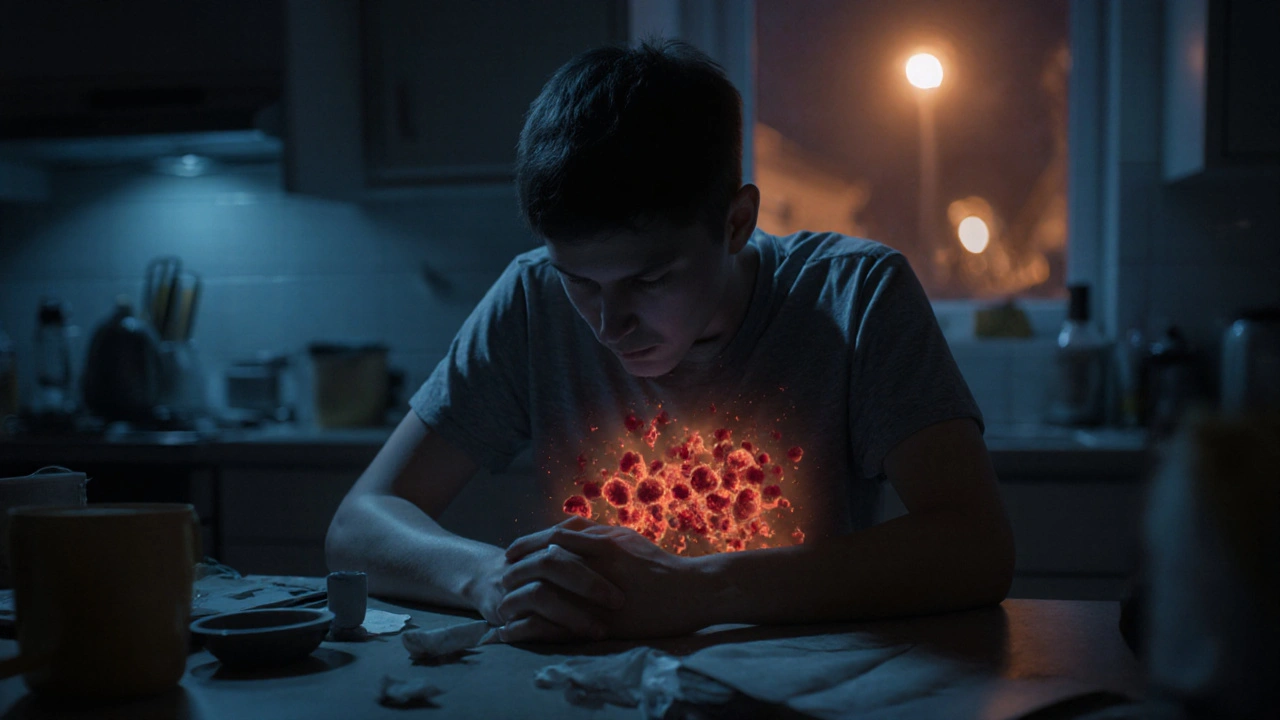
Ever wondered why some people who seem healthy suddenly develop active TB? The missing piece often isn’t genetics or a stray gust of wind - it’s the everyday pressure we put on our bodies. Tuberculosis and stress are more entwined than most realize, and understanding that link can change how you protect yourself and your community.
Quick Takeaways
- Chronic stress weakens the immune system, making latent TB more likely to become active.
- Cortisol, the stress hormone, suppresses the cells that normally keep Mycobacterium tuberculosis in check.
- People in low socioeconomic settings face a double hit: higher stress levels and greater exposure to TB.
- Managing stress through sleep, nutrition, and mindfulness can lower the risk of TB activation.
- Public‑health programs that address mental health see better TB control outcomes.
What is Tuberculosis a contagious bacterial infection caused by Mycobacterium tuberculosis that mainly affects the lungs?
TB spreads through airborne droplets when an infected person coughs or sneezes. Most exposed individuals never get sick because their immune system the body’s defense network of cells, tissues, and organs that fights infections keeps the bacteria dormant. This dormant state is known as latent TB infection a state where Mycobacterium tuberculosis remains in the body without causing active disease. Around a quarter of the world’s population carries latent TB, but only a small fraction progress to active disease each year.
How does stress a physiological and psychological response to perceived challenges or threats affect the immune system?
When you encounter a stressful situation, your body releases cortisol a glucocorticoid hormone released by the adrenal glands during stress. In the short term, cortisol helps mobilize energy and dampen inflammation - a useful survival tactic. But if cortisol stays elevated for weeks or months, it starts to cripple the very immune cells that fight TB: macrophages and T‑cells. Studies from the University of Cape Town showed that participants with chronically high cortisol had a 30% reduction in interferon‑γ production, a key molecule that keeps TB bacteria locked away.
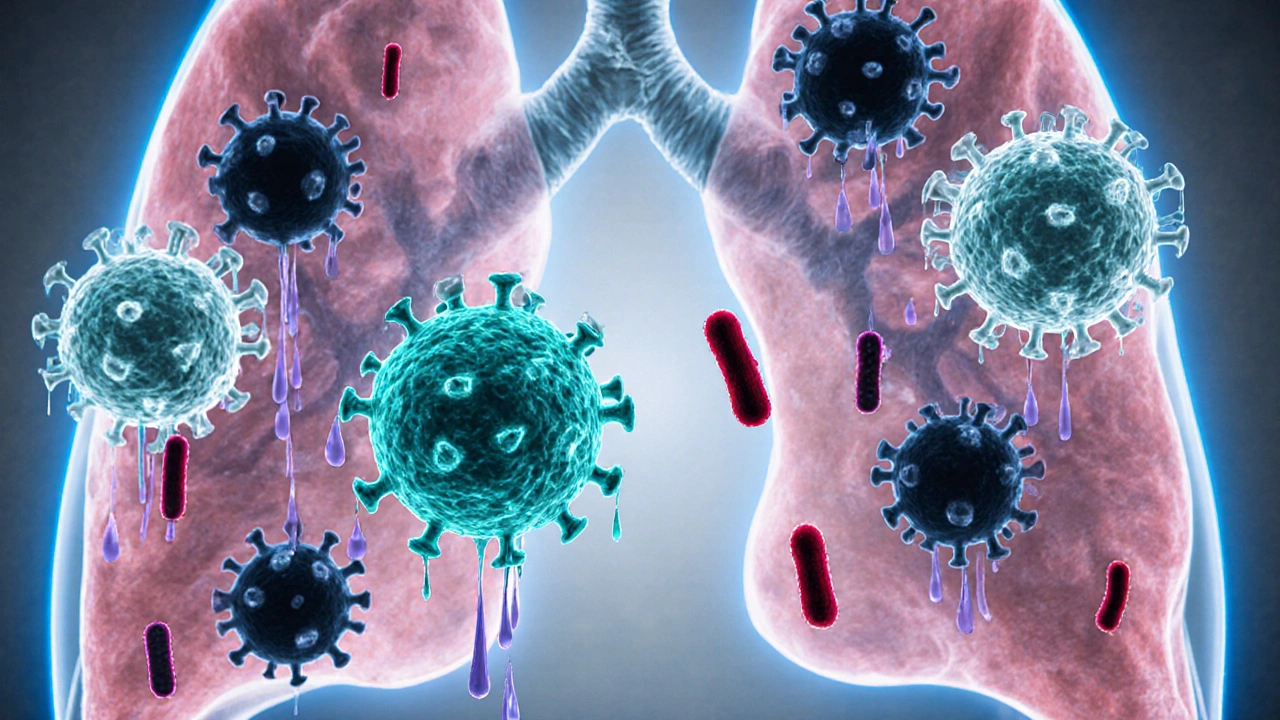
Direct pathways linking stress to active TB
- Immune suppression: Prolonged cortisol exposure reduces the ability of macrophages to engulf and kill TB bacilli.
- Inflammatory imbalance: Stress skews the balance toward anti‑inflammatory cytokines (IL‑10) and away from pro‑inflammatory ones (TNF‑α), creating a permissive environment for bacterial reactivation.
- Behavioral factors: Stressed individuals may neglect medication adherence, skip clinic visits, or engage in smoking and alcohol use - all known to raise TB risk.
- Co‑infection amplification: In people living with HIV the human immunodeficiency virus that weakens the immune system and raises TB risk, stress further erodes immune defenses, accelerating progression from latent to active TB.
Who is most vulnerable?
Data from the World Health Organization the United Nations agency responsible for international public health indicate that 70% of TB cases occur in low‑ and middle‑income countries. Within these regions, people with low socioeconomic status a combined measure of income, education, and occupation influencing health outcomes face higher chronic stress due to financial insecurity, crowded living conditions, and limited access to health services. Migrant workers, prison populations, and those in informal settlements report the highest stress scores and also the highest TB incidence.
Stress‑Management Strategies that Lower TB Risk
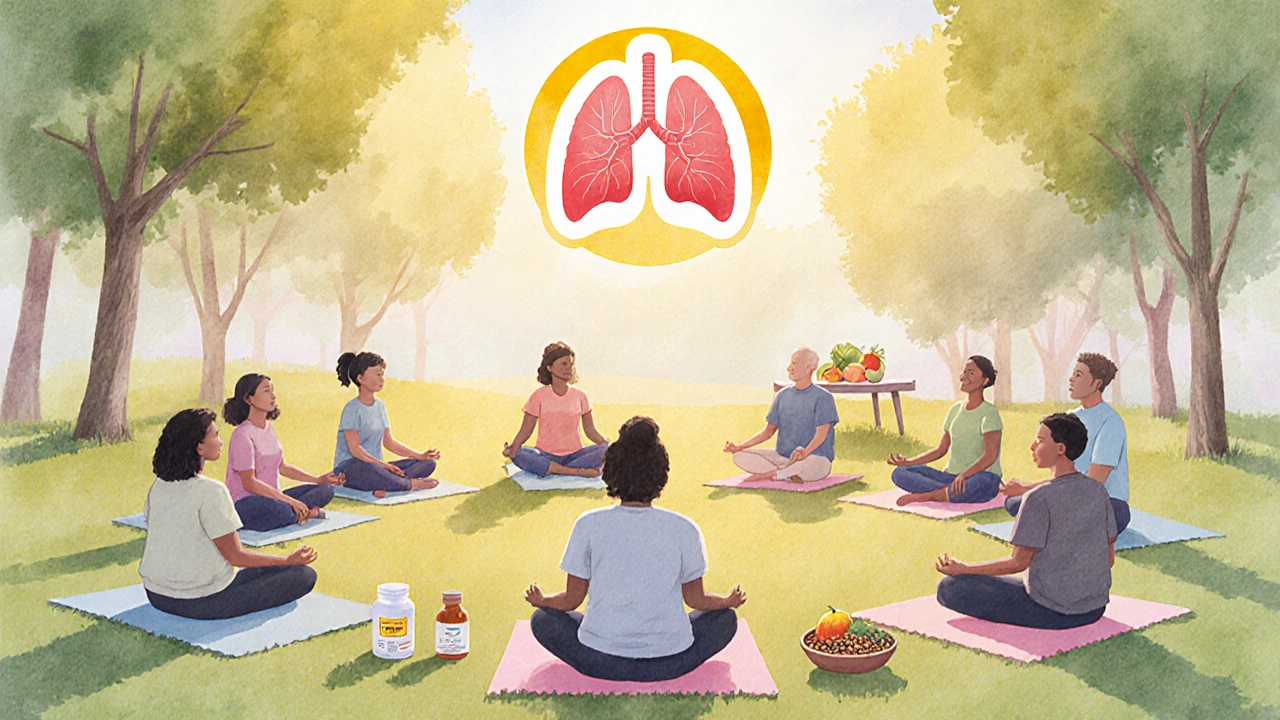
While you can’t control the bacteria, you can control the stress that helps it thrive. Here are evidence‑backed tactics that fit into daily life:
- Sleep hygiene: Aim for 7‑9hours per night. A study in Bangladesh linked less than 6hours of sleep to a 1.8‑fold increase in active TB among latent carriers.
- Balanced nutrition: Protein‑rich meals boost macrophage function. Vitamin D supplementation (800IU daily) has been shown to improve TB outcomes in stressed patients.
- Mindfulness & breathing exercises: A 12‑week randomized trial in Peru reduced cortisol levels by 18% and cut conversion from latent to active TB by 22%.
- Physical activity: Moderate aerobic exercise (30minutes, 3‑times/week) enhances T‑cell proliferation, counteracting stress‑induced suppression.
- Social support: Community groups and peer counseling lessen perceived stress and improve treatment adherence.
Integrating these habits doesn’t just improve mental health - it creates a physiological environment where TB bacteria stay dormant.
Public‑Health Perspective: Tackling Stress to Beat TB
National TB programs that ignore mental health miss a crucial lever. Countries that added psychosocial screening to routine TB care (e.g., India’s “TB‑Minds” initiative) reported a 15% drop in treatment default rates and a 9% reduction in new active cases over three years. The key steps for policymakers are:
- Incorporate validated stress questionnaires into TB screening.
- Train community health workers to provide brief stress‑reduction counseling.
- Allocate resources for joint TB‑mental‑health clinics, especially in high‑risk districts.
- Partner with NGOs that offer economic empowerment programs, addressing the root cause of chronic stress.
When mental health becomes part of the TB fight, outcomes improve across the board - fewer active cases, higher cure rates, and stronger community resilience.
Key Takeaway Table
| Stress Level | Typical Cortisol (µg/dL) | Immune Impact | Relative TB Activation Risk |
|---|---|---|---|
| Low (relaxed) | 5-10 | Normal macrophage & T‑cell activity | Baseline (1×) |
| Moderate (daily hassles) | 11-15 | Slight reduction in interferon‑γ | 1.3-1.5× |
| High (chronic) | 16-25 | Marked suppression of macrophage killing | 2-3× |
Next Steps for Individuals
- Ask your doctor for a TB screening if you live in a high‑risk area or have a history of latent infection.
- Complete a short stress assessment (e.g., Perceived Stress Scale) during the visit.
- Follow a stress‑reduction plan: regular sleep, balanced diet, daily movement, and mindfulness.
- If you’re on TB preventive therapy, never skip doses - set reminders or use a pill‑box.
- Seek community support groups; sharing experiences reduces perceived isolation.
Frequently Asked Questions
Can stress alone cause tuberculosis?
Stress doesn’t create the bacteria, but chronic stress weakens the immune defenses that keep latent TB dormant, making activation more likely.
Is cortisol the only hormone involved?
Cortisol is the main stress hormone, but adrenaline and inflammatory mediators like IL‑10 also play roles in modulating immunity.
How does smoking interact with stress and TB?
Smoking adds oxidative stress and directly damages lung tissue, compounding the immune suppression caused by psychological stress, thereby sharply raising TB risk.
Are there specific stress‑reduction programs for TB patients?
Many clinics now offer brief cognitive‑behavioral therapy (CBT) sessions, group mindfulness classes, and peer support circles tailored to TB patients. These programs have shown to improve treatment adherence by 12% on average.
What role does socioeconomic status play?
Low socioeconomic status often means cramped living conditions, higher exposure to TB, and greater chronic stress due to financial insecurity. Addressing poverty reduces both stress and TB transmission.
Can nutrition help counteract stress‑related TB risk?
Adequate protein, vitamins A, D, and C support immune cell function. A diet rich in legumes, fish, and leafy greens can mitigate some of the immune suppression linked to stress.

Lauren Carlton
October 13, 2025 AT 20:35The opening paragraph omits a serial comma before “and,” which makes the list ambiguous.
Additionally, “stress & TB Risk Calculator” should be capitalized consistently as a proper noun.
These small errors can distract readers from the otherwise solid content.
Katelyn Johnson
October 16, 2025 AT 04:09Highlighting stress's impact on immunity is essential for public awareness and encourages communities to adopt preventive measures.
Sharing simple stress‑reduction tips alongside the calculator can empower users from diverse backgrounds.
Patrick Fortunato
October 18, 2025 AT 06:09From an Irish viewpoint, the link between socioeconomic strain and disease mirrors historic famines where stress amplified vulnerability to infection.
Modern policies must consider how financial pressure resurrects old health threats.
Manisha Deb Roy
October 20, 2025 AT 05:22One practical addition to the calculator would be a toggle for smoking status, since tobacco use compounds stress‑induced immune suppression.
Including this variable could refine risk estimates for many users.
Adam Dicker
October 22, 2025 AT 01:49Take charge of your sleep schedule and watch your risk score drop – a solid 7‑9 hours of rest fuels immune cells that keep TB dormant.
Pair that with daily breathing exercises and you’ll see a noticeable difference in the calculator’s output.
Molly Beardall
October 23, 2025 AT 19:29Oh, you think that’s enough? Adding a smoking checkbox is cute, but what about chronic alcohol use? It ravages macrophage function even more aggressively.
Without tackling that, the tool remains half‑baked.
Sarah Hoppes
October 25, 2025 AT 10:22The real reason they hide comprehensive lifestyle data is that pharmaceutical lobbyists don’t want us to see how simple habits could replace costly meds.
They profit from keeping the narrative focused on “high‑tech” solutions.
Erin Smith
October 26, 2025 AT 21:29Staying chill really helps the immune system.
George Kent
October 28, 2025 AT 06:49Indeed, maintaining a relaxed mindset lowers cortisol levels, which directly supports macrophage activity!!! 😌👍
Dan Dawson
October 29, 2025 AT 13:22It's interesting that the article mentions vitamin D but doesn't suggest a dosage range for supplementation.
Albert Gesierich
October 30, 2025 AT 17:09The sentence should read: “It’s interesting that the article mentions vitamin D but doesn’t suggest a dosage range for supplementation.” Adding the apostrophe in “doesn’t” and using a non‑breaking space after “vitamin D” improves readability.
Suraj Midya
October 31, 2025 AT 18:09We must remember that promoting health isn’t just about individual choices; it’s a collective moral duty to provide safe housing and mental‑health resources to those in poverty.
ashish ghone
November 1, 2025 AT 16:22Your stress‑and‑TB calculator is a step in the right direction, and I’d like to add a few thoughts that might enhance its impact.
First, integrating a brief mental‑health questionnaire could identify users who need professional counseling.
Second, visual cues like red‑green color coding for risk tiers make the results instantly understandable.
Third, offering downloadable PDFs of personalized recommendations would let users share the plan with healthcare providers.
Fourth, linking local support groups or tele‑health services could bridge the gap between awareness and action.
Fifth, a reminder feature that nudges users to log their sleep hours daily would improve data accuracy.
Sixth, incorporating a simple stress‑log (e.g., rating 1‑10) alongside sleep data provides a more holistic picture.
Seventh, the algorithm could weight smoking and alcohol use more heavily, as studies show they synergistically increase TB activation risk.
Eighth, consider adding a “reset” button so users can experiment with lifestyle changes without reloading the page.
Ninth, multilingual support would broaden accessibility in high‑burden regions where English isn’t the primary language.
Tenth, partnering with NGOs that focus on housing stability could address the socioeconomic drivers of chronic stress.
Eleventh, regular updates to the scientific references ensure the calculator reflects the latest epidemiological findings.
Twelfth, a community forum embedded on the site would let users share coping strategies and success stories.
Thirteenth, highlighting success metrics (e.g., “users who improved sleep saw a 20% risk reduction”) can motivate continued engagement.
Fourteenth, ensuring the site complies with data‑privacy standards protects users who input personal health details.
Finally, celebrating small victories-like a week of 8‑hour sleep-reinforces positive behavior and keeps the momentum going.
steph carr
November 2, 2025 AT 11:49Great ideas! I especially like the community forum suggestion; hearing real‑world stories can make the science feel more relatable.
Vera Barnwell
November 3, 2025 AT 04:29There’s a hidden agenda behind the way stress is framed in public‑health campaigns.
Big Pharma and insurance companies benefit when people rely on medication rather than lifestyle changes.
The calculator’s emphasis on “sleep hours” distracts from the more insidious factors like workplace exploitation and chronic job insecurity.
Governments often downplay the link between socioeconomic stress and disease to avoid costly reforms.
Notice how the tool never asks about income level or housing conditions-obviously, those questions would reveal systemic failures.
Furthermore, the data collection endpoints are vague, leaving room for selective reporting that favors pharmaceutical sponsors.
Many whistleblowers have hinted that similar health apps have been repurposed to gather behavioral data for marketing algorithms.
The same pattern appeared with fitness trackers that were later sold to advertisers.
By keeping the focus on individual responsibility, the narrative shifts blame away from corporate practices that generate chronic stress.
Don’t be fooled by the polished UI; beneath it lies a profit‑driven motive to keep people dependent on expensive treatments.
When you look at the funding sources listed on the page, the connections become clearer.
It’s crucial to demand transparency and push for policies that address the root causes of stress, not just the symptoms.
Barbra Wittman
November 3, 2025 AT 18:22Oh sure, because the only thing missing from a simple health calculator is a full-blown political manifesto-how could we possibly improve public health without a conspiracy theory?
Lynnett Winget
November 4, 2025 AT 05:29While the intrigue is delicious, let’s sprinkle some hopeful hues on the canvas: imagine a world where stress‑aware tech partners with community gardens, art therapy, and jazz nightouts to lift spirits and fortify immunity.