 Jan, 6 2026
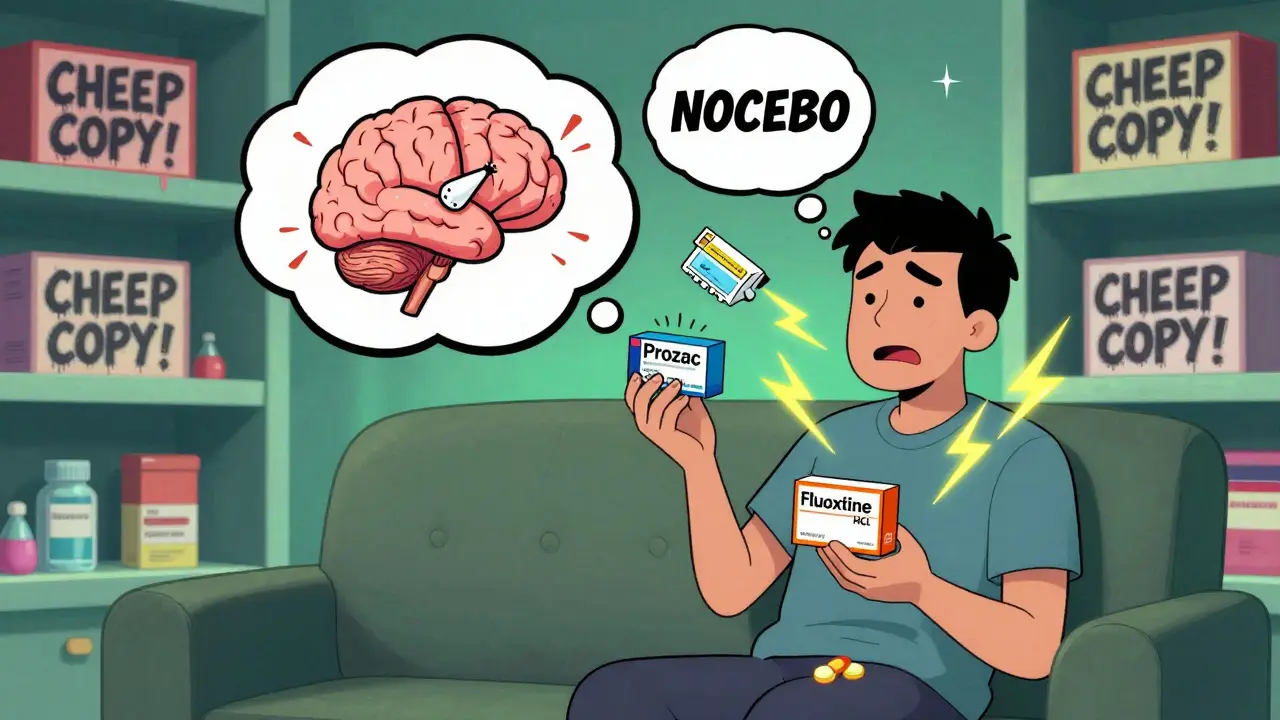
When a patient switches from a brand-name drug to a generic, they don’t just get a cheaper pill. They get a new belief-and that belief can change how their body responds. Even when the active ingredient is identical, many patients report new or worse side effects after the switch. This isn’t a flaw in the medicine. It’s the nocebo effect in action.
What Is the Nocebo Effect?
The nocebo effect is the dark twin of the placebo effect. Where placebo makes you feel better because you expect to, nocebo makes you feel worse because you expect to. It’s not imaginary. It’s real. A 2025 study gave healthy people a fake nasal spray labeled either as a brand-name product or a generic. Even though it contained no active ingredient, those told they were using the generic reported significantly more side effects-headaches, dizziness, fatigue-than those told they were using the brand. The difference wasn’t chemical. It was psychological.
This isn’t just lab data. In the U.S., where 90% of prescriptions are filled with generics, nearly 40% of patients still believe generics are less effective than brand-name drugs. And when they switch, symptoms they never had before suddenly appear. A patient on brand-name sertraline for years might feel fine-then switch to the generic and start reporting insomnia, nausea, or brain zaps. Blood tests show identical drug levels. But their brain? It’s convinced something’s wrong.
Why Does This Happen?
It’s not just about price. It’s about packaging, naming, and trust.
One 2024 study tested a fake anti-itch cream. One group got it in a sleek blue box with a fancy name: "Solestan® Creme." The other got the same cream in a plain orange box labeled "Imotadil-LeniPharma Creme." The group with the generic-looking packaging reported more pain sensitivity-even though the cream had no active ingredient. The design alone triggered stronger side effect reports.
Names matter too. Generic drugs often have long, complicated names like "fluoxetine hydrochloride" instead of "Prozac." That complexity feels unfamiliar. Unfamiliar feels risky. And when patients hear that a drug is "generic," they often assume it’s lower quality-even though the FDA requires generics to match brand-name drugs in strength, dosage, and how quickly they enter the bloodstream.
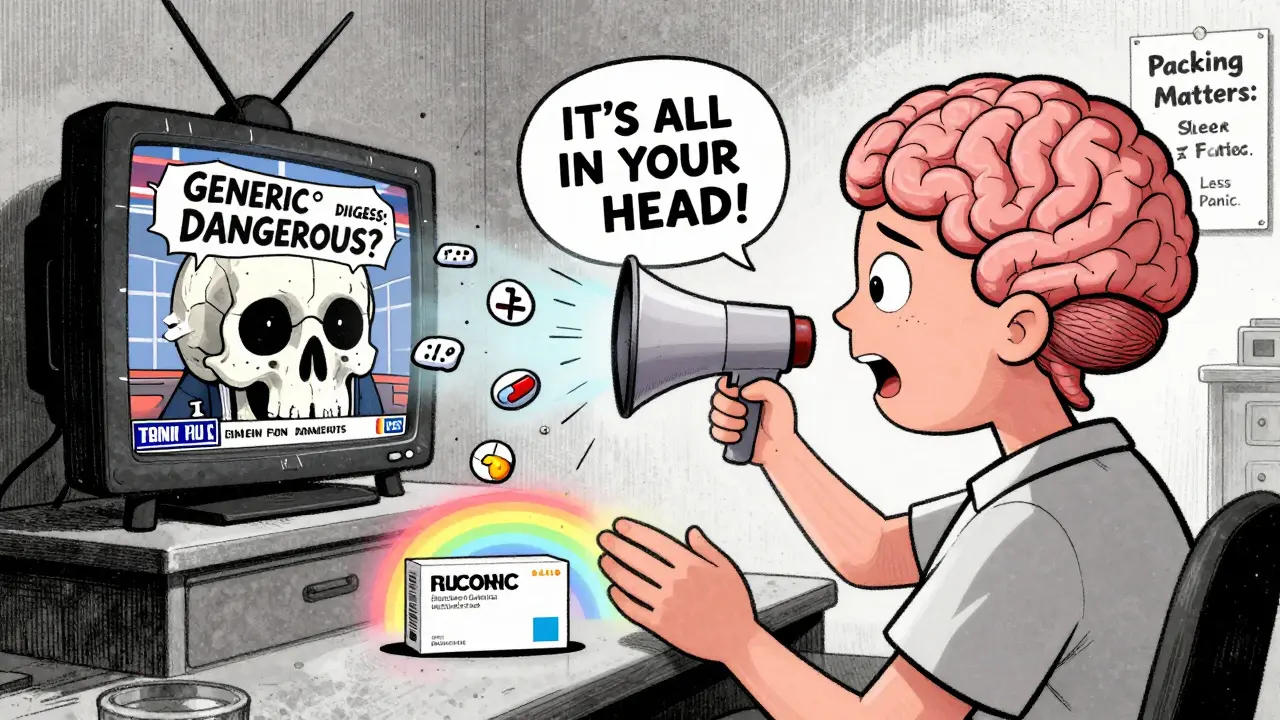
Media plays a role. In New Zealand, when the brand venlafaxine switched to a generic, reports of side effects didn’t spike until after local news ran stories questioning the switch. Patients started noticing normal body sensations-mild dizziness, tiredness-and labeled them as drug side effects. That’s the nocebo effect: turning everyday discomfort into medical alarms.
How Doctors and Pharmacists Can Help
Healthcare providers are the most powerful tool against the nocebo effect. Here’s what works:
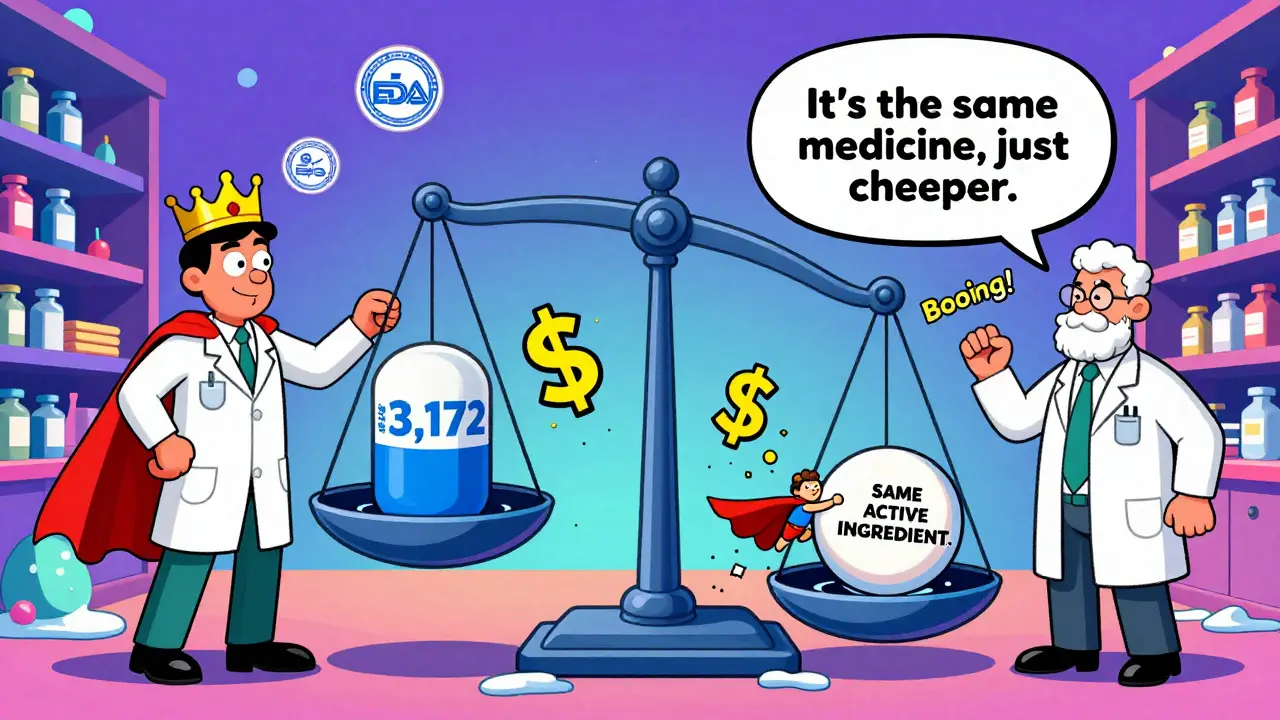
- Reframe the conversation. Don’t say, "This generic might cause nausea, drowsiness, or headaches." Say, "Most people take this generic without any issues. You’ve done well on the brand, and this is the same medicine-just less expensive. You’ll likely feel the same way."
- Explain bioequivalence. Use simple terms: "The FDA makes sure generics work the same way in your body. They have to prove they release the same amount of medicine at the same speed as the brand. If they didn’t, they wouldn’t be allowed on the market."
- Use trusted language. Say, "This is the exact same active ingredient as your old pill." Avoid words like "copy," "imitation," or "cheaper version." Those trigger doubt.
- Don’t over-warn. Listing every possible side effect from the package insert increases anxiety. Focus on what’s common and what’s serious. Most side effects are mild and temporary. Most people don’t experience them.
Kaiser Permanente uses a script for this exact moment: "This medication contains the exact same active ingredient as what you were taking before, and studies show that patients do just as well on the generic version." That’s not marketing. It’s medicine.
When Patients Already Feel Worse
Some patients switch and immediately report side effects-even though their blood levels show no change. What do you do?
- Don’t dismiss them. Saying, "It’s all in your head," makes things worse. Instead, say, "I hear that you’re feeling different. Let’s look at what’s changed."
- Check for real causes. Could stress, sleep, diet, or another medication be contributing? Rule out other factors before assuming it’s the generic.
- Give them back control. Ask, "Would you feel more comfortable trying the brand again for a few weeks to see if things improve?" Sometimes, just knowing they have a choice reduces anxiety enough to ease symptoms.
One study found that when patients were told switching to a generic could save them $3,172 a year-alongside reassurance about effectiveness-the nocebo effect dropped by 37%. Money talks. But only when paired with trust.
What About Branded Generics?
Some companies make "branded generics"-medications that are chemically identical to the original brand but sold under a different name with packaging that looks more premium. These often have lower nocebo rates because they look and feel more like the original.
That’s not deception. It’s smart design. The European Medicines Agency says generic packaging shouldn’t mimic brand names to avoid confusion. But it also says differences shouldn’t alarm patients. There’s a balance. Packaging that looks cheap, messy, or unfamiliar increases fear. Packaging that looks professional-even if it’s not the original brand-reduces it.
Some pharmacies in Australia and the U.S. now offer "preferred generics" with consistent packaging across refills. Patients know what to expect. That predictability reduces anxiety.
Long-Term Solutions
Changing patient perception takes more than one conversation. It takes culture.
- Public education. Health campaigns should explain that generics aren’t second-rate. They’re regulated, tested, and used by millions. The FDA approves over 1,000 generic drugs every year. Most are safe and effective.
- Provider training. Doctors and pharmacists need to recognize nocebo effects. If a patient’s symptoms appear right after a switch-and blood levels are normal-it’s likely psychological, not pharmacological.
- Reduce surprise switches. When possible, warn patients before switching. Give them time to ask questions. Don’t make it a surprise at the pharmacy counter.
And here’s the quiet truth: many patients who think they can’t tolerate generics have never tried a different generic. Not all generics are made the same. If one causes problems, switching to another manufacturer’s version might solve it-without going back to the brand.
It’s Not About the Pill. It’s About the Story.
Medicine isn’t just chemistry. It’s storytelling. Patients don’t just take pills. They take narratives. "This is a cheap copy" is a story that harms. "This is the same medicine, just more affordable" is a story that heals.
The nocebo effect doesn’t mean generics are less effective. It means our minds are powerful. And when we misunderstand them, we hurt ourselves.
Managing perception isn’t manipulation. It’s honesty with care. It’s giving patients the facts without the fear. It’s helping them believe in the medicine they’re already taking.
Are generic medications really the same as brand-name drugs?
Yes. The FDA requires generics to contain the same active ingredient, strength, dosage form, and route of administration as the brand-name drug. They must also prove they deliver the same amount of medicine into the bloodstream at the same rate. This is called bioequivalence. The only differences are in inactive ingredients-like fillers or dyes-which don’t affect how the drug works.
Why do some people feel worse after switching to a generic?
It’s often the nocebo effect. When patients believe a generic is inferior, their brain starts interpreting normal sensations-like mild fatigue or stomach upset-as side effects. Studies show these symptoms disappear when patients are reassured they’re taking the same medicine, even if they don’t know it.
Can packaging really affect how I feel on a medication?
Yes. A 2024 study showed that people using the same fake cream reported more pain when it came in a plain, generic-looking box compared to a sleek, branded one. Packaging shapes expectations. If it looks cheap or unfamiliar, your brain may assume it’s less effective-or more likely to cause side effects.
Should I avoid generics because of the nocebo effect?
No. Generics are safe, effective, and used by millions. The nocebo effect is about perception, not the drug itself. With the right communication from your provider, you can take a generic without fear. In fact, choosing a generic can save you thousands each year without sacrificing results.
What if I still feel bad on a generic-should I go back to the brand?
If you’re truly struggling, yes-talk to your doctor. But don’t assume it’s the generic’s fault. Sometimes, switching to a different generic manufacturer helps. Other times, the issue isn’t the drug at all-it’s stress, sleep, or another medication. Your doctor can help you figure out what’s really going on.

steve rumsford
January 7, 2026 AT 15:55so i switched to generic sertraline last year and yeah i got the brain zaps for like two weeks then they just vanished. turns out my brain was just mad about the pill being a different color. weird shit.
Paul Mason
January 8, 2026 AT 12:41man i used to be one of those people who swore brand-name was better. then i did a dumb experiment: i switched my blood pressure med to generic, didn't tell myself it was generic, and kept taking it for a month. no issues. then i found out it was generic and panicked for a week. turned out i felt exactly the same. my brain is a liar.
Christine Joy Chicano
January 9, 2026 AT 11:51the packaging study is wild. same cream, same chemistry, but the orange box made people feel more pain? that’s not psychology-that’s cultural conditioning. we’ve been trained to equate sleek design with quality. even when it’s just a fucking cream in a box. it’s capitalism selling us placebo trust.
and don’t even get me started on how generic names sound like bureaucratic jargon. fluoxetine hydrochloride vs prozac. one sounds like a lab report, the other like a superhero.
the FDA doesn’t care about aesthetics, but patients do. and that’s not irrational-it’s human.
we don’t just ingest drugs. we ingest narratives. if your pill looks like it was printed on a dot-matrix printer in 1998, your brain assumes it’s a backup plan. not a cure.
pharmacies need to treat packaging like UX design. consistency. clarity. dignity. not just cost-cutting.
and honestly? if a pharmacy gives you a generic that looks like it was mailed from a discount bin in a third-world country, no wonder people freak out. it’s not the drug. it’s the shame.
we need generic branding that doesn’t scream ‘i’m the cheap version.’ we need generics that look like they belong on a pharmacy shelf-not in a dumpster behind a gas station.
and while we’re at it, stop calling them ‘copies.’ that word is poison. it’s not a copy. it’s a clone. identical. tested. approved. just cheaper.
we’re not just fighting misinformation. we’re fighting aesthetics. and that’s harder than any clinical trial.
maybe the next step isn’t more education. maybe it’s better design.
the pill doesn’t change. but the box? that’s where the magic-or the fear-happens.
Emma Addison Thomas
January 9, 2026 AT 17:11I’ve seen this in the UK too. A patient came in terrified after switching to a generic antidepressant because the pill was smaller and white instead of blue. She swore it wasn’t working. We checked levels-perfect. Turned out she’d been taking the brand for 7 years and associated the blue pill with ‘safety.’ The white one felt alien. We switched her back for a month, then re-introduced the generic with the same packaging color. She didn’t notice the difference after that.
It’s not about the medicine. It’s about the ritual.
Poppy Newman
January 11, 2026 AT 14:31🤯 this is so real. i used to think generic ibuprofen gave me stomach issues. then i realized i was only taking the one in the weird yellow bottle. switched to the one in the white bottle with the same logo as the brand? no problems. my brain just hated the color.
Mina Murray
January 12, 2026 AT 00:59you know what’s really happening? Big Pharma doesn’t want you to know generics are just as good. They spent billions making you believe the blue pill is sacred. Now they’re pushing ‘branded generics’-same drug, same science, but they slap a fancy name on it and charge 3x. It’s not about trust. It’s about profit. They’re weaponizing your fear to sell you overpriced pills under a new label.
the ‘preferred generics’? that’s just rebranding scam #47. They don’t care if you feel better. They care if you keep buying.
and don’t even get me started on how the FDA lets them get away with this. The system is rigged.
Anastasia Novak
January 12, 2026 AT 02:02oh wow. So now we’re blaming patients for being too dumb to understand that a pill that looks different is still the same? That’s not patient education. That’s gaslighting wrapped in a white coat.
Let me guess-the doctors who say ‘it’s all in your head’ are the same ones who get bonuses for prescribing generics? Of course they are.
you don’t fix a psychological problem by telling people to stop feeling things. You fix it by fixing the system that made them feel that way in the first place.
and let’s be real: if a patient gets a generic that looks like it was printed on a napkin by a intern in a basement, of course they’re gonna panic. It’s not the nocebo effect. It’s the ‘this looks like trash’ effect.
stop calling it a mind trick. Call it what it is: corporate negligence disguised as cost-saving.
Katrina Morris
January 13, 2026 AT 17:47i used to think generics were sketchy too. then my mom got on one for her cholesterol med. she was scared. i sat with her and said, ‘this is literally the same thing. just no marketing.’ she cried. not from sadness. from relief. she realized she’d been paying extra for a logo.
we need more of that. not lectures. just quiet honesty.
Vince Nairn
January 15, 2026 AT 03:43so you're telling me my brain is the problem? cool. next time i feel dizzy after switching meds, i'll just tell myself it's all in my head. and if i die? well, at least i saved $40.
lol jk. but seriously. if your doctor says 'it's the nocebo effect' and doesn't listen to your symptoms, find a new doctor.
Ayodeji Williams
January 15, 2026 AT 10:49bro i switched to generic and my anxiety got worse. i swear it was the pill. then i found out the manufacturer changed the dye. i went back to the old generic and boom. fine. it wasnt the drug. it was the color. my brain is wild
LALITA KUDIYA
January 16, 2026 AT 15:19my aunt in India switched to generic insulin and got scared. she thought it was fake. we showed her the box, the batch number, the FDA stamp. she still cried. she said, 'but it doesn't feel like my medicine.' i realized then-medicine isn't just science. it's love. it's routine. it's the shape of the pill you've held for years.
Kamlesh Chauhan
January 18, 2026 AT 08:46generic meds are a scam. brand name is the only real one. i dont care what the science says. i feel it. and my body knows. the rest of you are just brainwashed by big pharma
Jessie Ann Lambrecht
January 19, 2026 AT 16:24the most powerful thing a provider can do? Hand you the generic and say, ‘this is your medicine. Nothing changed. I’m still here if you need me.’ No jargon. No warnings. Just presence. That’s the real antidote to fear.
and if you’re a patient? Try the same generic twice. Not all generics are made the same. One manufacturer’s version might sit better than another. Don’t give up after one bad experience.
you’re not broken. the system is just poorly designed.
Aparna karwande
January 20, 2026 AT 14:36how dare you suggest that Indians or people from developing countries are more susceptible to nocebo? we have been taking generics for decades because we have no choice. we know the difference between real medicine and scam. your western privilege is showing.
we don't need your 'reassurance.' we need affordable access. stop pathologizing our survival.
Anthony Capunong
January 21, 2026 AT 20:35if you're in America and you're still using brand-name drugs because you're scared of generics, you're literally funding the healthcare crisis. stop being weak. your life isn't a drama movie. the FDA doesn't lie. take the generic. save your money. be smart.