 Jan, 17 2026
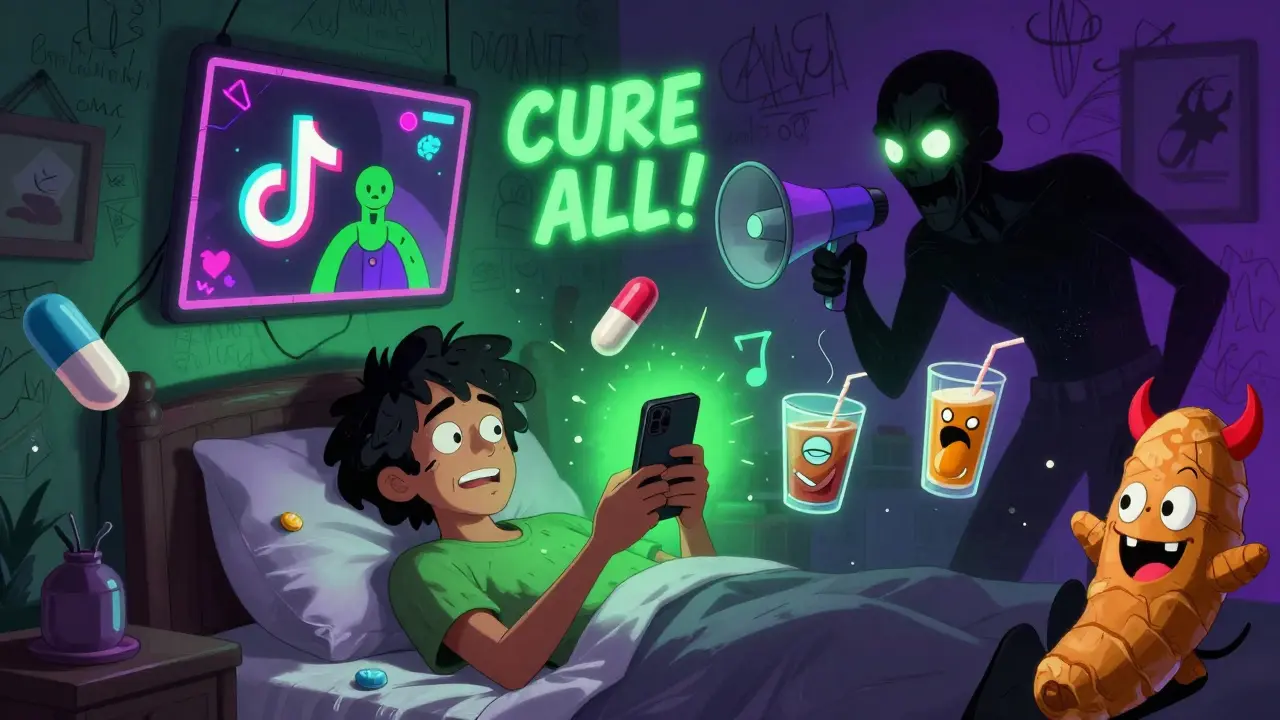
Every day, millions of people scroll through TikTok, Instagram, and YouTube looking for quick health fixes. Maybe you saw a video claiming that drinking apple cider vinegar cures migraines. Or a post saying you can replace your blood pressure meds with turmeric. These posts feel harmless-until they aren’t. Unsafe medication advice on social media isn’t just misleading; it can land you in the hospital-or worse.
During the pandemic, health misinformation exploded. The World Health Organization called it an "infodemic"-a flood of false or misleading claims that spread faster than the virus itself. And it didn’t stop when the pandemic did. Today, unlicensed influencers, paid promoters, and conspiracy theorists are still pushing dangerous ideas about pills, supplements, and treatments. The CDC says nearly 60% of Americans turn to the internet for health info. That’s a lot of people trusting strangers on their phones with their lives.
Who’s Really Giving This Advice?
First, ask: Who is this person? A licensed doctor? A pharmacist? A nurse? Or just someone with a big following and a good camera?
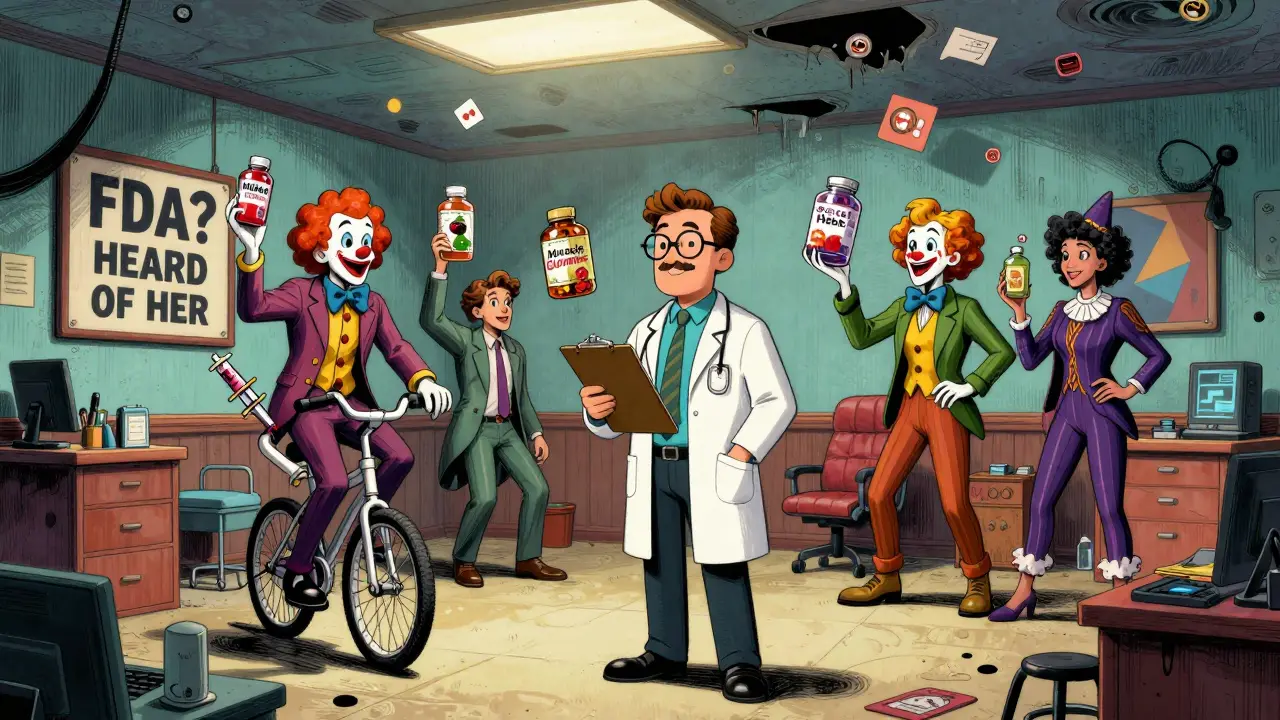
Healthcare professionals are legally required to have a patient relationship before giving advice. That means they need to know your history, your allergies, your other meds, your lab results. A TikTok creator doesn’t have that info-and they’re not trained to interpret it. Yet, they’ll tell you to stop your antidepressants or start taking 10 different supplements at once.
Look at their profile. If they don’t list credentials like MD, PharmD, RN, or PA-C, treat everything they say as unverified. Even if they say "I’m not a doctor, but..."-that’s not a shield. It’s a red flag. Anyone giving medical advice without a license is breaking the rules. And they’re not being held accountable.
Is This a Product Pitch in Disguise?
Most of the time, when someone tells you to try a "miracle cure," they’re selling something. It might be a bottle of gummies, a detox tea, or a "secret" supplement only available on their website. These aren’t health tips-they’re ads.
Healthline found that many influencers on social media are paid to promote products. They might not even use the stuff themselves. Their job is to make you believe it works. And they use emotional language to do it: "This changed my life," "Doctors hate this," "You won’t believe what happened after one week."
Check the comments. Are people asking, "Where can I buy this?" or "Is this real?" That’s a sign the post is designed to drive sales, not educate. If the advice leads to a link, a store, or a "limited-time offer," walk away. Real medical guidance doesn’t come with a countdown timer.
"Miracle Cures" Don’t Exist
There’s no pill, powder, or potion that cures everything. Cancer. Diabetes. Autoimmune disease. Depression. These are complex conditions. They need real science, not viral trends.
Be suspicious of any claim that sounds too good to be true. "Cure your arthritis in 3 days." "Reverse type 2 diabetes with one herb." "This one vitamin eliminates all inflammation." These are lies. Real medicine doesn’t work that way. Even the most effective treatments take time, monitoring, and adjustments.
The UNMC Health Security article says if you can’t find the same claim backed up by reputable news outlets, hospitals, or government health agencies, it’s probably misinformation. Google the claim. Look up the CDC, FDA, or Mayo Clinic. If none of them mention it, it’s not science-it’s noise.
One Size Doesn’t Fit All
Someone on Instagram says they lost 20 pounds and stopped their diabetes meds after switching to a carnivore diet. That doesn’t mean it’s safe for you.
Your body is different. Your meds, your allergies, your kidney function, your thyroid levels-none of that matters to a social media post. But they matter to your health. Taking someone else’s advice without knowing your own medical history is like driving blindfolded.
What works for one person might harm another. A supplement that helps one person’s sleep might raise blood pressure in someone else. A herb that reduces inflammation might interfere with your blood thinner. These interactions aren’t obvious. They’re not discussed in a 60-second video. Only a doctor or pharmacist who knows your full record can spot these risks.
How to Verify Anything You See Online
Don’t just trust your gut. Don’t wait until you feel sick. Before you try anything you see online, use this three-step check:
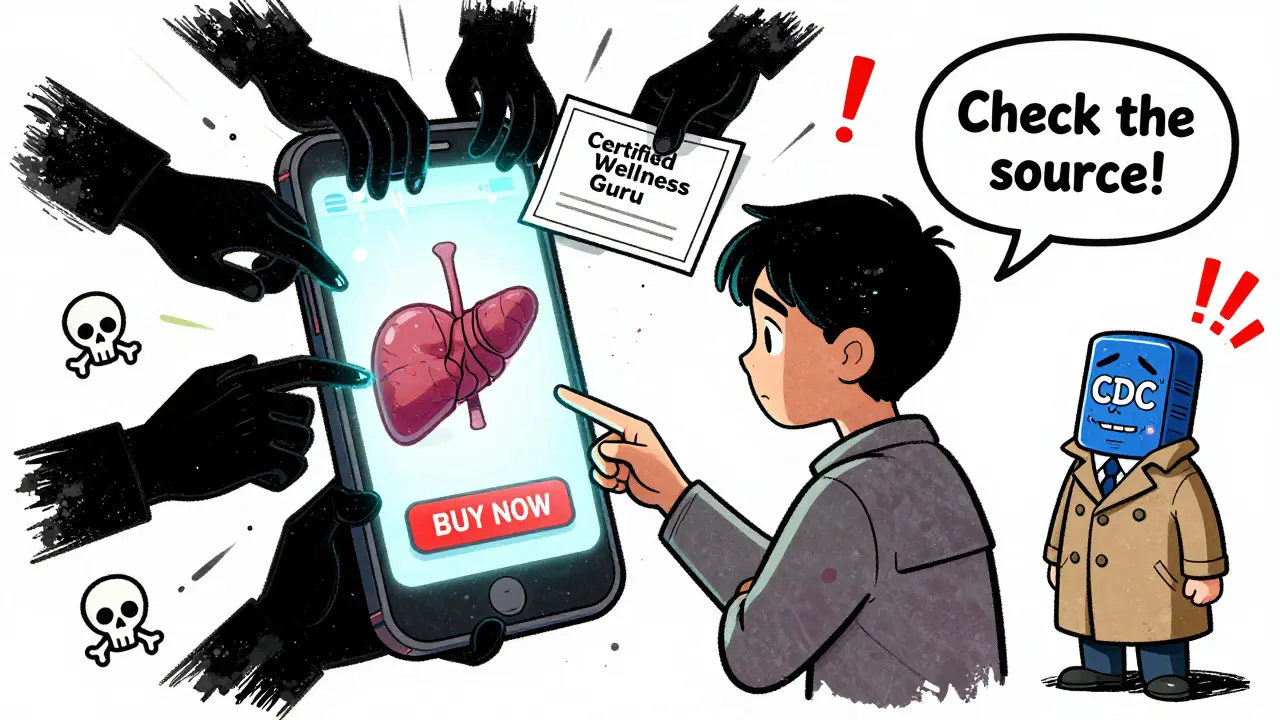
- Check the source. Who said it? Do they have real medical training? Look up their name. Are they listed on a hospital website or medical board registry?
- Look for bias. Are they pushing a product? Is the post one-sided? Does it ignore risks or side effects? Real advice includes both pros and cons.
- Compare with trusted sources. Cross-check the claim with at least three reputable sites: CDC, FDA, Mayo Clinic, Johns Hopkins, or peer-reviewed journals. If none of them mention it, it’s not reliable.
Don’t rely on one source. If you’re unsure, ask your doctor. Don’t wait for symptoms. If you’re thinking about changing your meds, stopping a prescription, or starting a new supplement-talk to a professional first. That’s not being cautious. That’s being smart.
How Algorithms Trick You
Why do you keep seeing the same dangerous advice over and over? Because the algorithm wants you to.
Social media platforms don’t show you what’s true. They show you what keeps you scrolling. If you’ve liked or watched a video about natural cures for anxiety, the algorithm will keep feeding you more of the same-even if it’s false. You end up in an echo chamber. Your own clicks are reinforcing the lies.
Studies show that once you’re exposed to misinformation, it’s hard to undo. But there’s a fix: "pre-bunking." That means learning the truth before you see the lie. Follow accounts run by real health organizations: CDC, WHO, American Heart Association, or your local hospital. They post accurate, science-backed info. When you see a wild claim later, you’ll recognize it because you already know what the truth looks like.
What Happens When People Believe This Stuff?
It’s not just theory. Real people get hurt.
There are documented cases of pregnant women stopping prenatal vitamins because they saw a post saying they were "toxic." Teens with eating disorders have been pushed toward dangerous fasting trends by "wellness influencers." Elderly patients have stopped life-saving heart meds after watching a video claiming they "cause cancer."
A study published in JAMA Pediatrics found that adolescents exposed to health misinformation online are more likely to make harmful choices about their bodies. And because they’re still developing their critical thinking skills, they’re more easily fooled.
Even Facebook and Instagram tried to fix this. They added "flag-and-fact-check" labels to misleading posts. But those labels only work if you notice them. And many people don’t. That’s why the real solution isn’t just tech-it’s you. You need to learn how to spot the signs before you click, share, or act.
What You Can Do Right Now
You don’t need to quit social media. But you do need to change how you use it.
- Unfollow anyone who gives medical advice without credentials.
- Follow trusted health organizations. They post regularly, clearly, and without hype.
- Before you share a health post, ask: "Would my doctor say this?" If the answer is no, don’t share it.
- Teach younger family members how to spot fake advice. Show them how to check sources.
- If you see dangerous advice, report it. Platforms need to know it’s a problem.
Medication safety isn’t about being paranoid. It’s about being informed. The people pushing these claims aren’t trying to help you. They’re trying to get clicks, likes, and sales. Your health isn’t a product. It’s not a trend. It’s yours-and it’s worth protecting.

Emma #########
January 18, 2026 AT 03:52I saw a post last week saying you can cure anxiety with lemon water and breathwork. I almost believed it until I remembered my therapist’s face when I mentioned it. Real talk-my grandma took her blood pressure meds because some influencer said they "cause dementia." She ended up in the ER. Don’t let your feed be your doctor.
Just un-follow anyone who says "I’m not a doctor but..."-that’s the red flag. I’ve done it. My feed is way calmer now.
Jake Moore
January 19, 2026 AT 02:22As a pharmacist, I see this daily. People DM me asking if they can swap their statin for garlic pills because some guy on YouTube said it "cleans arteries." I have to explain that garlic doesn’t lower LDL the way statins do-and it doesn’t stop plaque buildup. It’s not about being anti-natural. It’s about knowing what actually works.
And yes, most of these influencers are paid. One guy I tracked got $12K for promoting a $49 "detox tea" that’s just green tea with ginger. He doesn’t drink it. His mom does. And she’s on kidney dialysis now. Don’t be her.
Follow @CDCgov. Not @WellnessWizard99.
Danny Gray
January 20, 2026 AT 16:45But what if the system is broken? What if the FDA is corrupt and Big Pharma is suppressing natural cures? Who really benefits from you staying on meds for life? The pharmaceutical industry makes $1.3 trillion a year. That’s more than the GDP of most countries.
And yet, no one talks about how many people die from prescription side effects every year. The CDC says 100,000. But the real number? Probably higher. They don’t count the ones who just… faded away quietly.
Maybe the truth isn’t in the journals. Maybe it’s in the shadows. Maybe the people pushing supplements are the only ones telling the real story.
Why are you so afraid of questioning authority? You’re not being cautious-you’re being programmed.
Tyler Myers
January 22, 2026 AT 08:06They’re all in on it. The WHO, the CDC, the FDA-they’re all part of the New World Order. They want you dependent on chemicals so they can control your mind and your body. That’s why they ban natural cures. That’s why turmeric’s been classified as a "drug" in the EU. You think that’s a coincidence?
My cousin’s thyroid healed after she stopped all meds and started drinking saltwater every morning. She’s been off everything for two years. But the doctors? They call her a "delusional patient."
They don’t want you to know the truth. They want you afraid. They want you buying pills. Wake up. This isn’t medicine. It’s slavery with a stethoscope.
rachel bellet
January 24, 2026 AT 01:23Let’s deconstruct the epistemic vulnerability here. The ontological framing of social media health claims operates within a post-truth paradigm where affective resonance supersedes evidentiary validation. The algorithmic architecture of engagement-driven content prioritizes emotional salience over clinical accuracy, creating what Bourdieu would term a symbolic capital asymmetry.
Furthermore, the performative authority of the unlicensed influencer-constructed via curated aesthetics and affective storytelling-functions as a parasitic mimicry of medical legitimacy. This is not misinformation. It’s epistemic colonization.
And yet, the lay public, lacking critical hermeneutic tools, internalizes these narratives as heuristic truths. The result? A bio-political crisis of self-medication grounded in semiotic confusion.
TL;DR: You’re being gaslit by influencers who’ve read one blog post and think they’re Hippocrates.
Pat Dean
January 25, 2026 AT 16:09USA is the only country where people trust a 19-year-old with acne and 500k followers more than their own doctor. We’re not just dumb-we’re proud of it.
I’ve seen moms giving their kids CBD gummies because a TikTok said it "fixes autism." Your kid isn’t autistic because they’re not on Instagram. They’re autistic because they’re autistic. Stop trying to fix them with tea.
And don’t even get me started on the anti-vaxxers who think they’re warriors. You’re not brave. You’re reckless. And your kids are paying the price.
Stop sharing. Start thinking. Or just move to Canada. At least they still have doctors there.
Jay Clarke
January 26, 2026 AT 12:21Y’all are acting like this is some new thing. Nah. This has been going on since the 1980s. Remember the guy who sold "miracle mineral solution"? Or the one who claimed apple cider vinegar could cure cancer? Same energy.
But now? It’s faster. It’s louder. And it’s targeting teens who don’t know what a peer-reviewed journal is.
I watched a 16-year-old girl cry because she thought her anxiety was "just in her head" and she needed to "detox her soul" with a 3-day juice fast. She ended up in the hospital with low potassium.
It’s not just dangerous. It’s heartbreaking.
And the worst part? The people pushing this? They’re not evil. They’re just lazy. They’d rather make a quick buck than learn the real science. And that’s worse than fraud. It’s cowardice.
Selina Warren
January 27, 2026 AT 15:10Here’s the truth no one wants to say: we’re all addicted to quick fixes. We don’t want to wait. We don’t want to see a doctor. We don’t want to change our diet, sleep, or stress levels. So we click on the video that says, "One spoon a day and your depression is gone."
We’ve turned healthcare into a TikTok challenge. And now we’re shocked when people get hurt?
It’s not the influencers’ fault. It’s ours. We’re the ones who keep watching, liking, sharing. We’re the ones who’d rather believe a 30-second clip than spend 20 minutes reading a CDC page.
So stop blaming the snake oil salesmen. Look in the mirror. You’re the one handing them the money.
And if you’re still scrolling after this? You’re part of the problem.
Eric Gebeke
January 27, 2026 AT 22:18They say follow the science. But who defines the science? The same people who got rich off vaccines, pills, and surgeries. The same people who shut down natural alternatives because they don’t make enough profit.
What if the real danger isn’t the supplement guy on YouTube? What if the real danger is the system that tells you you need a pill for everything? What if the cure was never in a bottle?
I’ve been off all meds for three years. My blood pressure? Normal. My cholesterol? Better than when I was on statins. I eat real food. I walk. I sleep. I breathe.
They call me a quack. But I’m the one who’s alive. Who’s to say I’m wrong?
Maybe the system is the lie.
Robert Davis
January 28, 2026 AT 22:22Just saw a video of a guy saying he reversed his diabetes by eating only raw eggs and doing 50 squats a day. He’s got 2 million views. His comment section is full of people saying "I’m doing this tomorrow."
Meanwhile, his own doctor’s name is nowhere to be found. No credentials. No clinic. No follow-up. Just a guy with a camera and a $19.99 ebook link.
It’s not even about the danger anymore. It’s about the sheer audacity. Like, how do you look into the camera and say that with a straight face?
And we wonder why people are dying.