 Jan, 27 2026
When you’re receiving chemotherapy at home, the treatment can feel more manageable - but the waste it leaves behind is anything but simple. Chemotherapy drugs aren’t like leftover antibiotics or painkillers. These are powerful, cell-killing chemicals that don’t just disappear after you swallow a pill or finish an IV. Even small amounts left on gloves, in syringes, or in your body fluids can harm children, pets, waste workers, and the environment for days after treatment. If you’re handling chemo at home, you need to know exactly how to dispose of it - and how not to.
Why Chemotherapy Waste Is Dangerous
Most medications can be tossed in the trash with coffee grounds or cat litter. Not chemotherapy. These drugs are designed to destroy rapidly dividing cells - which is why they kill cancer. But they don’t care if those cells belong to a tumor or a healthy person. Exposure to even tiny amounts can damage DNA, harm reproductive health, and increase cancer risk in others. The American Cancer Society says active chemo compounds can remain in urine, feces, vomit, and sweat for up to 72 hours after treatment. That means your toilet, laundry, or trash bin could become a hazard if you’re not careful. The Environmental Protection Agency found detectable levels of cyclophosphamide - a common chemo drug - in nearly two-thirds of U.S. waterways. That’s not from hospitals. That’s from flushed pills and improperly thrown-away vials. Flushing chemo meds is illegal under EPA rules, no matter what the FDA says about other drugs. And it’s not just water. Waste collectors, janitors, and landfill workers face real exposure risks when chemo waste isn’t sealed properly.What You Need to Handle Chemo Waste Safely
You don’t need to be a nurse to do this right - but you do need the right tools. Most oncology clinics give you a starter kit when you begin home treatment. If you didn’t get one, ask your nurse. Here’s what you should have:- Nitrile gloves - at least 0.07mm thick. Never use latex or vinyl. They don’t block chemo chemicals.
- Two leak-proof plastic bags - each at least 1.5 mil thick. Clear, heavy-duty zip-lock bags work if they’re labeled for hazardous waste. Regular grocery bags won’t cut it.
- Yellow hazardous waste containers - these are often provided by your clinic. They’re labeled for cytotoxic waste and must be sealed before disposal.
- Dedicated cleaning supplies - paper towels, wipes, and a bucket just for chemo cleanup. Don’t use your kitchen towels or sponges.
- Sealable containers - for empty pill bottles, IV bags, and syringes.
How to Dispose of Different Types of Chemo Medications
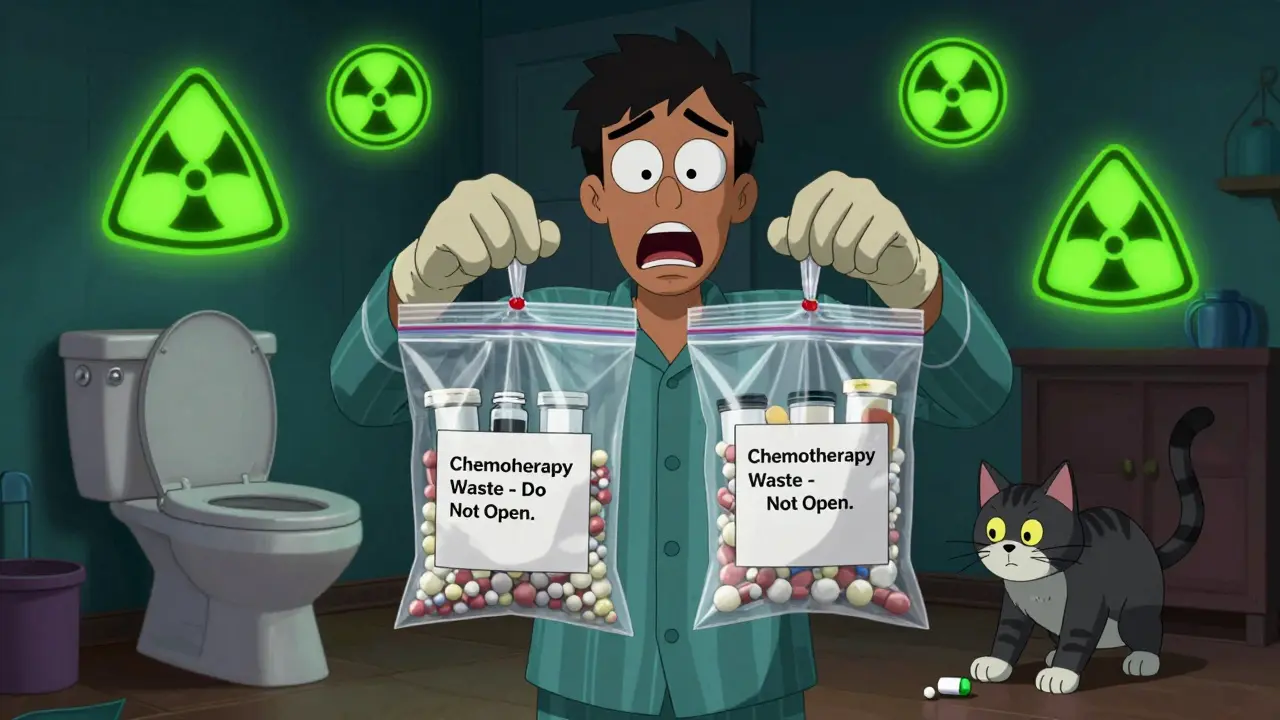
Not all chemo drugs are the same. How you dispose of them depends on the form.Oral pills or capsules: Never crush, chew, or dissolve them. Even a small amount of dust can be dangerous. Place the empty bottle or blister pack directly into the inner plastic bag. Then put that bag into a second, identical bag. Seal both with a zip-tie or tape. Label the outer bag: "Chemotherapy Waste - Do Not Open."
Transdermal patches: These stick to your skin and release drugs slowly. After removing one, fold it so the sticky sides touch each other. Place it in the inner bag, then the outer bag. Don’t throw it in the trash loose - someone could touch the adhesive side.
Liquid chemo (oral or IV): If you spill it, follow the 15-step cleanup procedure from the Cancer Institute of New Jersey. Wear gloves, a gown, and eye protection. Use disposable cloths - never sponges. Soak up the spill, then seal everything in the inner bag. For unused liquid, pour it into a container with an absorbent material like kitty litter or paper towels. Seal it, then double-bag. Never pour chemo down the sink or toilet.
The 48- to 72-Hour Rule
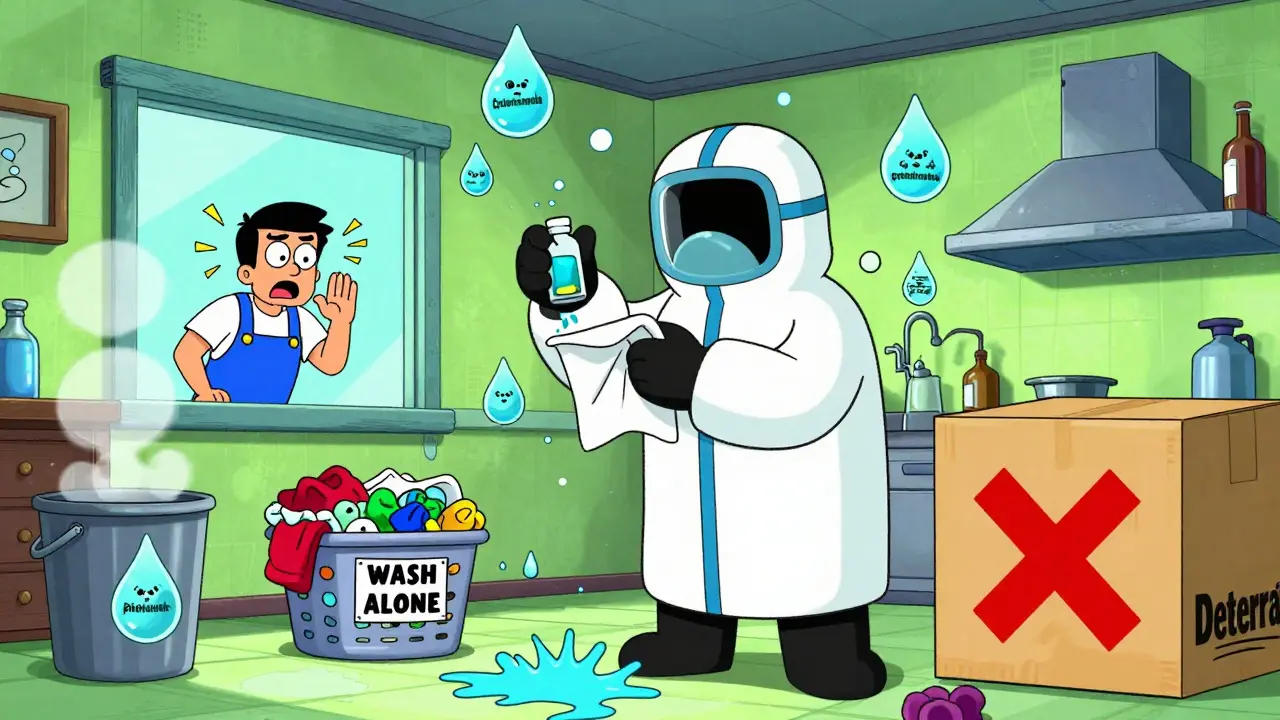
Your body is still excreting active chemo drugs for days after treatment. That means:- Flush the toilet twice after each use.
- Wash your hands thoroughly after using the bathroom.
- Wear gloves when handling soiled laundry, diapers, or incontinence pads.
- Keep your laundry separate from the rest of the household. Wash it alone in hot water with detergent.
- Don’t share towels, razors, or toothbrushes.
What NOT to Do
There are a lot of myths out there. Don’t fall for them:- Don’t flush. Not even if the bottle says “flush if no take-back program.” That rule doesn’t apply to chemo.
- Don’t use Deterra® or similar deactivation systems. Their website clearly states they’re not approved for chemotherapy.
- Don’t throw pills in the trash without double-bagging. Single bags can leak. A child or pet could get into them.
- Don’t reuse gloves or bags. Once they’ve touched chemo, they’re contaminated.
- Don’t assume your pharmacy will take it. Only 34% of U.S. pharmacies accept chemotherapy waste, according to the National Community Pharmacists Association.
Where to Take Chemo Waste
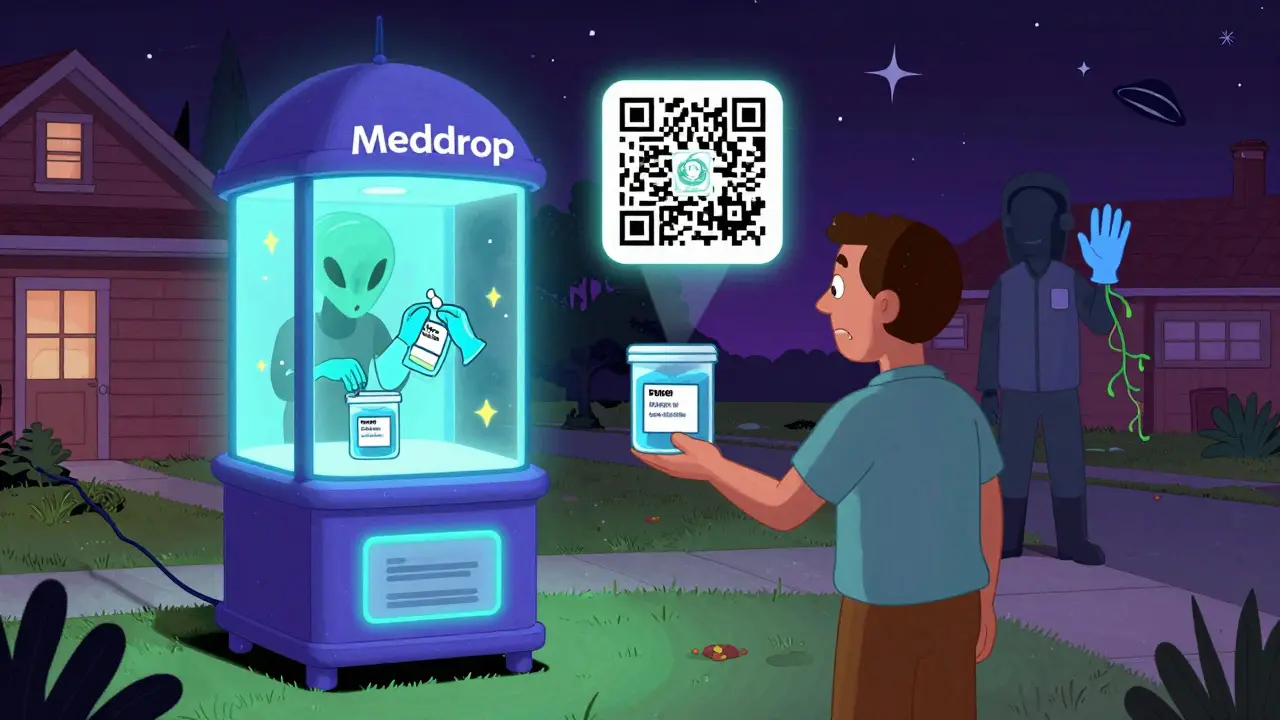
You have a few options - but not many.MedDrop kiosks: Stericycle operates over 1,800 of these across 47 states. They accept some chemo medications - but not all. Call ahead. They’ll tell you what’s allowed. Kiosks are usually found in pharmacies, hospitals, or fire stations.
Mail-back programs: Some clinics provide pre-paid, FDA-compliant envelopes. These are sealed, labeled, and shipped to licensed hazardous waste facilities. Only about 28% of U.S. pharmacies offer these for chemo. Ask your oncology nurse if yours does.
Household hazardous waste collection: Some cities run special drop-off days for toxic materials. Call your local waste authority and ask if they accept chemotherapy waste. Many don’t - because it’s risky to handle without proper training.
Return to your clinic: This is often the safest and easiest option. Most cancer centers will take back unused or expired chemo meds. Call your nurse’s office. They’ll tell you how to package it and when to drop it off.
What Happens After You Dispose of It
Once you’ve double-bagged your chemo waste and labeled it, you’re not done. You need to track it. If your clinic gave you a mail-back envelope, keep the tracking number. If you dropped it at a MedDrop kiosk, ask for a receipt. If you’re storing it at home until pickup, write the date you sealed the bag on the outside.Some states have specific rules. Only 19 states in the U.S. have laws specifically about home chemotherapy disposal. The rest rely on federal EPA and OSHA guidelines - which don’t cover homes. That’s why it’s so important to follow the CINJ 2022 guidelines, even if your state doesn’t require it.
The Cancer Drug Disposal Act of 2021 is still in Congress. If it passes, it would create national standards - including free disposal kits for patients. Until then, you’re responsible for doing it right.
Getting Help When You’re Overwhelmed
You’re not alone. CancerCare’s 2022 survey found that 68% of patients needed multiple training sessions just to feel confident handling disposal. That’s normal. If you’re unsure:- Call your oncology nurse. They’ve seen this hundreds of times.
- Ask for a written checklist. Memorial Sloan Kettering scores 9.2 out of 10 for clear instructions - others average 6.8.
- Request a video demo. Many clinics now offer QR codes on disposal kits that link to step-by-step videos.
Don’t guess. Don’t rely on memory. Mistakes happen - and the consequences are serious. A 2023 study in the Journal of Oncology Practice found only 53% of patients consistently follow safe disposal rules. You can be part of the 47% who get it right every time.
What’s Changing in 2026
The home chemotherapy market has grown nearly 30% since 2019. That means more people need better disposal tools. The FDA now requires all oral chemo labels to include disposal instructions - a change that took effect in March 2023. The EPA has allocated $4.7 million to research safer methods. Two new systems - ChemiSafe and the Oncology Waste Management Unit - are in final FDA review and could be available by late 2026.For now, the best system is the one you already have: double-bagging, gloves, and returning waste to your clinic. It’s not perfect - but it’s proven. And it saves lives - not just yours, but everyone around you.
Can I flush chemotherapy pills down the toilet?
No. Flushing chemotherapy drugs is illegal under EPA rules and can contaminate waterways. Even if the label says "flush if no take-back program," this instruction does not apply to chemotherapy agents. The FDA explicitly states that no chemotherapy medications should ever be flushed.
What should I do with empty chemo pill bottles?
Place empty pill bottles directly into the inner leak-proof plastic bag, then seal and place that bag into a second identical bag. Label the outer bag as "Chemotherapy Waste - Do Not Open." Do not recycle or reuse the bottles - they may still have trace amounts of drug residue.
How long should I wear gloves after taking chemotherapy?
Wear gloves whenever handling any chemotherapy medication, used syringes, or contaminated materials - including body waste like urine, vomit, or sweat. This precaution should continue for 48 to 72 hours after your last dose, as active drugs can remain in your bodily fluids during this time.
Can I use Deterra® or similar drug deactivation systems for chemo?
No. The Deterra® system and similar activated carbon products are not approved for chemotherapy drugs. Their official website states they are designed for conventional medications only. Using them for chemo could leave active toxins unneutralized and create a false sense of safety.
Where can I find a MedDrop kiosk that accepts chemotherapy?
Stericycle operates over 1,800 MedDrop kiosks across 47 states, but not all accept chemotherapy. Call ahead or visit Stericycle’s website to check if your local kiosk accepts cytotoxic waste. Some only take non-hazardous drugs. Your oncology clinic can provide a list of nearby approved locations.
Is it safe to wash chemo-contaminated laundry with other clothes?
No. Wash any clothing, bedding, or towels that have come into contact with chemotherapy drugs separately in hot water with detergent. Wear gloves when handling soiled laundry, and rinse the washing machine afterward. Do not mix chemo-contaminated items with regular laundry to avoid cross-contamination.
What if I spill chemotherapy liquid at home?
Put on gloves, a gown, and eye protection. Use disposable paper towels or cloths to soak up the spill. Place all contaminated materials into a leak-proof plastic bag, then double-bag. Clean the area with water and detergent. Never use sponges or reusable cloths. Follow the full 15-step cleanup procedure from the Cancer Institute of New Jersey’s 2022 guidelines.
Can I dispose of chemo waste in my regular trash can?
Only if you double-bag it properly. Place all chemo waste - pills, vials, syringes, gloves - into an inner leak-proof plastic bag, seal it, then place it into a second identical bag. Label the outer bag clearly. Never put chemo waste in your trash without double-bagging. Single bags can tear or leak, exposing others to toxic substances.

Katie Mccreary
January 28, 2026 AT 11:19SRI GUNTORO
January 29, 2026 AT 02:11Kevin Kennett
January 30, 2026 AT 15:49Jess Bevis
January 31, 2026 AT 16:50Rhiannon Bosse
February 2, 2026 AT 15:15doug b
February 2, 2026 AT 19:10Linda O'neil
February 2, 2026 AT 20:52Robert Cardoso
February 4, 2026 AT 18:27James Dwyer
February 6, 2026 AT 12:12matthew martin
February 6, 2026 AT 18:40Jeffrey Carroll
February 8, 2026 AT 12:19Phil Davis
February 9, 2026 AT 03:00Irebami Soyinka
February 10, 2026 AT 16:49