 Feb, 8 2026
Every year, thousands of people in the U.S. take the wrong medication or the wrong dose-not because they made a mistake, but because the pharmacy label was wrong. It sounds rare, but it’s not. According to the Institute for Safe Medication Practices, dispensing errors account for 16-20% of all medication mistakes in community pharmacies. And here’s the scary part: pharmacy labeling errors often slip through even the best pharmacist’s checks. That’s why your final look at the label isn’t just a formality-it’s your last line of defense.
What Exactly Is a Pharmacy Labeling Error?
A pharmacy labeling error happens when the information on your medication bottle or bag doesn’t match what your doctor prescribed. It could be the wrong drug name, the wrong strength, the wrong directions, or even the wrong form-like getting capsules when you were supposed to get tablets. These aren’t just typos. They’re dangerous.Some of the most common mistakes include:
- Confusing drugs with similar names-like hydralazine and hydroxyzine, or cycloserine and cyclosporine. These are called look-alike/sound-alike (LASA) errors and make up about 30% of all dispensing mistakes.
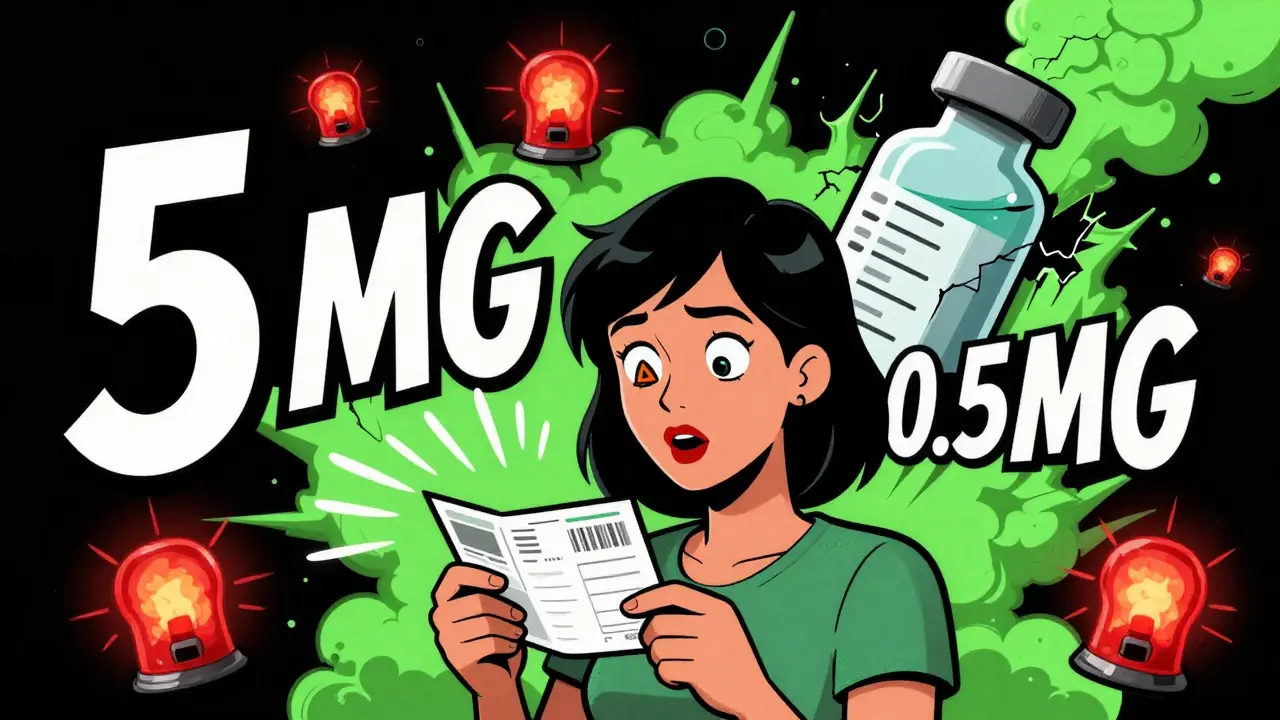
- Wrong dosage strength-especially with decimal points. A label that says “5 mg” instead of “0.5 mg” on a blood thinner like warfarin can lead to a 10-fold overdose.
- Missing or unclear directions-like “take once daily” vs. “take three times a day.”
- No indication listed-meaning you don’t know why you’re taking it. Only 18% of community pharmacy labels include this, even though it’s a key safety tool.
The FDA and ASHP both agree: if the label doesn’t clearly say why you’re taking the drug, you’re more likely to take it wrong-and not even realize it.
The Five Things You Must Check Every Time
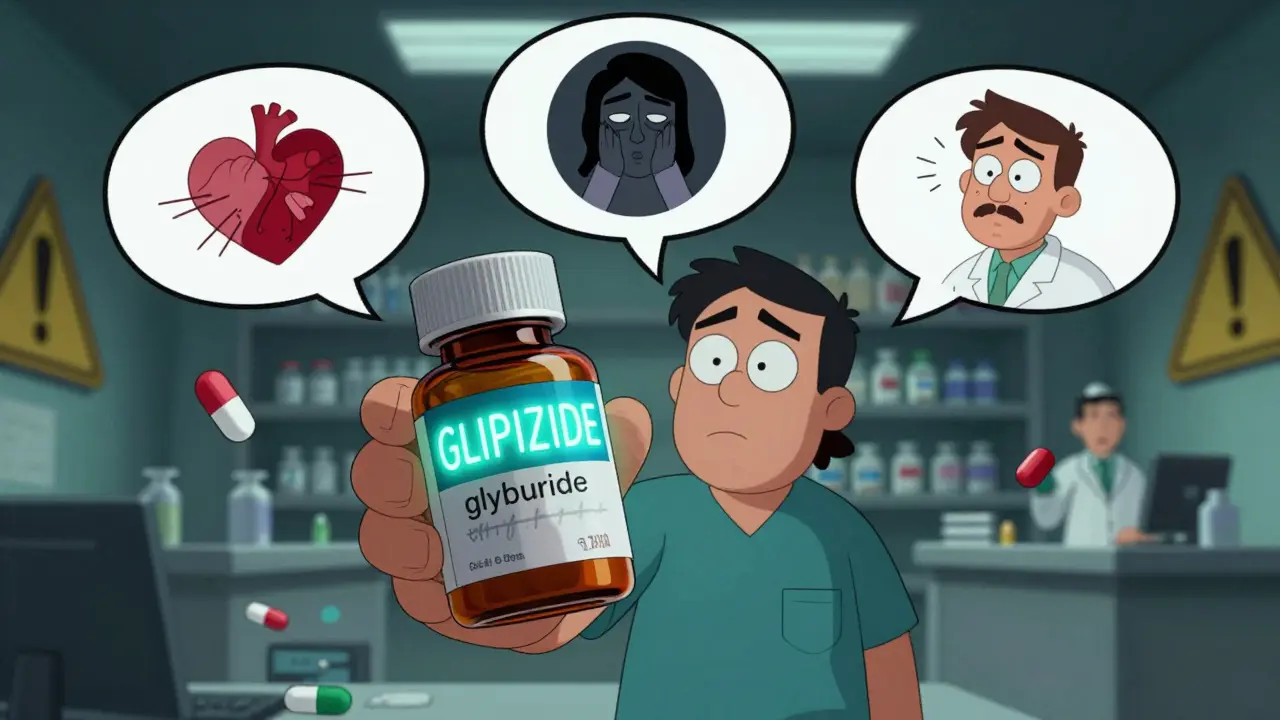
You don’t need to be a pharmacist to catch a mistake. You just need to check five things every time you pick up a new prescription. This isn’t optional. It’s your safety checklist.- Drug name - Read both the brand name and generic name aloud. If it says “Lisinopril” but your doctor said “Zestril,” they’re the same drug. But if it says “Lisinopril” and you were supposed to get “Lisinopril-HCTZ,” that’s a problem. Pay attention to tall-man lettering: GLIpiZIDE vs. glyBURide. The capital letters highlight the differences.
- Strength - Read the number out loud. Is it 5 mg, 50 mg, or 0.5 mg? Say it out loud. Hearing it helps your brain catch mistakes your eyes miss. Warfarin, insulin, and levothyroxine are high-risk here. A single decimal error can be life-threatening.
- Dosage form - Are you getting a tablet, capsule, liquid, or patch? If you were prescribed a tablet but got a liquid, ask why. Sometimes, it’s fine (like for someone who can’t swallow pills). But if it’s not what your doctor ordered, question it.
- Directions - “Take one by mouth daily” should match what your doctor told you. If they said “take with food” and the label says “take on empty stomach,” that’s a red flag.
- Indication - This is the most overlooked one. The label should say why you’re taking it: “for high blood pressure,” “for anxiety,” “for diabetes.” If it’s blank, ask. A 2016 study found that including the indication helps patients catch wrong-medication errors 63% of the time.
Dr. Michael Cohen of ISMP says the best way to catch errors is to read the label aloud. It activates a different part of your brain. You’re not just seeing the words-you’re hearing them. And that’s how people catch mistakes like “10 mg” instead of “1 mg.”
High-Risk Medications: Where Errors Hurt Most
Not all medications are created equal when it comes to labeling mistakes. Some errors are more dangerous than others. The FDA calls these “high-alert medications.” If you’re taking any of these, double-check extra carefully:- Insulin - Wrong dose can cause coma or death.
- Warfarin - A tiny change in strength can cause bleeding or clots.
- Opioids - Even a small overdose can stop your breathing.
- Levothyroxine - Too much can cause heart problems; too little leaves you exhausted.
- Anticoagulants - Like heparin or rivaroxaban. These are notorious for decimal errors.
According to the FDA’s 2021 Adverse Event Reporting System, these five types account for 65% of serious outcomes from labeling errors. If you’re on one of these, don’t just glance at the label-study it.
Real Stories: People Who Caught the Mistake
On Reddit’s r/Pharmacy community, a user named u/MedSafetyNurse shared how she caught a 10-fold error on her own warfarin prescription. The label said “5 mg,” but she knew her dose was “0.5 mg.” She called the pharmacy. They fixed it. That mistake could have led to internal bleeding.Another case in Michigan involved a patient who took glipizide instead of glyburide-two diabetes drugs with similar packaging. The label didn’t use tall-man lettering. The patient didn’t check the name closely. She ended up in the ER with severe low blood sugar. Both drugs are used for diabetes, but they work differently. If the label had shown “GLIpiZIDE” vs. “glyBURide,” she might have noticed.
These aren’t rare. A 2023 survey of 147 people on Reddit found that 68% had personally caught a labeling error in the past year. Most were strength mistakes or wrong drugs. But here’s the problem: only 37% of pharmacy customers consistently check their labels. Why? Because they trust the pharmacy. Or they don’t know what to look for.
How to Verify Like a Pro (The 4-Step Method)
The Agency for Healthcare Research and Quality (AHRQ) created a simple 4-step method that works. It takes less than 90 seconds. Use it every time:- Compare to your doctor’s prescription - Do you have a copy? Or a screenshot from your portal? Compare the name, strength, and directions word for word.
- Look for tall-man lettering - If the label says “pROMethazine” and you were supposed to get “premazinE,” the capitals show you the difference. This is standard for high-risk drugs-but not always used.
- Read the strength aloud - Say “five milligrams” or “zero point five milligrams.” Hearing it makes your brain pause and think.
- Confirm the reason - “Why am I taking this?” If you can’t answer it, ask the pharmacist. If they say “I don’t know,” walk out and call your doctor.
One study showed that patients trained in this method caught 92% of simulated errors. Untrained patients caught only 55%. That’s a huge gap.
Technology Is Helping-But Don’t Rely on It Alone
New tools are making it easier. Apps like MedSafety Check use your phone’s camera to scan the label and compare it to your prescription. CVS’s “Label Lens” lets you scan a QR code to hear an audio description of your meds. The new USP guidelines (effective May 1, 2024) require labels to use 12-point font and high contrast so older eyes can read them.But here’s the truth: technology doesn’t replace your brain. A 2022 study in the Annals of Internal Medicine found that 68% of patients who spotted a mistake still took the medication because they didn’t want to “bother” the pharmacist. That’s the real danger-not the error, but the silence.
What to Do If You Spot an Error
If you catch something wrong:- Don’t take the medication.
- Ask the pharmacist to double-check the prescription with the doctor.
- Request a printed copy of the original prescription for comparison.
- If they dismiss you, call your doctor’s office directly.
- Report it to your state board of pharmacy. In 34 states, this is now mandatory for pharmacies to track.
Pharmacies are required to correct errors. You’re not being difficult. You’re being smart.
Final Thought: You’re the Last Line of Defense
Pharmacists are trained professionals. They do their best. But even the best systems miss mistakes. Studies show pharmacist double-checks alone fail to catch 3.4% of errors. That’s one in every 30 prescriptions. Your job isn’t to replace them-it’s to be the final checkpoint.Spending 90 seconds checking your label isn’t a waste of time. It’s the difference between taking the right medicine and taking a dangerous mistake. Your health isn’t something you delegate. It’s something you protect.
What should I do if the pharmacy label doesn’t match my doctor’s prescription?
Don’t take the medication. Ask the pharmacist to verify the prescription with your doctor’s office. Request a printed copy of the original prescription for comparison. If the pharmacy refuses to fix it, call your doctor directly. You have the right to safe medication, and pharmacies are required to correct errors.
Why is the indication (reason for taking the drug) important on the label?
The indication tells you why you’re taking the drug. If you’re supposed to take it for high blood pressure but the label says “for anxiety,” you might not notice it’s the wrong drug. A 2016 study found that including the indication helps patients catch wrong-medication errors 63% of the time. It’s a simple safety feature that’s missing from most pharmacy labels.
Can I trust my pharmacist not to make a mistake?
Pharmacists are trained and usually careful, but errors still happen. Studies show that even with double-checks, about 3.4% of medication selection errors go unnoticed. That’s why patient verification is critical-it’s the last safety layer. Trust doesn’t replace verification. Your eyes and voice are your best tools.
What are look-alike/sound-alike (LASA) drug errors?
LASA errors happen when two drugs have similar names or spellings, like hydralazine and hydroxyzine, or glipizide and glyburide. These are common causes of dispensing mistakes. The FDA identifies over 1,500 risky pairs. Tall-man lettering (like GLIpiZIDE vs. glyBURide) helps, but not all pharmacies use it. Always read the full name carefully.
How often do labeling errors actually reach patients?
According to Pharmacy Times, over 1,200 labeling errors reached patients in just 18 months across 15 states. That’s about 31% of all dispensing errors. Only 34% of those were caught by patients before they took the medication. That means most people take the wrong drug without realizing it. Your check could be the one that stops it.
If you’re taking insulin, warfarin, opioids, levothyroxine, or any high-alert medication, make this checklist part of your routine. You don’t need to be a doctor to save your own life. You just need to look closely, read aloud, and speak up.

John McDonald
February 9, 2026 AT 11:46I used to think pharmacists were infallible until my mom got metformin instead of metoprolol. Same damn pill shape, different heart meds. I read the label out loud-‘take once daily’-and she said, ‘But my doctor said twice.’ We called the pharmacy. They apologized. Fixed it. Never skip the out-loud check. It’s not paranoia-it’s survival.
Chelsea Cook
February 10, 2026 AT 02:51Oh sweet mercy, another ‘read the label’ PSA. Look, I get it. But can we talk about how pharmacies charge $12 for a 30-day script and then slap a label on it like it’s a grocery bag from 7-Eleven? I’ve had labels where the drug name was smaller than the barcode. And don’t get me started on ‘indication’ being blank. That’s not negligence-it’s a feature. They want you to stay confused so you keep coming back.
Andy Cortez
February 10, 2026 AT 08:59lol so u just gotta read the label? what a revolutionary idea. next u’ll tell us to check if the milk is expired before drinking it. also, ‘tall-man lettering’? like, capital letters? i didn’t know we were back in 1998. and why is the FDA just now mandating 12pt font? my grandma’s reading glasses are more advanced than this system. also, i took my meds once without checking and lived. so maybe stop scaring people?
Jacob den Hollander
February 10, 2026 AT 15:19Hey, I just wanted to say-this post really hit home. Last month, I picked up my sister’s new prescription for gabapentin. The label said ‘take three times daily’ but her doctor said twice. I asked the pharmacist. He paused, looked at the screen, and said, ‘You’re right. My bad.’ He gave her a new bottle, free refill, and a handwritten apology note. I cried. Pharmacists aren’t robots. They’re humans. But they’re overwhelmed. So yeah, check the label. But also, be kind. A little patience goes a long way.
Patrick Jarillon
February 12, 2026 AT 09:35You think this is about labeling? Nah. This is about the pharmaceutical-industrial complex. The same companies that make the drugs also design the labels. They want you to misread them. Why? So you end up on a second, third, fourth drug. They profit off dependency. And the FDA? They’re paid by Big Pharma. The ‘indication’ isn’t missing by accident-it’s erased to keep you dependent. Don’t trust the label. Trust your gut. And pray.
Kathryn Lenn
February 13, 2026 AT 19:03Wow. Another ‘check your meds’ lecture. Like, cool. But have you ever tried explaining to a 70-year-old with dementia why they’re taking a pill that says ‘for anxiety’ when they’ve never been anxious? Or why their blood thinner label doesn’t say ‘for AFib’? The system is broken. And now you want me to be the one holding the flashlight? I’m tired. I just want to live without being a medical detective.
John Watts
February 13, 2026 AT 21:59This is why I tell everyone I know: read the label aloud. Seriously. It’s not just about catching typos-it’s about waking up your brain. I used to be the guy who just grabbed the bottle and ran. Then I had a friend who took the wrong antibiotic and ended up in the ICU. Now? I do the whole checklist. Name. Strength. Form. Directions. Reason. Takes 90 seconds. Could save your life. Or someone else’s. Don’t be lazy. Your body is your only one.
Randy Harkins
February 15, 2026 AT 05:41Thank you for this. 💙 I’ve been a pharmacy tech for 12 years. We’re drowning in scripts, understaffed, and underpaid. But we *want* to get it right. Every time someone checks their label, it helps us. It’s not a challenge-it’s a partnership. I’ve cried because a patient caught a mistake I missed. Please don’t be afraid to speak up. We’re not mad. We’re grateful. And we’re rooting for you.
Chima Ifeanyi
February 15, 2026 AT 09:25Let’s deconstruct the epistemological fallacy here. The assumption that human verification supersedes systemic integrity is a classic neoliberal illusion. The labeling paradigm is a symptom of a larger pharmacovigilance architecture that commodifies patient agency as a risk-mitigation strategy. In essence, you’re being asked to perform labor that should be institutionalized. The real solution isn’t reading labels-it’s defunding the profit-driven pharmacy model. Until then, you’re just a glorified QA checker.
Tori Thenazi
February 15, 2026 AT 22:54I don’t trust ANY label anymore. I swear, last week I got a pill that said ‘Lisinopril’ but the bottle had a picture of a cat? No, wait-that was my phone. But I swear, I thought the label had a different logo. And then I saw a guy at CVS just swallow his pills without looking. What if they’re all fake? What if the whole system is a hologram? I started keeping my meds in a locked box with a note from my spirit guide. Just saying. You’re not safe. Nobody is.
Ken Cooper
February 16, 2026 AT 21:47Just wanted to say-this is so important. I’m a dad of two. My 8-year-old has asthma. I check every inhaler label. Always. Even if it’s the same one I got last month. I read it out loud. I say, ‘For wheezing.’ I say, ‘Two puffs, twice a day.’ My kid repeats it back to me. It’s become our ritual. I didn’t know it would make me feel safer. But it does. And honestly? It’s kinda beautiful. Don’t underestimate the power of saying it out loud.
MANI V
February 17, 2026 AT 07:13Wow. So now we’re blaming patients for pharmacy errors? How convenient. You know who’s really responsible? The corporations that cut corners to maximize profit. The pharmacists? They’re just doing their job under impossible conditions. And you? You’re just another middle-class fool thinking you can ‘outsmart’ a system designed to keep you dependent. Read the label? Please. Read the fine print on your insurance policy. That’s where the real danger lies.