 Jan, 11 2026
When your blood sugar drops too low, your body doesn’t just feel off-it can go into crisis mode. You might shake, sweat, or suddenly feel confused. In severe cases, you could pass out or have a seizure. This isn’t just a minor inconvenience. It’s hypoglycemia, and it’s one of the most common and dangerous complications of diabetes. But here’s the good news: it’s almost always preventable if you know what to look for and how to act.
What Exactly Is Hypoglycemia?
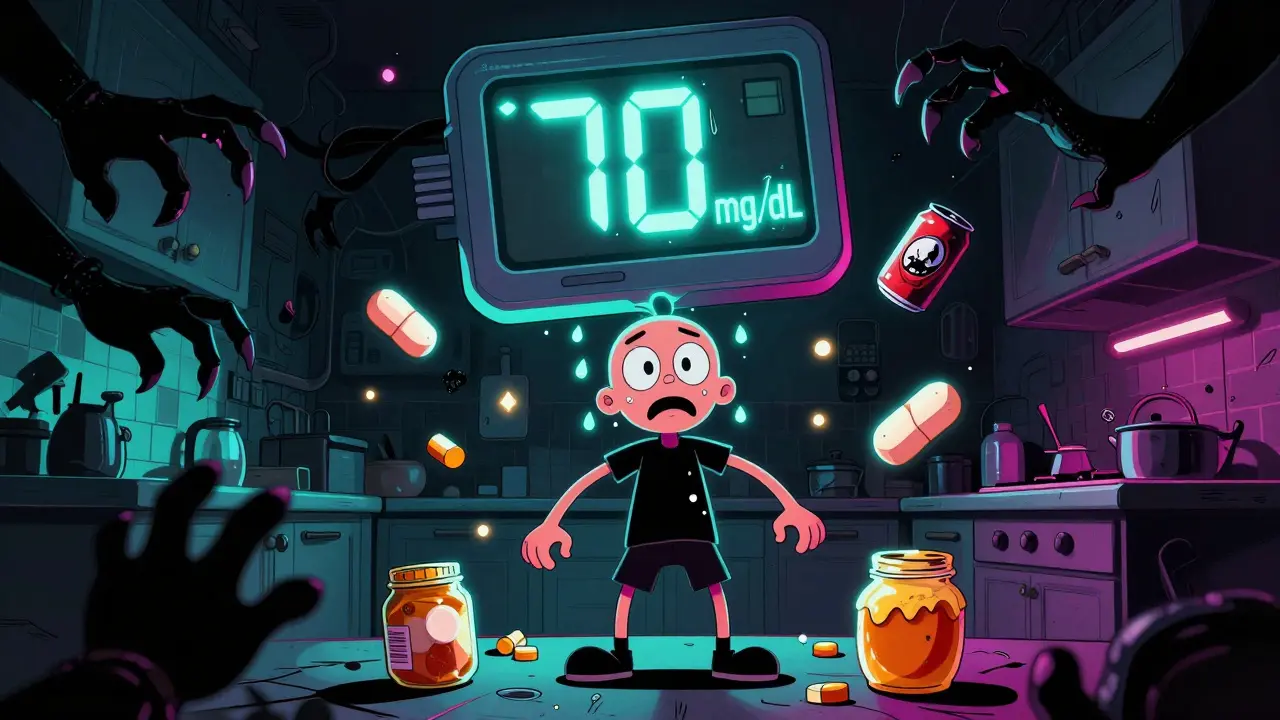
Hypoglycemia means your blood glucose level has fallen below 70 mg/dL (3.9 mmol/L). For people with diabetes, this is the official warning line. For those without diabetes, it’s even lower-at 55 mg/dL (3.1 mmol/L)-but most episodes happen in people managing diabetes with insulin or certain oral medications. It’s not about being hungry. It’s about your body running out of fuel. Glucose is the primary energy source for your brain. When levels drop too far, your brain starts to misfire. That’s when you get symptoms like dizziness, blurred vision, or trouble concentrating. Your body also releases stress hormones like adrenaline to try to raise your sugar back up. That’s what causes the shaking, racing heart, and cold sweats. The American Diabetes Association breaks hypoglycemia into three levels:- Level 1: Glucose between 54 and 69 mg/dL. You might feel symptoms, but you can still treat yourself.
- Level 2: Glucose below 54 mg/dL. This is clinically significant. Your brain is starting to struggle.
- Level 3: Severe hypoglycemia. You’re unable to treat yourself. You need help from someone else-often a glucagon injection.
What Do Low Blood Sugar Symptoms Look Like?
Symptoms vary from person to person-and even from one episode to the next. That’s why it’s so easy to miss. Some people get the classic signs: trembling, sweating, hunger, and a pounding heart. Others feel nothing until they’re dizzy or confused. Here’s what to watch for:- Shaking or trembling (hands, legs, whole body)
- Sudden sweating, even when it’s not hot
- Fast heartbeat or palpitations
- Feeling anxious, irritable, or like you’re about to panic
- Hunger that comes out of nowhere
- Blurred or double vision
- Confusion, trouble speaking, or feeling “foggy”
- Weakness or drowsiness
- Headache
- Numbness or tingling in the lips or tongue
What Causes Hypoglycemia?
In people with diabetes, most episodes are caused by a mismatch between medication, food, and activity. Here’s how it breaks down:- Too much insulin or diabetes medication (73% of cases): Taking your usual dose but eating less, or injecting too much because you misread your meter.
- Not eating enough carbs (19%): Skipping a meal, eating a small snack, or going too long between meals.
- Exercise without adjusting (9%): Even a 30-minute walk can lower blood sugar. If you don’t eat extra carbs or reduce insulin, your levels can crash.
- Alcohol: Especially on an empty stomach. Alcohol blocks your liver from releasing stored glucose.
- Delayed digestion: Conditions like gastroparesis can cause sugar to enter your bloodstream slower than expected.
- Reactive hypoglycemia: Blood sugar drops within 2-4 hours after eating. Often linked to gastric bypass surgery or prediabetes.
- Fasting hypoglycemia: Happens when you haven’t eaten for hours. Could signal a tumor (like an insulinoma), liver disease, or hormone problems.
How to Treat Low Blood Sugar Right Away
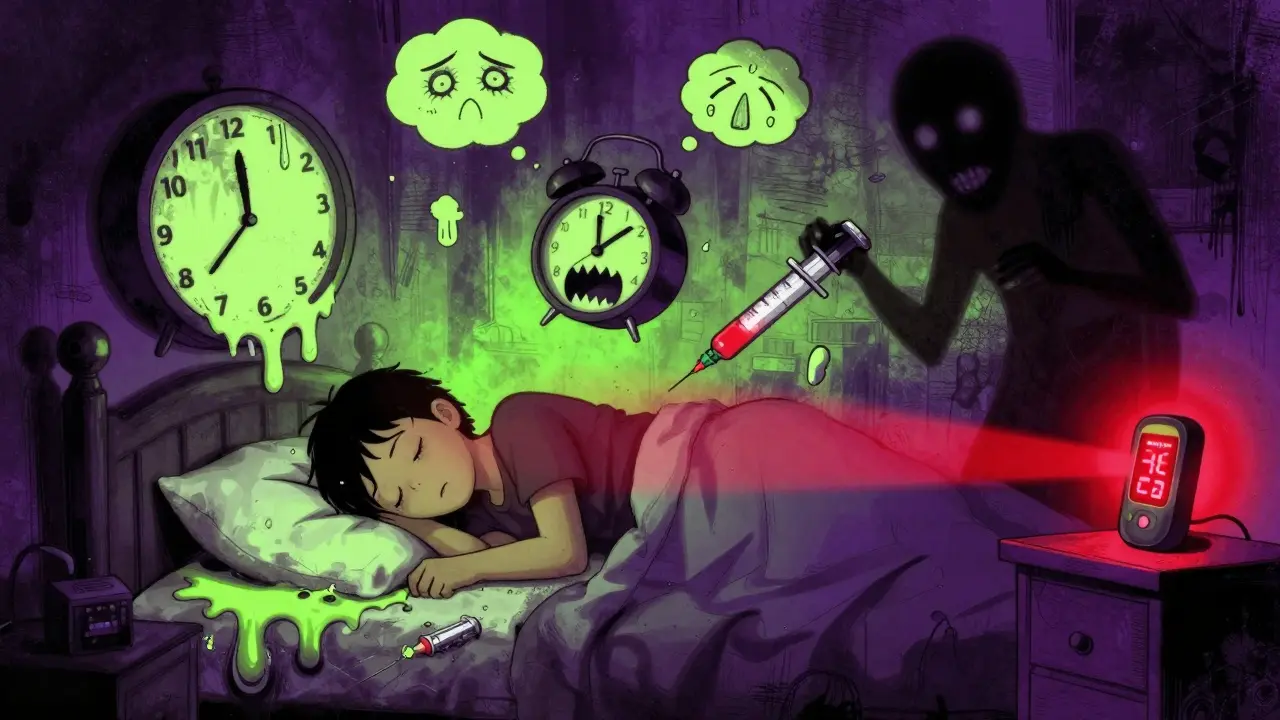
If you feel symptoms-or your glucose meter says you’re below 70 mg/dL-act fast. Don’t wait. Don’t think you’ll “just eat lunch soon.” The standard rule is the 15-15 Rule:- Consume 15 grams of fast-acting carbohydrates.
- Wait 15 minutes.
- Check your blood sugar again.
- If still below 70 mg/dL, repeat.
- 4 glucose tablets
- 1/2 cup (4 oz) of regular soda (not diet)
- 1 tablespoon of honey or sugar
- 1/2 cup of fruit juice
- 1 tube of glucose gel
- Nasal glucagon (like Baqsimi): A puff up the nose. No needle. Works in 10-15 minutes.
- Intramuscular glucagon: Injected into the thigh or arm. Also fast-acting.
How to Prevent Hypoglycemia Before It Happens
Prevention isn’t guesswork. It’s planning. 1. Know your triggers. Keep a log. When do your lows happen? After workouts? Skipping breakfast? At night? Patterns reveal your risk zones. 2. Match food to meds. If you take insulin, learn carb counting. For every unit of rapid-acting insulin, you usually need 10-15 grams of carbs. That varies by person, but tracking helps you adjust. 3. Adjust for activity. If you’re going for a long walk, bike ride, or swim, check your sugar before, during, and after. You may need to:- Eat an extra 15-30g of carbs before exercise
- Reduce your insulin dose by 20-50% (talk to your doctor first)
- Check your sugar 1-2 hours after finishing
Special Cases: Nighttime and Older Adults
Nocturnal hypoglycemia is a silent killer. You sleep through it. That’s why 6% of unexpected deaths in young Type 1 patients are linked to nighttime lows. Tips for safer nights:- Check your sugar before bed. Aim for above 80 mg/dL.
- If you’ve exercised during the day, have a small bedtime snack with protein and carbs (like peanut butter on toast).
- Use a CGM with overnight alarms.
- Ask your doctor about a lower basal insulin dose at night.
- Fall
- Act confused
- Have slurred speech
- Seem “off” or unusually tired
What’s New in Hypoglycemia Management?
Technology is moving fast. In 2023, the FDA approved Dasiglucagon (Zegalogue), a nasal glucagon that works in under 15 minutes with a 94% success rate. It’s easier than injections and doesn’t need refrigeration. Closed-loop systems-also called artificial pancreases-are now available. The Tandem Control-IQ system automatically adjusts insulin based on real-time glucose readings. In trials, it reduced time spent below 54 mg/dL by over 3 hours per week. Researchers are also testing glucose-responsive insulin-insulin that turns itself off when blood sugar drops. Early trials show a 62% reduction in hypoglycemia duration. But tech isn’t a magic fix. Cost is a barrier. Nearly 1 in 4 people skip monitoring supplies because they’re too expensive. Telehealth programs that provide coaching and support have cut severe lows by 41% in Medicaid patients. Education matters as much as gadgets.When to Call for Help
You don’t need to handle every low alone. Call 911 or go to the ER if:- You’ve had a seizure or lost consciousness
- Glucagon was given and there’s no improvement after 15 minutes
- You’re confused and can’t swallow or follow instructions
- You’ve had multiple lows in 24 hours

Bryan Wolfe
January 12, 2026 AT 12:26Just wanted to say this is one of the clearest, most practical guides I’ve ever read on hypoglycemia-seriously, thank you for laying it out like this. I’ve been living with Type 1 for 12 years and still learned a few new things, especially about nighttime patterns and the new nasal glucagon options. You’re right: it’s not about perfection, it’s about protection. I keep glucose gel in my wallet, my car, and my gym bag now. No more ‘I’ll just eat something later.’ Never again.
laura manning
January 13, 2026 AT 06:47While the article is clinically accurate, it lacks sufficient nuance regarding socioeconomic barriers to CGM access; in the U.S., 23% of patients report skipping monitoring due to cost-yet no systemic solutions are proposed. Furthermore, the 15-15 Rule, while widely endorsed, fails to account for individual insulin sensitivity variance, which can lead to rebound hyperglycemia in up to 37% of cases. A more personalized, algorithm-driven approach is warranted.
Sumit Sharma
January 14, 2026 AT 16:26Let me clarify this for the uninitiated: hypoglycemia isn’t ‘just a low sugar episode’-it’s a neuroglycopenic emergency with direct implications for cerebral metabolism. The 15-15 rule is outdated. Recent ADA guidelines (2023) recommend 20g of glucose for Level 2 events, especially if HbA1c is >7.5%. Also, fruit juice? Inefficient. Glucose tabs or gel have faster gastric absorption due to lower osmolarity. And if you’re using insulin analogs like Fiasp or Lyumjev, you need to adjust your carb ratios accordingly. This isn’t advice-it’s biochemistry.
Jay Powers
January 15, 2026 AT 02:10I’ve had lows so bad I couldn’t speak and people thought I was drunk. This post got me crying in the best way. You’re not alone. I used to hide my glucose meter. Now I tell my coworkers where it is. I carry two glucagon pens. I even taught my 70-year-old mom how to use the nasal one. It’s not about being perfect. It’s about being ready. And if you’re reading this and you’re scared? You’re already doing better than you think.
Craig Wright
January 15, 2026 AT 15:54It is, of course, entirely unacceptable that the United States has failed to implement universal access to continuous glucose monitors. In the UK, the NHS provides CGMs to all insulin-dependent patients regardless of income. Here, people are forced to ration their test strips. This is not healthcare-it is a market failure. The fact that this article does not explicitly condemn the profit-driven pharmaceutical system is, frankly, dismaying.
Lelia Battle
January 16, 2026 AT 13:02There’s something quietly profound about the idea that the brain-our most vital organ-relies entirely on a single molecule for fuel. Glucose isn’t just energy; it’s the substrate of consciousness. When it drops, the self begins to unravel. We call it hypoglycemia, but it’s really a momentary erasure of identity. The fact that we’ve built entire technologies to prevent this erasure speaks to how deeply we value the continuity of thought. This isn’t just medicine. It’s a meditation on what it means to be present.
Rinky Tandon
January 18, 2026 AT 08:31Ugh, I can’t believe people still think juice or honey is enough. I had a friend pass out at a concert because she used honey. Honey is 40% fructose-it takes FOREVER to convert to glucose. You need pure dextrose. Also, why are you letting your insulin pump do the thinking? That’s a recipe for disaster. I’ve had 17 severe lows since 2018. I don’t trust tech. I trust my fingerstick. And I don’t care what your ‘algorithm’ says. If your sugar is 68, you eat 20g. Period. End of story. Stop being lazy.
Ben Kono
January 19, 2026 AT 00:50