 Dec, 17 2025
When you land in Tokyo after a 12-hour flight from Brisbane, your body still thinks it’s 3 a.m. Even though it’s 8 a.m. local time, you’re wide awake, heart racing, and your stomach is churning. This isn’t just tiredness-it’s jet lag, a real biological mismatch between your internal clock and the world outside. And if you’ve ever reached for a time-released melatonin pill to fix it, you’re not alone. But here’s the truth: time-released melatonin might be making your jet lag worse.
Why Jet Lag Isn’t Just ‘Being Tired’
Jet lag isn’t a side effect of long flights. It’s a circadian rhythm disorder. Your body runs on a 24-hour internal clock that controls sleep, hunger, hormone release, and body temperature. When you cross three or more time zones quickly, that clock doesn’t flip instantly. It takes days to adjust. Eastward travel-like flying from Australia to Europe-is harder because you’re forcing your body to go to sleep earlier than it wants. Westward travel-say, from the U.S. to Australia-is easier because you’re stretching your day, which your body naturally prefers. According to the CDC Yellow Book 2024, you typically need about one day per time zone crossed to fully adjust. For an 8-time-zone trip, that’s 8 to 12 days. But you don’t have to wait that long. The right tools can cut that time in half.The Melatonin Myth: Time-Released vs. Immediate-Release
Melatonin is the hormone your brain naturally produces at night to signal sleep. That’s why it’s the most studied and recommended supplement for jet lag. But not all melatonin is created equal. Time-released melatonin is designed to slowly drip into your system over 6 to 8 hours. It sounds ideal-like a gentle night-long sleep aid. But your circadian clock doesn’t work that way. It needs a sharp, precise signal, not a slow drip. Research from the Journal of Biological Rhythms (2017) shows melatonin’s half-life is only 40 to 60 minutes. That means it should rise quickly and drop just as fast. When you take time-released melatonin, you’re flooding your system with the hormone during times it should be absent. If you take it at 10 p.m. local time, you might still have elevated levels at 6 a.m. That’s when your body should be waking up, cortisol rising, and melatonin gone. Instead, you’re still under its influence. The result? Waking up groggy, feeling off, and your internal clock gets even more confused. A 2019 study in Sleep Medicine found that 3 mg of immediate-release melatonin taken at 10 p.m. local time produced a 1.8-hour phase advance. The same dose in time-released form? Only 0.6 hours. That’s a 67% drop in effectiveness. For eastward travelers-who need to shift their clock earlier-this difference is the gap between adapting in 3 days or 6.Why Experts Say Avoid Time-Released Melatonin
It’s not just anecdotal. Leading sleep researchers and institutions agree: - The American Academy of Sleep Medicine gives a strong, Level A recommendation for immediate-release melatonin for eastward travel across 2+ time zones. They state there’s insufficient evidence for time-released versions. - Dr. Charles Czeisler, chief of sleep at Brigham and Women’s Hospital, says time-released melatonin “conflicts with the phase-response curve requirements.” - The European Medicines Agency approved a prolonged-release melatonin product (Circadin) for insomnia in older adults-but specifically excluded jet lag as an indication. - Even the FDA, which doesn’t regulate melatonin as a drug, has flagged supplement inconsistencies. One study found melatonin content varied by up to 478% from what was on the label. Time-released products are even less regulated, making timing even more unpredictable. And travelers aren’t guessing. A 2023 survey of over 5,000 frequent flyers using the Sleep Cycle app found that those using time-released melatonin took 2.4 days longer to adjust than those using immediate-release. On Reddit’s r/Biohackers, 78% of users who tried time-released melatonin reported worse grogginess and slower recovery.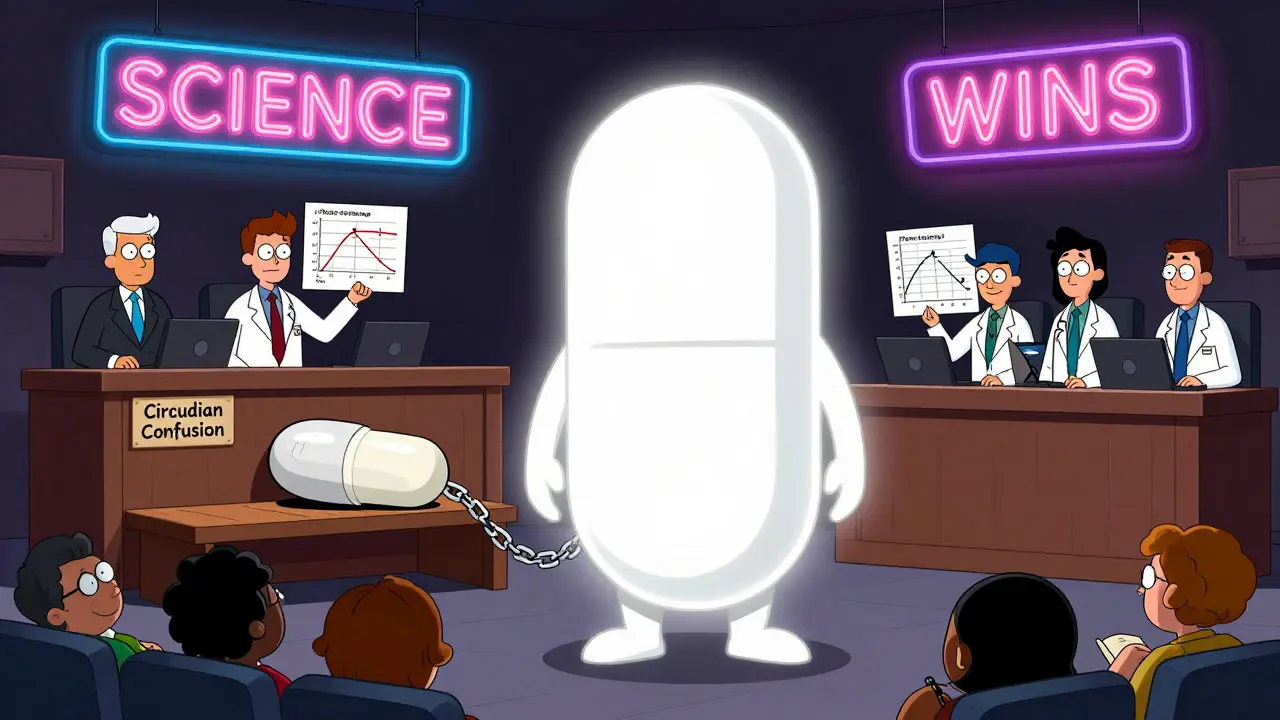
How to Use Immediate-Release Melatonin Correctly
If you’re going to use melatonin, use it right. Here’s the exact protocol backed by the Mayo Clinic and CDC:- For eastward travel (e.g., Australia to Europe): Take 0.5 to 3 mg of immediate-release melatonin 30 minutes before your target bedtime at your destination. Start this 1 to 2 days before departure if possible. For 5+ time zones, use 0.5 mg. For 7+ time zones, use 3 mg.
- For westward travel (e.g., Europe to Australia): Take 0.5 mg upon waking at your destination for 2-3 days. This helps delay your clock. But this is rarely needed-most people adjust naturally going west.
- Don’t take it too early or too late. Taking it at 7 p.m. when your body still thinks it’s 3 p.m. can push your clock in the wrong direction.
- Use it for 3-5 nights only. Melatonin isn’t meant for long-term use. It’s a temporary reset tool.
Timing Matters More Than Dose
You don’t need a big dose. Studies show 0.5 mg is just as effective as 5 mg for shifting your clock. Higher doses (3-5 mg) might help you fall asleep faster, but they don’t improve circadian adjustment. In fact, they increase the chance of morning grogginess. The real key? Timing. Your body responds to melatonin in a narrow window-usually 2 to 3 hours around your biological night. Take it too early, and you delay your clock. Take it too late, and you don’t shift it enough. That’s why apps like Timeshifter (used by over 1.2 million travelers) are so valuable. They don’t just tell you when to take melatonin. They factor in your chronotype (are you a night owl or early bird?), flight path, light exposure, and even your sleep history. One Business Insider travel writer used it to adapt to a 9-time-zone jump in just 3.5 days-using only 1 mg of immediate-release melatonin at the exact right time.What Else Helps? Light and Routine
Melatonin isn’t magic. It works best with light. Exposure to bright light (2,000-10,000 lux) at the right time tells your brain it’s daytime. For eastward travel, get sunlight in the morning at your destination. For westward, get it in the evening. Avoid blue light after dosing. Phones, tablets, and overhead LEDs suppress melatonin. If you’re taking melatonin at 10 p.m. local time, dim the lights and put your phone on grayscale mode. Stick to a strict sleep schedule. Even if you’re tired at 7 p.m., don’t nap. Stay awake until your target bedtime. Your body needs consistency to retrain.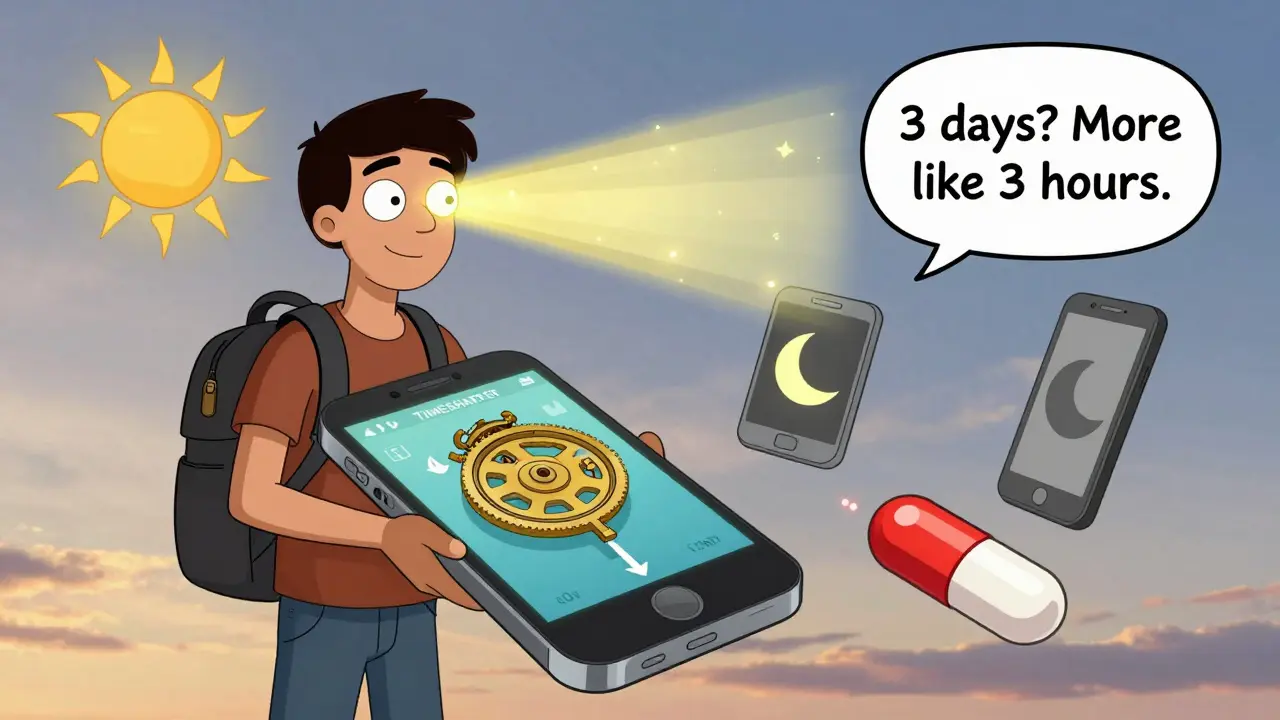
Alternatives to Melatonin
If melatonin doesn’t work for you-or you can’t get it-there are other options:- Zolpidem or eszopiclone: Prescription sleep aids that help you fall asleep fast. They don’t reset your clock, but they can help you get rest during adjustment.
- Modafinil: A stimulant used for daytime alertness. It helps you stay awake during the day but doesn’t fix your internal clock.
- Tasimelteon (Hetlioz): A newer FDA-approved drug that mimics melatonin but with more precise receptor binding. Still, it’s not time-released and isn’t approved for jet lag.
The Bigger Picture: Why This Matters
Jet lag isn’t just about feeling tired. It affects decision-making, reaction time, and even immune function. For business travelers, athletes, or medical professionals, that’s not just inconvenient-it’s risky. A 2023 survey found 42 of the Fortune 100 companies now provide immediate-release melatonin and timing guidance to frequent travelers. None recommend time-released versions. The global jet lag market is growing fast-projected to hit $2.89 billion by 2030. But the winners won’t be companies selling slow-release pills. They’ll be the ones offering precision timing tools, personalized protocols, and science-backed advice.Final Takeaway: Skip the Time-Released, Use the Right One
If you’re flying across time zones, don’t waste money or time on time-released melatonin. It’s not just less effective-it can actively interfere with your body’s ability to adapt. Stick with immediate-release melatonin, take it at the right time, and pair it with light and routine. You’ll feel like yourself again in days, not weeks. The science is clear. The data is solid. And the travelers who’ve tried both? They’re never going back to time-released.Is time-released melatonin safe for jet lag?
Time-released melatonin isn’t dangerous, but it’s not effective for jet lag. It can make symptoms worse by prolonging melatonin levels into your biological morning, which confuses your circadian clock. Experts from the American Academy of Sleep Medicine and Harvard Medical School advise against it for this purpose.
What’s the best dose of melatonin for jet lag?
For most people, 0.5 mg to 3 mg of immediate-release melatonin works best. Lower doses (0.5-1 mg) are enough to shift your clock. Higher doses (3-5 mg) help with sleep onset but don’t improve circadian adjustment. Start low and increase only if needed.
When should I take melatonin for a flight from Australia to Europe?
For eastward travel like Australia to Europe, take 0.5-3 mg of immediate-release melatonin 30 minutes before your target bedtime in Europe. If you’re crossing 7+ time zones, use 3 mg. Start this 1-2 days before departure. Avoid taking it too early-timing is more important than dose.
Can I use melatonin every day during my trip?
No. Melatonin is meant for short-term use-3 to 5 days max. Using it longer can disrupt your natural production and lead to dependency. Once your body adjusts to the new time zone, stop taking it.
Are there side effects of melatonin for jet lag?
Short-term use (3-7 days) is generally low-risk. Some people report morning grogginess, headaches, or vivid dreams. These are rare at low doses (0.5-1 mg). Avoid driving or operating machinery after taking it. If you’re pregnant, on blood thinners, or have autoimmune conditions, talk to a doctor first.
Do I need a prescription for melatonin?
No, melatonin is sold as a supplement in the U.S., Australia, and many other countries. But quality varies widely. Look for products with third-party testing (USP, NSF, or ConsumerLab seals). The FDA doesn’t regulate supplements, so labeled doses can be off by up to 478%.

Ryan van Leent
December 17, 2025 AT 20:20so i took time released melatonin on my last trip to germany and yeah i was a zombie for 3 days no cap
Laura Hamill
December 18, 2025 AT 22:50they dont want you to know this but the pharmaceutical companies paid off the CDC to push time released melatonin so you keep buying it lol. i saw a guy on youtube with a lab coat saying the FDA knows its fake. i dont trust no government or big pharma. i just take raw ashwagandha and stare at the sun at 4am like my grandpa taught me. #FreeTheClock
Vicki Belcher
December 19, 2025 AT 16:32OMG YES THIS IS SO IMPORTANT!! 🙌 I used to use time-released and felt like a zombie for days… then switched to 0.5mg immediate-release at 9pm local and BOOM - adjusted in 2 days!! 🌞✨ You’re not just helping yourself - you’re saving your productivity, your mood, your sanity. Thank you for this life-changing post!! 💖
Aboobakar Muhammedali
December 20, 2025 AT 05:19i read this while waiting for my flight to dubai and i felt like someone finally explained why i always feel broken after long flights. i never knew timing mattered more than dose. i always took 5mg because i thought more = better. i feel stupid now but also hopeful. thank you for writing this. i’ll try the 0.5mg now
Kathryn Featherstone
December 21, 2025 AT 12:39This is one of the clearest, most evidence-based explanations of jet lag I’ve ever read. I’ve been recommending melatonin to colleagues for years without knowing the difference between release types. I’m sharing this with my entire team before our next international trip. Thank you for taking the time to compile this.
Nicole Rutherford
December 23, 2025 AT 10:43Of course you’re telling people to use melatonin. The supplement industry is a scam. You think a pill fixes your circadian rhythm? You’re just trading one problem for another. Your body doesn’t need chemicals. It needs discipline. Sleep at the right time. No pills. No apps. Just stop being lazy. And don’t even get me started on those $200 ‘sleep coaches’.
Sahil jassy
December 23, 2025 AT 11:02bro i tried the 0.5mg at bedtime and it worked like magic 🙏 no grogginess next day. i was skeptical but now i’m a believer. you dont need much just the right time. thanks for the tip
jessica .
December 23, 2025 AT 21:00you guys are all being manipulated. melatonin is a military bioweapon designed to make travelers docile. the real solution is grounding your feet on concrete at sunrise. i’ve been doing it for 12 years and never had jet lag. the government banned this method because it’s free. check out the documentary ‘Sleeping in Chains’ on obscuretube.