 Apr, 26 2026
Milk Thistle & Medication Interaction Checker
Select Your Medication Type:
Please select a medication category to see the potential interaction profile.
You might think adding a natural supplement to your routine is a safe bet, but your liver doesn't always see it that way. When you take Milk Thistle is a flowering herb native to Mediterranean regions used primarily for its hepatoprotective properties, you aren't just supporting your liver-you're potentially changing how your body processes prescription medications. For some, this is a harmless addition; for others, it can shift the concentration of a critical drug in the bloodstream to a dangerous level.
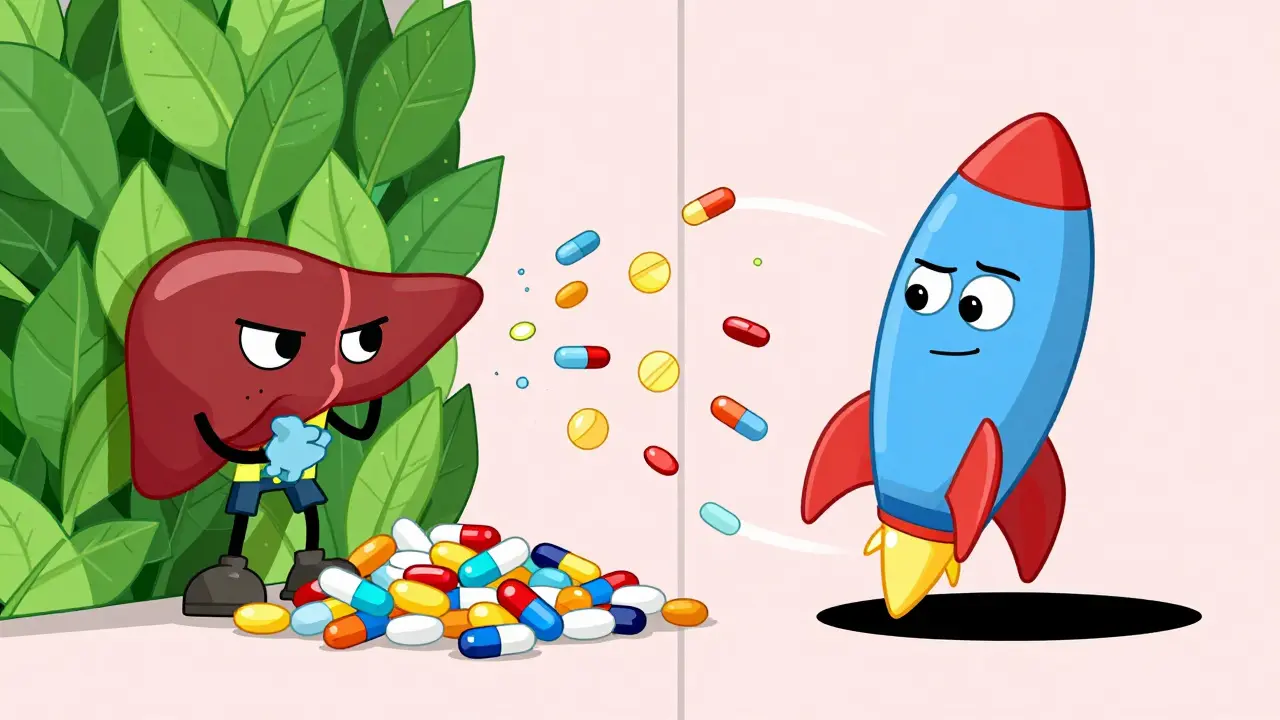
The core of the issue lies in the Cytochrome P450 a superfamily of enzymes responsible for the metabolism of the majority of drugs in the human liver (CYP) system. Think of these enzymes as the liver's processing plant. If a supplement like milk thistle slows down the plant, drugs build up in your system. If it speeds it up, the medication may leave your body too quickly to work. Because Silymarin the primary active compound in milk thistle consisting of flavonolignans like silybin interacts with these enzymes, the result can be unpredictable.
How Milk Thistle Changes Drug Metabolism
The interaction isn't a simple "on or off" switch. It depends on which specific enzyme is involved and how long you've been taking the supplement. Most of the action happens with three main enzymes: CYP3A4, CYP2C9, and CYP2D6.
For instance, research published in the Journal of Biomedical and Clinical Practice and Medicine showed that silymarin can inhibit CYP2C9 a liver enzyme that metabolizes various drugs, including certain blood thinners and anti-seizure medications activity by 15-23%. This means if you're taking a drug that relies on CYP2C9 to break down, the drug stays in your system longer, increasing the risk of side effects.
What makes this tricky is the "biphasic response." A study by Gurley et al. found that while taking silymarin for the first time might inhibit an enzyme, taking it consistently for 28 days could actually induce (speed up) that same enzyme by about 12.7%. You aren't just dealing with one effect; you're dealing with a moving target that changes as your body adapts to the supplement.
High-Risk Medications and Potential Conflicts
Not all medications are affected equally. The biggest red flags appear when you're using drugs with a "narrow therapeutic index"-meaning the difference between a helpful dose and a toxic dose is very small.
- Blood Thinners: Warfarin an anticoagulant medication used to prevent blood clots is a major point of concern. Because it is metabolized by CYP2C9, milk thistle can potentially interfere with its clearance. Real-world data from user communities like Reddit shows some patients requiring dosage adjustments of 15-35% after starting milk thistle to keep their INR levels stable.
- Anti-Seizure Meds: Drugs like phenytoin also rely on the CYP2C9 pathway, making them sensitive to silymarin's enzyme-modulating effects.
- Statins: While clinical evidence is thinner, many physicians advise caution with cholesterol-lowering statins due to theoretical interactions with the CYP3A4 enzyme.
| Agent | Primary Mechanism | CYP Interaction Risk | Predictability |
|---|---|---|---|
| Milk Thistle | Silymarin / Antioxidant | Moderate (CYP3A4, 2C9, 2D6) | Variable / Biphasic |
| N-acetylcysteine (NAC) | Glutathione precursor | Low | High |
| Artichoke Extract | Choleretic effect | Moderate (Primarily 2C9) | Consistent Inhibition |
| Ursodeoxycholic Acid | Bile acid replacement | Low (Pharmaceutical) | Very High |
The Great Debate: Is the Risk Overstated?
If you ask two experts, you might get two different answers. On one side, some integrative medicine specialists argue that the risks are exaggerated. They point out that in 40 years of widespread use, confirmed cases of severe interactions are rare, often suggesting that reported issues are correlations rather than direct causes.
On the other side, traditional hepatologists warn that until we have standardized extracts and more consistent clinical data, caution is the only safe path. This is especially true because the supplement industry is loosely regulated. An FDA compliance study found that only 32% of analyzed milk thistle supplements actually matched the silymarin content listed on their labels. If you don't know exactly how much silymarin you're taking, you can't accurately predict how it will interact with your meds.

Practical Tips for Safe Use
If you're considering milk thistle while on prescription meds, don't just guess. There are specific ways to manage the risk.
- Check your extract: Look for standardized extracts (70-80% silymarin). These are generally more predictable than whole-herb powders.
- Time your doses: Some interactions occur within 24 to 48 hours, while others take a week to develop. Be hyper-aware of any new symptoms during the first 14 days of use.
- Request "Therapeutic Drug Monitoring": If you are on warfarin or phenytoin, ask your doctor for more frequent blood tests during the first month of supplementation. For warfarin, this means weekly INR checks.
- The Washout Period: If you need to get an accurate baseline reading of a drug's level in your blood, consider a 48-hour washout period (stopping the supplement) before the test.
It's also worth noting that milk thistle isn't bad for everyone. For people managing non-alcoholic fatty liver disease (NAFLD), it has shown significant success in improving liver enzyme levels with a very low adverse event rate-about 1.2% across thousands of trial participants.
Does milk thistle interfere with all liver medications?
No. For example, clinical evidence shows minimal interactions with direct-acting antivirals used for Hepatitis C, such as sofosbuvir/velpatasvir. The risk is primarily tied to drugs metabolized by specific CYP450 enzymes (3A4, 2C9, 2D6).
Can I take milk thistle and statins together?
While there is limited clinical data proving a dangerous interaction, many physicians advise caution because of theoretical interactions with the CYP3A4 enzyme. It is best to consult your doctor to ensure your specific statin isn't heavily reliant on that pathway.
How long does it take for milk thistle to affect my medications?
Inhibition of enzymes can happen quickly, often within 24-48 hours. However, enzyme induction (where the liver speeds up metabolism) typically takes 7-10 days of consistent use to manifest.
Why is there a difference between "whole herb" and "standardized extract"?
Standardized extracts contain a guaranteed percentage of silymarin (usually 70-80%), which makes the drug interaction profile more predictable. Whole-herb preparations vary wildly in potency, making it harder to gauge the risk of enzyme interaction.
What should I do if I notice a change in my medication's effect?
Stop the supplement immediately and contact your healthcare provider. Do not adjust your prescription dosage yourself, as this can lead to dangerous fluctuations in drug levels.
Next Steps and Troubleshooting
For the casual user: If you are healthy and not taking prescription meds, milk thistle is generally very safe. Focus on buying from brands that provide third-party verification of their silymarin content.
For those on chronic medication: Start with the lowest possible dose of silymarin. Keep a daily log of any new symptoms-such as unusual bruising (for blood thinner users) or unexpected dizziness-and share this log with your doctor.
For healthcare providers: When a patient mentions milk thistle, identify if their current meds are CYP2C9 or CYP3A4 substrates. If they are, implement a more aggressive monitoring schedule for the first 30 days to catch biphasic enzyme changes before they become clinically significant.
