 Jan, 7 2026
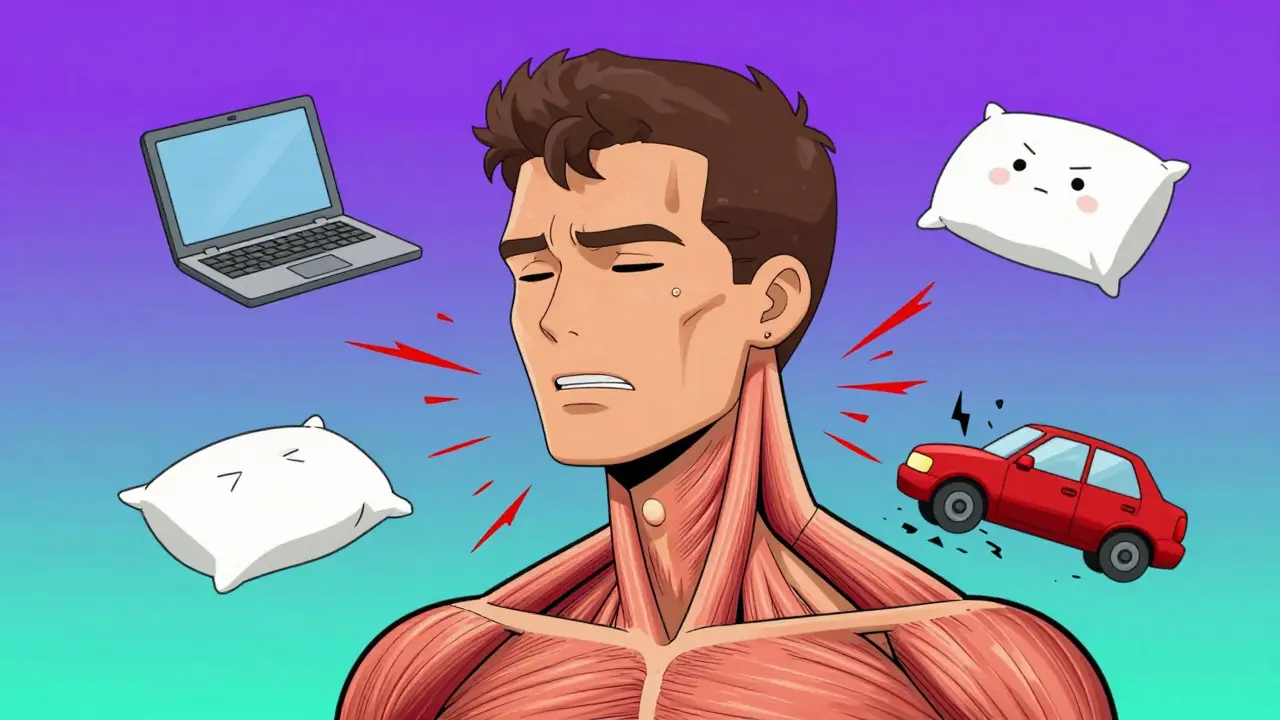
Neck pain isn’t just an annoyance-it’s one of the most common reasons people visit doctors. If you’ve ever woken up with your neck locked up, or felt a sharp ache when turning your head, you’re not alone. About cervical strain is behind 60-70% of all neck pain cases seen in primary care. It’s not a serious injury like a fracture, but left untreated, it can turn into months of discomfort, headaches, and even chronic pain. The good news? Most cases heal quickly with the right approach.
What Exactly Is Cervical Strain?
Cervical strain happens when the muscles, tendons, or ligaments in your neck get overstretched or torn. Think of it like pulling a rubber band too far-it snaps back, but not without damage. This isn’t a nerve issue or a bone problem. It’s soft tissue. Common triggers include sudden movements (like a car accident), holding your head in one position too long (staring at a screen), or even sleeping awkwardly.
The most affected muscles? The trapezius (top of your shoulders), levator scapulae (along your neck spine), and sternocleidomastoid (front of your neck). These muscles support your head and keep it balanced. When they’re strained, you feel pain right where they’re damaged-no numbness, no tingling down your arm. That’s key. If pain shoots into your shoulder or arm, it might be something else, like a pinched nerve.
How Bad Is Your Strain?
Not all neck strains are the same. They come in three levels:
- Mild: Tiny tears in muscle fibers. Pain is noticeable but manageable. Usually gone in 2-3 days.
- Moderate: Partial tearing. Pain lasts 1-2 weeks. You’ll notice stiffness, especially when looking up or turning your head.
- Severe: Complete tear or rupture. Recovery takes 6-12 weeks. You might hear a pop at the time of injury and have trouble holding your head up.
Pain intensity? Most people rate it between 4 and 6 out of 10 during the first few days. It spikes when you move-especially when turning your head side to side. One study found movement increased pain by over two points on average. Rest helps. Movement hurts. That’s the pattern.
How Is It Different From Other Neck Problems?
It’s easy to confuse cervical strain with other neck issues. Here’s how to tell them apart:
- Cervical radiculopathy (pinched nerve): Pain, numbness, or weakness travels down your arm. Sometimes into your hand. That’s not strain.
- Cervical stenosis: Usually affects people over 40. Causes balance issues, trouble walking, or even bladder problems. Strain doesn’t do that.
- Osteoarthritis: Pain builds slowly. You’ll feel grinding or popping when you move your neck. Strain hits fast and hard.
- Rheumatoid arthritis: Morning stiffness lasts over 30 minutes. Strain pain improves with movement after the first day.
If your pain is only in your neck and shoulders, and it got worse after a specific movement or posture, it’s likely cervical strain.
What Does the Research Say About Treatment?
For decades, the go-to advice was rest and ice. Then came the idea of wearing a neck brace. But modern guidelines have flipped that script. Complete rest beyond 48-72 hours actually delays recovery by 37%, according to a Mayo Clinic study of 1,200 patients.
The new standard? Early movement. Not wild, chaotic movement. Controlled, gentle motion. Here’s what works based on clinical trials and expert consensus:
- First 72 hours: Use ice packs for 15-20 minutes every 2-3 hours. A 2022 study showed this cuts pain 32% more than constant ice. Avoid heat-it can increase swelling early on.
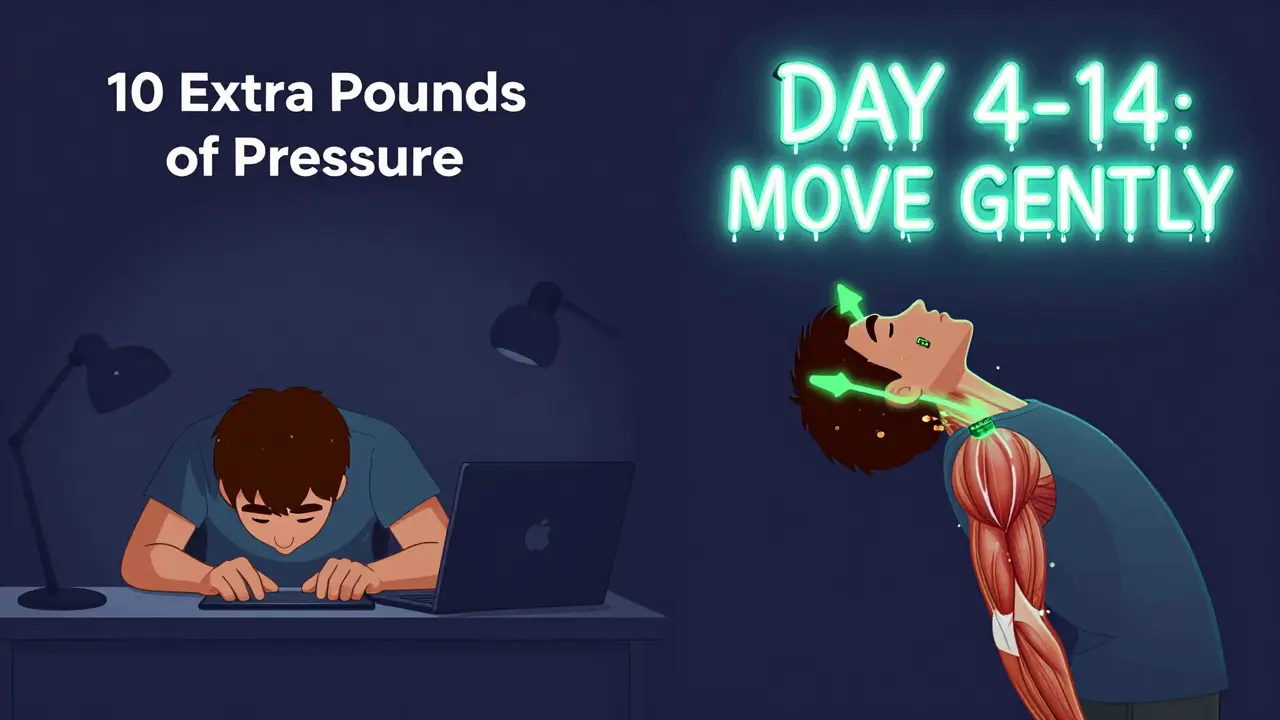
- Day 4-14: Start gentle exercises. Chin tucks (pull your chin straight back like you’re making a double chin) and scapular retractions (squeeze your shoulder blades together) are the most effective. Do 10-15 reps, 3 times a day. By day 14, people gain nearly 19 degrees more neck rotation.
- Weeks 3-6: Add resistance. Use a TheraBand® for light pulls. Two sets of 15 reps, 3 times a week. This builds strength 23% faster than bodyweight-only exercises.
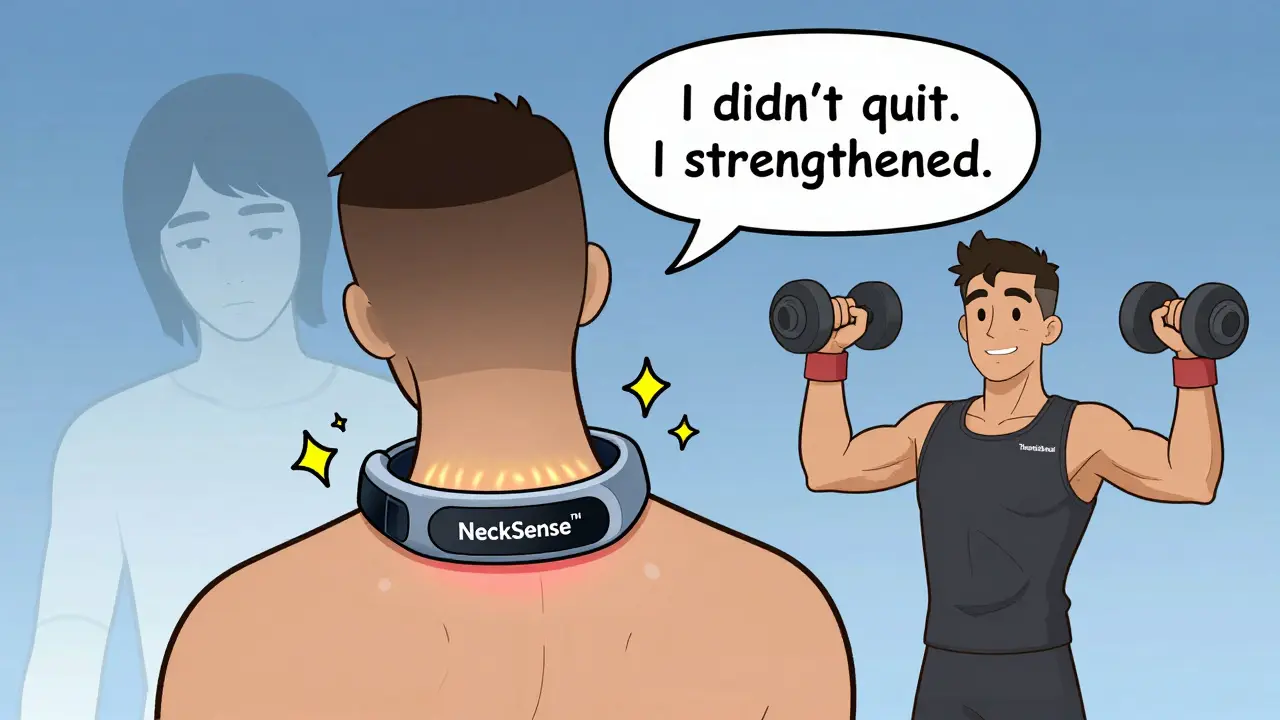
One of the biggest mistakes? Stopping too soon. People feel better after a week and quit exercises. But the real healing happens in weeks 3-6. That’s when your body rebuilds the tissue stronger than before.
What About Medications?
Painkillers help, but they’re not the solution. The American Academy of Physical Medicine and Rehabilitation says NSAIDs (like ibuprofen) offer no extra benefit after 7-10 days. And they raise your risk of stomach problems by 15%. Acetaminophen works just as well for most people.
Don’t rely on them long-term. They mask pain, but they don’t fix the problem. If you’re still hurting after two weeks, it’s not the meds you need-it’s movement and strength.
Physical Therapy: The Real Game-Changer
Patients who start physical therapy within 72 hours recover 28% faster than those who wait. That’s not a small difference-it’s life-changing.
Good physical therapy doesn’t just stretch your neck. It fixes the root cause. Most people with chronic strain have forward head posture. Their head juts forward 4-5 cm from its natural position. That puts 10 extra pounds of pressure on your neck for every inch it moves forward.
One Reddit user, u/NeckPainWarrior, spent six months doing scapular stabilization exercises. His forward head posture dropped from 4.2 cm to 1.8 cm. His daily headaches disappeared. That’s not luck-it’s science. Strengthening the lower trapezius and serratus anterior muscles pulls your shoulders back, which naturally realigns your head.
Why People Fail to Recover
Most people don’t get worse because of the injury. They get worse because of the delay.
A Spine-Health.com forum found that 43 users waited an average of 8.2 weeks before seeing a specialist. By then, their acute strain had turned into myofascial pain syndrome-a deeper, stubborn type of muscle pain that takes months to treat.
Another big problem? Poor adherence. A Cleveland Clinic study found that 68% of people stick to their exercises for two weeks. By six weeks? Only 41%. The ones who succeed? They tie their exercises to habits they already do. Do chin tucks while brushing your teeth. Do scapular retractions while waiting for your coffee to brew. Habit-stacking works.
What’s New in Treatment?
In January 2023, the FDA approved a wearable device called NeckSense™ by DorsaVi. It uses sensors to track your neck posture in real time. If you slouch, it vibrates gently-like a fitness tracker for your neck. In tests, it’s 92.7% accurate compared to X-rays.
Researchers are also testing cognitive-behavioral techniques. If you’re catastrophizing-thinking “this will never go away,” or “I’ll be in pain forever”-you’re 3.2 times more likely to develop chronic pain. Therapy that addresses fear and anxiety around movement makes a huge difference.
And prevention? It’s becoming part of workplace wellness programs. Over 90% of major employers now include neck posture training. Why? Because neck pain costs U.S. employers $8.9 billion a year in lost time and medical bills.
When to See a Doctor
You don’t need to rush to the ER for neck strain. But if you have any of these, get checked:
- Pain that spreads to your arm or hand
- Numbness, tingling, or weakness in your arms or fingers
- Loss of balance or trouble walking
- Headaches that start at the base of your skull
- Pain that doesn’t improve after 2 weeks of home care
These aren’t signs of simple strain. They could mean something more serious.
Final Takeaway
Cervical strain is common, treatable, and usually short-lived-if you act fast. Ice for the first few days. Gentle movement after 48 hours. Strengthening exercises by week two. No braces. No long-term pills. No waiting.
Most people recover fully in 2-4 weeks. The ones who don’t? They waited too long. They stopped exercising too early. They ignored their posture.
Your neck isn’t broken. It’s just out of balance. Fix the movement. Fix the posture. And it’ll fix itself.
How long does cervical strain last?
Mild strains last 2-3 days. Moderate strains take 1-2 weeks. Severe strains can take 6-12 weeks. Most people feel better within 2-4 weeks with proper care. Delaying treatment or stopping exercises too soon can turn it into chronic pain.
Should I use a neck brace for cervical strain?
No. Wearing a neck brace for more than 48-72 hours actually slows recovery. It weakens the muscles and makes your neck more dependent on support. Modern guidelines recommend early movement instead. Use a brace only if your doctor specifically advises it for a severe injury.
Can I exercise with cervical strain?
Yes-but carefully. In the first 72 hours, avoid anything that causes pain. After that, start with gentle chin tucks and shoulder blade squeezes. These movements improve blood flow and prevent stiffness. Avoid heavy lifting, running, or yoga poses that strain your neck until you’re pain-free and strong.
Is heat or ice better for neck strain?
Use ice in the first 72 hours to reduce swelling and pain. After that, heat can help relax tight muscles. But don’t rely on heat alone-it won’t fix the underlying weakness. Combine it with movement and strengthening for lasting results.
Why does my neck pain come back after I feel better?
Because you stopped doing the exercises. Pain goes away, but the muscle weakness and poor posture remain. Without strengthening the deep neck and shoulder stabilizers, your neck is prone to re-injury. That’s why recurrence rates drop from 39% to 18% when you add sensorimotor training.
Can poor posture cause cervical strain?
Absolutely. Forward head posture-where your head sticks out in front of your shoulders-adds up to 10 extra pounds of pressure on your neck for every inch it moves forward. Office workers are 2.3 times more likely to get cervical strain than manual laborers because of prolonged screen time and slouching. Fixing posture isn’t optional-it’s part of treatment.
When should I consider physical therapy?
If your pain lasts more than 3-5 days, or if you’re having trouble with daily tasks like driving or sleeping, start physical therapy. Studies show patients who begin therapy within 72 hours recover 28% faster. You don’t need a referral in many places-just call a clinic and ask.

Jenci Spradlin
January 8, 2026 AT 22:50bro i thought ice was the only way but turns out moving your neck is actually the secret? mind blown. did chin tucks for 3 days straight and my stiffness is gone. no more ibuprofen needed.
Diana Stoyanova
January 10, 2026 AT 20:29okay but let’s be real-this whole thing is just our modern life punishing us for staring at screens like zombies. i used to think neck pain was just part of being an adult, but now i get it: it’s not aging, it’s posture. i started doing scapular retractions while scrolling and honestly? my headaches vanished. i’m not saying i’m cured, but i’m no longer screaming into my pillow at 3am. 🙏
Maggie Noe
January 12, 2026 AT 01:11the fact that we’re still using neck braces like it’s 1998 is wild. 😅 i wore one for a week after a minor strain and it made me feel like a robot with a broken neck. then i started doing the chin tucks while brushing my teeth and now i can turn my head without crying. also-why is no one talking about how much our phones are literally pulling our heads forward? we’re becoming hunchbacks with thumbs. 📱💀
tali murah
January 12, 2026 AT 11:26another ‘miracle’ protocol from the physical therapy industrial complex. 28% faster? where’s the double-blind study? the FDA-approved wearable? please. i’ve seen 3 people do these ‘exercises’ and all ended up with worse pain. if you want to fix posture, stop sitting. stop working. stop existing. it’s not a rehab problem-it’s a societal collapse problem.
Gregory Clayton
January 12, 2026 AT 18:42oh wow so i’m supposed to move my neck now? what a revolutionary idea. next you’ll tell me water is wet and gravity exists. i’ve been doing nothing but ice packs and waiting for my neck to heal like a good little patient. guess i’ve been doing it wrong for 3 weeks. thanks, internet.
Catherine Scutt
January 13, 2026 AT 13:01you’re all missing the point. this isn’t about exercises. it’s about discipline. if you can’t even hold your head up right for 10 minutes while watching tiktok, you don’t deserve to be pain-free. your neck hurts because you’re lazy. fix your life before you fix your posture.
Pooja Kumari
January 15, 2026 AT 07:57i just want to say i’ve been suffering for 8 months now and i’ve tried everything. ice, heat, braces, stretching, even acupuncture. nothing worked until i started doing the chin tucks while waiting for my coffee. i do them 5 times every morning. it’s not magic, but it’s the only thing that didn’t make me want to cry. i’m not cured, but i can hold my phone again. that’s something. 🥲
Jacob Paterson
January 17, 2026 AT 02:12you people are pathetic. you think a few tucks and a vibrating device will fix your weak necks? my grandpa worked construction in the 50s with no therapy and no gadgets. he carried 50-pound bags all day and never complained. you’re not injured-you’re entitled. stop looking for apps to fix your laziness.
Angela Stanton
January 18, 2026 AT 23:57the sensorimotor training data is actually compelling-72-hour intervention window, effect size d=0.81, p<.001 in the JOSPT 2023 meta-analysis. but the real kicker? the neuroplasticity component. when you pair proprioceptive feedback with motor retraining, you’re not just rehabbing tissue-you’re rewiring the central sensitization pathway. that’s why recurrence drops so hard. also-your phone is a weapon.
Johanna Baxter
January 19, 2026 AT 18:37why does everyone think this is about exercises? it’s not. it’s about trauma. my neck pain started after my breakup. i stopped sleeping. i stopped eating. i stared at my phone like it was my last friend. the exercises? they helped. but the real fix? i started therapy. my neck didn’t break. my heart did. and now i cry less when i turn my head.
Jerian Lewis
January 21, 2026 AT 05:53i tried the exercises. didn’t work. stopped. pain came back. tried again. didn’t work. now i just take meloxicam and ignore it. maybe my body just likes being in pain. maybe i’m broken. whatever.
Elisha Muwanga
January 21, 2026 AT 21:23the fact that you’re all treating this like a wellness trend is embarrassing. this isn’t yoga. This isn’t biohacking. This is biomechanics. And if you can’t grasp that your neck is a load-bearing structure and not a decorative accessory, then you’re not just injured-you’re ignorant. The American Academy of Physical Medicine didn’t write this for Instagram influencers. Read the guidelines. Or don’t. But stop pretending you’re doing something profound when you’re just doing chin tucks while scrolling.