 Dec, 27 2025
When you notice milky discharge from your nipples - and you're not pregnant or breastfeeding - it’s natural to panic. Is it cancer? A sign of something serious? The truth is, this symptom, called galactorrhea, is rarely dangerous. But it’s often a red flag for something deeper: a hormonal imbalance called hyperprolactinemia. And left untreated, it can quietly mess with your fertility, your periods, and your peace of mind.
What Exactly Is Galactorrhea?
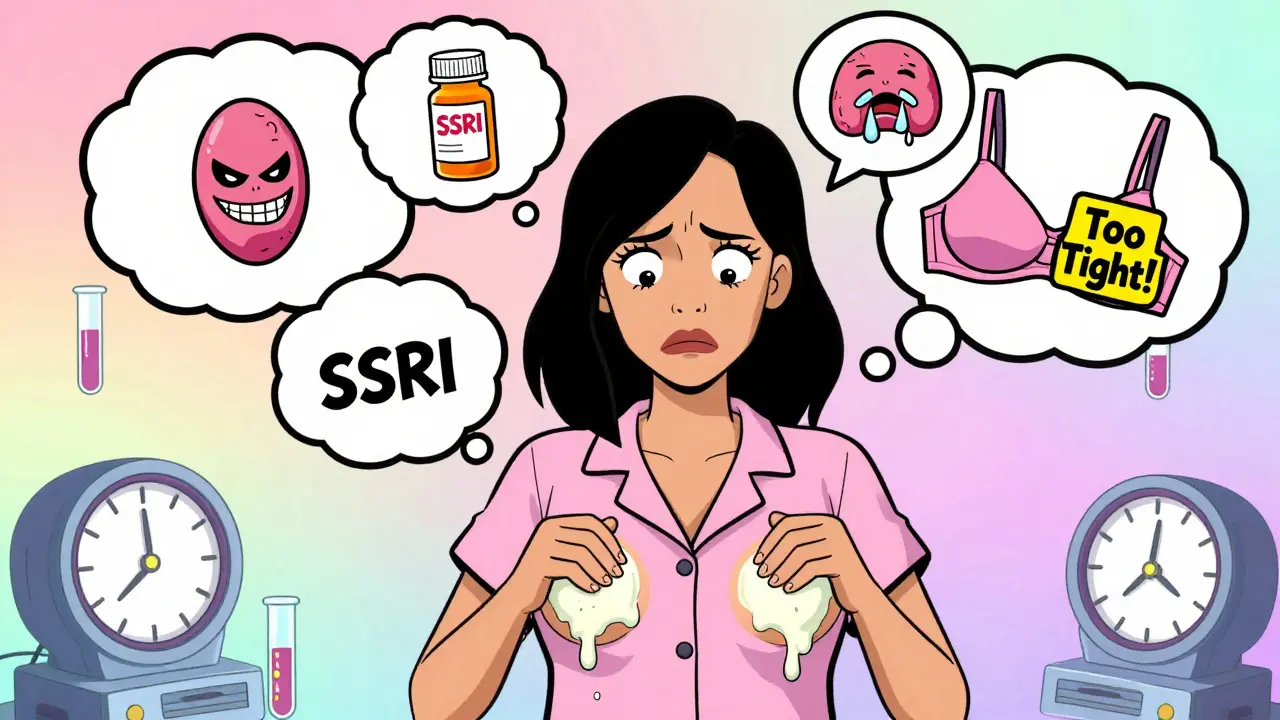
Galactorrhea isn’t a disease. It’s a symptom. And it’s more common than you think. About 1 in 5 women will experience it at some point in their lives, according to Mayo Clinic data from early 2025. It shows up as a spontaneous, milky fluid leaking from one or both breasts, usually without pain or tenderness. The discharge can be clear, white, or slightly yellow - but it’s never bloody or greenish. That’s important. Bloody discharge? That’s a different story. That needs immediate imaging to rule out breast cancer. In 70-80% of cases, the discharge comes from both breasts. If it’s only one side, doctors still take it seriously, but it’s less likely to be caused by high prolactin. The key is context: this happens outside of pregnancy, postpartum, or breastfeeding. And it often shows up with other signs - like missed periods, low libido, or trouble getting pregnant.Why Does This Happen? The Role of Prolactin
Prolactin is the hormone your pituitary gland makes to trigger milk production after birth. It’s normal for levels to rise during pregnancy and breastfeeding. But when prolactin stays high in someone who isn’t nursing, trouble follows. Levels above 25 ng/mL are considered abnormal in non-pregnant women. Normal range? 2.8 to 29.2 ng/mL. So what makes prolactin spike? The most common cause is a benign tumor on the pituitary gland - called a prolactinoma. These tumors are usually small (under 10 mm) and don’t spread. But they pump out extra prolactin. About 90% of these tiny tumors shrink or disappear with the right treatment. But tumors aren’t the only culprit. Medications can do it too. Antidepressants like SSRIs (sertraline, fluoxetine), antipsychotics, and even some blood pressure pills can raise prolactin. So can herbal supplements like fenugreek or fennel. Stress, chest wall injuries, and even a too-tight bra can trigger a temporary spike. Thyroid problems are another big one. If your thyroid isn’t working right (hypothyroidism), your body makes more TRH - which accidentally tells the pituitary to crank out more prolactin. That’s why every patient with galactorrhea gets a TSH test. And here’s something surprising: up to 35% of cases have no clear cause. These are called idiopathic. Sometimes, the body just gets a little confused.How Galactorrhea Leads to Infertility
High prolactin doesn’t just make your breasts leak. It shuts down your reproductive system. It suppresses GnRH - the hormone that tells your ovaries to release eggs. No GnRH? No ovulation. No ovulation? No periods. And no periods? No pregnancy. Studies show that 80-90% of women with hyperprolactinemia and missed periods will start ovulating again once prolactin levels drop back to normal. That’s not a guess - it’s what Dr. Richard S. Legro from Penn State found in his decades of research. And it’s backed up by patient stories: one woman on Reddit said her period returned after 18 months of absence, just three months after starting cabergoline. Another said she got pregnant naturally four months after treatment began. This isn’t just about fertility. Low estrogen from lack of ovulation can lead to bone thinning over time. That’s why treating this isn’t optional - it’s preventative.How Doctors Diagnose It
You won’t get a diagnosis from a website or a symptom checker. You need blood tests. The first step? A prolactin level. But here’s the catch: stress, sleep, sexual activity, or even a rough breast exam right before the blood draw can spike prolactin by 10-20 ng/mL. That’s why doctors often repeat the test - especially if the first result is only slightly high. Next, they check your thyroid (TSH), kidney function (creatinine), and sometimes pregnancy. If prolactin is over 100 ng/mL, an MRI of the brain is almost always ordered. That’s to look for a pituitary tumor. Most prolactinomas are small and hidden - but they show up clearly on MRI. Doctors also ask about your meds. A quick review of your pill bottle might reveal the culprit: maybe it’s the antidepressant you’ve been on for years, or that herbal tea you started for “stress relief.”
Treatment Options: What Actually Works
The goal isn’t to stop the discharge - it’s to fix the hormone imbalance. Once prolactin drops, the milk stops, periods return, and fertility improves. The first-line treatment? Dopamine agonists. These drugs mimic dopamine, the natural brake on prolactin production. Two main drugs are used: cabergoline and bromocriptine. Cabergoline (Dostinex) is the gold standard now. It’s taken just twice a week - 0.25 to 1 mg. In clinical trials, 83% of patients saw prolactin levels normalize within three months. It’s also better tolerated. Only 10-15% of users get nausea, compared to 25-30% with bromocriptine. Bromocriptine works too, but you have to take it daily, usually with food to reduce stomach upset. Many patients say it makes them feel sick, dizzy, or faint - especially at first. One Reddit user said they had to take it at bedtime just to sleep through the nausea. Still, it’s cheaper - about $50 to $100 a month, versus $300-$400 for cabergoline. There’s a new twist: in January 2025, the FDA approved an extended-release version of cabergoline - Cabergoline ER. Now you can take it just once a week. Early results show 89% effectiveness at six months, slightly better than the old version. For patients with prolactinomas, the results are impressive. Tiny tumors (<10 mm) shrink or vanish in 90% of cases within six months. Big tumors take longer, but even large ones often respond well.When Treatment Doesn’t Work - or Isn’t Needed
Not everyone needs drugs. About 30% of people with idiopathic galactorrhea see the discharge go away on its own within a year. If prolactin is only slightly high and you’re not trying to get pregnant, your doctor might suggest watchful waiting. Sometimes, the fix is simple: stop the medication causing the problem. Switching from sertraline to bupropion, for example, has resolved galactorrhea in multiple patient reports. One user on MyHealth Alberta said their discharge stopped within two weeks of the switch. Surgery is rarely needed - only if a tumor is huge, pressing on your optic nerves, or doesn’t respond to drugs. Radiation is even rarer. And here’s a warning: don’t treat based on numbers alone. Dr. Sarah L. Berga points out that 15-20% of women have mildly high prolactin but no symptoms. Treating them with powerful drugs does more harm than good.Side Effects and Safety Concerns
Cabergoline is safe for most people at standard doses. But long-term use at very high doses (over 2 mg/day for more than a year) has been linked to rare heart valve issues. That’s why doctors stick to the lowest effective dose - usually 0.5 mg twice a week. Bromocriptine can cause dizziness, low blood pressure, and nasal congestion. Some people can’t tolerate it at all. But both drugs are considered safe during early pregnancy if conception happens before stopping treatment. If you’re on either drug, don’t stop suddenly. Your prolactin can rebound, and symptoms return. Always taper under medical supervision.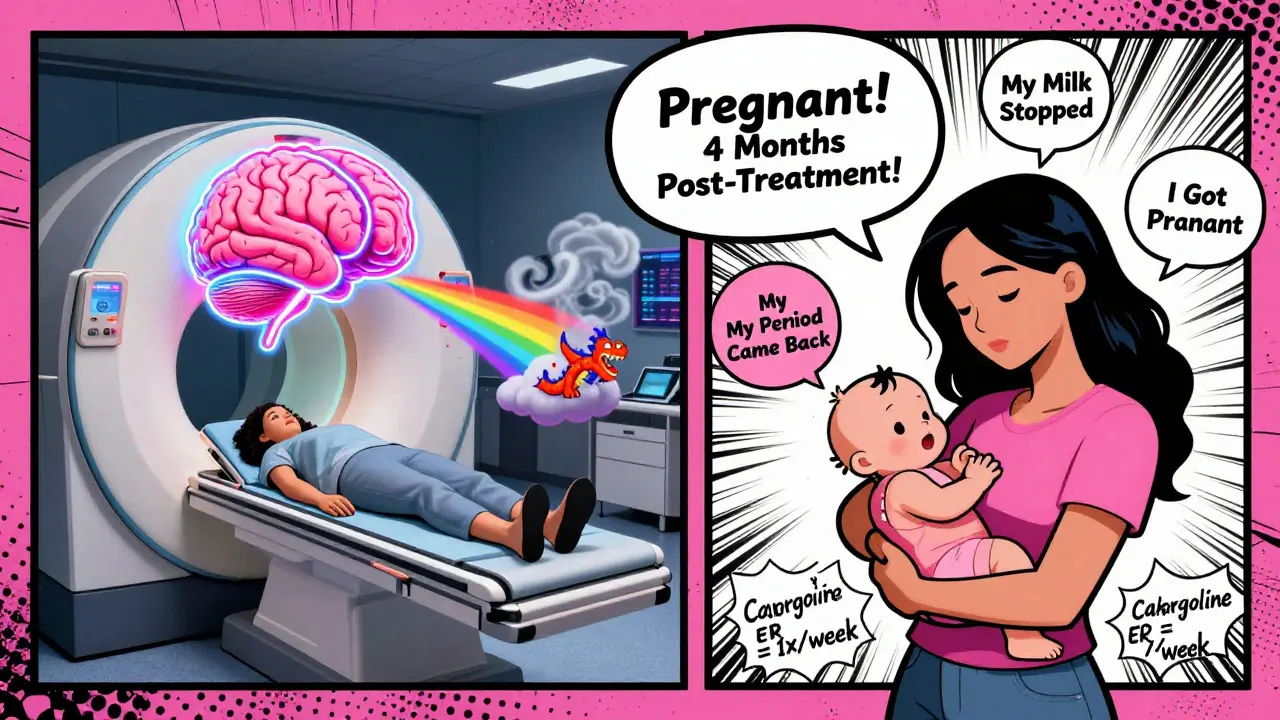
What to Expect Long-Term
Most people do well. After six months of treatment, 80% of patients have normal prolactin levels and restored menstrual cycles. Fertility returns in the vast majority. And once you’re pregnant, you can usually stop the medication - prolactin will rise naturally during pregnancy anyway. For those with prolactinomas, regular follow-ups are key. MRI scans every 1-2 years check that the tumor stays gone. Blood tests track prolactin levels. If everything’s stable, you might even be able to stop treatment after a few years - under your doctor’s watch. The future looks promising. Researchers are testing new drugs - like selective prolactin receptor blockers - that could work without dopamine agonists. By 2027, genetic testing might help pick the best drug for your body based on your dopamine receptor profile.Real Stories, Real Outcomes
Patient reviews tell the real story. On Healthgrades, 78% of people rate their treatment as successful. The top praise? “My discharge stopped fast.” “My period came back.” “I got pregnant.” The complaints? Side effects. “Bromocriptine made me sick.” “Cabergoline cost too much.” But here’s the takeaway: if you’re struggling with unexplained milk discharge and missed periods, you’re not alone. And you’re not stuck. This isn’t a life sentence. It’s a solvable hormonal glitch.What You Can Do Right Now
If you’re experiencing this:- Don’t panic. Milky discharge is rarely cancer.
- Write down every medication, supplement, and herb you take.
- Avoid excessive breast stimulation - including tight bras or vigorous massage.
- See your doctor for a blood test. Ask for prolactin, TSH, and kidney function.
- If your prolactin is high, ask if an MRI is needed.
- If you’re trying to get pregnant, mention it. Treatment can restore fertility.
Is galactorrhea a sign of breast cancer?
No, galactorrhea - which is milky, non-bloody discharge - is not a sign of breast cancer. Cancer-related discharge is usually bloody, clear, or serosanguinous, and typically comes from only one breast. If you see blood or dark fluid, you need a mammogram or ultrasound right away. But milky discharge from both breasts is almost always due to high prolactin, not cancer.
Can I get pregnant if I have hyperprolactinemia?
Yes, absolutely. High prolactin stops ovulation, which makes pregnancy difficult. But once prolactin levels are lowered with medication - usually cabergoline or bromocriptine - ovulation returns in 80-90% of women. Many conceive naturally within months of starting treatment. Fertility specialists often treat hyperprolactinemia as a reversible cause of infertility.
What’s the difference between cabergoline and bromocriptine?
Cabergoline is taken twice a week, while bromocriptine is taken daily. Cabergoline is more effective - 83% of patients normalize prolactin in 3 months, compared to 76% with bromocriptine. It also causes fewer side effects: only 10-15% get nausea with cabergoline versus 25-30% with bromocriptine. But bromocriptine is cheaper. Cabergoline costs $300-$400 a month; bromocriptine is $50-$100. The new extended-release cabergoline (Cabergoline ER) allows once-weekly dosing and is even more effective.
Can stress cause high prolactin and galactorrhea?
Yes. Stress, lack of sleep, or even a rough breast exam right before a blood test can temporarily raise prolactin by 10-20 ng/mL. That’s why doctors often repeat the test if levels are only slightly high. If your prolactin is normal on the second test, no treatment is needed. Chronic stress can also disrupt your whole hormonal system, leading to missed periods - which might look like hyperprolactinemia but isn’t.
Will I need to take medication forever?
Not necessarily. If your galactorrhea is caused by a small prolactinoma, many people can stop medication after 2-5 years of normal prolactin levels and no tumor growth on MRI. If it’s caused by a medication, stopping that drug often fixes it. For idiopathic cases, some people go off treatment and stay symptom-free. But you’ll need regular monitoring - prolactin can rise again. Never stop these drugs suddenly without your doctor’s guidance.
Are there natural ways to lower prolactin?
There’s no proven natural cure. Some supplements like vitamin B6 or chasteberry (vitex) are claimed to help, but there’s no solid evidence they lower prolactin enough to fix galactorrhea or restore fertility. The only proven treatments are dopamine agonists (cabergoline, bromocriptine) or removing the trigger - like stopping a medication. Don’t rely on herbs. They can interfere with your hormones and make things worse.

dean du plessis
December 28, 2025 AT 23:12Been dealing with this for two years. No pregnancy, no breastfeeding, just... milk. Went to three doctors before someone finally checked prolactin. Turns out it was a tiny prolactinoma. Cabergoline wiped it out. Periods came back. Felt like my body finally remembered how to work. Still take it twice a week. No regrets.
Elizabeth Ganak
December 30, 2025 AT 09:49i had this too lol. thought i was dying. turned out it was my ssri. switched meds and boom. no more milk. also my period came back. weird how meds can do that.
Raushan Richardson
December 31, 2025 AT 01:19So many women suffer in silence thinking it’s ‘just something weird’ - but it’s not. It’s your body screaming for help. I was told it was stress, then anxiety, then ‘maybe you’re perimenopausal.’ Turns out? Prolactinoma. Took 18 months to get diagnosed. Please, if you’re leaking and not nursing - get bloodwork. Don’t wait like I did.
Caitlin Foster
December 31, 2025 AT 05:13Ohhh so THAT’S why my ‘stress tea’ had fenugreek in it?? 😅 I was drinking it daily because ‘it calms you down’ - and now I’m leaking milk?? Thanks for the wake-up call. I’ve already tossed the whole damn jar. Also, cabergoline ER? That’s a game-changer. Once a week? Yes please. I can’t even remember to take my vitamins daily.
Todd Scott
January 1, 2026 AT 01:53Let me tell you something most doctors won’t say out loud - galactorrhea is the silent thief of female vitality. It doesn’t just steal your milk ducts, it steals your confidence, your sense of bodily autonomy, your belief that your body is trustworthy. I remember staring at my bra in the mirror after work, wondering if I was broken. Turns out, I wasn’t broken - I was just misunderstood. The science here is solid: dopamine agonists restore hormonal rhythm. But the emotional toll? That’s the part nobody prepares you for. And yes, the cost of cabergoline is obscene. Insurance denied it for six months. I paid $1,200 out of pocket before I found a patient assistance program. If you’re reading this and you’re struggling with access - reach out. There are people who can help. You’re not alone in this. And yes, your fertility can come back. It did for me. And it can for you too.
Paula Alencar
January 1, 2026 AT 14:13It is imperative to underscore the gravity of this condition - not as a mere physiological anomaly, but as a systemic disruption of endocrine harmony. The pituitary gland, that most delicate of regulatory organs, is not merely a passive actor in this drama - it is the conductor of a symphony of hormonal signals, and when prolactin ascends without invitation, the entire orchestra falls into dissonance. The suppression of GnRH, the cessation of ovulation, the erosion of bone density - these are not trivial inconveniences. They are cascading failures of biological integrity. And yet, the remedy is elegant in its simplicity: dopamine agonism. A molecular key, turning the lock of hypersecretion. The FDA’s approval of the extended-release formulation is not merely a pharmaceutical advancement - it is a triumph of patient-centered innovation. We must advocate for equitable access, for early screening, and for the destigmatization of bodily signs that are too often dismissed as ‘women’s issues.’ This is not vanity. This is physiology. And it deserves our deepest respect.
Nikki Thames
January 3, 2026 AT 02:07Let’s be honest - if you’re drinking herbal teas labeled ‘for hormonal balance’ and then leaking milk, maybe stop listening to Instagram influencers and start listening to your endocrinologist. You don’t need a ‘wellness journey’ - you need a blood test. And if you’re on antidepressants and didn’t think to ask your doctor about side effects? Well. That’s on you. We live in an age of information. You have Google. You have WebMD. You have the Mayo Clinic. Stop blaming the system. Start taking responsibility. Your body is not a mystery box - it’s a machine. And machines need proper maintenance.
Chris Garcia
January 4, 2026 AT 16:44In many African cultures, we speak of the body as a river - flowing, changing, sometimes blocked. Galactorrhea is not a curse, nor is it a sin. It is a signal. A river that has found an obstruction. In Nigeria, we say: ‘The water does not rise without reason.’ And here, the reason is science - not superstition. I have seen women in rural clinics, with no access to MRI machines, diagnosed through history alone - milky discharge, missed periods, low libido. They are treated with bromocriptine when cabergoline is unavailable. They heal. They conceive. They thrive. The medicine is global. The suffering is local. But the solution? It is universal. Let us not forget: science is the most compassionate language we have.
Nicola George
January 5, 2026 AT 17:52So let me get this straight - you’re telling me that my ‘relaxation tea’ with fennel and fenugreek is basically a prolactin bomb? And I’ve been drinking it for a year?? Wow. Thanks for the free lesson, internet. Also, why is cabergoline so expensive? Like, $400? For a pill? Who decided that was fair? My therapist charges less. And she doesn’t even fix my hormones. Just my anxiety. I’m just saying… maybe we need to fix the system before we fix the prolactin.
James Bowers
January 7, 2026 AT 03:49Idiopathic hyperprolactinemia is not a diagnosis - it’s a cop-out. If you can’t find the cause, you haven’t looked hard enough. Either there’s a microadenoma hiding in plain sight, or you’re on a medication you forgot to disclose, or your thyroid is underperforming. Stop labeling unknowns as ‘idiopathic.’ That’s not medicine - that’s laziness. Get the MRI. Check the TSH. Review the med list. Again. And again. Until you find it. Your fertility deserves more than a shrug.
Alex Lopez
January 7, 2026 AT 14:59So… cabergoline ER is once a week? That’s wild. I used to take bromocriptine and would wake up feeling like I’d been hit by a truck. Now I just take one pill on Sunday and forget about it. Also, side note: if you’re on SSRIs and have galactorrhea - congrats, you’re part of a very common, very under-discussed club. We should start a support group. T-shirts: ‘I Survived My Antidepressant’s Side Effects (And Still Got Pregnant).’