 Dec, 3 2025
When you buy a car, a medical device, or even a smartphone, you don’t think about the factory floor. You assume it works. But behind every product, there’s a quiet battle-between precision and pressure, between innovation and incompetence. And if that battle is lost, your trust in the brand doesn’t just waver. It shatters.
Quality Isn’t Just a Process-It’s a Promise
Manufacturers in 2025 aren’t just trying to make things right. They’re trying to make them perfect-under impossible conditions. Material costs are up. Skilled workers are scarce. Supply chains are brittle. And customers? They expect flawless performance at lightning speed.
Here’s the truth: 95% of manufacturing executives say quality is mission-critical. Not important. Not nice to have. Mission-critical. That’s because quality isn’t a department anymore. It’s the backbone of brand loyalty. A single defective airbag, a misaligned battery in an electric vehicle, a contaminated medical implant-these aren’t just recalls. They’re reputation killers.
Think about it. If a company you trust starts shipping flawed products, you don’t just stop buying. You tell your friends. You post about it. You switch brands. And once that trust is gone, it’s nearly impossible to get back.
The Hidden Cost of Rework
Most people think quality control means inspecting finished goods. That’s the old way. Today, rework is the silent profit killer.
Thirty-eight percent of manufacturers say the cost of fixing mistakes-rework, iterations, scrap-is their biggest quality challenge. And it’s not just about wasted materials. It’s about time. Labor. Lost shipments. Delayed launches.
One medical device maker in Ohio slashed its rework costs by $1.2 million a year-not by hiring more inspectors, but by using precise metrology tools that caught errors before assembly even began. That’s the difference between treating quality as a cost and treating it as a lever for profit.
Meanwhile, companies still using manual inspections? They’re paying 43% more in labor just to check for defects. And those defects? They’re slipping through. More often than not, they reach the customer.
The Skills Gap Is Bigger Than the Tech Gap
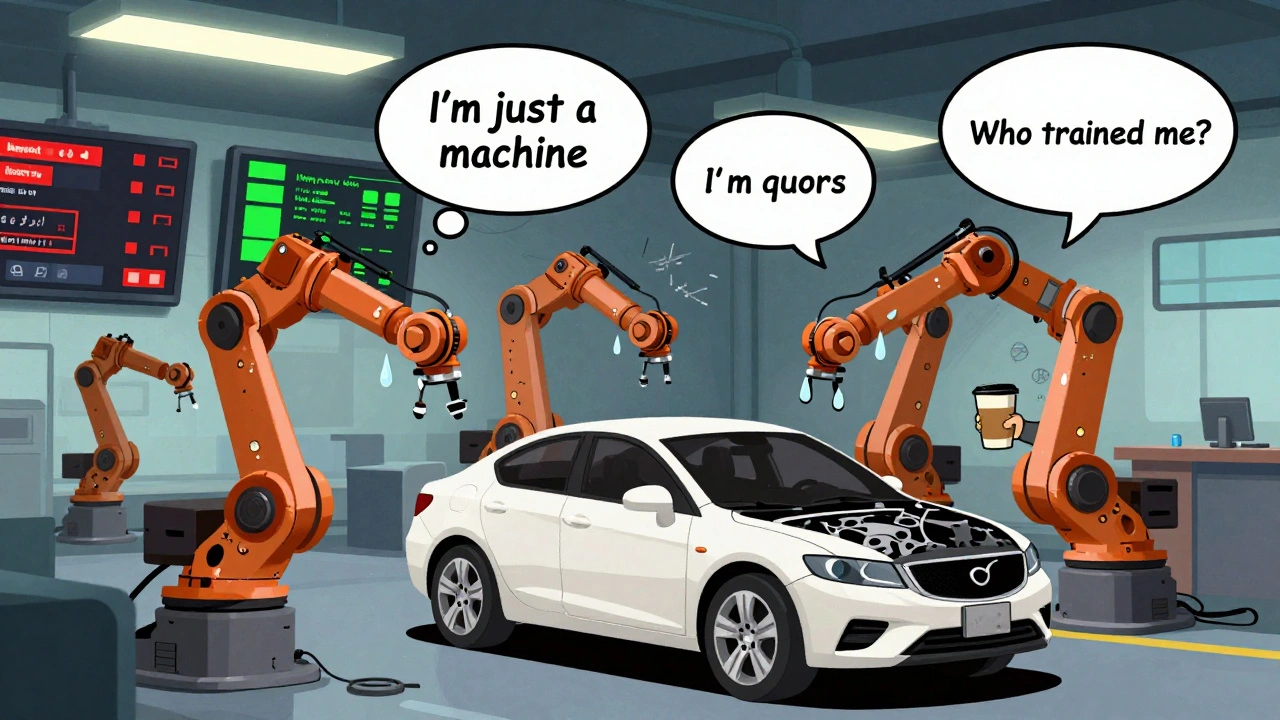
Here’s the irony: manufacturers are spending millions on AI-powered inspection systems, 3D scanners, and real-time analytics. But 47% still say they can’t find enough skilled people to run them.
A production manager in Michigan put it bluntly: “We’re expected to maintain aerospace-grade precision while moving at consumer electronics speed. It’s impossible without proper technology investment.” But tech alone doesn’t fix this. You need people who understand both old-school quality checks and new digital tools.
One electronics manufacturer spent $2.3 million on automated inspection systems. No training. No change management. Result? Error rates went up 40% in the first year. The machines didn’t fail. The people did.
Today’s quality engineers need to be part data analyst, part mechanic, part problem-solver. Median salaries for those with AI/ML skills hit $98,500 in mid-2025-22% higher than traditional roles. But the training pipeline? Still broken.
Technology Without Integration Is Just Noise
Manufacturers aren’t short on tools. They’re short on connections.
Automation, robotics, AI, cloud-based quality systems-these aren’t standalone gadgets. They’re parts of a system. And too many companies treat them like separate toys.
Eighty-seven percent of manufacturing professionals on Reddit say their biggest frustration is inconsistent data between departments. The quality team sees one number. The production team sees another. The warehouse sees something else. No one agrees on what “good” looks like.
Companies that fix this-by integrating their quality management systems with production, supply chain, and customer feedback-see 22% lower rework costs and 18% faster time-to-market. It’s not magic. It’s alignment.
Cloud-based Quality Management Systems (QMS) are now the standard. Sixty-eight percent of new enterprise deployments in 2025 use them. Why? Because they let everyone-from a factory floor operator in Mexico to a compliance officer in Germany-see the same data, in real time.
Who’s Winning? Who’s Losing?
The divide in manufacturing isn’t between big and small. It’s between those who treat quality as a strategic advantage-and those who treat it as a compliance checkbox.
Aerospace and medical device makers? They’re ahead. With 78% and 72% adoption of advanced quality tech, respectively, they know a single failure can mean lives lost. They invest. They integrate. They monitor.
Automakers? They’re under the most pressure. Electric vehicles have more sensors, more electronics, more complex assemblies than ever. One misaligned motor mount can trigger a chain reaction of failures. Yet, only 65% have adopted integrated systems.
And then there’s the rest-general manufacturing, where adoption sits at just 48%. These are the brands you’ve never heard of, but you buy from every day. Their products work… most of the time. But when they don’t? You never know why. And that uncertainty? It erodes trust slowly, quietly.
The Brand Psychology of Flawed Quality
People don’t buy products. They buy confidence.
When a brand consistently delivers quality, your brain starts to associate it with reliability. You feel safe. You feel loyal. You recommend it. That’s brand psychology in action.
But when quality slips-even once-the brain flips. It starts looking for evidence of failure. “Was this always like this?” “Do they cut corners?” “Can I trust anything they make?”
That’s why one defective product can cost more than a million in lost sales. It’s not the cost of the recall. It’s the cost of the doubt.
Manufacturers who align quality metrics with customer feedback are already winning. QualityZe predicts that by 2026, top brands will link defect rates directly to customer reviews. If your product gets low ratings for “durability” or “consistency,” the quality team gets alerted before the next batch even ships.
What’s Next? The 2027 Divide
By 2027, Forrester forecasts that manufacturers who delay AI-driven quality analytics will see 23% higher defect rates than early adopters. That’s not a projection. It’s a countdown.
Meanwhile, 89% of leading manufacturers will have predictive quality systems in place-systems that don’t wait for a defect to happen. They predict it. They stop it.
But here’s the real threat: 58% of manufacturers know quality is strategic. They just don’t have the people, the budget, or the roadmap to act. That’s the “quality solution gap.” And it’s widening.
Those who close it? They’ll see 28% higher profit margins by 2030. Those who don’t? They’ll be bought out. Or worse-forgotten.
Can You Afford to Ignore This?
It’s easy to think quality assurance is someone else’s problem. The factory. The engineers. The inspectors.
But if you’re a consumer, a investor, or a brand manager-you’re not just watching. You’re participating. Every purchase you make, every review you leave, every brand you stick with-it all feeds into the cycle.
Brands that treat quality as a cost center will keep shrinking. Those that treat it as a core value? They’ll dominate.
The fear isn’t that manufacturing is failing. It’s that we’re letting it fail-quietly, slowly, one defective part at a time.
Why is quality assurance more important now than in the past?
Because today’s products are more complex, customer expectations are higher, and the cost of failure is bigger. A single defect in an electric vehicle battery or a medical implant can lead to recalls, lawsuits, and lost trust. Quality is no longer about checking boxes-it’s about protecting your brand’s reputation and ensuring long-term profitability.
How do manufacturing fears affect consumer trust?
When consumers suspect a product might be flawed-even without proof-they start questioning everything. That doubt spreads. One bad experience turns into a pattern in their mind. Trust isn’t built in a year; it’s broken in a single moment. Brands that ignore quality signals lose loyalty faster than they gain customers.
Is investing in new quality technology worth it?
Only if you invest in people, too. Companies that buy AI inspection tools but don’t train staff see higher error rates. Those that combine technology with skilled teams see defect rates drop by up to 37% and pay for themselves in under a year. Tech without training is just expensive noise.
What’s the biggest mistake manufacturers make today?
Thinking quality is a department, not a culture. You can’t outsource trust. You can’t automate loyalty. Quality must be owned by everyone-from the CEO to the line worker. The most successful manufacturers treat quality as a shared mission, not a compliance task.
How can small manufacturers compete?
They don’t need to buy the most expensive systems. They need to focus on integration. Start with one cloud-based Quality Management System. Train your team on data literacy. Share forecasts with suppliers. Even small steps create alignment-and alignment builds trust. You don’t need to be big. You just need to be consistent.

Michael Feldstein
December 4, 2025 AT 07:08Been in manufacturing for 18 years, and this post nails it. Quality isn’t a checklist-it’s a habit. The best plants I’ve seen? Everyone knows the next part’s gonna be perfect, because they’ve all got skin in the game.
It’s not about the tech. It’s about culture. You can throw AI at a broken team and it’ll just spit out fancy lies.
jagdish kumar
December 4, 2025 AT 16:07Man, we’re all just atoms in a machine that forgot it’s supposed to serve humans.
zac grant
December 5, 2025 AT 15:48Let’s talk ROI on QMS integration. Companies that deploy cloud-based systems with real-time KPIs tied to OEE and first-pass yield see 14-22% reduction in scrap within 6 months. The real win? Reduced cycle time to root cause analysis-from weeks to hours.
And yes, the data has to be clean. Garbage in, garbage out. But when it works? It’s like giving the whole org a shared nervous system.
michael booth
December 7, 2025 AT 12:03Quality is the foundation of every great brand. Without it, innovation is just noise. Every employee, from the CEO to the floor technician, must embrace this as their personal mission. Consistency builds credibility. Credibility builds legacy.
Let’s not wait for a crisis to act. Let’s build excellence into every step.
Carolyn Ford
December 9, 2025 AT 02:15Oh please. 'Quality is mission-critical'? Yeah, right. That’s what they say before they cut the QA team in half to hit Q3 targets. You think Apple doesn’t have defects? They just bury them in firmware updates and charge you $1,200 for the privilege of being their beta tester.
Stop romanticizing manufacturing. It’s a profit machine with a PR filter.
Alex Piddington
December 10, 2025 AT 17:29My dad worked on assembly lines in the 80s. Back then, if a part was bad, you fixed it. Now? You log it, tag it, route it, and pray the system catches it before it ships.
Technology didn’t make us better. It just made us slower to notice we stopped caring.
Dematteo Lasonya
December 12, 2025 AT 06:12I’ve seen plants where the night shift leads the quality huddles. No managers. Just people who show up early and say, ‘This doesn’t feel right.’ That’s the real magic.
Trust isn’t built by dashboards. It’s built by someone saying, ‘Wait, let me check that again.’
Rudy Van den Boogaert
December 14, 2025 AT 05:28Biggest issue I’ve seen? The gap between engineering specs and what the line actually does. One company had a torque spec of 12.5 Nm ±0.5. The tool was calibrated for 12.5. But the operator? He just cranked it till it felt right.
No one trained him on why precision mattered. He just wanted to go home on time.
Gillian Watson
December 15, 2025 AT 16:30Over in the UK, we’ve got this quiet revolution in SMEs. One toolmaker in Birmingham started using a $200 Raspberry Pi camera + open-source vision AI to catch weld flaws. No consultants. No ERP integration. Just grit and YouTube tutorials.
Doesn’t need to be fancy. Just consistent.
Jordan Wall
December 16, 2025 AT 00:13Let’s be real-most ‘AI-driven quality’ is just glorified image classification with a $500k price tag. And the data? Half the time it’s from legacy systems that haven’t been updated since 2012. You can’t AI your way out of a culture of apathy.
Also, ‘predictive quality’? Sounds like sci-fi marketing speak. Unless you’re Tesla, you’re just throwing money at buzzwords.
val kendra
December 16, 2025 AT 08:53My cousin works at a mid-sized medical device plant. They started sharing customer feedback directly on the floor screens-real reviews, real photos of returned units. Within 3 months, defect rates dropped 30%.
People don’t want to be cogs. They want to know their work matters. Show them the impact. It’s that simple.
George Graham
December 17, 2025 AT 15:14I used to think tech was the answer. Then I watched a plant in Ohio go from 7% rework to 1.2%-not because they bought new scanners, but because they started having coffee with the line workers every morning.
They asked: ‘What’s slowing you down?’ Not ‘Why did this fail?’
Listening > sensors.
John Filby
December 18, 2025 AT 22:41My brother’s company installed a fancy AI vision system. First week: 40% more false positives. Second week: operators started ignoring the alerts. By month 3? Defects doubled.
They didn’t train anyone. Just turned it on and walked away.
Technology doesn’t fix culture. It amplifies it.
Emmanuel Peter
December 20, 2025 AT 22:33Let’s not sugarcoat this: 90% of manufacturers are just buying tech to look good for investors. The real problem? Leadership doesn’t understand quality. They think it’s a cost center. It’s not. It’s a revenue driver.
And if you don’t get that, you’re not just behind-you’re dead weight.
Ashley Elliott
December 21, 2025 AT 08:31Small manufacturers can compete. They just need to stop trying to be Tesla.
Focus on one thing: consistency. Ship the same good product, every time. Even if it’s simple. Even if it’s cheap. People will come back.
Trust is built in small, quiet moments-not in press releases.