 Dec, 22 2025
Every year, millions of fake pills, injections, and vials enter the global drug supply-some disguised as life-saving treatments, others sold as quick fixes for weight loss or erectile dysfunction. These aren’t just poor-quality imitations. They’re dangerous. In 2025, law enforcement seized over 50 million doses of counterfeit medications in a single global operation. That’s not a statistic. That’s 50 million chances someone could have died because they trusted a fake.
What Gets Counterfeited-and Why
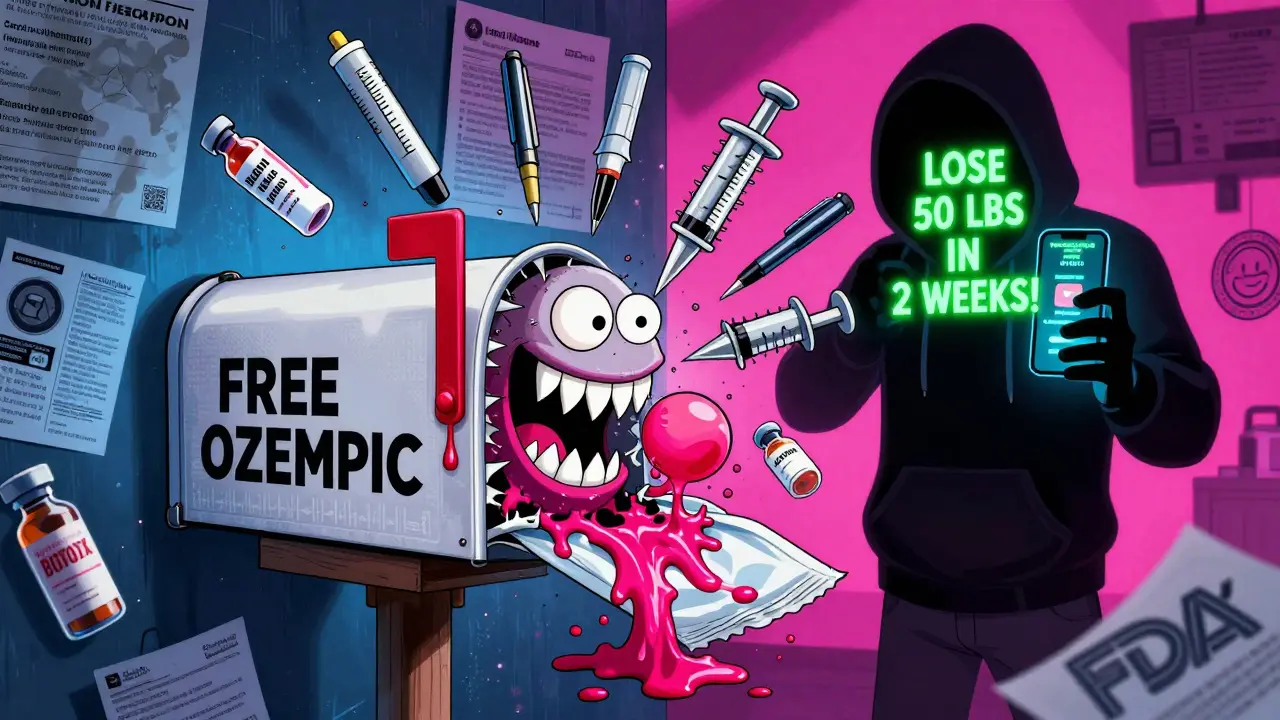
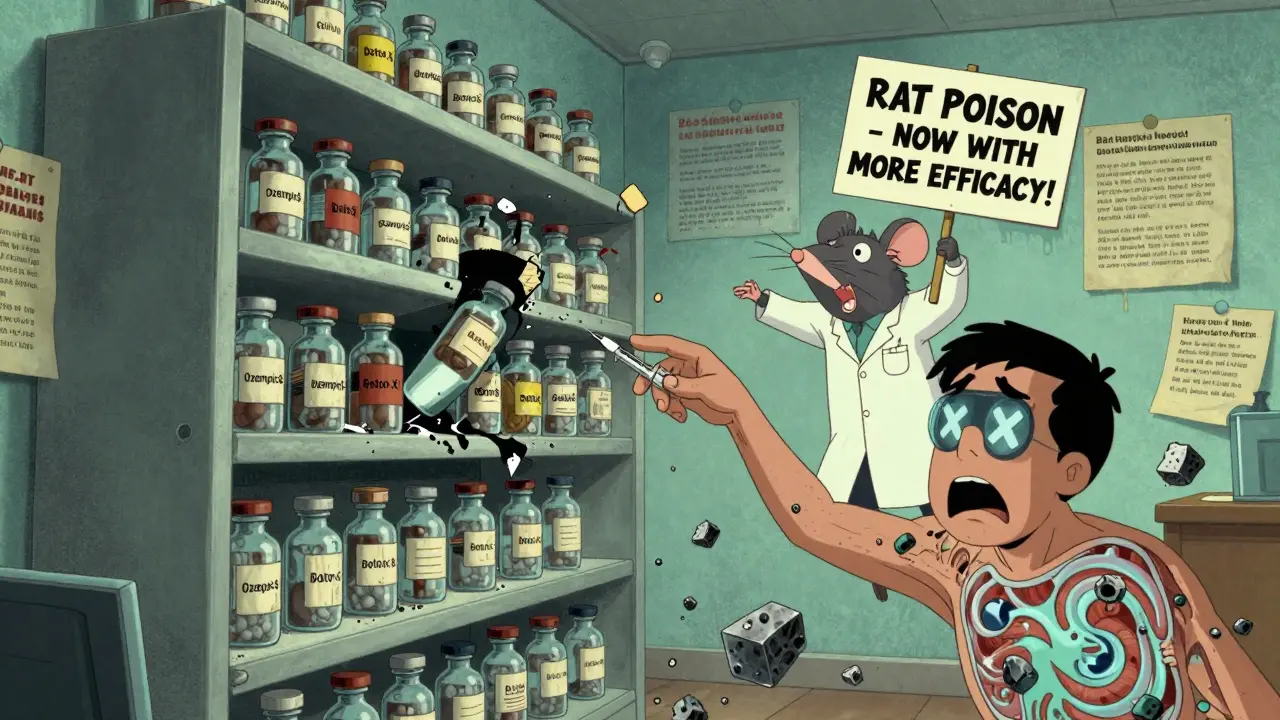
Counterfeiters don’t guess what people need. They follow the money. And right now, the biggest targets are high-demand, high-cost drugs. GLP-1 agonists like Ozempic, Wegovy, and the newer Retatrutide are being faked at alarming rates. These drugs treat type 2 diabetes and obesity, and demand has exploded. People are desperate. Criminals know it.It’s not just weight-loss meds. Fake Botox, dermal fillers, HIV treatments, and erectile dysfunction pills are flooding the market. In August 2025, U.S. Customs intercepted over 16,700 counterfeit pre-filled injectable pens-most shipped from Hong Kong, China, and Colombia. These weren’t just mislabeled. Many contained no active ingredient at all. Others had toxic chemicals: heavy metals, industrial solvents, even rat poison.
Why these drugs? Because they’re expensive. A single pen of real Ozempic can cost over $1,000. A fake one costs $5 to make. Sold online for $150, the profit margin is insane. And since they’re often bought privately, without a prescription, there’s little oversight.
Where the Fakes Come From-and How They Get Here
Most counterfeit drugs don’t show up in pharmacies. They come through the mail, hidden in small parcels. Over 65% of seized fake medications arrive via international shipping, often disguised as personal items or “cosmetic supplies.” This makes them harder to catch than bulk shipments.The top countries of origin? India and China (including Hong Kong). In Fiscal Year 2024, India became the #1 source of counterfeit pharmaceuticals seized at the U.S. border. But it’s not just about where they’re made-it’s how they’re sold.
Online marketplaces are the main distribution channels. Etsy alone accounts for nearly half of all illicit GLP-1 sales. Social media ads, Instagram influencers, and fake pharmacy websites lure buyers with low prices and fake testimonials. One Reddit user, a pharmacist, shared a case where a patient developed severe cellulitis from counterfeit dermal fillers bought on Facebook. The packaging looked real. The label matched the brand. But inside? Unknown particulates. The patient needed emergency surgery.
Big Seizures, Big Consequences
In August 2025, U.S. Customs seized $3.5 million worth of fake drugs in Cincinnati alone. In Iowa, a local pharmacy was fined $25,000 for selling counterfeit Ozempic. That’s not an isolated case. Across the U.S., more than 13,000 illegal websites and social media accounts were shut down during Interpol’s Pangea XVI operation.Internationally, the scale is even larger. South African police seized counterfeit medicines worth over $118,000 in Gqeberha. Nigeria shut down an illegal herbal medicine factory in Kaduna that was selling unregulated, untested treatments. In the U.S., the Department of Justice prosecuted over 70 people for defrauding Medicaid of $17 million by selling $9.5 million in fake HIV drugs through online platforms.
These aren’t just financial crimes. They’re public health emergencies. The FDA’s MedWatch database saw a 43% spike in adverse event reports tied to suspected counterfeit drugs in the first half of 2025. Most involved weight-loss injectables and cosmetic fillers. Patients reported strokes, kidney failure, allergic reactions, and unexplained tissue death.
Why Enforcement Is So Hard
You’d think seizing fake drugs would be straightforward. But it’s not. U.S. Customs can only seize products that are outright counterfeit-meaning they falsely claim to be a branded drug. If a product is just unapproved (like an imported version of Ozempic that’s real but not FDA-approved), it’s not illegal to import for personal use. And Customs can’t touch it.This loophole means thousands of dangerous products slip through every day. A vial might contain the right active ingredient but be mislabeled or improperly stored. It’s not counterfeit by law-but it’s still deadly. The National Association of Boards of Pharmacy says this gap leaves patients vulnerable.
Another problem? Criminals are getting smarter. Instead of shipping full pills or vials, they’re sending unassembled parts: packaging, labels, powder, and syringes-then assembling them locally. This makes detection nearly impossible without inside information or advanced scanning tech.
What’s Working: Lessons from the Front Lines
Despite the challenges, there are success stories. Pfizer has trained law enforcement in 183 countries on how to spot fake packaging-checking for color shifts, font inconsistencies, missing holograms, or mismatched batch numbers. These small details matter. A fake Ozempic pen might have a slightly different shade of blue or a logo that’s 0.5mm off-center.Some companies are using blockchain to track every vial from factory to pharmacy. Pilot programs cut counterfeit incidents by 37%. That’s not magic-it’s accountability. When every step is recorded and verifiable, it’s harder to slip in fakes.
Interpol’s Pangea XVI operation showed what global cooperation can do. Ninety countries worked together. They shut down websites, arrested 769 people, and dismantled 123 criminal networks. But the real win? They raised awareness. Now, patients are asking more questions. Pharmacists are double-checking sources. Doctors are warning patients about online purchases.
What You Can Do
If you’re taking medication for a chronic condition, don’t buy it online unless you’re certain of the source. Look for the VIPPS seal (Verified Internet Pharmacy Practice Sites) on websites. If it’s not there, walk away.Don’t trust social media ads. If a “pharmacist” on Instagram is offering Ozempic for $50, it’s fake. Real medication doesn’t come with a discount code.
If you’ve bought medication online and feel unwell, report it. The FDA’s MedWatch system lets you file a report anonymously. Your report could save someone else’s life.
And if you’re a healthcare provider? Talk to your patients. Ask if they’ve bought anything online. Many won’t admit it-until something goes wrong.
The Road Ahead
Counterfeit drugs aren’t going away. As long as there’s profit and desperation, criminals will find a way. But we’re learning. Better tech. Stronger laws. Global teamwork. Patient awareness.The next time you see a deal that seems too good to be true for a life-saving drug-it probably is. And someone, somewhere, might be paying for it with their health.

Spencer Garcia
December 24, 2025 AT 07:57Been working in pharmacy for 12 years. Saw my first fake Ozempic pen last year. The packaging looked identical-until you held it up to the light. The hologram was printed, not embossed. One patient nearly lost a finger from the filler he bought off Instagram. This isn’t hype. It’s happening right now.
Lindsey Kidd
December 25, 2025 AT 10:07PLEASE stop buying meds off Instagram. 🙏 I work in ER. We had a 24-year-old come in with necrotizing fasciitis from a ‘Botox’ she got for $40. The vial had no batch number. No expiration. Just a QR code that led to a TikTok ad. 💔
Andy Grace
December 26, 2025 AT 01:24I’m from Australia. We’ve seen this creep in over the last two years. The online pharmacies pretending to be Canadian or UK-based? Most are just servers in Eastern Europe. I’ve had patients show me their ‘prescription’-it’s a screenshot from a Discord group. No doctor, no script, no oversight. It’s terrifying how normalized this has become.
Blow Job
December 27, 2025 AT 09:41People don’t realize that when you buy a fake GLP-1, you’re not just risking your health-you’re funding organized crime. The same networks selling counterfeit insulin are also moving fentanyl. These aren’t some shady guys in a garage. They’re transnational syndicates with logistics teams and customer service reps. And they’re winning because we’re too embarrassed to admit we bought a $50 Ozempic online.
Gray Dedoiko
December 28, 2025 AT 09:51My cousin got hooked on weight-loss meds after her doctor refused to prescribe her anything. She started buying from a ‘pharmacist’ on Reddit. Said he was ‘certified.’ Turned out he was a 19-year-old in Ukraine with a Shopify store. She ended up in the hospital with liver toxicity. No one talked about it until it was too late. We need better education-not just crackdowns.
EMMANUEL EMEKAOGBOR
December 29, 2025 AT 04:58In Nigeria, we have a different kind of crisis. Herbal concoctions sold as HIV cures, labeled in English, packed in fake Pfizer boxes. People die because they can’t afford real antiretrovirals. The government shuts down one factory, ten pop up in villages. We need affordable access, not just enforcement. Justice without access is just another kind of violence.
Austin LeBlanc
December 29, 2025 AT 08:39Why are we even surprised? Americans are lazy and stupid. You want a miracle drug? Go see a doctor. Don’t trust some guy with a phone camera and a Shopify store. If you’re too cheap for real medication, then maybe you shouldn’t be taking it at all. This isn’t a conspiracy-it’s consequences.
John Pearce CP
December 31, 2025 AT 04:02The United States has allowed this epidemic to fester through regulatory complacency and ideological deference to ‘personal liberty.’ The FDA’s loophole permitting unapproved imports is a national security failure. Every vial that slips through is a violation of public trust. We must close this gap immediately, enforce border controls with military-grade scanning, and prosecute every intermediary-regardless of jurisdiction.
Ajay Sangani
January 1, 2026 AT 04:59i think this is not just about drugs… its about how we treat pain. people dont buy fake ozempic because theyre stupid… they buy it because theyre tired of being told to ‘eat less and move more’ while their body betrays them. the system failed them first. the criminals just filled the silence.
Pankaj Chaudhary IPS
January 2, 2026 AT 00:05As an Indian citizen and former customs officer, I can confirm: India is being exploited as a manufacturing hub-not because we lack standards, but because criminal networks hijack legitimate supply chains. Our regulatory bodies are improving, but global demand for cheap drugs fuels the fire. We need international traceability standards, not blame games. India wants to be part of the solution, not the scapegoat.
Bret Freeman
January 3, 2026 AT 14:04Let me be clear: if you buy a fake drug online, you deserve whatever happens to you. You’re not a victim-you’re a sucker. And now you’ve put other people at risk. I don’t care if you’re ‘desperate.’ There are charities, sliding-scale clinics, patient assistance programs. You didn’t look. You clicked ‘buy now’ because it was easy. Now you’re part of the problem. Wake up.