 Jan, 1 2026
Every year, millions of people take statins to lower their cholesterol. At the same time, many more are prescribed antifungals for stubborn yeast infections, athlete’s foot, or toenail fungus. What most patients don’t realize is that combining these two types of drugs can trigger a dangerous, sometimes life-threatening reaction. This isn’t a rare edge case - it’s a common clinical trap that’s sending people to the ER with severe muscle damage.
Why This Interaction Happens
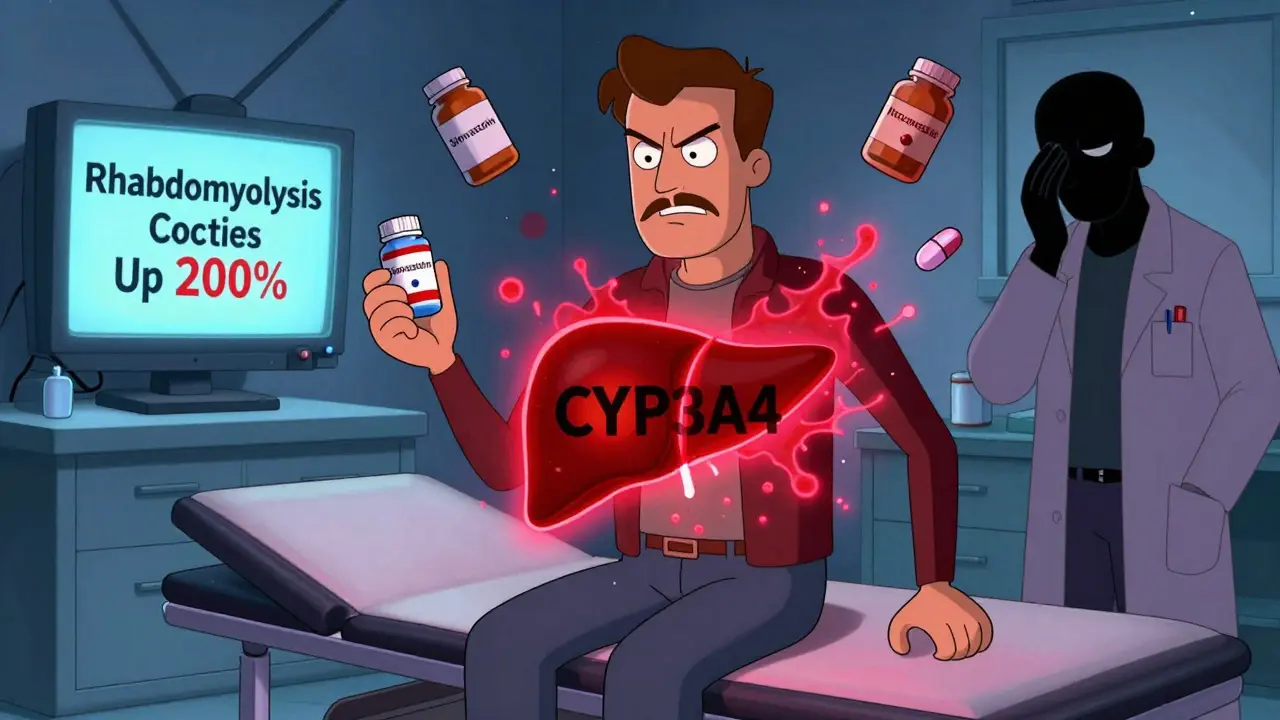
Statins work by blocking an enzyme in your liver called HMG-CoA reductase. This lowers LDL (bad) cholesterol. But your body doesn’t break down all statins the same way. Simvastatin, lovastatin, and atorvastatin rely heavily on an enzyme called CYP3A4 to be cleared from your system. If this enzyme gets blocked, these statins build up in your blood - fast. That’s where azole antifungals come in. Drugs like itraconazole, ketoconazole, and voriconazole are powerful CYP3A4 inhibitors. They’re designed to stop fungi from making their cell walls by targeting a fungal enzyme called CYP51A1. But they don’t care if they accidentally shut down your liver’s ability to process statins too. The result? A dangerous spike in statin levels. One case study in the BMJ showed that when someone took simvastatin and itraconazole together, the simvastatin concentration in their blood jumped by more than 10 times. That’s not a small increase. That’s enough to trigger rhabdomyolysis - a condition where muscle tissue breaks down, releasing toxins into the bloodstream that can cause kidney failure.Which Combinations Are Most Dangerous?
Not all statins are created equal when it comes to drug interactions. Here’s what you need to know:- High-risk combinations: Simvastatin + itraconazole, lovastatin + ketoconazole, atorvastatin + voriconazole. These can cause statin levels to rise 5 to 10 times higher than normal.
- Moderate-risk: Fluvastatin + fluconazole. Fluconazole affects a different enzyme (CYP2C9), but it still raises fluvastatin levels by about 70%.
- Low-risk options: Pravastatin and rosuvastatin. These are mostly cleared by the kidneys, not the liver. They don’t rely on CYP3A4, so they’re much safer to use with antifungals.
That’s why doctors often switch patients from simvastatin to rosuvastatin if they need long-term antifungal treatment. The change is simple - but it can mean the difference between a mild side effect and a hospital stay.
Real Stories Behind the Numbers
A 62-year-old man in Queensland was prescribed fluconazole for a recurring fungal nail infection while taking 40 mg of simvastatin daily. Two weeks later, he couldn’t climb stairs without pain. His arms felt heavy. He thought he was just getting older. Then he collapsed at the gym. His creatine kinase (CK) level - a marker for muscle damage - was over 15,000 U/L. Normal is under 200. He spent five days in intensive care. He wasn’t alone. Pharmacists on Reddit’s r/Pharmacy report catching 10-15 dangerous statin-azole combinations each month. Many of these happen because the patient didn’t tell their doctor they were using an over-the-counter antifungal cream or spray. Or worse - their doctor didn’t check their full medication list. On the American Heart Association’s patient forum, one user wrote: “I didn’t know statins and antifungals could interact. My doctor never mentioned it. I thought it was just bad luck I got so sick.”
What You Can Do Right Now
If you’re taking a statin and your doctor prescribes an antifungal, here’s what to do:- Ask: Is this antifungal really necessary? For mild skin or nail infections, topical treatments (creams, sprays, nail lacquers) often work just as well as pills - and they don’t enter your bloodstream. That means no interaction risk.
- Ask: Can we use terbinafine instead? Terbinafine (Lamisil) is an antifungal that doesn’t block CYP3A4. It’s just as effective for nail fungus and doesn’t interfere with statins.
- Ask: Can we switch my statin? If you’re on simvastatin or lovastatin, ask if you can switch to pravastatin or rosuvastatin. The switch is safe and usually covered by insurance.
- Ask: Should I pause my statin? If you must take a high-risk antifungal like itraconazole, your doctor might tell you to stop your statin for a few days before and after treatment. This is not something to decide on your own - but it’s a proven safety step.
Don’t assume your pharmacist caught it. Don’t assume your doctor remembers every medication you’ve ever taken. Be the one who asks.
Why This Problem Is Getting Worse
Candida auris - a drug-resistant yeast - is spreading fast. In the U.S. alone, cases jumped 200% from 2022 to 2023. Hospitals are turning to stronger azoles like voriconazole and posaconazole to treat it. At the same time, nearly 1 in 3 Australian adults over 45 are on statins. More people are taking both drugs - and more are at risk. Regulators are catching on. The FDA updated simvastatin’s label in 2022 to say: “Contraindicated with itraconazole.” The European Medicines Agency did the same in 2023. But guidelines don’t change what happens in a 10-minute GP appointment. Patients still get prescribed the wrong combo.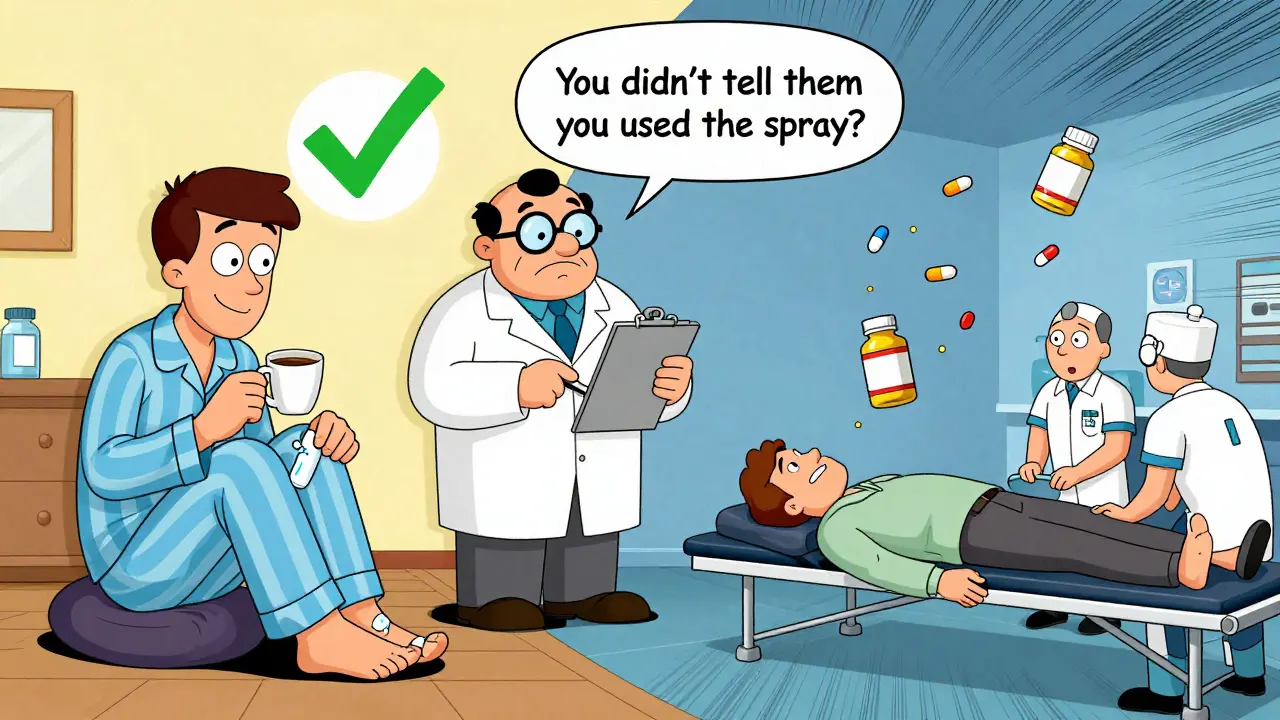
There’s a Silver Lining
Here’s something surprising: statins might actually help fight fungal infections. Lab studies show that at low doses, statins like fluvastatin and atorvastatin can make azoles work better against Candida - even drug-resistant strains like C. auris. One 2023 study found that combining rosuvastatin with voriconazole boosted antifungal effects in 40-60% of tested isolates. Researchers are now running clinical trials (like the NIH-funded STATIN-AF trial) to see if we can safely use statins as antifungal helpers. But that’s still years away. Right now, the priority is avoiding harm.What to Do If You Think You’re Having a Reaction
Symptoms of statin-induced rhabdomyolysis include:- Severe muscle pain or weakness, especially in the thighs or shoulders
- Dark, tea-colored urine
- Unexplained fatigue
- Fever or nausea
If you’re on a statin and an antifungal and you feel any of these, stop both medications and go to the nearest emergency department. Don’t wait. Don’t call your doctor first. Get checked immediately. Muscle damage can spiral fast.
Bottom Line
This interaction isn’t theoretical. It’s real. It’s common. And it’s preventable. You don’t need to be a medical expert to protect yourself. Just ask three simple questions before starting any new antifungal:- What’s the name of this antifungal?
- Is it going to interact with my statin?
- Can we switch to a safer option?
If your doctor doesn’t know the answer, ask them to check. Or ask to speak with a pharmacist. You’re not being difficult - you’re being smart. And in this case, being smart could save your muscles - and maybe your life.
Can I take fluconazole with my statin?
It depends on which statin you’re taking. Fluconazole doesn’t strongly inhibit CYP3A4, but it does affect CYP2C9. That means it can raise levels of fluvastatin and, to a lesser extent, atorvastatin. If you’re on simvastatin or lovastatin, avoid fluconazole. If you’re on pravastatin or rosuvastatin, it’s generally safe. Always check with your doctor or pharmacist before combining them.
Is it safe to use antifungal cream while on statins?
Yes, topical antifungal creams, sprays, or nail lacquers are usually safe. These products are designed to stay on the skin or nails and don’t enter your bloodstream in significant amounts. That means they won’t interfere with how your liver processes statins. Always use them as directed - but you don’t need to stop your statin for them.
What are the safest statins to take with antifungals?
Pravastatin and rosuvastatin are the safest choices. They’re mostly cleared by your kidneys, not your liver, so they don’t rely on the CYP3A4 enzyme that azole antifungals block. Switching from simvastatin or lovastatin to one of these two can eliminate the interaction risk entirely. Your doctor can easily make this switch.
How long should I wait between stopping a statin and starting an antifungal?
If you’re taking a high-risk statin like simvastatin and need a strong antifungal like itraconazole, your doctor may recommend stopping the statin 2-3 days before starting the antifungal. You should also wait 2-3 days after finishing the antifungal before restarting the statin. This gives your body time to clear the antifungal and restore normal enzyme function. Never do this without medical guidance.
Can statins help fight fungal infections?
Lab studies suggest some statins - especially fluvastatin and atorvastatin - can boost the effect of antifungals against resistant fungi like Candida auris. This is still being studied in clinical trials, and it’s not something you should try on your own. The goal isn’t to use statins as antifungals yet - it’s to avoid dangerous interactions while we learn more.
Don’t let a simple prescription turn into a medical emergency. Stay informed. Speak up. Your body will thank you.

Alex Warden
January 2, 2026 AT 21:06This is why America's healthcare is broken. People take pills like candy and then act surprised when they get sick. If you can't read a label or ask your doctor a simple question, maybe you shouldn't be allowed to take meds at all. Stop blaming the system - blame yourself.
Austin Mac-Anabraba
January 2, 2026 AT 23:02The CYP3A4 pathway is not merely a metabolic route - it is a biological gatekeeper, and its inhibition by azoles represents a fundamental violation of pharmacokinetic equilibrium. The resulting statin accumulation is not an ‘interaction’ - it is a biochemical cascade toward cellular autolysis. The fact that this remains under-discussed in primary care reflects a systemic failure of pharmacovigilance, not patient ignorance.
Sally Denham-Vaughan
January 4, 2026 AT 07:23I’ve been on rosuvastatin for five years and just started terbinafine for my toenail fungus last month. No issues. Honestly, I didn’t even know there was a risk until I read this. My pharmacist flagged it when I picked up the script - that’s the kind of check we need more of. Why do doctors skip this? I get it, they’re rushed. But maybe if they just paused for 30 seconds to check interactions before hitting ‘send’ on that prescription…
Also, topical antifungals? Totally fine. I use clotrimazole cream every time I get athlete’s foot. Zero problems. No need to panic or stop your statin unless you’re on simva or lova. Prava and rosu are your friends.
Ann Romine
January 5, 2026 AT 21:58Interesting how the same enzyme that protects fungi from antifungals is the same one our bodies use to process cholesterol meds. Evolution is wild. I wonder if this is why some cultures historically used natural antifungals like garlic or tea tree oil - maybe they didn’t know the science, but they knew to avoid mixing things that mess with the liver.
Also, I’ve seen people on Reddit say they used apple cider vinegar for nail fungus and it worked. Not science-backed, sure. But if it keeps someone from taking oral azoles… maybe that’s a win?
Todd Nickel
January 6, 2026 AT 10:59Let’s not oversimplify this. The risk isn’t just about simvastatin and itraconazole - it’s about polypharmacy in aging populations. Most patients on statins are over 50. Most patients getting oral antifungals are over 55. The overlap is massive. And many of these folks are on five, six, seven meds. A 10-minute visit isn’t enough to catch every interaction. The system is designed for volume, not safety.
Pharmacists are the real frontline here. They’re the ones who see the full list. But they’re underpaid, overworked, and often not consulted until after the script is filled. We need mandatory interaction alerts at the pharmacy level - not just ‘possible interaction’ pop-ups that get ignored. Real, forced pauses. Like seatbelt chimes. If you’re prescribing ketoconazole with simvastatin, the system should lock you out until you sign a waiver. That’s not paranoia - that’s engineering for human error.
gerard najera
January 8, 2026 AT 04:44Ask three questions. Do it.
Stephen Gikuma
January 9, 2026 AT 19:45Big Pharma made sure this stays hidden. They don’t want you to know statins and antifungals clash - because they make billions selling both. That’s why your doctor doesn’t warn you. That’s why the FDA label changes came 10 years too late. They’re not protecting you - they’re protecting profits. And now you’re paying with your muscles. Wake up.
Bobby Collins
January 10, 2026 AT 01:27My neighbor’s husband died from this. They said it was ‘natural causes’ but he was on simva and took fluconazole for a yeast infection. They didn’t even tell him it was dangerous. I swear, the government and drug companies are hiding this on purpose. I think they’re testing us. Like in the CIA experiments. I saw a video on TikTok - they’re putting stuff in the water to make us sick so they can sell more pills. This is part of it.
Layla Anna
January 11, 2026 AT 05:39Thank you for posting this 🙏 I was on simvastatin and got prescribed fluconazole last month - I almost took it until I googled it and found this exact post. Switched to rosuvastatin and used clotrimazole cream instead. My legs don’t ache anymore 😅 I’m so glad I asked. You’re right - we’re not being difficult, we’re being smart. Love that you included the real story - it made me cry a little. We need more of this ❤️