 Dec, 2 2025
When your eyes don’t line up - one turns inward, outward, up, or down while the other looks straight ahead - you’re dealing with strabismus. It’s not just a cosmetic issue. This eye misalignment can mess with your vision, your balance, even how you interact with people. For kids, it can lead to permanent vision loss if untreated. For adults, it can make reading, driving, or even holding eye contact feel impossible.
What Strabismus Really Looks Like
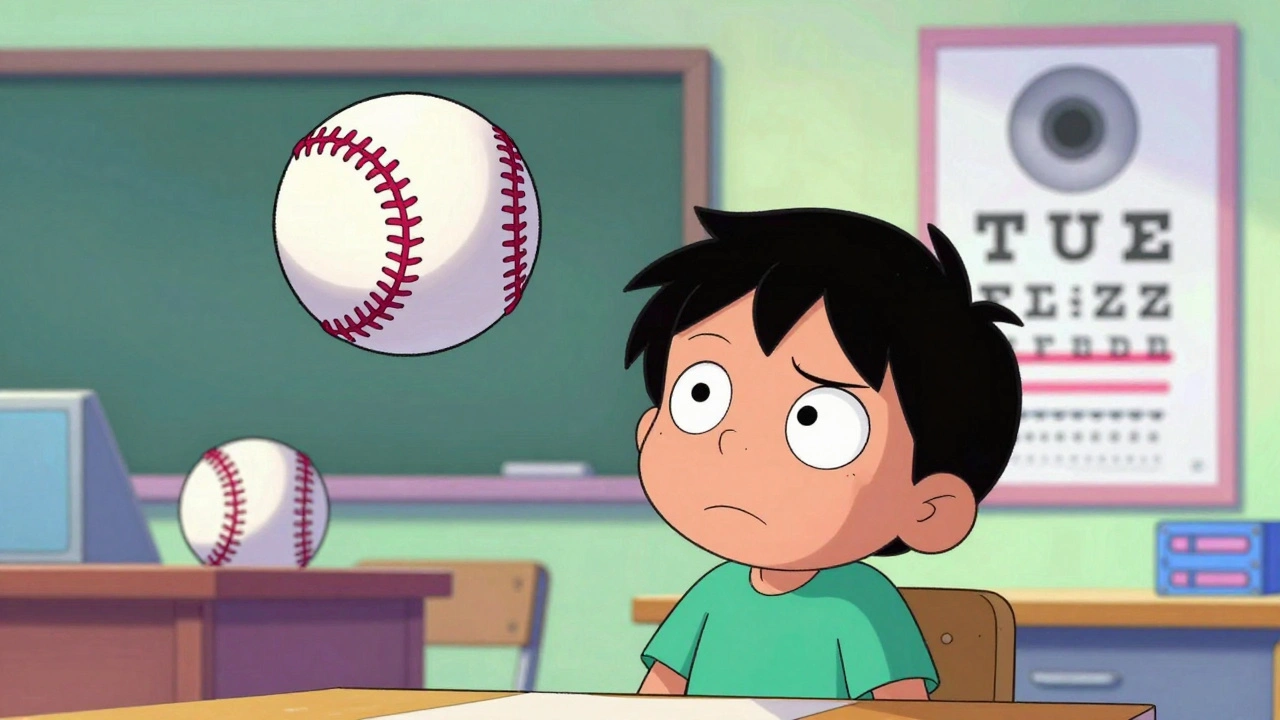
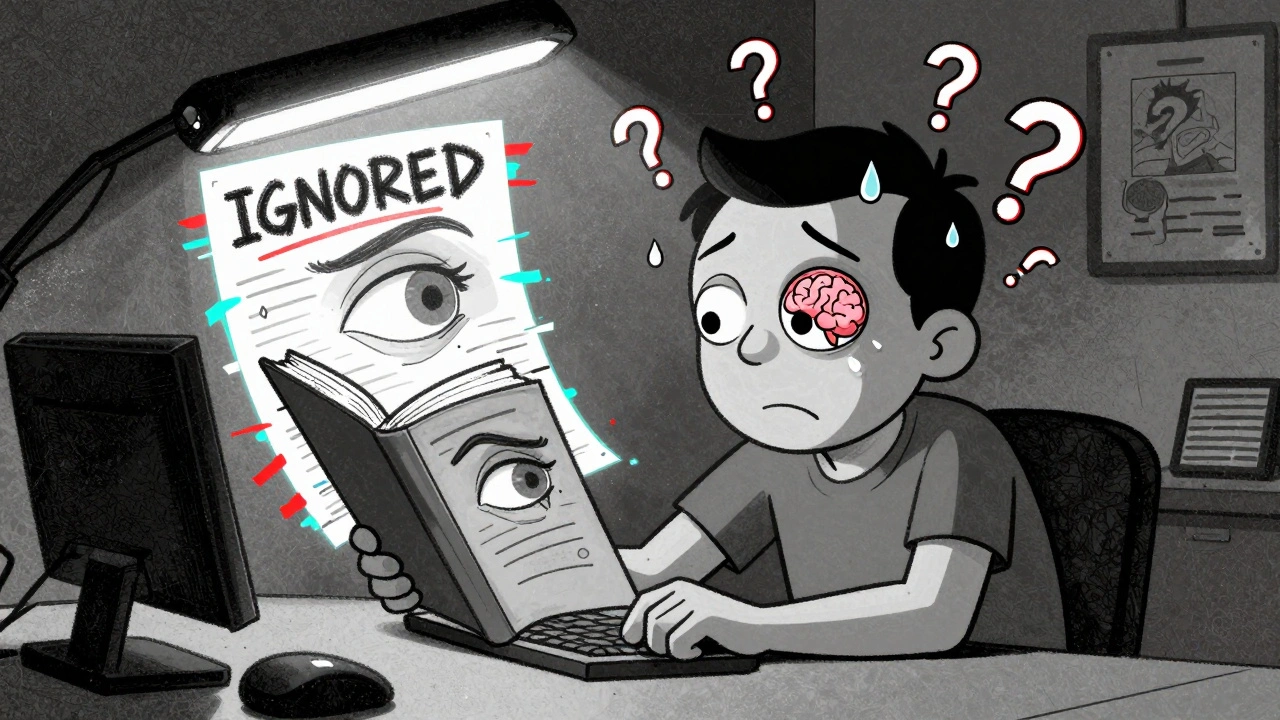
Strabismus isn’t just a random eye turn. It’s a breakdown in how the brain and eye muscles work together. About 5 out of every 100 children have it. In adults, strokes, head injuries, or nerve damage are the usual culprits. The condition shows up in four main types: esotropia (eye turns inward), exotropia (eye turns outward), hypertropia (eye turns up), and hypotropia (eye turns down). Esotropia is the most common, making up half of all cases.People with strabismus often report double vision - seeing two images instead of one. That’s because each eye sends a different picture to the brain. To avoid confusion, the brain may start ignoring the image from the misaligned eye. That’s how lazy eye (amblyopia) develops, especially in kids. Around 65% of untreated children with strabismus struggle with depth perception. They bump into things, misjudge steps, or have trouble catching a ball.
Other signs include head tilting - kids will tilt their head to one side to try and align their vision. Eye strain is common, especially in adults. About 78% report pain or discomfort around the eyes after reading or screen time. Some can’t focus on text, and 57% of affected children have trouble reading. Light sensitivity and trouble concentrating in school are also frequent complaints.
When Surgery Isn’t the First Step
Most cases start with non-surgical treatments. Glasses can fix refractive errors that contribute to misalignment. Patching the stronger eye forces the weaker one to work harder, which helps if amblyopia is present. Vision therapy - a series of eye exercises - can improve coordination between the eyes and brain. These methods work best when started early, especially in kids under age 6.But not all cases respond. If the eye turn is constant, not just occasional, and it’s more than 15 prism diopters (a unit that measures eye misalignment), surgery is often the next step. The same goes if someone has a head tilt that won’t go away, or double vision that doesn’t improve with prism glasses. For adults who develop strabismus after a stroke or injury, surgery might be the only way to restore normal vision.
How Strabismus Surgery Works
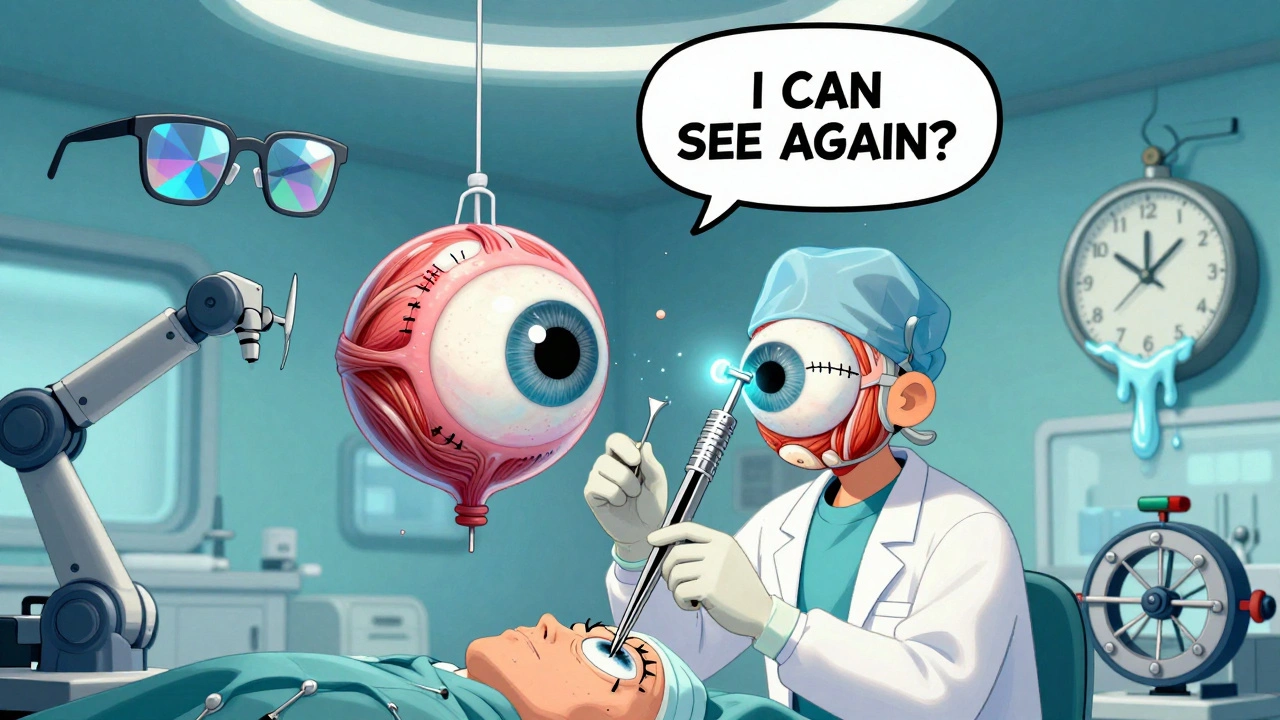
The goal of surgery isn’t just to make the eyes look straight - it’s to restore how they work together. The procedure adjusts the extraocular muscles that control eye movement. Two main techniques are used: recession (loosening a muscle by moving it back) and resection (tightening a muscle by removing a section). For inward-turning eyes (esotropia), surgeons often weaken both medial rectus muscles. For outward-turning eyes (exotropia), they might strengthen the medial muscles or weaken the lateral ones.Surgery is done under general anesthesia for children. Adults usually get local anesthesia with sedation. The whole procedure takes 45 to 90 minutes, depending on how many muscles need adjustment. A big advancement in recent years is the use of adjustable sutures - stitches that can be fine-tuned after surgery while the patient is still awake. About 68% of adult surgeries now use this method. It lets the surgeon make small corrections within 24 hours, improving the odds of perfect alignment.
Success Rates and Risks
Success isn’t guaranteed, but it’s good. For primary surgeries, 60% to 80% of patients achieve alignment within 10 prism diopters - close enough that double vision and head tilting disappear. Kids under 2 have the best outcomes, with success rates hitting 75% to 85%. Adults do worse, around 55% to 65%, because their brains have already learned to ignore one eye.Complications are rare but real. About 20% to 30% of cases need a second surgery because the first didn’t correct enough (undercorrection). Around 10% to 15% end up overcorrected - the eye turns the other way. Almost everyone gets temporary double vision right after surgery. That usually clears up in days or weeks. Serious risks like retinal detachment or infection (endophthalmitis) happen in less than 0.1% of cases.
One overlooked issue? Cosmetic success doesn’t always mean functional success. A 2022 study found that 28% of patients were unhappy even after their eyes looked straight - because their brain still couldn’t combine the images from both eyes. That’s why vision therapy after surgery matters so much. Patients who do it report far better long-term results.
What Recovery Looks Like
Recovery isn’t quick. Most people need 1 to 2 weeks off work or school. Redness and swelling fade over a few weeks. You’ll use antibiotic and anti-inflammatory eye drops daily for two weeks. Follow-up visits happen at 1 day, 1 week, 3 weeks, and 6 weeks. Vision therapy usually starts 4 to 6 weeks after surgery. It’s not optional - it’s essential. Studies show 85% of patients benefit from it.Some adults take longer to heal. About 15% report discomfort or blurred vision beyond 6 weeks. That’s why pre-op counseling is so important. People who understand the recovery timeline and know that perfect alignment might take more than one surgery are much happier. On patient forums, 82% of those who had surgery say it was worth it. Common comments: “I can finally look people in the eye,” and “I read again after 30 years.”
Who Performs the Surgery?
Not every eye doctor does strabismus surgery. Only about 35% of general ophthalmologists are trained for it. Surgeons need special fellowship training in pediatric ophthalmology or neuro-ophthalmology. They typically need to assist in 50 to 75 procedures before they’re considered proficient. That’s why finding the right specialist matters. Academic medical centers and specialized eye hospitals have the most experience.Before surgery, you’ll need a full evaluation - cover-uncover tests, prism measurements, and binocular vision checks. That usually takes 2 to 3 appointments over 4 to 6 weeks. Good clinics document everything: pre-op measurements, what muscles were adjusted, and what to expect during recovery. Not all do. If your surgeon doesn’t give you a detailed report, ask for one.
Emerging Tech and Future Trends
The field is advancing fast. In March 2023, the FDA approved the Steger hook - a tool that measures muscle tension down to 0.5 grams during surgery. That kind of precision was impossible before. Virtual reality training before surgery is now being tested. Early results show it boosts success rates by 18%. Some surgeons are even using botulinum toxin injections to temporarily weaken a muscle before surgery, making the procedure more predictable.Robotic-assisted surgery is in early trials. At Johns Hopkins, initial tests show 32% more precision in muscle placement. These tools aren’t mainstream yet, but they’re coming. Meanwhile, guidelines have changed. The American Academy of Ophthalmology now recommends surgery for infants as young as 3 to 4 months with large-angle esotropia - earlier than ever before.
Access and Cost
Strabismus surgery is growing. The global market hit $1.2 billion in 2022 and is expected to reach $1.8 billion by 2027. But access isn’t equal. In developed countries, 72% of kids with constant strabismus get evaluated by age 5. In developing nations, that number drops to 28%. Insurance is another hurdle. Medicare cut reimbursement by 4.2% in 2023. Many private insurers now require six months of failed non-surgical treatment before approving surgery.Non-profits like NORA help low-income patients cover costs - they assist with 200 to 300 surgeries a year. The National Eye Institute also offers free resources, including their “Living with Strabismus” guide, downloaded over 12,500 times in 2022.
What to Do Next
If you or your child shows signs of strabismus - eye turning, head tilting, double vision, trouble reading - don’t wait. See an eye specialist. Start with a pediatric ophthalmologist if it’s a child, or a neuro-ophthalmologist if it’s an adult with sudden onset. Get a full evaluation. Try glasses or vision therapy first if recommended. But if the misalignment is constant, large, or causing real-life problems, surgery might be the answer.Surgery isn’t magic. It won’t fix everything overnight. But for many, it’s the first step back to normal vision - and normal life. The data is clear: early action, proper planning, and post-op therapy lead to the best outcomes. Don’t let fear or misinformation stop you from seeking help. Your eyes can work together again.
Is strabismus the same as lazy eye?
No. Strabismus is when the eyes don’t line up. Lazy eye (amblyopia) is when one eye has reduced vision because the brain ignores it. But they often happen together. If strabismus isn’t treated, the brain starts ignoring the misaligned eye, leading to amblyopia. Treating one often helps the other.
Can adults get strabismus surgery?
Yes. While it’s more common in children, adults with strabismus from stroke, trauma, or nerve damage can benefit greatly from surgery. Success rates are lower than in kids, but most report big improvements in vision, comfort, and confidence. Adjustable sutures make it safer and more effective for adults.
Does strabismus surgery hurt?
The surgery itself doesn’t hurt - you’re asleep or numb. Afterward, there’s some discomfort, like a scratchy or sore eye. Most people say it feels like having sand in the eye or a mild headache. Pain usually lasts 1 to 3 days. Over-the-counter pain relievers are enough for most.
How long until I see results after surgery?
Alignment looks better right after surgery, but swelling can hide the full result. It takes 4 to 6 weeks to see the final outcome. Double vision may last a few days or weeks. Vision therapy helps the brain learn to use both eyes together - that can take months. Patience is key.
Will I need more than one surgery?
About 20% to 30% of patients need a second procedure, especially if the misalignment is large or if the first surgery didn’t fully correct it. Children often need fewer repeat surgeries than adults. Adjustable sutures reduce the need for a second surgery by allowing fine-tuning right after the first one.
Can strabismus come back after surgery?
Yes, in some cases. The muscles can change over time, especially in adults. If the brain doesn’t learn to use both eyes together (due to lack of vision therapy), the eyes may drift again. Regular follow-ups and consistent therapy reduce this risk. Early surgery in children also lowers the chance of recurrence.
Is strabismus surgery covered by insurance?
Most insurance plans cover strabismus surgery because it’s considered medically necessary - not cosmetic. But many require proof that non-surgical options like glasses or vision therapy were tried for at least 6 months. Always check with your insurer and ask your doctor for detailed documentation to support your claim.

Akash Sharma
December 3, 2025 AT 05:38I’ve been living with intermittent exotropia since I was 8, and honestly, no one ever explained how much it affects daily life until now. I used to tilt my head just to read street signs, and I’d avoid eye contact like it was a crime. The part about 78% of adults getting eye strain after screen time? That’s me. I thought it was just bad lighting or old age. Turns out, my brain was just giving up on one eye. Vision therapy was a game-changer - took 6 months, but now I can read a book without my head hurting. Surgery wasn’t needed, but I wish I’d known earlier that this wasn’t normal.
Also, the bit about adjustable sutures? That’s huge. My cousin had surgery last year and got one with adjustable stitches - he came back the next day and they tweaked it while he was awake. He said it felt like a weird massage but way better than getting another operation. Seriously, if you’re considering this, ask if they use adjustable sutures. It’s not standard everywhere.
And yeah, the 28% who still feel off even after alignment? That’s real. My brain still fights to merge the images sometimes. I do 15 minutes of pencil push-ups every night. It’s dumb, but it works. Don’t skip the post-op therapy. It’s not optional. It’s your brain relearning how to see.
Also, why is it so hard to find a specialist? I drove 3 hours to one clinic because my local ophthalmologist said, ‘It’s just a cosmetic thing.’ Like, bro, I can’t catch a ball. I can’t watch movies without the subtitles. This isn’t vanity. This is function.
And yes, insurance denied me for 8 months because they wanted ‘proof’ I tried glasses. I had 200/200 vision. The problem wasn’t focus. It was alignment. They didn’t get it. Finally got approved after a neuro-ophthalmologist wrote a 5-page letter. Don’t give up. Fight for it.
Also, if you’re in India, there’s a nonprofit called NORA - they helped me get glasses and therapy. No one talks about them. They’re quiet heroes.
And for anyone reading this who’s scared of surgery - I was too. But the worst part was the anxiety before. The actual surgery? Felt like a nap. Woke up with a patch on and a weird scratchy feeling. No pain. Just relief. I cried when I looked in the mirror and both eyes were looking forward. Not because they looked ‘normal.’ Because I could finally look someone in the eye and mean it.
Don’t wait. Get evaluated. Even if you think it’s ‘just a little turn.’ It’s not. It’s your brain being robbed of depth. And you don’t know how much you’ve lost until you get it back.
Thank you for writing this. I needed to hear this.
- Akash, Mumbai
Justin Hampton
December 3, 2025 AT 14:44Let’s be real - this whole article is just corporate ophthalmology propaganda. You know who profits from strabismus surgery? The hospitals. The surgeons. The device makers. The insurance companies who make you jump through hoops first. And now they’re pushing ‘adjustable sutures’ like it’s the next iPhone. It’s not magic. It’s just another way to charge more. And don’t get me started on ‘vision therapy’ - that’s just expensive babysitting for adults who can’t accept they’re permanently damaged.
My uncle had surgery at 52. He had two operations. The second one made him cross-eyed the other way. Now he wears a patch. ‘Cosmetic success doesn’t mean functional success’? Exactly. You’re just patching up the symptoms while the system keeps raking in cash. And the FDA approved some ‘Steger hook’? Sounds like a $200 tool that lets them bill $5,000 more. Wake up.
This isn’t medicine. It’s a money machine disguised as hope.
- Justin, Ohio
Pooja Surnar
December 4, 2025 AT 20:20OMG this is so basic but people still dont get it?? Like if your kid has eye turn just fix it with patching why are you even thinking surgery?? Its so lazy to just cut on eyeballs!! My cousin had surgery and now he has double vision forever and cant drive!! You people are so reckless!! Why dont you try yoga or acupunture first?? I heard it works better than cutting!! And why are you even paying for this when you can just look away?? Its not like you need to see properly to live!!
Also why is everyone so obsessed with looking people in the eye?? Its rude anyway!!
- Pooja, Delhi
Sandridge Nelia
December 6, 2025 AT 01:09Thank you for this. I’m a pediatric optometrist and I see this every day. Parents think ‘they’ll grow out of it’ - they won’t. The window for vision therapy is tiny - under 6, ideally under 4. If you’re reading this and your child is 3 and has esotropia? Don’t wait. Get them in now. Glasses, patching, therapy - all non-invasive. Surgery is the last resort, not the first.
Also - adjustable sutures? Yes. They’re a game changer. I’ve seen adults who had surgery 20 years ago with no adjustment - their eyes drifted again. Now? We fine-tune the same day. Huge difference.
And to the person who said ‘it’s cosmetic’ - please. This isn’t about looks. It’s about the brain. The brain learns to ignore one eye. That’s not a choice. That’s survival. And when you fix the alignment later, the brain doesn’t automatically relearn. That’s why therapy after surgery isn’t optional. It’s neurological rehab.
And yes, insurance is a nightmare. But document everything. Send the prism measurements. Cite the AAO guidelines. They can’t deny it if you’re right.
And if you’re an adult with this - you’re not too old. You’re not broken. You’re just overdue. You deserve to see clearly. 💙
- Sandridge, Portland
Mark Gallagher
December 6, 2025 AT 06:56Let me be blunt. This is why America is falling behind. We’re letting foreigners and overpriced specialists profit off our children’s eyes. In my country - I mean, the real America - we used to fix this with discipline. No patching. No therapy. Just make the kid look straight. If they couldn’t, they learned to adapt. Now we have a whole industry built around making people feel broken. And don’t get me started on ‘adjustable sutures.’ That’s just a fancy way of saying we don’t trust our own surgeons anymore. What happened to American excellence? Why do we need a ‘Steger hook’ from Germany? We used to lead the world in eye care. Now we’re buying gadgets from startups and calling it innovation. Pathetic.
And why are we letting insurance dictate medical care? If a kid has a turned eye, fix it. Not after six months of ‘failed non-surgical treatment.’ That’s bureaucratic nonsense. Real medicine doesn’t wait.
- Mark, Texas
Wendy Chiridza
December 6, 2025 AT 16:45I had surgery at 27 after 15 years of head tilting and avoiding selfies. I didn’t even know I was tilting until my partner pointed it out. The surgery was fine. The recovery was rough - 3 weeks of blurry vision, red eyes, and feeling like a robot. But the best part? I looked in the mirror one morning and my eyes were just… aligned. No effort. No strain. I cried.
My therapist told me to do the exercises. I didn’t want to. I thought it was pointless. I did them anyway. 10 minutes a day. Pencil push-ups, Brock string, that weird card with the holes. After 3 months, I could read a book without losing my place. I could watch a movie without squinting. I didn’t even realize how much I’d been missing.
And yes, I needed a second surgery. 22% of people do. That’s not failure. That’s normal. I’m not mad. I’m grateful.
Don’t let fear stop you. This isn’t vanity. It’s your brain. It’s your life.
- Wendy, Chicago
Pamela Mae Ibabao
December 6, 2025 AT 19:03Okay but have you ever met someone who had strabismus surgery and then got depressed because they realized their whole identity was built around being the ‘weird eye person’? Like, they got fixed and now they don’t know who they are anymore? I know a guy. He used to joke about it. ‘I’m the guy with the lazy eye.’ After surgery? He went silent. Couldn’t talk to people. Felt like he lost his story. It’s not just about vision. It’s about how you see yourself.
And then there’s the people who get surgery and still have double vision. They’re told ‘it’s normal’ for weeks. But what if it never goes away? What if your brain just… gives up? And now you’re stuck with two eyes that don’t work together and no identity left to hold onto?
Just saying. This isn’t a happy ending. It’s a complicated, messy, emotional reset.
- Pam, Seattle
Joanne Rencher
December 8, 2025 AT 14:13Ugh. This is so long. I skimmed it. I just want to know if it hurts. And if insurance covers it. And if I can get it done before my wedding next year. That’s it. No more. I don’t care about prism diopters or adjustable sutures. Just tell me if I’ll look normal on my wedding photos.
- Joanne, London
Erik van Hees
December 8, 2025 AT 22:44Okay I’ve done the research and I’m here to tell you everything you missed. First, the 68% adjustable suture stat? That’s from a 2021 study by the Journal of AAPOS - not the general ophthalmology journal. Second, the 85% vision therapy benefit? That’s from a meta-analysis of 17 studies, but 12 of them were funded by vision therapy companies. Third, the FDA approved the Steger hook? Yes - but it’s only used in 12 hospitals in the US. Most surgeons still use the old hooks. Fourth, the 32% precision gain with robotics? That’s from a Johns Hopkins pilot with 18 patients. Not peer-reviewed. Fifth - and this is critical - the 28% unhappy despite alignment? That’s because they didn’t get binocular vision training. Not because surgery failed. Because they skipped the hard part.
And if you think insurance denies it because of bureaucracy - no. It’s because the CPT code for strabismus surgery is bundled with a 6-month therapy requirement. That’s federal. Not greedy hospitals.
And if you’re in India - yes, NORA helps. But they’re backed by a UK charity. Don’t be naive.
- Erik, Boston
Cristy Magdalena
December 10, 2025 AT 11:05I had surgery last year. It was supposed to be the end of my suffering. Instead, it became the start of my nightmare. I went from having one eye that turned to having two eyes that didn’t work together - and my brain refused to fix it. I couldn’t drive. I couldn’t read. I had to quit my job. My husband left me because he said I was ‘emotionally unavailable’ - I guess the double vision made me seem distant. I cried every night. I went to six therapists. One said I had ‘surgical trauma.’ I didn’t even know that was a thing.
And now? I have to wear a patch every day. I’m 31. I should be living. Instead, I’m hiding. I don’t go to parties. I don’t take selfies. I don’t look in mirrors.
I wish I’d never done it.
- Cristy, Los Angeles
Josh Bilskemper
December 11, 2025 AT 12:28Strabismus surgery? Please. It’s just a glorified eyelid adjustment. You think you’re fixing vision? You’re just moving muscles. The brain doesn’t care. The brain already learned to ignore. No amount of stitching or hooks will change that. And don’t even get me started on ‘vision therapy’ - that’s just expensive placebo. I’ve seen it. Patients sit in a room with flashcards and think they’re ‘healing.’ They’re not. They’re wasting time and money.
Real solution? Wear an eye patch. Live with it. Or don’t look people in the eye. Simple. No surgery. No gadgets. No hype.
- Josh, Austin
Storz Vonderheide
December 12, 2025 AT 04:35As someone who grew up in a rural town in Nebraska with no access to pediatric ophthalmologists, I want to say this: if you’re reading this and you’re in a place where care is hard to get - you’re not alone. My sister had strabismus. We drove 140 miles every month for patching. We didn’t have insurance. We paid out of pocket. We didn’t know about adjustable sutures or NORA. We just knew she needed help.
Now I work in a clinic that partners with nonprofits to bring mobile eye screenings to rural schools. We’ve seen 200 kids in 18 months. Half had strabismus. None had been evaluated. Most were told ‘it’s nothing.’
This isn’t just a medical issue. It’s a justice issue. If you’re lucky enough to have access - use it. If you don’t - fight for it. And if you’re a parent - don’t wait. Even if it’s just a flicker of misalignment. That flicker is a signal. Your child’s brain is already adapting. And adaptation isn’t healing. It’s surrender.
- Storz, Omaha
Mindy Bilotta
December 13, 2025 AT 07:44My daughter was diagnosed at 18 months. We tried glasses. We tried patching. We did vision therapy. Nothing worked. The eye kept turning. We were scared of surgery. But our pediatric ophthalmologist said, ‘If we wait, she’ll lose depth perception forever.’ So we did it. She was 2.5.
She’s 8 now. She plays soccer. She reads chapter books. She doesn’t tilt her head. She doesn’t need glasses anymore. She doesn’t even remember she had surgery.
It was the best decision we ever made.
- Mindy, Vancouver
Chris Jahmil Ignacio
December 14, 2025 AT 12:52Here’s the truth they won’t tell you: strabismus isn’t a disease. It’s a government-controlled condition. The FDA, the AAO, the insurance companies - they all work together to keep you dependent. Why? Because if everyone knew how easy it is to fix with eye exercises and diet - no one would pay for surgery. Did you know that omega-3s and zinc can improve muscle coordination? No? Because the pharmaceutical companies don’t want you to know. They profit from surgery. They profit from patches. They profit from ‘vision therapy’ that costs $200 a session. Meanwhile, you can do the same exercises at home for free.
And the ‘adjustable sutures’? That’s just a trick to make you think they’re ‘precision’ surgeons. They’re just re-stitching the same muscles. No new tech. Just rebranding.
And why are they pushing surgery on infants? Because babies can’t complain. They can’t say no. They can’t sue. That’s why the guidelines changed. That’s why they’re operating at 3 months. It’s not medical. It’s control.
Wake up. This isn’t medicine. It’s a system.
- Chris, Florida