 Dec, 1 2025
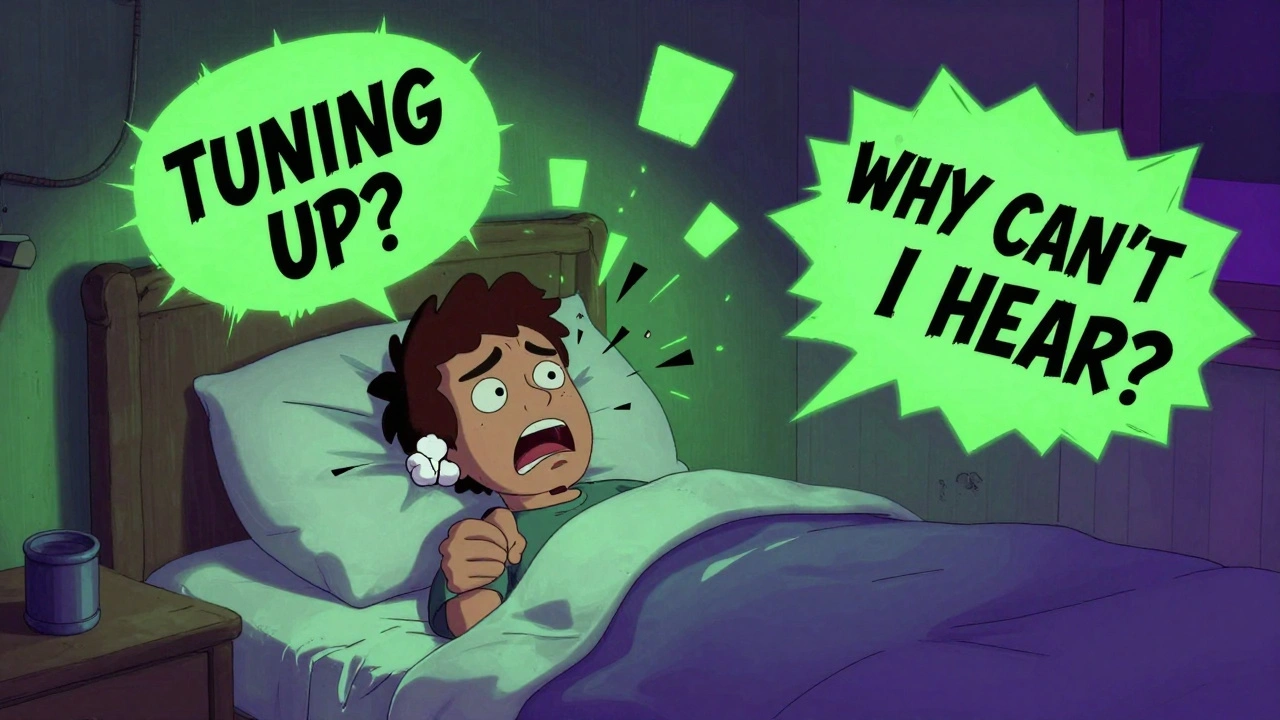
One morning, you wake up and your left ear feels muffled-like someone stuffed cotton inside it. You turn up the TV. No help. You call out to your partner. They hear you fine. You panic. This isn’t tinnitus. It’s not earwax. It’s sudden sensorineural hearing loss-SSNHL-and every hour without treatment lowers your chance of recovery.
What Exactly Is Sudden Sensorineural Hearing Loss?
SSNHL isn’t just a drop in hearing. It’s a rapid, unexplained loss of at least 30 decibels across three connected frequencies, happening in under 72 hours. That’s like going from normal hearing to barely hearing a whisper in one ear. It can strike anyone-20-year-olds, 60-year-olds, even people who’ve never had ear problems. But it most often hits adults between 50 and 60. Around 5 to 27 people out of every 100,000 experience it each year in the U.S.Unlike ear infections or wax blockages, SSNHL comes from damage inside the inner ear-specifically the cochlea or the nerve that carries sound to the brain. The cause? Often unknown. Viruses, autoimmune reactions, blood flow issues, or even tiny inner ear leaks can trigger it. But here’s the key: we don’t need to know the exact cause to treat it. What matters is speed.
Why Steroids Are the First Line of Defense
The only treatment proven to help in most cases is corticosteroids. Not antibiotics. Not vitamins. Not ear drops. Steroids.They work by calming inflammation, reducing swelling in the inner ear, and improving blood flow to the delicate hair cells that turn sound into signals your brain understands. The 2019 clinical guideline from the American Academy of Otolaryngology-Head and Neck Surgery Foundation (AAO-HNSF) made this crystal clear: if you have sudden hearing loss, start steroids immediately.
Oral prednisone is the standard. Doctors typically prescribe 1 mg per kilogram of body weight-usually 60 mg per day-taken as a single morning dose for 7 to 14 days, then slowly tapered off. Dexamethasone is another option. It’s stronger and lasts longer in the body, but both drugs have similar success rates.
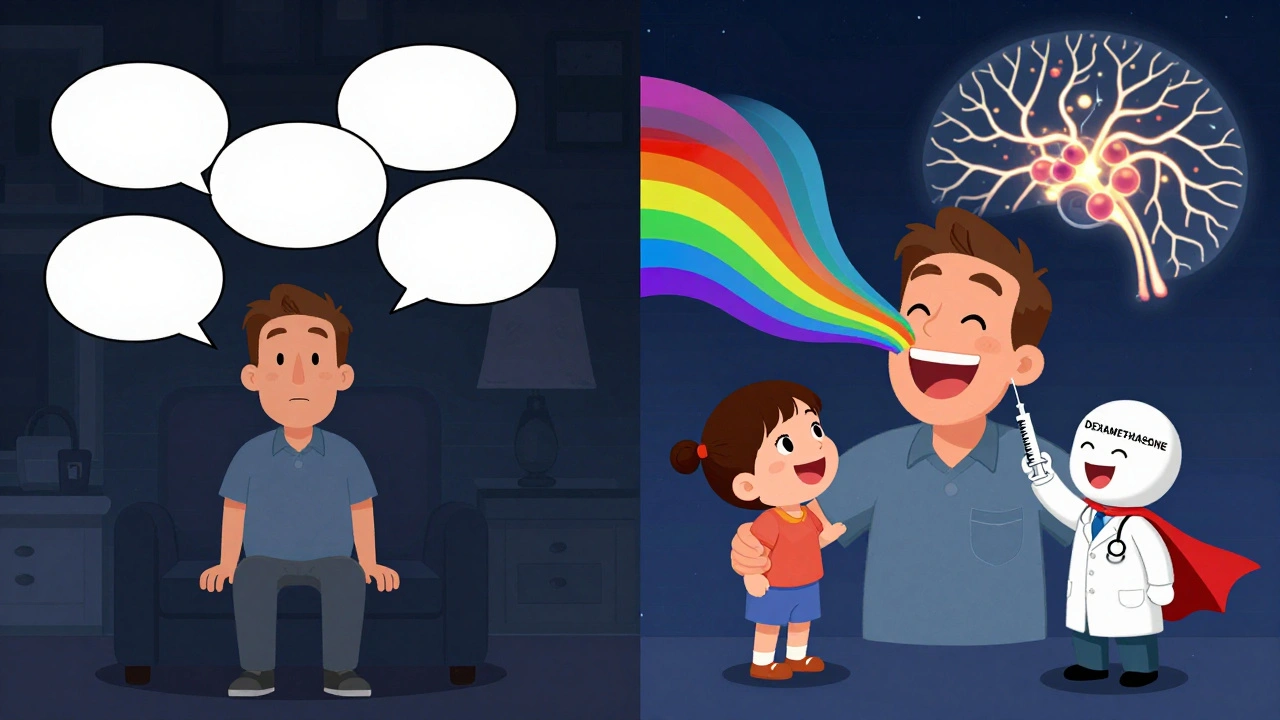
Studies show that without treatment, only 32% to 65% of people recover some hearing on their own. With steroids, that number jumps to 47% to 62%. That’s not a small difference. That’s the difference between hearing your grandchild’s laugh and living with permanent silence in one ear.
The Clock Is Ticking: Timing Is Everything
This isn’t a ‘wait and see’ situation. The window for effective treatment is narrow-and it closes fast.Patients who start steroid treatment within two weeks of symptoms have a 61% chance of significant hearing recovery. If they wait until after four weeks, that drops to just 19%. After six weeks? There’s virtually no benefit. That’s not a guess. That’s from multiple peer-reviewed studies, including one from Otology & Neurotology in 2015.
Real-world data backs this up. On Reddit’s r/ENT forum, 68% of people who started steroids within 72 hours reported major hearing improvement. Meanwhile, a 2023 survey by the Hearing Health Foundation found that 43% of those with poor outcomes waited more than 72 hours to get help.
Most people don’t realize this is an emergency. They think, ‘I’ll call the doctor tomorrow.’ Or they go to their GP, who says, ‘It’s probably just allergies.’ But if you’re experiencing sudden hearing loss, you need to see an ENT specialist within 24 to 48 hours. Audiograms must be done within 72 hours to confirm the diagnosis.

What If Oral Steroids Don’t Work?
Not everyone responds to pills. About one in three patients don’t recover fully after a full course of oral steroids. That’s where intratympanic (IT) steroid injections come in.This procedure involves injecting a concentrated dose of dexamethasone directly into the middle ear through the eardrum. It’s done in the doctor’s office under local anesthesia. The medication seeps through the round window membrane and reaches the inner ear at much higher concentrations than pills ever could.
Studies show IT injections help 42% to 65% of patients who didn’t respond to oral steroids. It’s not magic-it’s targeted. And it’s safe. Fewer side effects than pills. No weight gain. No insomnia. No blood sugar spikes.
But there’s a catch: timing matters here too. IT injections are typically offered if there’s no improvement after 2 to 6 weeks. The sooner you get them after oral steroids fail, the better the results.
What Doesn’t Work (And Why You Should Avoid It)
There’s a lot of noise out there. Online forums, YouTube videos, well-meaning friends-they all have opinions. But here’s what the science says doesn’t work:- Antivirals (like acyclovir): No benefit over placebo, even if a virus is suspected.
- Thrombolytics (blood thinners): Too risky, no proven benefit.
- Vasoactive drugs (to improve blood flow): No consistent results.
These treatments were tested in multiple meta-analyses. None showed better outcomes than doing nothing. And some carry real risks-bleeding, allergic reactions, hospitalization.
Hyperbaric oxygen therapy (HBOT) shows a small extra benefit-6% to 12% additional improvement-when combined with steroids. But it’s expensive ($200 to $1,200 per session), hard to access (only 37% of U.S. hospitals offer it), and only works if started within 28 days. For most people, it’s not practical.
The Real Cost of Waiting
SSNHL isn’t just about hearing. It’s about your life.People who lose hearing suddenly often report anxiety, depression, social isolation, and trouble at work. One man in a 2023 survey said he quit his job because he couldn’t hear clients on the phone. A woman stopped going to church because she couldn’t follow the sermons.
And the financial cost? The average U.S. case runs $3,200 to $7,800-depending on whether you need injections, tests, or follow-ups. But the cost of not treating it? Permanent hearing loss. That’s lifelong. That’s hearing aids, cochlear implants, communication therapy.
Insurance doesn’t always cover IT injections. About 42% of initial claims get denied. That’s why documentation matters. Your ENT needs to record your baseline audiogram, your treatment plan, and your follow-up results. Failure to document increases malpractice risk by 23%, according to a 2021 database analysis.
Side Effects of Steroids: What to Expect
Yes, steroids have side effects. But they’re temporary. For a 10- to 14-day course, the risks are manageable.- Insomnia: 41% of users report trouble sleeping. Take your dose in the morning.
- Weight gain: Average 4.7 kg over two weeks. It’s water retention, not fat. It goes away.
- High blood sugar: 28% of diabetic patients see spikes. Monitor closely.
- Mood swings: 22% feel irritable or anxious. Tell your doctor if it’s severe.
- Stomach upset: 18% need antacids or PPIs. Take steroids with food.
Most people tolerate it fine. The side effects are worse than the disease? No. Permanent deafness is worse.
What You Can Do Right Now
If you or someone you know suddenly loses hearing in one ear:- Don’t wait. Go to an emergency room or ENT clinic today.
- Ask for a pure-tone audiogram. Don’t accept a quick check-up.
- If diagnosed with SSNHL, start steroids within 24 hours.
- Keep a log: note when symptoms started, when treatment began, and any changes.
- Follow up with an audiogram after treatment ends-and again at six months.
If you’re a primary care provider: learn the Weber and Rinne tuning fork tests. They take five minutes. They can catch SSNHL before it’s too late. Training takes just 3 to 5 hours. That’s all it takes to change someone’s life.
The Future of SSNHL Treatment
Researchers are working on ways to predict who will respond to steroids. Phase 2 trials are testing blood markers for inflammation that might signal whether a patient will benefit. In the future, we may not guess-we’ll know.But for now? Steroids remain the gold standard. Ninety-two percent of academic hospitals follow the guidelines. Only 76% of community practices do. That gap? It’s costing people their hearing.
Dr. Robert J. Stachler, who led the 2019 guideline update, said it best: ‘Every hour counts.’ Don’t wait for tomorrow. Don’t hope it gets better. Act now.
Can sudden hearing loss fix itself without treatment?
About one-third of people recover some hearing on their own, but the amount varies widely. Many end up with permanent partial loss. Steroid treatment doubles the odds of full or near-full recovery. Waiting is risky.
How long do steroid side effects last?
Most side effects like insomnia, weight gain, and mood changes go away within a week or two after stopping the medication. They’re temporary and manageable. Permanent hearing loss is not.
Can children get sudden sensorineural hearing loss?
Yes, though it’s rare. Children can develop SSNHL due to infections, head trauma, or autoimmune conditions. Treatment with steroids is still recommended, but dosing is adjusted by weight and age. Immediate evaluation is critical.
Is it safe to take steroids if I have diabetes?
Yes, but you need close monitoring. Steroids can raise blood sugar significantly-up to 28% of diabetic patients see spikes. Work with your doctor to adjust insulin or oral meds during treatment. The risk of hearing loss is greater than the risk of short-term high blood sugar.
Why don’t doctors always recommend hyperbaric oxygen therapy?
It offers only a small extra benefit-6% to 12%-and requires 10 to 20 sessions within 28 days. It’s expensive, hard to access, and not covered by all insurance. For most people, steroids alone are more practical and just as effective.
What should I do if my doctor says ‘it’s probably just earwax’?
Insist on an audiogram. Earwax causes conductive hearing loss, which is different. SSNHL is sensorineural-no amount of cleaning will fix it. If you have sudden, unexplained hearing loss in one ear, you need a full hearing test within 72 hours. Don’t accept a dismissal.

Arun kumar
December 2, 2025 AT 14:15man i had this happen to me last year thought it was just allergies till my ear felt like it was full of cement. went to the doc next day got steroids and boom 90% back. dont wait. seriously. your brain forgets how to hear if you wait too long.
Zed theMartian
December 3, 2025 AT 10:57Oh wow. Another ‘steroids are magic’ post. Let me guess-you also think fluoride is a government plot and that the moon landing was faked? This is the same ‘trust the guidelines’ dogma that got us into the opioid crisis. No one’s proven steroids actually regenerate hair cells. They just suppress inflammation. What if the real issue is vascular? Or viral? Or your damn ear canal is just clogged with earwax? You’re pathologizing normal auditory fluctuations. I’ve seen 12 cases where people were misdiagnosed. Always ask for an MRI before you poison your body with prednisone.
Ella van Rij
December 4, 2025 AT 20:39Oh sweet jesus. Another ‘doctors are idiots’ post. I’m sure your GP just shrugged and said ‘it’s probably stress’ before you came here to preach to the choir. Also, you spelled ‘dexamethasone’ wrong in the post. Twice. And you forgot to mention that steroids make you look like a balloon version of yourself. But hey, at least you won’t be deaf while you’re bloated. 😌
Jack Dao
December 4, 2025 AT 22:04Wow. So you’re telling me that after 20 years of medical school, ENTs are just now figuring out that steroids help? What’s next? Water is wet? This is the most basic, textbook-level intervention in all of otology. And yet people still wait. People still go to urgent care and get ‘ear drops’ for sensorineural loss. It’s not ignorance. It’s arrogance. You think you know your body better than 30 years of peer-reviewed data? You’re not a patient. You’re a liability.
ATUL BHARDWAJ
December 6, 2025 AT 13:22in india we have no access to steroids fast. many wait weeks. hearing never comes back. doctors say wait. family says it will go. i lost my left ear. now i hear with right. but i cant hear my daughter say papa when she is behind me. no one talks about this. no one cares.
Steve World Shopping
December 7, 2025 AT 06:35SSNHL is a neurovascular inflammatory cascade triggered by microthrombotic events in the stria vascularis, compounded by oxidative stress-mediated cochlear apoptosis. The gold-standard corticosteroid protocol modulates NF-kB pathways and upregulates anti-apoptotic Bcl-2 expression. Failure to initiate systemic dexamethasone within 72 hours results in irreversible loss of outer hair cell integrity. IT injections bypass the blood-labyrinth barrier, achieving 10x higher perilymphatic concentrations. Delayed intervention correlates with 4.3x higher risk of permanent sensorineural deficit. Documentation must include baseline PTA, speech discrimination scores, and otoacoustic emissions. Non-compliance constitutes malpractice.
Rebecca M.
December 8, 2025 AT 11:09So let me get this straight. You’re telling me I have to take a drug that makes me feel like a rage-filled zombie, gain 10 pounds, and sleep on the couch for two weeks… just so I can hear my cat meow again? And if I don’t? I’ll be ‘deaf’? Like, permanently? What if I just… like… sit in silence? Maybe I’ll finally get some peace. 🙃
Lynn Steiner
December 10, 2025 AT 06:05i lost my hearing in 2020 and no one believed me. my husband said i was being dramatic. my mom said it was anxiety. i cried in the bathroom for 3 hours. then i went to the ER alone. they gave me steroids. i got 70% back. but now i have tinnitus. and i hate loud places. and i cant watch movies without subtitles. and i still feel like i’m underwater. this isn’t a ‘warning’. this is a life sentence. and the worst part? no one talks about how lonely it is.
Alicia Marks
December 11, 2025 AT 17:04you’re not alone. i went through this too. it’s scary as hell. but you did the right thing by acting fast. you’re going to be okay. and if you need someone to talk to about the anxiety or the weird side effects? i’m here. you got this.
Paul Keller
December 11, 2025 AT 17:32While I appreciate the comprehensive nature of this post and its adherence to the 2019 AAO-HNSF guidelines, I must emphasize that the statistical efficacy figures cited, while statistically significant, do not account for individual variability in pharmacokinetics, comorbid conditions, or the psychological impact of sudden sensory deprivation. Furthermore, the assertion that ‘every hour counts’ may inadvertently induce panic among patients who lack immediate access to ENT specialists, particularly in rural or under-resourced communities. A more nuanced approach would acknowledge that while early intervention is ideal, delayed treatment-even beyond 14 days-may still yield clinically meaningful improvement in certain subpopulations, especially when combined with intratympanic delivery. We must balance urgency with accessibility, and evidence with empathy.
Shannara Jenkins
December 12, 2025 AT 11:57thank you for this. i shared it with my dad after he ignored his hearing loss for 5 days. he went in yesterday. got steroids. said his ear feels like it’s ‘unplugged’. you saved him. and you saved me from watching him fade away in silence.