 Dec, 31 2025
When a generic drug gets tentative approval from the FDA, it doesn’t mean it’s ready to hit shelves. It means the agency has confirmed the drug meets all scientific standards for safety, effectiveness, and quality-but something is still blocking it from being sold. And that something often takes years to clear. Between 2010 and 2023, over 2,500 generic drugs received tentative approval, yet nearly one in five never made it to market. Why? The road from tentative approval to actual sale is paved with legal, technical, and economic hurdles that most people don’t see.
Patent Litigation Is the Biggest Roadblock
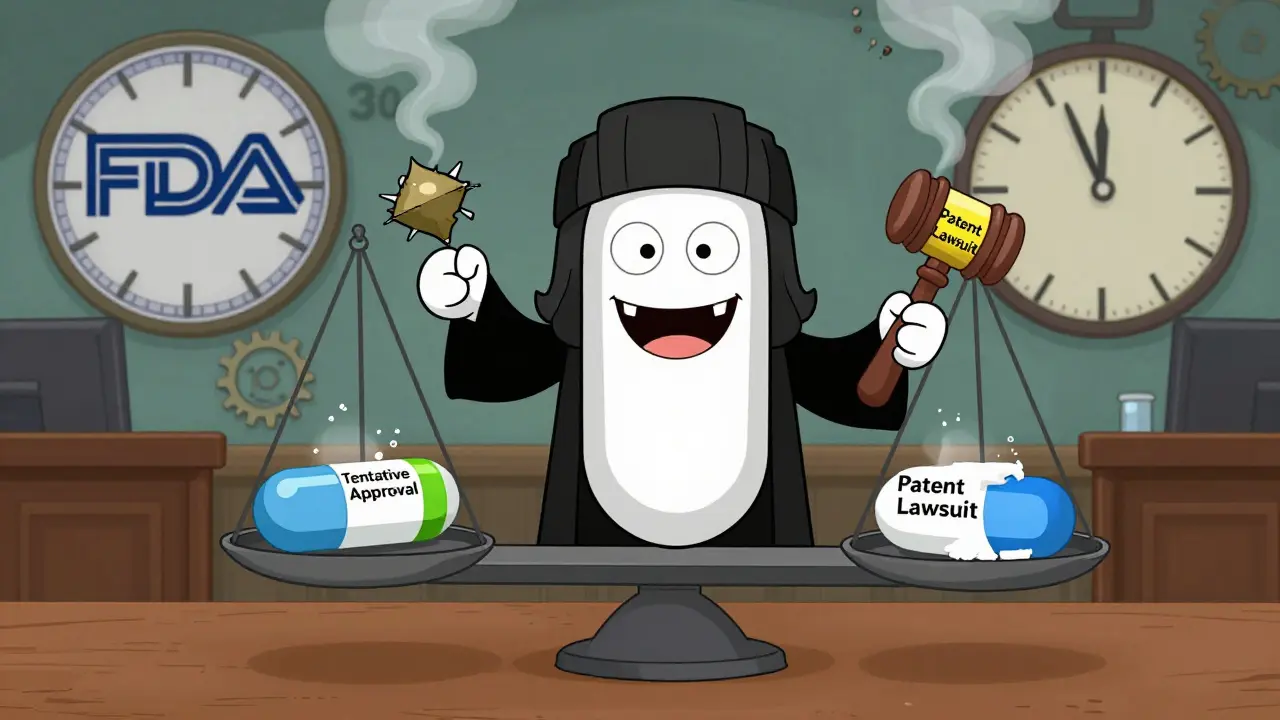
The most common reason a tentatively approved generic never launches isn’t because it’s flawed-it’s because someone sued. Under the Hatch-Waxman Act, brand-name drug companies can file a patent infringement lawsuit when a generic manufacturer certifies that their patent is invalid or won’t be infringed (called a Paragraph IV certification). This triggers an automatic 30-month stay, blocking the FDA from giving final approval-even if the generic is scientifically perfect. Between 2010 and 2016, 68% of tentatively approved generics were held up by these lawsuits. Some brand companies file these suits just to delay competition, even if the patent is weak. A 2017 Commonwealth Fund analysis found that 72% of citizen petitions filed by brand manufacturers during that time were based on scientifically unsupported claims, all aimed at stalling approval. Then there’s “product hopping”-when a brand company makes a tiny change to their drug, like switching from a tablet to a capsule, and gets a new patent. This resets the clock on generic competition. A 2018 FTC study found this tactic affected 17% of top-selling drugs. And “pay-for-delay” deals? That’s when a brand company pays a generic maker to hold off on launching. Between 2009 and 2014, 987 generic entries were blocked this way.Manufacturing Problems Keep Drugs Off the Shelf
Even if the science checks out and no lawsuits are filed, the factory might not be ready. The FDA inspects every manufacturing site-domestic or overseas-that produces the drug. In fiscal year 2022, 41% of complete response letters (CRLs) issued by the FDA cited facility issues. That’s more than half of all delays. The top problems? Poor quality control systems (63% of facility-related CRLs), inadequate environmental monitoring (29%), and unqualified equipment (24%). These aren’t minor paperwork errors. They’re real risks to patient safety. A single contaminated batch can shut down an entire production line. Complex dosage forms-like inhalers, injectables, or extended-release pills-face even tougher scrutiny. They require 2.3 times more review cycles than simple tablets. Many generic manufacturers, especially smaller ones, don’t have the resources to fix these issues quickly. The average time to respond to a deficiency letter from the FDA is 9.2 months. The FDA recommends six. That delay alone can push a launch back by over a year.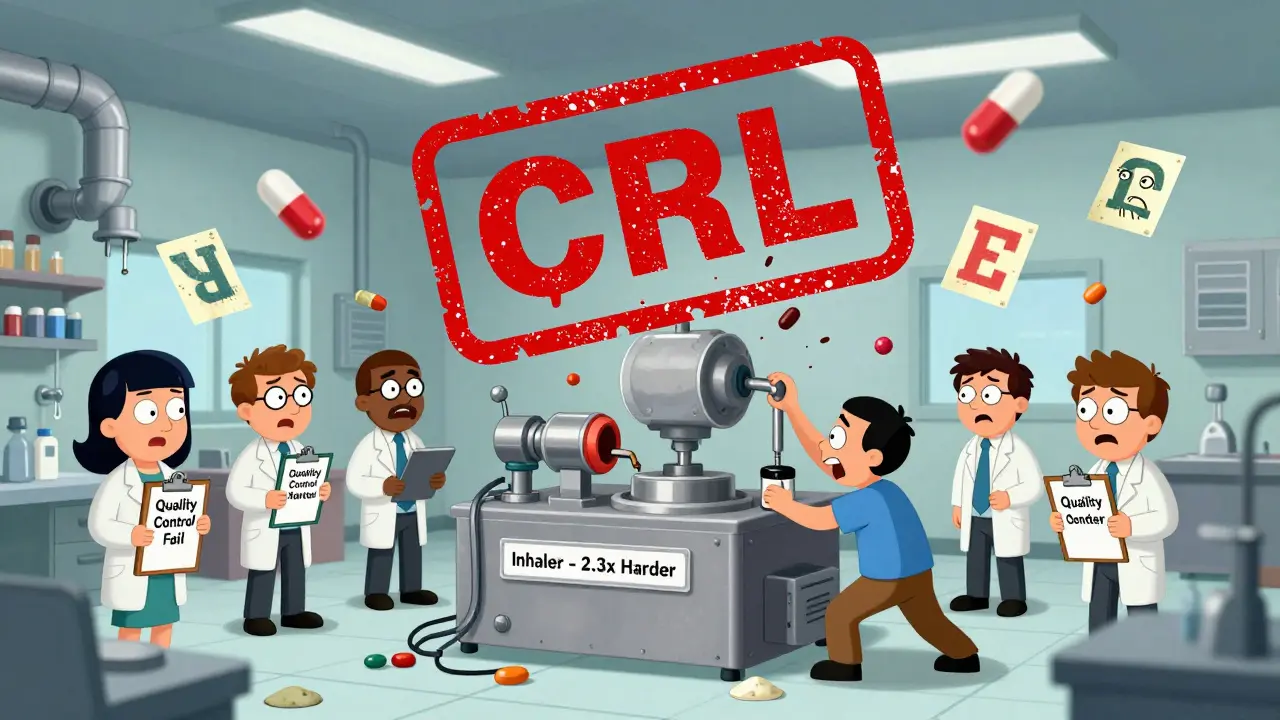
Applications Are Often Incomplete from Day One
It’s not just the factory. The application itself is often incomplete. In 2021, the FDA reported that 29% of initial generic drug applications had major missing pieces-missing stability data, unclear chemistry details, or poorly written labeling. In 2022, 43% of all deficiencies were tied to inadequate stability studies. That means the manufacturer didn’t prove the drug would stay safe and effective over time under real-world conditions. Analytical methods-how the drug’s ingredients are measured-are another big issue. Twenty-two percent of deficiencies came from poorly validated testing methods. If the lab can’t accurately measure the active ingredient, the FDA can’t approve it. And for complex generics like topical creams or nasal sprays, the requirements are even stricter. Dr. Jessica Lee of Brookings noted these products average 3.7 review cycles, compared to 2.9 for oral tablets. That’s an extra 14 months of waiting.Market Economics Don’t Always Add Up
Even if the FDA approves it and the patent expires, the generic might still never launch. Why? Because it’s not profitable. A 2022 DrugPatentWatch analysis found that 30% of approved generics never reach the market-and that number jumps to 47% for drugs with annual U.S. sales under $50 million. If the market is too small, or if the price is already so low that there’s no profit margin, manufacturers walk away. This is especially true for older, off-patent drugs that have been generic for years but still have no competition. Even when generics do launch, prices don’t always drop fast. A 2019 JAMA Internal Medicine study found that when only one generic competitor enters the market, prices stay at 80% or more of the brand price for two full years. That discourages other companies from entering. So even if a drug gets tentative approval, it might sit on the shelf because no one sees a financial upside.
What’s the FDA Doing About It?
The FDA knows the system is slow. That’s why they created the Competitive Generic Therapy (CGT) pathway in 2017. It gives priority review to drugs with little or no generic competition. Of the 78% of CGT-designated drugs that received tentative approval, most got it within eight months-compared to the usual 18 months. They also launched the 2022 Tentative Approval Initiative, targeting 102 high-priority drugs with no generic alternatives. For those, 67% received final approval within 12 months, compared to just 34% for similar drugs outside the program. The GDUFA III agreement (2023-2027) sets ambitious goals: raise first-cycle approval rates from 28% to 70% by 2027, and cut review time for priority applications to just eight months. But progress is slow. In 2022, the average number of review cycles dropped only from 3.9 to 3.2. And the median time from tentative approval to market launch? Still 16.5 months.What’s Next?
New laws like the CREATES Act (2019) and the Affordable Drug Manufacturing Act (2023) are trying to fix the root problems. The CREATES Act makes it harder for brand companies to block generic manufacturers from getting samples of their drug-something they’ve used to delay testing. The Affordable Drug Manufacturing Act aims to bring more production back to the U.S. and improve supply chain resilience. But the biggest challenge remains: patents. Until the system stops rewarding legal gamesmanship over real competition, tentative approvals will keep piling up while patients wait for affordable drugs. The science is ready. The factories can make them. The FDA approves them. But the system? It’s still stuck.For every generic drug that finally hits the market, dozens more sit in limbo-approved in every way except one: the legal and economic barriers that keep them from reaching the people who need them.

Joy Nickles
January 2, 2026 AT 02:33So wait-so the FDA says ‘you’re good’ but then some big pharma company just slams the brakes because they don’t like competition?? 😤 Like… what even is this system?? I just paid $400 for a pill last month and now I find out it’s been approved for YEARS but stuck in legal limbo??
Emma Hooper
January 3, 2026 AT 23:30Oh honey, this is the wild west of medicine. 🤠 Brand names play chess while patients play hopscotch trying to afford their meds. I’ve seen people skip doses because generics never showed up-even when the science was flawless. It’s not broken. It’s designed this way. Profit over people. Again.
Martin Viau
January 5, 2026 AT 06:48Let’s be real-this is why Canada’s drug pricing model is superior. We don’t let corporate litigation dictate access. The FDA’s process is a carnival of inefficiency. Manufacturing standards? Fine. But the patent system? A grotesque subsidy for monopolies. We need structural reform-not more ‘initiatives’ that take 16 months to move the needle.
Marilyn Ferrera
January 5, 2026 AT 20:21This is heartbreaking. And so avoidable. The science is there. The capacity is there. The will? Not so much.
Bennett Ryynanen
January 7, 2026 AT 12:04THEY’RE JUST LAUGHING WHILE WE SUFFER. PAY-FOR-DELAY? PRODUCT HOPPING? THAT’S NOT BUSINESS-THAT’S THEFT. AND THE FDA’S JUST SITTING THERE WITH A CLIPBOARD LIKE ‘OH WELL, NEXT!’
Chandreson Chandreas
January 7, 2026 AT 22:42It’s like the system is built to make us feel hopeful… then crush us gently with bureaucracy. 🫂 But hey-at least we’re talking about it now. That’s something, right? 💪
Darren Pearson
January 8, 2026 AT 20:33One must acknowledge the structural complexities inherent in the regulatory ecosystem. The convergence of intellectual property law, manufacturing compliance, and market dynamics necessitates a multi-tiered governance framework that cannot be reduced to simplistic moral narratives. The FDA, despite its constraints, operates within a legally codified paradigm that prioritizes patient safety above all.
Joy Nickles
January 9, 2026 AT 22:48Oh wow, so you’re saying we’re supposed to be impressed that they’re not letting people die? 😒 Like that’s the bare minimum. I want my pills NOW. Not in 16.5 months. Not after 3 review cycles. NOW.
Robb Rice
January 10, 2026 AT 04:44I appreciate the depth of this breakdown. It’s easy to blame the FDA, but the real issue is the perverse incentives baked into the entire system-from patent law to manufacturing oversight. We need legislation that cuts through the noise, not more committees.
Jenny Salmingo
January 12, 2026 AT 02:37My grandma took a generic for her blood pressure for 10 years. Never had an issue. But she waited 3 years for it to be available. She didn’t know why. I just told her it was ‘the system.’ She nodded and said, ‘Well, I’m glad it’s here now.’ That’s all most people want.