 Feb, 7 2026
Vitamin K Intake Tracker
Keep your INR stable by maintaining consistent vitamin K intake between 90-120 mcg daily. Track your daily intake from key sources to stay within the safe range.
Your Vitamin K Sources
Your Vitamin K Intake
Recommended range: 90-120 mcg per day
Your intake:
According to the American Heart Association, consistent vitamin K intake is the single most modifiable factor affecting INR stability.
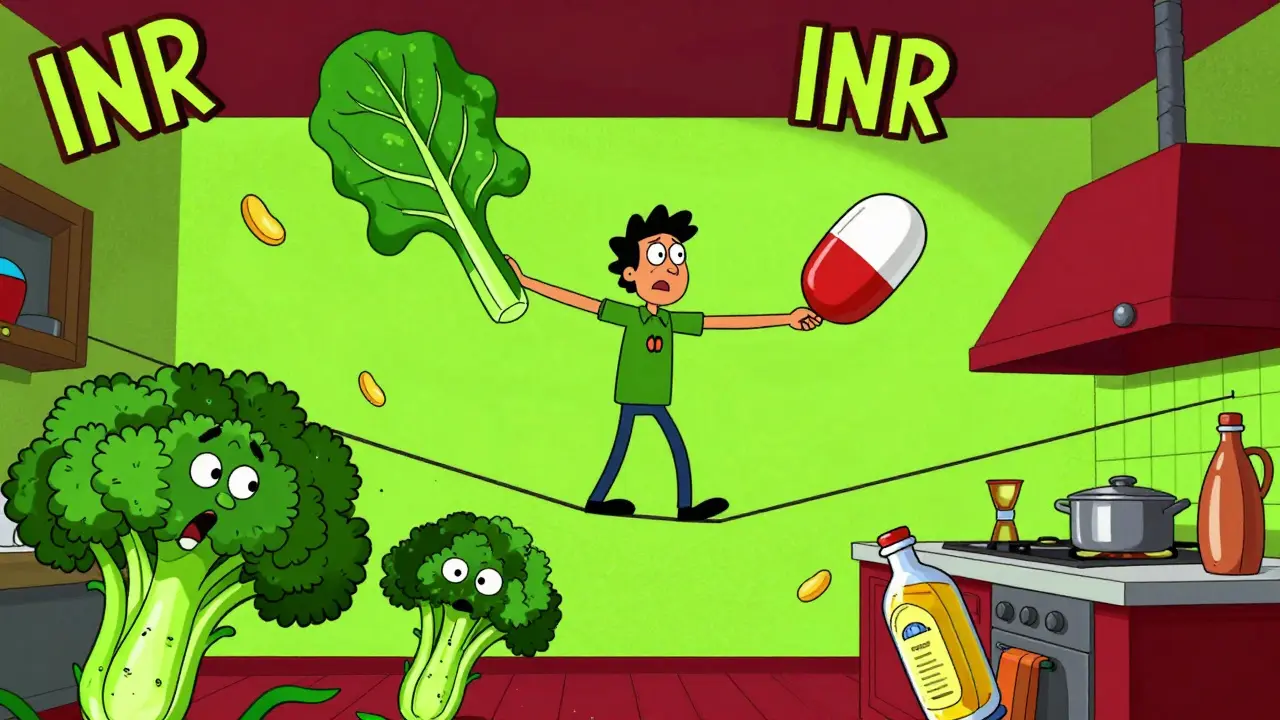
When you're on warfarin, your body is walking a tightrope. Too much blood thinning? You risk dangerous bleeding. Too little? You could end up with a clot that leads to a stroke or heart attack. The difference between safety and crisis often comes down to one thing you might not think about: vitamin K in your food.
Why Vitamin K Matters More Than You Think
Warfarin works by blocking vitamin K’s job in your body. Vitamin K is essential for making clotting factors - proteins that help your blood thicken when you get cut. Warfarin slows this process so clots don’t form where they shouldn’t, like in your legs or lungs. But here’s the catch: if you suddenly eat a lot more vitamin K, your body starts making more clotting factors again. That can make warfarin less effective. On the flip side, if you cut back on vitamin K, your blood can thin too much. Both scenarios are dangerous.The American College of Chest Physicians says your target INR - a lab test that measures how long your blood takes to clot - should stay between 2.0 and 3.5, depending on your condition. But studies show that inconsistent vitamin K intake causes 32% of warfarin-related emergency visits. That’s not rare. It’s common. And it’s preventable.
What Foods Really Have Vitamin K?
You don’t need to avoid vitamin K. You need to keep it steady. The biggest sources aren’t exotic superfoods - they’re everyday greens. One cup of cooked kale has over 800 micrograms. That’s more than eight times what an adult woman needs in a full day. Cooked spinach? Nearly 500 mcg. Broccoli? Around 220 mcg. Even romaine lettuce adds up if you eat it daily.It’s not just salads. Soybean oil, canola oil, and some meal replacements like Ensure contain hidden vitamin K. A single 8-ounce serving of Ensure has 25 mcg. If you drink one every day without telling your doctor, your INR could drift out of range.
There’s also vitamin K2, found in fermented foods like natto, sauerkraut, and certain cheeses. While less common in Western diets, it still matters. A change in your cheese habits - switching from cheddar to blue cheese - can affect your INR. That’s why tracking isn’t about avoiding these foods. It’s about consistency.
How a Food Diary Stops Dangerous Fluctuations
A food diary isn’t just a log. It’s a safety net. When you write down what you eat - especially leafy greens, oils, and fortified foods - you create a pattern. Your doctor can see if your INR changes line up with your meals. Maybe your INR dropped after you ate three servings of broccoli in one week. Or maybe it spiked after you stopped eating spinach for two weeks.According to the American Heart Association, consistent vitamin K intake is the single most modifiable dietary factor affecting INR stability. That means if you eat roughly the same amount of vitamin K every day, your warfarin dose stays steady. You won’t need frequent dose adjustments. You won’t get called in for emergency INR checks.
Research from Blood Advances followed 327 patients for six months. Those using a digital food diary kept their INR in the safe zone 72.3% of the time. Those using paper logs? Only 61.8%. That’s a 10.5% difference in safety - and it’s real.

Paper vs. Digital Diaries: What Works Best?
Some people still use paper. A notebook with columns for date, food, portion, and INR. Simple. Reliable. But it’s easy to forget. A soggy diary in your pocket. A lost page. A rushed entry that says “greens” without specifying how much.Digital apps have changed the game. The Vitamin K Counter & Tracker app, updated in September 2023, lets you scan or type in over 1,200 foods. It shows you how much vitamin K you’ve eaten so far that day. If you eat a salad with spinach and broccoli, it adds up the numbers in real time. No math. No guesswork.
But not all apps are equal. A 2023 study found that 68% of vitamin K tracking apps aren’t clinically validated. Some say a banana has 10 mcg of vitamin K. It doesn’t. It has less than 1. That kind of error can send your INR off track.
The Vitamin K-iNutrient app, updated in January 2024, stands out. It was tested against lab analysis and matched vitamin K content with 94.7% accuracy. That’s rare. And it breaks down K1 and K2 - important if you eat fermented foods.
For older adults, paper still wins. A 2022 study showed 82% of patients over 75 stuck with paper logs. Only 57% used apps. Why? Smartphone confusion. Too many steps. Too much tech. That’s why clinics still offer printed diaries - and why many patients need two or three visits just to learn how to fill one out.
The Hidden Problem: Underreporting
Even the best diary fails if you don’t track everything. A 2020 NIH study found patients underreported vitamin K intake by 22% to 37%. Why? Because they forget. A spoonful of canola oil in stir-fry. A multivitamin with 50 mcg of vitamin K. A salad dressing made with soybean oil.These aren’t big meals. They’re tiny. But they add up. That’s why experts recommend spot checks. A registered dietitian calls you in, asks you what you ate yesterday, and compares your diary to your actual intake. This simple step improves accuracy by 28%.
Portion size is another trap. One cup of cooked spinach? That’s a big handful. But most people eyeball it. A visual guide - like comparing a serving to a tennis ball or a deck of cards - helps. One clinic found that giving patients these guides reduced estimation errors by 41%.
What Experts Really Say
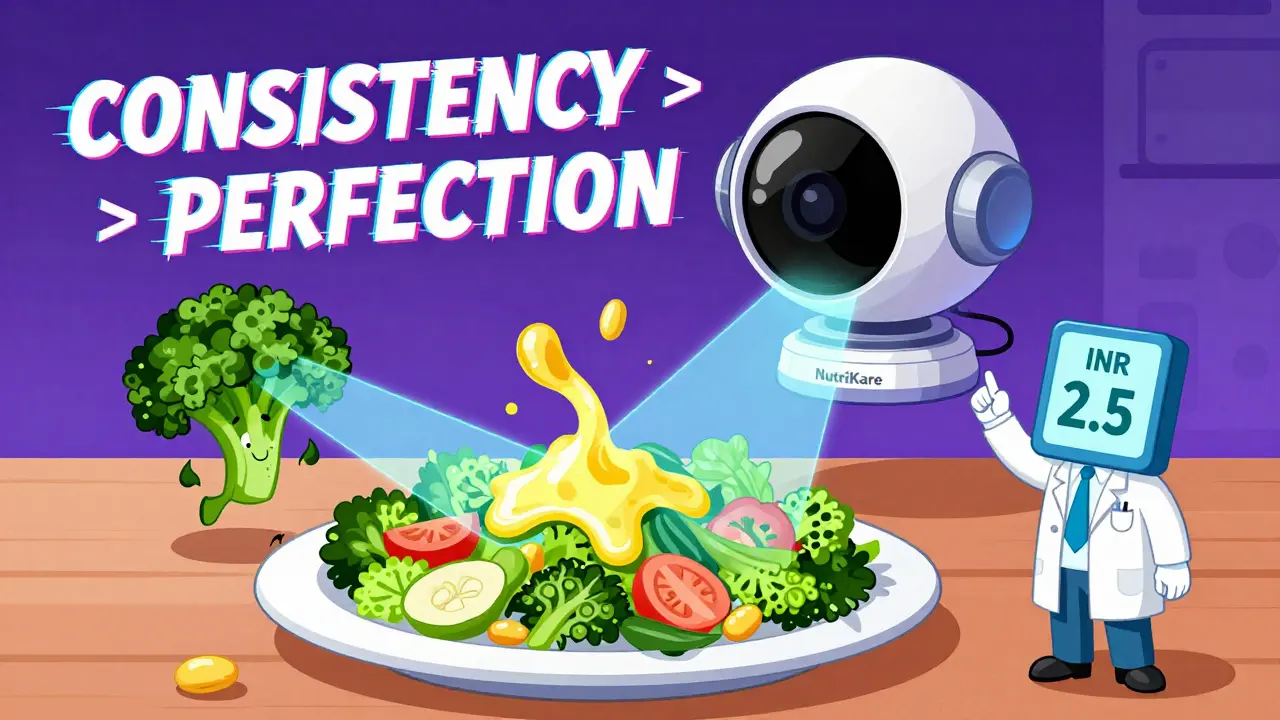
Dr. Gary Raskob, who helped write the 2021 guidelines for the American Society of Hematology, puts it plainly: “Don’t change your diet. Just keep it the same.” You don’t need to go vegan or cut out greens. You just need to eat about the same amount every day. If you normally have spinach for breakfast, keep doing it. If you skip it for a week and then eat a huge salad, your INR will swing.Dr. Evan Stein from the University of Chicago adds: “People who ate exactly 150 mcg of vitamin K every day had 18% fewer INR fluctuations than those who averaged 150 mcg but varied wildly.” That’s the key. Consistency beats perfection.
The Agency for Healthcare Research and Quality found that using food diaries boosts time in therapeutic range by over 8 percentage points. For someone who’s been bouncing between 1.8 and 4.0, that’s the difference between living normally and being stuck in the hospital.
How to Start - and Stick With It
Start simple. Pick one method: paper or app. Use it for 30 days. Write down:- Every leafy green (kale, spinach, broccoli, brussels sprouts)
- Any oils (soybean, canola, olive oil if you use a lot)
- Fortified drinks (Ensure, Boost)
- Multivitamins (check the label - many contain vitamin K)
- Your INR value from each blood test
Don’t try to track everything. Just the big ones. After a month, bring your diary to your next appointment. Your doctor will tell you if your intake is steady. If not, they’ll help you adjust.
For extra help, pre-plan five meals a week with similar vitamin K levels. Aim for 90-120 mcg daily. That’s about one serving of cooked spinach or two cups of raw lettuce. Keep it simple. Keep it the same.
What’s Next? The Future of Tracking
In January 2024, the FDA approved the first AI-powered tool called NutriKare. It uses your phone camera to take a picture of your food and estimates vitamin K content. Early results show 89% accuracy. Hospitals like those using Epic’s MyChart system are starting to integrate food diaries directly into electronic records. Soon, your diet might auto-update your warfarin dose suggestions.But for now, the best tool is still the one you’ll use. Whether it’s a notebook in your purse or an app on your phone, tracking vitamin K isn’t about being perfect. It’s about being predictable. And that’s what keeps you safe.
Do I need to stop eating leafy greens if I’m on warfarin?
No. You don’t need to avoid leafy greens. In fact, cutting them out can be more dangerous than eating them. The goal is consistency. If you normally eat spinach every day, keep doing it. If you rarely eat greens, don’t suddenly start eating a big salad every day. Your body needs steady vitamin K levels to keep your INR stable.
Can I use MyFitnessPal or Lose It! to track vitamin K?
You can, but it’s not ideal. A 2023 JAMA Internal Medicine study found that general nutrition apps like MyFitnessPal are 3.2 times less accurate for vitamin K tracking than apps designed specifically for warfarin patients. Many don’t list vitamin K content correctly - especially for oils, fortified foods, and cooked vegetables. Use a specialized app like Vitamin K Counter & Tracker or Vitamin K-iNutrient instead.
How often should I check my INR if I’m using a food diary?
You still need regular INR tests - usually every 2 to 4 weeks when starting, then every 4 to 6 weeks once stable. The food diary doesn’t replace blood tests. It helps your doctor understand why your INR changed. If your INR drops or rises without a clear reason, your diary might show a hidden change in your diet.
What if I travel or eat out often?
Plan ahead. Ask restaurants how their greens are prepared. Oils matter - soybean or canola oil in salad dressing can spike vitamin K. If you’re unsure, stick to foods you know: grilled chicken, plain rice, steamed vegetables you’ve tracked before. Keep your diary updated even when you’re away. Consistency matters more than location.
Are there any foods I should completely avoid?
No foods need to be completely avoided. But be cautious with large, sudden changes. Eating a whole head of kale one day after weeks of no greens can cause your INR to drop sharply. Avoiding alcohol, cranberry juice, and herbal supplements like St. John’s Wort is more critical than avoiding greens. Focus on steady intake, not elimination.
