 Dec, 15 2025
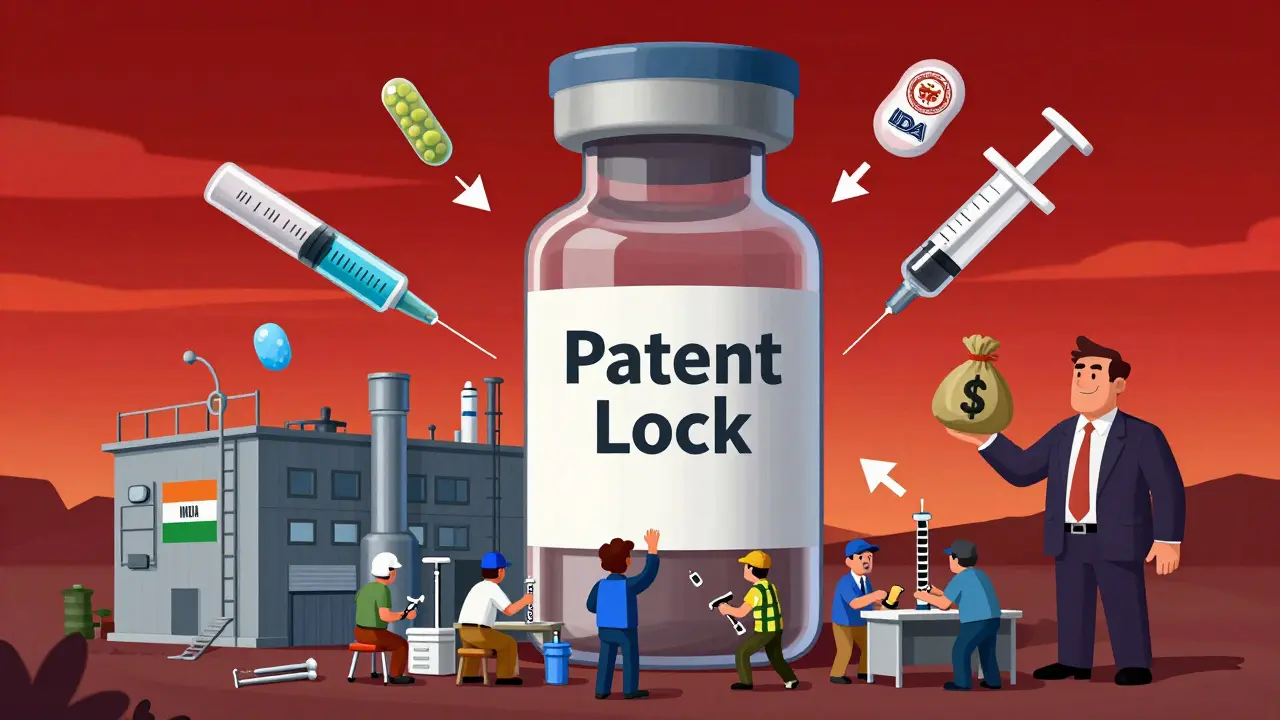
There’s no such thing as a vaccine generic in the way we think of generic pills. You can’t just copy a vaccine the way you copy a blood pressure tablet. Vaccines aren’t chemicals. They’re living systems-grown in cells, purified under strict conditions, and often stored at -70°C. That’s why, even after a vaccine’s patent expires, another company can’t just make a cheaper copy and slap on a new label. The science doesn’t allow it. And that’s just the start of the problem.
Why Vaccines Can’t Be Generic Like Pills
Generic drugs are simple in comparison. Take a molecule, replicate it, prove it behaves the same in the body, and you’re done. The FDA’s ANDA process lets companies do this quickly and cheaply. But vaccines? They’re made from viruses, proteins, or mRNA strands. Each one requires a unique biological process. Even small changes in temperature, pH, or raw materials can ruin a batch. That’s why every new vaccine-no matter how similar it looks to another-needs a full new approval. There’s no shortcut.This isn’t just technical. It’s financial. Building a single vaccine manufacturing line costs between $200 million and $500 million. That’s not a startup expense. That’s a national infrastructure project. Only a handful of companies worldwide have the capital, expertise, and regulatory track record to do it. GSK, Merck, Sanofi, Pfizer, and Johnson & Johnson control about 70% of the global vaccine market. The rest? A few players, mostly in India and China, that operate on razor-thin margins.
India: The World’s Vaccine Factory, But Not Its Master
India makes 60% of the world’s vaccines by volume. It supplies 90% of the WHO’s measles shots, 70% of its DPT vaccines, and nearly all of its BCG. The Serum Institute of India alone can produce 1.5 billion doses a year. That’s more than any other company on Earth. But here’s the catch: India doesn’t own the technology behind most of what it makes.Most of the critical raw materials-like lipid nanoparticles for mRNA vaccines or specialized cell culture media-come from just five to seven global suppliers. And over 70% of India’s vaccine-grade ingredients are imported from China. When the U.S. restricted exports of these materials during India’s 2021 COVID wave, global vaccine production dropped by an estimated 50%. India didn’t just lose its own supply-it choked off the world’s.
Even when India produces vaccines under license-like the AstraZeneca shot-it doesn’t set the price. It makes them for $3-$4 per dose, while Western manufacturers charge $15-$20. But because the technology isn’t theirs, they can’t negotiate. They’re contract manufacturers, not innovators. And when domestic demand spikes, exports get cut. That’s exactly what happened in April 2021. The world relied on India. When India needed its own vaccines, the global supply froze.
Manufacturing Isn’t Enough-The Supply Chain Is Broken
You can build a factory, but if you can’t get the right materials, it’s useless. Vaccine production needs ultra-pure water, sterile bioreactors, cold-chain logistics, and specialized excipients that don’t exist in most countries. There are no off-the-shelf kits. No Amazon Prime delivery for lipid nanoparticles.Take the WHO’s mRNA hub in South Africa. It was set up in 2021 with technical help from BioNTech. Two years later, it produced its first mRNA vaccine. But it took 18 months just to source the right equipment. Why? Because the machines needed for mRNA production are made by a handful of German and U.S. companies. And those companies don’t sell to just anyone. They vet buyers, require training, and often demand long-term service contracts. That’s not just expensive-it’s exclusionary.
Even if a country builds a facility, it still needs to pass inspections from the FDA, EMA, or WHO. That takes years. The U.S. FDA spends more time and money inspecting foreign plants than domestic ones. Why? Because foreign inspections are harder to schedule, harder to verify, and harder to enforce. So even if a factory in Nigeria or Indonesia makes a perfect vaccine, getting it approved for global use is a bureaucratic marathon.
The Inequity Is Stark-And It’s Getting Worse
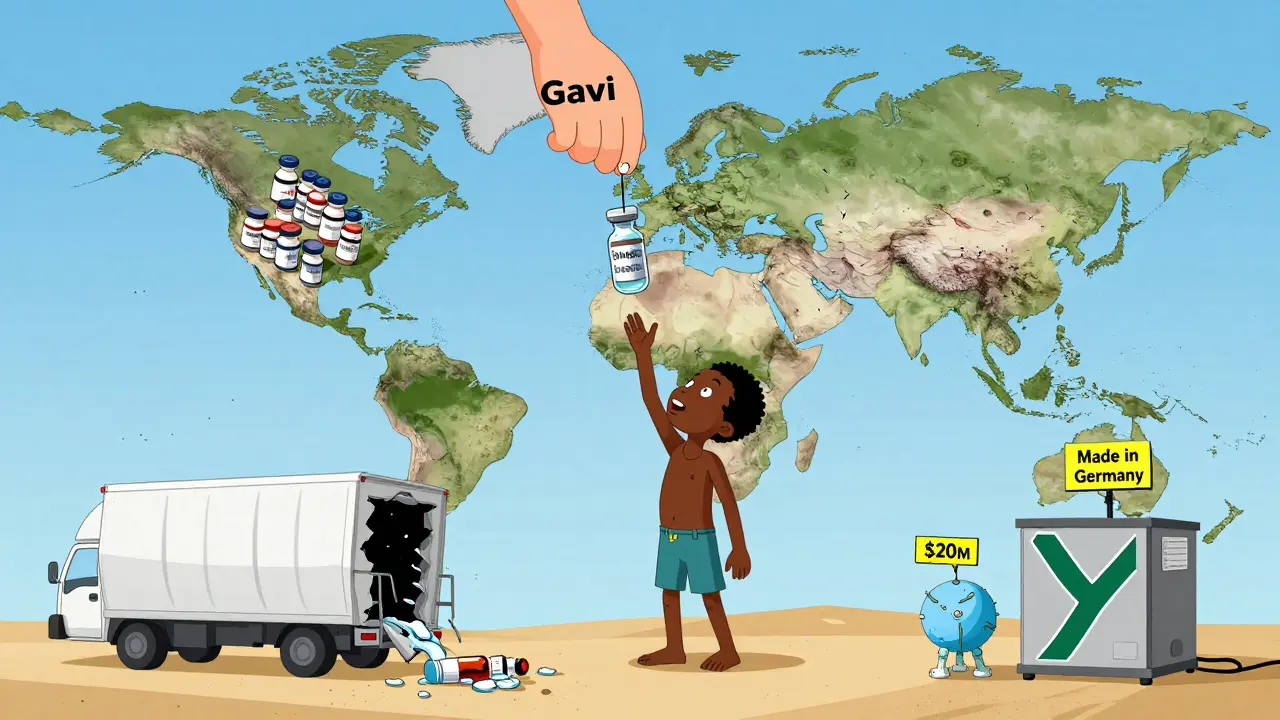
During the pandemic, high-income countries bought up 86% of the first billion doses of COVID-19 vaccines. They had the money. They had the political power. They had the contracts signed before the vaccines even worked. Meanwhile, low-income countries waited. In April 2021, 83% of all COVID-19 doses delivered to Africa through COVAX went to just 10 countries. Twenty-three African nations had vaccinated less than 2% of their people.And here’s the irony: Africa imports 99% of its vaccines. Even though it’s home to growing pharmaceutical markets and skilled scientists, its local manufacturing capacity is under 2% of its needs. The African Union estimates it will take $4 billion and 10 years to reach 60% self-sufficiency by 2040. That’s not progress-that’s a delay.
Health workers in the Democratic Republic of Congo were receiving doses that would expire in two weeks, with no way to store them properly. No cold chain. No refrigerated trucks. No backup power. That’s not a manufacturing problem. That’s a system failure. You can make a vaccine, but if you can’t get it to a child in a village, it’s just waste.
Who’s Really in Control?
The global vaccine system isn’t broken. It’s designed this way. It’s built for profit, not equity. Companies don’t lose money on vaccines-they make billions. Pfizer made over $36 billion from its COVID-19 shot in two years. Gavi, the Vaccine Alliance, negotiates prices with manufacturers, but even then, pneumococcal vaccines still cost over $10 per dose for the poorest countries. That’s not affordable. That’s extortion.India and other emerging manufacturers aren’t the problem. They’re the only hope. But they’re trapped. They can’t innovate because they don’t own the IP. They can’t compete on price because their costs are already squeezed. And they can’t scale because the world won’t let them. When the U.S. FDA prioritizes domestic generic drug production in 2025, it’s not because it cares about global access. It’s because it’s scared of relying on China and India.
Dr. Nahathai Thitisawakulchai of the WHO put it simply: technology transfer is key. But transfer isn’t just handing over a manual. It’s transferring equipment, training, regulatory support, and supply chain access. No country can do that alone. No company will do it for free.
What Needs to Change
There are no easy fixes. But here’s what’s needed:- Patent waivers that actually work-not just symbolic gestures. The TRIPS waiver debate stalled because rich countries blocked it. Real change means letting countries produce without fear of lawsuits.
- Global investment funds for vaccine manufacturing in Africa, Southeast Asia, and Latin America. Not loans. Grants. $10 billion over five years to build 20 new facilities.
- Standardized raw material sourcing. Create a global pool of critical inputs, managed by the WHO, with guaranteed supply to low-income manufacturers.
- Fast-track inspections. If a factory passes WHO standards, it should be accepted by all major regulators without repeat audits.
- Local ownership. Stop treating emerging economies as contract workers. Let them develop their own vaccines, not just assemble others’.
The Serum Institute of India proved that large-scale, low-cost vaccine production is possible. BioNTech and Moderna proved that mRNA technology can be scaled fast. The University of Oxford showed that open science can accelerate access. But none of these successes matter if the system keeps locking out the people who need vaccines most.
It’s Not About Science-It’s About Power
We talk about vaccine equity like it’s a technical problem. It’s not. It’s a political one. The same companies that make vaccines also lobby governments, fund research, and control supply chains. They benefit from the status quo. And they have the power to keep it.For decades, the world accepted that poor countries would get leftovers. We called it ‘differential pricing.’ We called it ‘philanthropy.’ But when a child dies because a vaccine expired in a warehouse with no fridge, that’s not charity. That’s neglect.
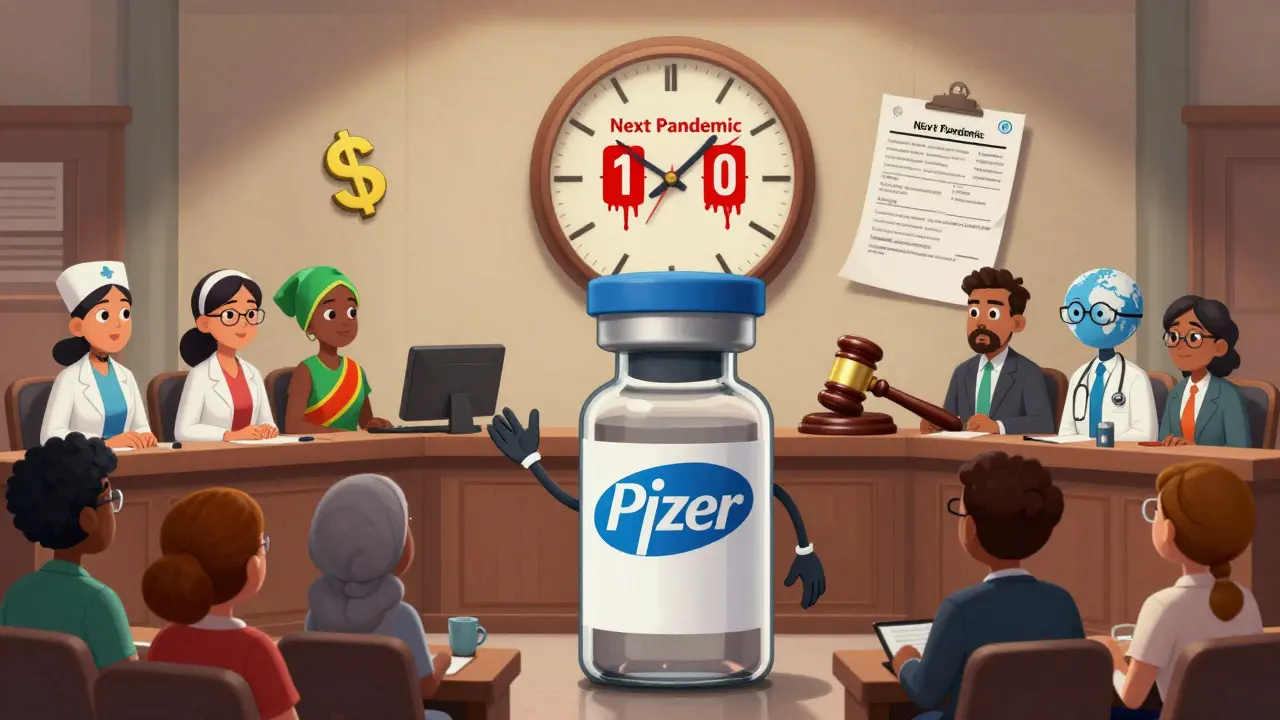
The tools to fix this exist. The knowledge is there. The manufacturing capacity is growing. What’s missing is the will. And until that changes, the next pandemic won’t be stopped by science. It’ll be stopped by who gets to the front of the line first.
Can vaccines be generic like pills?
No. Vaccines are biological products made from living cells, proteins, or mRNA, not simple chemical compounds. Unlike generic drugs, they cannot be proven equivalent through standard tests. Each vaccine requires a full new approval process, even if it’s nearly identical to an existing one. That’s why there’s no true ‘generic vaccine’ market.
Why can’t countries like India make their own vaccine technology?
India manufactures most of the world’s vaccines, but it rarely owns the technology. Most vaccines are produced under license from Western companies. The core IP, raw materials, and manufacturing know-how are tightly controlled. Even when India receives technology transfer-like with the WHO’s mRNA hub-it still struggles to source specialized equipment and materials. Without ownership, countries can’t innovate or set prices.
Why do low-income countries pay so much for vaccines?
Manufacturers use a ‘take-it-or-leave-it’ pricing model. Even when they promise differential pricing, prices remain high. For example, pneumococcal vaccines still cost over $10 per dose for low-income countries, despite Gavi’s efforts. India makes the same vaccine for $3-$4, but can’t sell it directly because it doesn’t control the patent. The system rewards monopoly, not affordability.
Is Africa building its own vaccine production?
Yes, but slowly. The African Union’s Pharmaceutical Manufacturing Plan aims for 60% self-sufficiency by 2040, requiring $4 billion in investment. The WHO’s mRNA hub in South Africa began production in 2023, but its capacity is only 100 million doses per year-less than 1% of global need. Progress is real, but it’s decades behind where it should be.
What’s the biggest barrier to global vaccine equity?
It’s not science or money-it’s power. The companies and countries that control patents, raw materials, and regulatory approval won’t give up that control. Even when technology is shared, supply chains remain locked. Until global systems prioritize access over profit, vaccine inequity will persist, no matter how many factories are built.

jeremy carroll
December 16, 2025 AT 22:39man i never realized vaccines were this complicated. thought it was just like buying generic ibuprofen. wow.
Daniel Wevik
December 18, 2025 AT 20:31The structural complexity of biologics renders traditional generic paradigms obsolete. The regulatory burden isn't arbitrary-it's a function of batch-to-batch variability inherent in cell-based production systems. Without GMP-compliant upstream and downstream processing, you're not making a vaccine-you're making a biohazard.
Wade Mercer
December 19, 2025 AT 02:41So we're just supposed to trust that the same companies who made billions off pandemic vaccines will suddenly become altruistic? Please. This isn't about access. It's about control. And they'll kill any effort to disrupt their monopoly.
Sinéad Griffin
December 19, 2025 AT 21:48USA made vaccines first. USA paid for the R&D. USA has the best scientists. Why should we hand over our tech to countries that can't even keep their own factories running? 🇺🇸💪
Daniel Thompson
December 20, 2025 AT 00:31While I appreciate the systemic critique, the underlying assumption-that technology transfer alone can solve global inequity-ignores the institutional fragility of many recipient nations. Regulatory capacity, workforce training, and supply chain resilience are not transferable via licensing agreements. They must be cultivated.
Alexis Wright
December 21, 2025 AT 22:52Let me break this down for you like you're five: Big Pharma owns the patents, the materials, the machines, and the regulators. They don't want you to make vaccines. They want you to beg for them. Every time a country tries to build capacity, they get slapped with trade sanctions, IP threats, or 'quality concerns'-which are just code for 'we don't want competition.' This isn't science. It's colonialism with a lab coat.
Rich Robertson
December 22, 2025 AT 23:47India's role is often misunderstood. They're not just factories-they're the backbone of global immunization. But when you're dependent on Chinese lipid nanoparticles and German bioreactors, you're not sovereign. You're a node in someone else's network. True equity means building end-to-end capability: from raw material synthesis to cold-chain logistics. That’s the real challenge.
Thomas Anderson
December 24, 2025 AT 14:20Bottom line: vaccines aren't pills. You can't just copy them. And yeah, the rich countries hoarded doses. But the solution isn't to tear down the system-it's to build more of it, in more places, with real support. Not handouts. Investment.
Jonny Moran
December 25, 2025 AT 18:40Think of it like this: if you gave someone the blueprint for a Ferrari but no access to premium fuel, specialized mechanics, or a garage with climate control-they’d still be stuck. That’s what’s happening with vaccine tech transfer. Knowledge alone doesn’t make a factory work.
Tim Bartik
December 26, 2025 AT 10:25they want us to just hand over our crown jewels? the usa spent billions developing these vaccines and now some third-world gov is gonna start cranking out mRNA like it's soda pop? lol. wake up. this is economic warfare. and they're gonna blame us when the batches go bad.
Edward Stevens
December 26, 2025 AT 19:31Oh wow, so the problem is... capitalism? Groundbreaking. Next you'll tell me water is wet and the sun rises in the east. Can we please stop pretending this is a mystery? The system works exactly as designed-for profit. Everything else is PR.
Natalie Koeber
December 28, 2025 AT 19:30Did you know the WHO is secretly controlled by the same people who run the CDC? And those people are owned by Pfizer. The whole 'vaccine equity' thing is a distraction. They're using it to push digital IDs and microchips. You think the cold chain is broken? Nah. It's all part of the plan. They want you dependent. Watch the news. They're already testing nano-sensors in the vials.