 Feb, 25 2026
Warfarin INR Risk Calculator
How Your INR Affects Bleeding Risk
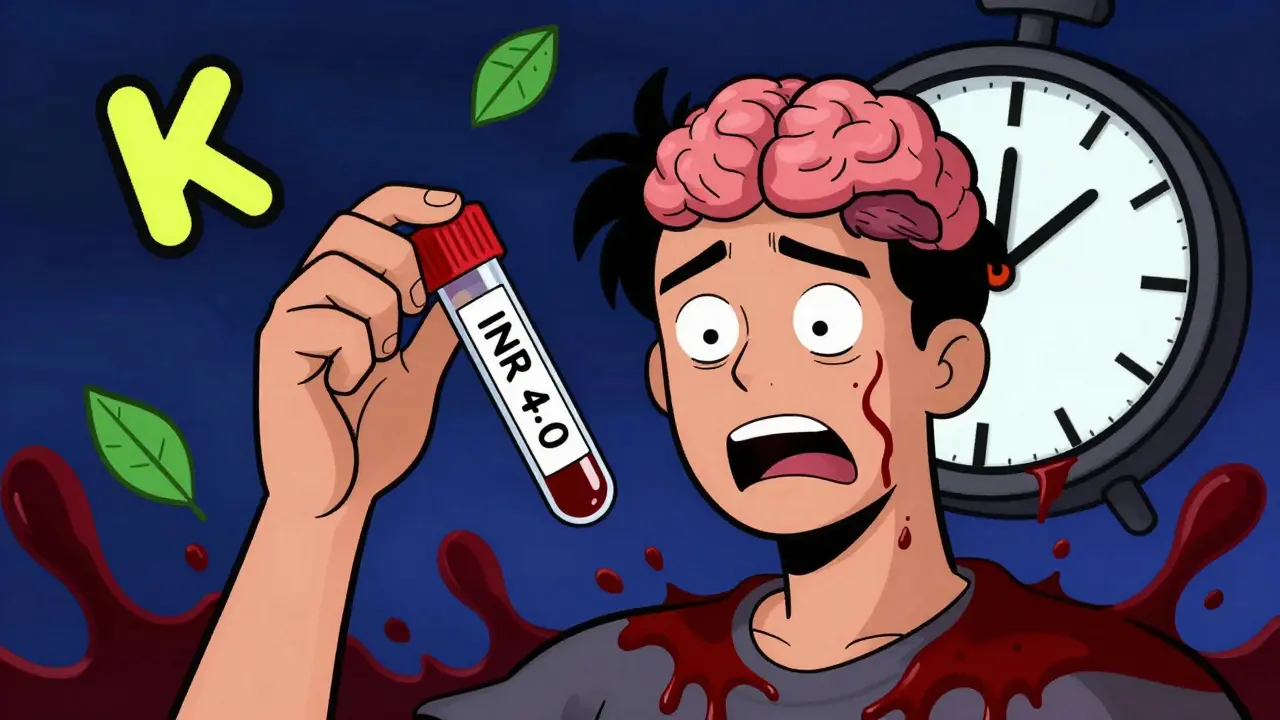
For every 1-point rise in your INR above 3.0, your risk of major bleeding double. At an INR of 4.0, your risk is 4 to 8 times higher than if you're in range. The goal is to keep your INR between 2.0 and 3.0.
Warfarin saves lives. It prevents deadly blood clots in people with atrial fibrillation, deep vein thrombosis, or mechanical heart valves. But for every person it protects, another could face a serious - even life-threatening - bleeding episode. If you’re taking warfarin, you need to know the real risks, how to spot danger signs early, and what to do before it’s too late. This isn’t about fear. It’s about control.
What Warfarin Does - and Why It’s Still Used
Warfarin has been around since the 1950s. It works by blocking vitamin K, which your body needs to make clotting factors. Less clotting = fewer dangerous clots. That’s why it’s still prescribed for millions worldwide. Unlike newer blood thinners, warfarin can be reversed quickly if bleeding happens. Vitamin K and special clotting factor concentrates can undo its effect in minutes. That’s a lifesaver in emergencies.
It’s also cheap. Generic warfarin costs as little as $4 to $10 a month. For many people, especially those without good insurance, that’s the only option. And for some conditions - like mechanical mitral valve replacements - warfarin is still the gold standard. Newer drugs don’t work as well here. So, even with newer alternatives, warfarin hasn’t disappeared. It just demands more attention.
The Biggest Risk: Bleeding
Bleeding is the #1 reason warfarin causes hospital visits. About 10% to 16% of people on warfarin will have a major bleed each year. That’s one in ten. And it’s not just one type. Bleeding can happen anywhere - in your brain, stomach, joints, or even your eyes.
Minor signs you shouldn’t ignore:
- Nosebleeds that last longer than 5 minutes, even after pinching your nose
- Gums that bleed easily when brushing or flossing
- Bruising without any injury - especially large, dark patches
- Pink, red, or brown urine
- Black, tarry, or bloody stools
- Vaginal bleeding that’s heavier than normal or happens between periods
These aren’t normal. They’re warning signs. If you notice any of these, call your doctor. Don’t wait.
Now, the red flags that need emergency care:
- Coughing up blood or vomiting blood (or material that looks like coffee grounds)
- Sudden, severe headache or dizziness - could mean bleeding in the brain
- Weakness on one side of your body - possible stroke
- Severe back or abdominal pain
- Loss of consciousness
If any of these happen, go to the ER immediately. Time matters. For brain bleeds, getting treatment within an hour can mean the difference between recovery and permanent damage.
Your INR Is Your Lifeline
Every warfarin patient has an INR number. It’s a blood test that measures how long it takes your blood to clot. The goal? Keep it between 2.0 and 3.0 for most people. For those with mechanical heart valves, it’s higher - 2.5 to 3.5.
Here’s the brutal truth: each 1-point rise above 3.0 doubles your risk of major bleeding. At an INR of 4.0, your risk is 4 to 8 times higher than if you’re in range. That’s why testing isn’t optional. It’s survival.
How often should you test?
- Every 1 to 2 weeks when you first start or if your dose changes
- Every 4 weeks once you’re stable
- More often if you’re sick, start new meds, or change your diet
Some people can test at home with a finger-prick device like the CoaguChek Pro II. Studies show this improves time in range by 15% to 20%. If your doctor says you’re a candidate, ask about it. More control = less risk.
What You Eat Matters More Than You Think
Warfarin doesn’t care about your coffee or sugar. But it cares deeply about vitamin K. Found in leafy greens like spinach, kale, broccoli, and Brussels sprouts, vitamin K fights warfarin’s effect. Too much? Your INR drops. Too little? Your INR spikes.
The key isn’t to avoid these foods. It’s to eat them the same amount every day. Aim for 60 to 80 micrograms of vitamin K daily. That’s about one cup of cooked spinach or two cups of raw kale. Don’t suddenly eat a big salad every day. Don’t go on a juice cleanse with 5 cups of kale. That’s how people end up in the hospital.
And don’t assume “healthy” means safe. Acai bowls, green smoothies, and kale chips can all throw your INR off. Keep it steady. Consistency beats perfection.
Other Medications and Supplements Can Kill You
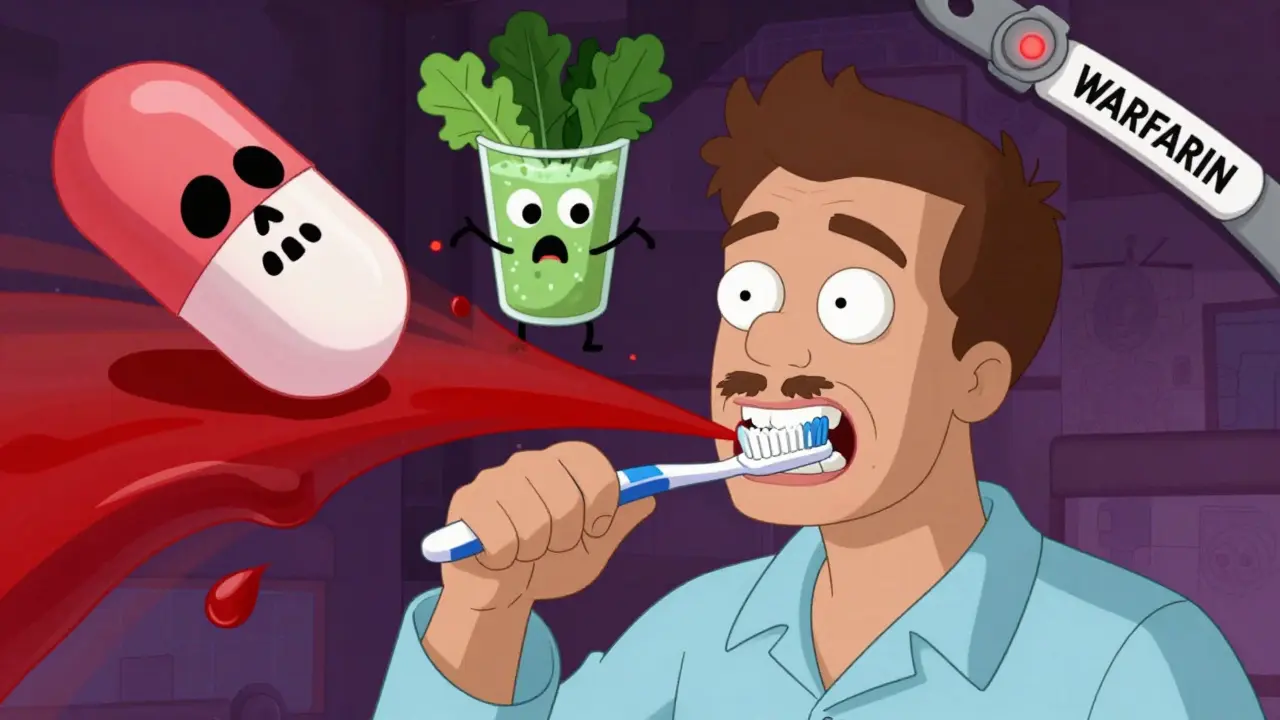
Over 300 drugs and supplements interact with warfarin. Some are obvious. Others? Not so much.
Never take these without checking with your doctor:
- NSAIDs like ibuprofen or naproxen - they double your risk of stomach bleeding
- Aspirin - even low-dose - unless your doctor says it’s safe
- Antibiotics - many change how warfarin is broken down
- Herbal supplements - garlic, ginkgo, ginseng, and St. John’s Wort can all raise bleeding risk
- Over-the-counter cold meds - many contain hidden NSAIDs or decongestants that affect INR
Always tell every doctor, dentist, and pharmacist you’re on warfarin. Even for a simple tooth extraction. Your dentist might need to use special techniques or delay the procedure. Don’t assume they know.
Other Rare but Serious Side Effects
Bleeding isn’t the only danger. Warfarin can cause other problems - rare, but serious.
- Skin necrosis: A rare reaction where skin turns black and dies, usually within days of starting warfarin. More common if you have a protein C deficiency. If you notice painful, purple patches on your thighs or breasts, get help fast.
- Purple toe syndrome: Affects the toes and feet 3 to 8 weeks after starting. The skin turns purplish-blue. It’s not dangerous, but it’s a sign your body is reacting badly. Tell your doctor.
- Calciphylaxis: Extremely rare. Calcium builds up in blood vessels, causing painful sores. Mostly in people with kidney failure.
These are uncommon. But if you notice anything unusual - especially skin changes - don’t brush it off. Call your provider.
How to Reduce Your Risk - Day to Day
You can’t control your INR. But you can control your habits. Here’s how:
- Use an electric razor - not a blade
- Use a soft-bristle toothbrush and waxed floss
- Wear slip-resistant shoes - falls are a leading cause of bleeding
- Avoid contact sports like football, rugby, or boxing
- Wear a medical alert bracelet or carry a card that says “On Warfarin”
- Keep a log of your INR results, doses, and any symptoms
- Never skip a dose - but if you miss one, call your doctor before doubling up
These aren’t suggestions. They’re survival tactics.

What Happens If You Bleed?
If you have a major bleed, your care team will act fast:
- Stop warfarin immediately
- Test your INR right away
- Give vitamin K (10 mg IV) to reverse the effect
- Use prothrombin complex concentrate (PCC) if bleeding is severe
- Use fresh frozen plasma if PCC isn’t available
For brain bleeds, reversal must happen within 30 to 60 minutes. That’s why knowing your INR and having it checked regularly isn’t just smart - it’s critical.
Is There a Better Option?
Newer blood thinners - called DOACs (like apixaban, rivaroxaban, dabigatran) - are easier. No regular blood tests. Fewer food restrictions. And studies show they cause about 30% fewer major bleeds than warfarin.
But they’re not perfect. They’re expensive. They can’t be reversed as easily (though reversal drugs exist). And they don’t work for mechanical heart valves. For many, warfarin is still the best choice.
The bottom line: Warfarin isn’t outdated. It’s powerful. And it demands respect. If you’re on it, you’re not just taking a pill. You’re managing a high-risk treatment. The more you know, the safer you are.
Can I drink alcohol while taking warfarin?
Moderate alcohol - one drink a day - is usually okay. But binge drinking or heavy daily use can raise your INR and increase bleeding risk. Alcohol affects how your liver processes warfarin. If you drink, be consistent. Don’t switch between heavy and light use. Always tell your doctor how much you drink.
Can I take painkillers for headaches while on warfarin?
Avoid ibuprofen, naproxen, or aspirin. They increase stomach bleeding risk. Acetaminophen (Tylenol) is generally safe at normal doses (up to 3,000 mg a day). But don’t take it long-term without checking with your doctor. Some studies show it can affect INR in sensitive people.
What should I do if I need surgery or a dental procedure?
Never stop warfarin on your own. For most dental work - fillings, cleanings, simple extractions - you can keep taking it. Your dentist can use gauze, sutures, or hemostatic agents to control bleeding. For major surgery, your doctor may temporarily stop warfarin and use a short-acting blood thinner as a bridge. This decision depends on your INR, reason for warfarin, and bleeding risk. Always plan ahead - talk to your doctor at least a week before any procedure.
How long does it take for warfarin to leave my system after I stop?
It takes about 3 to 5 days for warfarin to fully leave your body. That’s why you can’t just stop it the day before surgery. Your INR stays high for days after the last dose. This is why timing matters. If you’re planning a procedure, your doctor will give you a clear schedule to stop and restart.
Is warfarin safe during pregnancy?
No. Warfarin can cause serious birth defects, especially in the first trimester. If you’re pregnant or trying to get pregnant, talk to your doctor immediately. Heparin injections - which don’t cross the placenta - are the standard replacement during pregnancy. Warfarin may be used after delivery, but never during.
Final Thought: Knowledge Is Your Shield
Warfarin isn’t dangerous because it’s flawed. It’s dangerous because it’s powerful. And power demands precision. The people who stay safe aren’t the ones who never had a problem. They’re the ones who knew the signs, tested regularly, and never ignored the small warnings. You can be one of them. You just have to pay attention.

Nandini Wagh
February 25, 2026 AT 13:55So let me get this straight - we’re still using a 70-year-old drug because it’s cheap, but we’re not giving people the tools to actually manage it? 😒 I’ve seen folks in India on warfarin with no access to INR testing, just… hoping. This post is accurate, but also a cry for help that no one’s listening to. 🙃
Holley T
February 26, 2026 AT 10:56Actually, I think the entire narrative around warfarin is overblown - yes, it has risks, but so does every medication. The real issue is that we’ve turned a simple anticoagulant into this terrifying monster because of fear-based medicine. People are terrified of bleeding, but they don’t seem to be terrified of clots, which kill far more people annually. Also, vitamin K isn’t some enemy - it’s a nutrient. The idea that you have to eat exactly one cup of spinach per day is ridiculous. I’ve been on warfarin for 12 years and my INR has never been stable because of diet - it’s been stable because I take the pill at the same time every day and don’t binge on kale smoothies. The system is broken, not the drug.
Dominic Punch
February 27, 2026 AT 20:18Let me say this loud and clear - if you’re on warfarin, you are not a victim. You are a warrior. Every INR test is a victory. Every time you choose an electric razor over a blade, you win. This isn’t about fear - it’s about discipline. And discipline is power. You think this is hard? Try living with a mechanical valve and no access to care. Try being told your only option is a $1,200/month pill and you’re lucky to get a $4 generic. You want to live? Then show up. Test. Track. Adapt. This isn’t a suggestion - it’s your new daily ritual. And if you’re not doing it, you’re not trying. I’ve seen people die because they thought ‘it’ll be fine.’ It won’t be fine. Be the person who survives - not the one who assumes.
Valerie Letourneau
February 28, 2026 AT 03:31While I appreciate the comprehensive nature of this exposition, I must respectfully observe that the tone, though clinically accurate, may inadvertently foster a climate of undue anxiety among patients who are already navigating significant psychological burdens. The emphasis on life-threatening outcomes, while statistically valid, may overshadow the remarkable efficacy and longevity of warfarin when used with appropriate monitoring and patient education. A more balanced framing - one that acknowledges both the risks and the millions who live stable, healthy lives on this therapy - might serve to empower rather than alarm. The data is clear; the delivery, perhaps, could be refined.
Khaya Street
March 1, 2026 AT 09:14Look, I’m not saying this is wrong, but it’s also not exactly news. I’ve been on warfarin since 2010. I know about INR, vitamin K, bleeding signs. What I don’t know is why no one talks about how hard it is to get a lab appointment in rural areas. Or why my insurance won’t cover home testing even though the device costs less than my monthly copay. This post reads like it was written by a pharma rep who’s never met a real patient. Knowledge is power? Nah. Access is power.
Christina VanOsdol
March 2, 2026 AT 17:17Okay but like… 🤯 I just learned that kale chips can kill you?? I thought they were HEALTHY?? Also, I took ibuprofen for a headache last week and now I’m terrified I’m gonna bleed out in my sleep 😭💀 I need to go check my INR right now. Also, why is everyone so chill about this?? Like, I’m literally sweating. Someone please tell me I’m not the only one who just had a panic attack reading this??
Brooke Exley
March 4, 2026 AT 13:08You’ve got this. Seriously. Every time you test your INR, you’re choosing life. Every time you skip the NSAIDs, you’re choosing safety. This isn’t about being perfect - it’s about being consistent. You don’t need to be a superhero. You just need to show up, even on the days you don’t feel like it. I’ve coached dozens of patients through this, and the ones who thrive? They’re not the ones who know every detail. They’re the ones who didn’t give up. You’re not alone. Keep going. You’re stronger than you think.
Alfred Noble
March 6, 2026 AT 03:19So I’ve been on warfarin for 8 years and I’ve never had a bleed. I do my INR every 6 weeks. I eat spinach. I drink beer. I use a manual razor. I think this post is kinda scary for no reason. I mean, sure, be careful, but also… life is risky. I’ve had 3 surgeries and never had a problem. I just take my pill and go. Maybe people overthink it? I dunno. I’m just sayin’.
Matthew Brooker
March 6, 2026 AT 04:57Warfarin is still the best option for mechanical valves. Period. Newer drugs? They’re great for AFib. But for mitral valves? Nope. I’ve seen patients on DOACs with valve clots. It’s ugly. And yeah, it’s a pain to test. But if you’re willing to do the work, you’ll live longer. Don’t let fear stop you. Learn your numbers. Know your limits. Ask your doctor about home testing. It’s a game changer. You got this.
Emily Wolff
March 7, 2026 AT 23:31How is this even a post? It’s basic medical knowledge. If you need a 3,000-word guide to understand warfarin, you shouldn’t be on it. This isn’t a lifestyle. It’s pharmacology. Get your INR checked. Stop eating kale. Don’t take NSAIDs. That’s it. Stop making it a drama.
Lou Suito
March 9, 2026 AT 05:24Actually, vitamin K isn’t the issue - it’s the inconsistency. And the real problem? Doctors don’t educate patients. They hand out a script and say ‘come back in a month.’ That’s not care. That’s negligence. Also, I’ve been on warfarin since 2003. I’ve had 3 major bleeds. I don’t eat spinach. I drink whiskey. My INR is stable. So… your advice is wrong. And your tone? Condescending. Try again.
Joseph Cantu
March 9, 2026 AT 11:55They don’t want you to know this - but warfarin was originally developed as rat poison. And now we’re feeding it to humans? Who decided this was a good idea? And why is no one talking about how the pharmaceutical industry profits from lifelong testing? The INR machine? The labs? The follow-ups? All money. Meanwhile, the real solution - natural anticoagulants, lifestyle changes - are buried. This isn’t medicine. It’s a racket. And you’re being manipulated into believing this is your only option. Wake up.
Jacob Carthy
March 10, 2026 AT 23:39Why are we still using this outdated crap? We’ve got better options. Why are we stuck in the 1950s? This is America - we’re supposed to be leading the world. Not clinging to ancient drugs because they’re cheap. We need innovation. Not fear. Not vitamin K spreadsheets. We need progress. This post is a joke. Get with the times.