 Nov, 14 2025
Antidepressant Weight Gain Calculator
Calculate Your Weight Gain Risk
Estimate potential weight gain based on your antidepressant and treatment duration
How This Works
This tool estimates potential weight gain based on clinical studies of antidepressants. It's not a medical diagnosis or recommendation.
Results
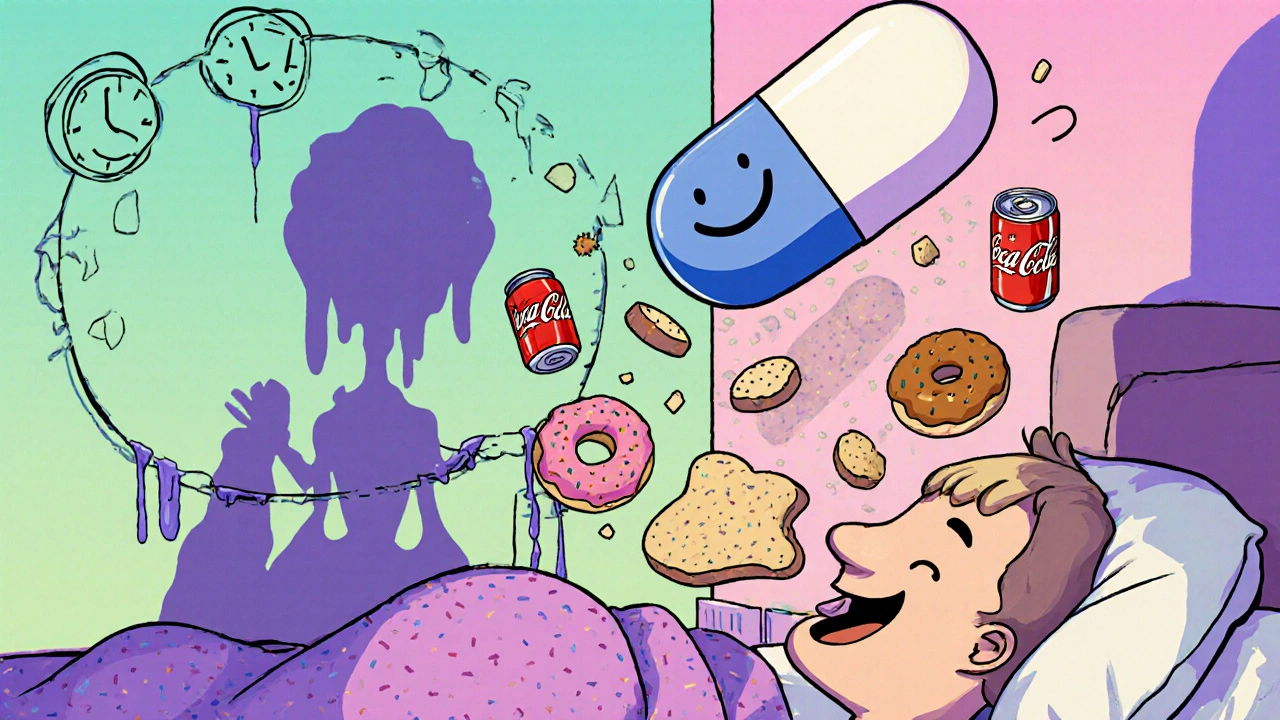
It’s not uncommon to feel like your antidepressant is working-your mood lifts, your energy returns, you start enjoying meals again. But then the scale creeps up. You didn’t change your diet. You didn’t stop moving. So why are you gaining weight? If you’re one of the 55 to 65% of people on long-term antidepressants who experience this, you’re not alone. And it’s not just about clothes fitting tighter. This kind of weight gain can increase your risk for type 2 diabetes, heart disease, and even make your depression come back.
Which antidepressants are most likely to make you gain weight?
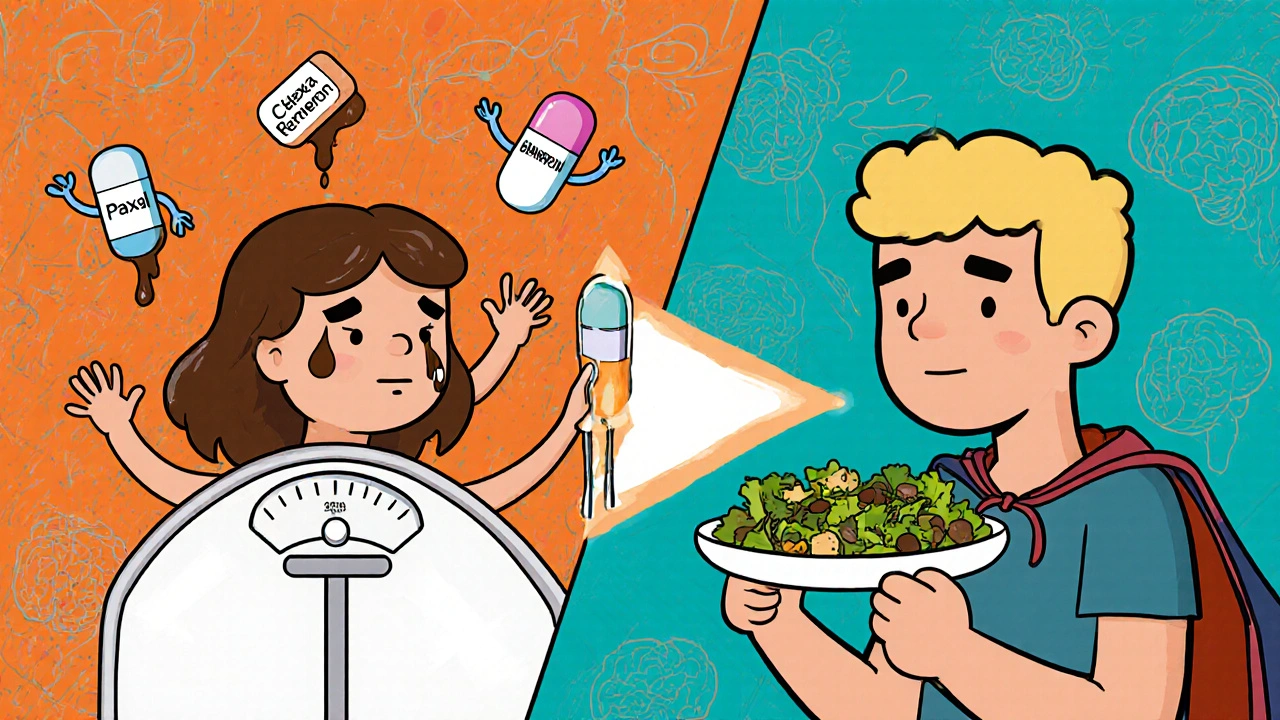
Not all antidepressants affect your weight the same way. Some barely move the needle. Others? They can add pounds quietly, over months or years. The biggest culprits are older drugs like tricyclic antidepressants (TCAs) and mirtazapine.
Amitriptyline, nortriptyline, and imipramine (all TCAs) are known for causing weight gain. They work by blocking histamine receptors, which boosts appetite. They also slow down how your body uses sugar, making it easier to store fat. Mirtazapine (Remeron) is another top offender-it’s often prescribed for people who can’t sleep or eat, but it’s notorious for increasing hunger and cravings for carbs.
Among SSRIs, paroxetine (Paxil) and citalopram (Celexa) show the most weight gain over time. Even though they might help you lose a little weight at first, after a year, your brain’s serotonin receptors adjust. That’s when cravings for sweets and carbs kick in. Escitalopram (Lexapro) and sertraline (Zoloft) cause smaller gains-about 3 to 3.6 pounds after two years-but it still adds up.
Then there’s bupropion (Wellbutrin). It’s the exception. Most people either stay the same weight or lose a little in the first six months. Even after two years, the average gain is only 1.2 pounds-far less than other drugs. That’s because bupropion works on dopamine and norepinephrine, not serotonin. It doesn’t trigger the same hunger signals.
Why do antidepressants make you gain weight?
It’s not just one thing. It’s a mix of brain chemistry, hormones, and metabolism.
When you start an antidepressant, your brain gets flooded with serotonin. At first, that can make you feel full faster and less impulsive about food. That’s why some people lose weight early on. But after months, your brain adapts. Serotonin receptors become less sensitive. That’s when your cravings for carbs spike. Your body starts seeking quick energy-and sugar is the fastest fuel.
Some drugs, like TCAs and mirtazapine, also block histamine receptors. That’s why you feel hungrier. It’s the same reason antihistamines make you sleepy and hungry. Your appetite center in the brain gets louder.
Then there’s insulin. Some antidepressants make your body less responsive to insulin. That means more sugar stays in your blood instead of being used for energy. Your body turns that extra sugar into fat. Leptin and ghrelin-hormones that tell you when you’re full or hungry-also get thrown off. You might not feel full even after eating.
And it’s not just the drug. Your genes matter too. Some people have a version of the CYP2C19 gene that breaks down certain antidepressants slower. That means more of the drug stays in your system, increasing the chance of side effects like weight gain.
Is it the medication-or just feeling better?
This is a big one. Sometimes, the weight gain isn’t from the drug at all. It’s from the depression lifting.
If you were depressed, you might have lost your appetite. You skipped meals. You lost weight without trying. When the antidepressant starts working, your appetite comes back. You start eating again. You gain weight-not because the drug is making you fat, but because you’re finally eating like a healthy person.
That’s why it’s so hard to tell what’s causing the change. A 2024 Harvard study found that many people who gained weight were actually regaining the weight they’d lost during their depression. The drug helped them heal. The scale just reflected that healing.
That doesn’t mean you should ignore the weight gain. But it does mean you shouldn’t assume the drug is the only culprit. Talk to your doctor about your eating habits, sleep, stress levels, and activity. All of it matters.
What can you do if you’re gaining weight?
Don’t stop your medication. Stopping suddenly can trigger withdrawal, make your depression worse, and increase your risk of relapse by 30 to 50%. That’s worse than a few extra pounds.
Here’s what actually works:
- Switch to a different antidepressant. If you’re on paroxetine, citalopram, or mirtazapine, ask about switching to bupropion. It’s the only one consistently linked to less weight gain-or even weight loss. If bupropion isn’t right for you, sertraline or escitalopram are better choices than paroxetine.
- Add metformin. This diabetes drug helps your body use insulin better. Studies show it can reduce antidepressant-related weight gain by 3 to 5 pounds over six months. It’s not a magic pill, but it’s safe and often covered by insurance.
- Try GLP-1 agonists. Drugs like semaglutide (Wegovy) and liraglutide (Saxenda) were made for weight loss. New research shows they also work well for people on antidepressants. In trials, patients lost 5 to 7% of their body weight while staying on their antidepressant. These are newer options, so they’re not for everyone-but they’re becoming a real tool for doctors.
- Focus on protein and fiber. Carbs feel good when your serotonin is low. But protein and fiber keep you full longer. Swap white bread for whole grain. Eat eggs, chicken, beans, or tofu at every meal. Add vegetables to every plate. This doesn’t mean dieting-it means eating smarter.
- Move your body daily. You don’t need to run marathons. Just walk 30 minutes a day. Strength training twice a week helps too. Muscle burns more calories than fat, even when you’re sitting. And movement helps regulate your appetite hormones.
What about lifestyle changes? Do they help?
Yes-but not the way you think.
Most people assume they need to go on a strict diet. That rarely works long-term, especially when your brain is wired for comfort food. Instead, focus on consistency.
Try this: Eat at the same times every day. Don’t skip meals. Keep snacks like nuts, yogurt, or fruit handy. Avoid sugary drinks. Drink water before meals. These small habits help stabilize your blood sugar, which reduces cravings.
Sleep matters too. Poor sleep raises ghrelin (the hunger hormone) and lowers leptin. If you’re not sleeping well, no amount of willpower will stop the cravings. Talk to your doctor about sleep hygiene-or whether your medication is affecting your rest.
Stress is another hidden factor. Depression and obesity both mess with your HPA axis-the system that controls stress hormones. When you’re stressed, your body holds onto fat. Managing stress with walking, breathing exercises, or therapy can help your body reset.
When should you talk to your doctor?
If you’ve gained more than 5% of your body weight in six months, it’s time to talk. That’s about 7 pounds for someone who weighs 140 pounds. Don’t wait until you’ve gained 20.
Bring this list to your appointment:
- How much weight you’ve gained and when
- Your eating habits (are you craving carbs? Skipping meals?)
- Your sleep and stress levels
- Whether you’ve been more or less active
- Any other side effects (dry mouth, fatigue, dizziness)
Ask: "Is there a different antidepressant that’s less likely to cause weight gain?" or "Would metformin or a GLP-1 agonist be an option for me?""
Your doctor isn’t trying to keep you on a drug that’s harming you. They want you to stay on treatment-and feel better in every way. Weight gain is a side effect they can help you manage.
What’s the long-term risk?
Weight gain from antidepressants isn’t just about appearance. It’s about health.
Studies show that people who gain weight on these drugs are more likely to develop insulin resistance, high blood pressure, and type 2 diabetes. That’s especially true if you were already at risk. The combination of depression, medication, and weight gain creates a cycle: low mood → poor diet → weight gain → worse mood.
Some researchers even wonder if the rise in antidepressant use is contributing to the obesity epidemic. One study found that people who took antidepressants and then ate a high-fat diet kept gaining weight-even after stopping the medication. That suggests these drugs can change your metabolism in lasting ways.
That’s why managing this side effect isn’t optional. It’s part of your treatment plan.
Bottom line: You have options
Antidepressants save lives. But they’re not perfect. Weight gain is a real, documented side effect-and it’s not your fault. You’re not lazy. You’re not failing. Your body is responding to a chemical change.
You don’t have to choose between mental health and physical health. There are smarter ways to take these drugs. Switching to bupropion. Adding metformin. Eating more protein. Moving daily. These aren’t drastic changes. They’re practical, science-backed steps.
Start by talking to your doctor. Not to stop your medication-but to make sure it’s working for you in every way. Your mental health matters. So does your physical health. You deserve both.

Rachel Wusowicz
November 15, 2025 AT 04:39Melanie Taylor
November 15, 2025 AT 12:40Teresa Smith
November 17, 2025 AT 01:54ZAK SCHADER
November 17, 2025 AT 21:54Danish dan iwan Adventure
November 19, 2025 AT 13:10Dan Angles
November 20, 2025 AT 19:25David Rooksby
November 22, 2025 AT 00:34Ankit Right-hand for this but 2 qty HK 21
November 23, 2025 AT 19:16Oyejobi Olufemi
November 23, 2025 AT 23:20Daniel Stewart
November 25, 2025 AT 15:13