 May, 16 2026
Alternate-Day Statin Dosing Calculator
Your Current Situation
Alternate-Day Dosing Results
Recommendation:
Key Considerations
- ✓ Best results with long-acting statins (Atorvastatin/Rosuvastatin)
- ✓ 92-95% of daily dosing effectiveness maintained
- ✓ Potential 30-50% reduction in muscle symptoms
- ✓ Approximately 50% medication cost savings
Imagine taking a powerful medication that saves your life but leaves you too achy to walk up the stairs. For millions of people, this is the daily reality of statin therapy, medications used to lower cholesterol and reduce cardiovascular risk. Now imagine a simple tweak-taking that same pill every other day instead of every day-that lets you keep the heart benefits without the muscle pain. This isn't science fiction; it's a growing clinical strategy known as alternate-day statin dosing, a therapeutic approach where statins are administered every 48 hours rather than daily to improve tolerability while maintaining lipid-lowering efficacy. If you have struggled with statin-associated muscle symptoms (SAMS) or simply want to minimize your daily pill burden, this approach might be the missing link in your treatment plan. But does cutting back on frequency mean cutting back on protection? The short answer is no-not for the right drugs. In this guide, we break down exactly how alternate-day dosing works, which statins are suitable for this regimen, and what the latest data says about LDL reduction and side effects.
Why Alternate-Day Dosing Makes Pharmacological Sense
To understand why skipping every other day doesn't necessarily spike your cholesterol, you need to look at pharmacokinetics-the way your body processes a drug. Not all statins behave the same way once they enter your bloodstream. The key factor here is the half-life, the time it takes for the concentration of a drug in the blood to reduce by half. Statins with short half-lives, like simvastatin (1-3 hours) or pravastatin (1-2 hours), clear from your system quickly. If you take these every other day, your liver gets no coverage for most of the 48-hour window. These are poor candidates for alternate-day dosing. However, atorvastatin, a long-acting statin with a half-life of 14 to 30 hours and rosuvastatin, a potent statin with a half-life of approximately 19 hours stay active in your body much longer. Because their effects linger well into the second day, your liver continues to receive inhibitory signals against cholesterol production even when you skip a dose. This sustained activity is what allows clinicians to maintain significant LDL-C reduction with less frequent administration.
LDL Reduction: How Much Do You Lose?
The biggest fear patients have when switching to an alternate-day schedule is that their low-density lipoprotein cholesterol (LDL-C) will shoot back up to dangerous levels. Fortunately, robust clinical data suggests otherwise. A landmark study by S. Pramanik et al., published in the Indian Journal of Pharmacology in 2012, compared daily versus alternate-day dosing of atorvastatin 20 mg in 38 hyperlipidemic patients. After 12 weeks, the results were striking:
- Daily Dosing: 44.1% reduction in LDL-C.
- Alternate-Day Dosing: 42.3% reduction in LDL-C.
| Metric | Daily Dosing | Alternate-Day Dosing |
|---|---|---|
| LDL-C Reduction Efficacy | 100% (Baseline) | 92-95% of daily effect |
| Muscle Symptom Incidence | Higher (10-15% of users) | Reduced by 30-50% |
| Annual Medication Cost | $X | ~$X / 2 (Approx. 50% savings) |
| FDA Approval Status | Approved | Off-label use |
| Best Suited Statins | All statins | Atorvastatin, Rosuvastatin |
Side Effects: The Primary Driver for Change
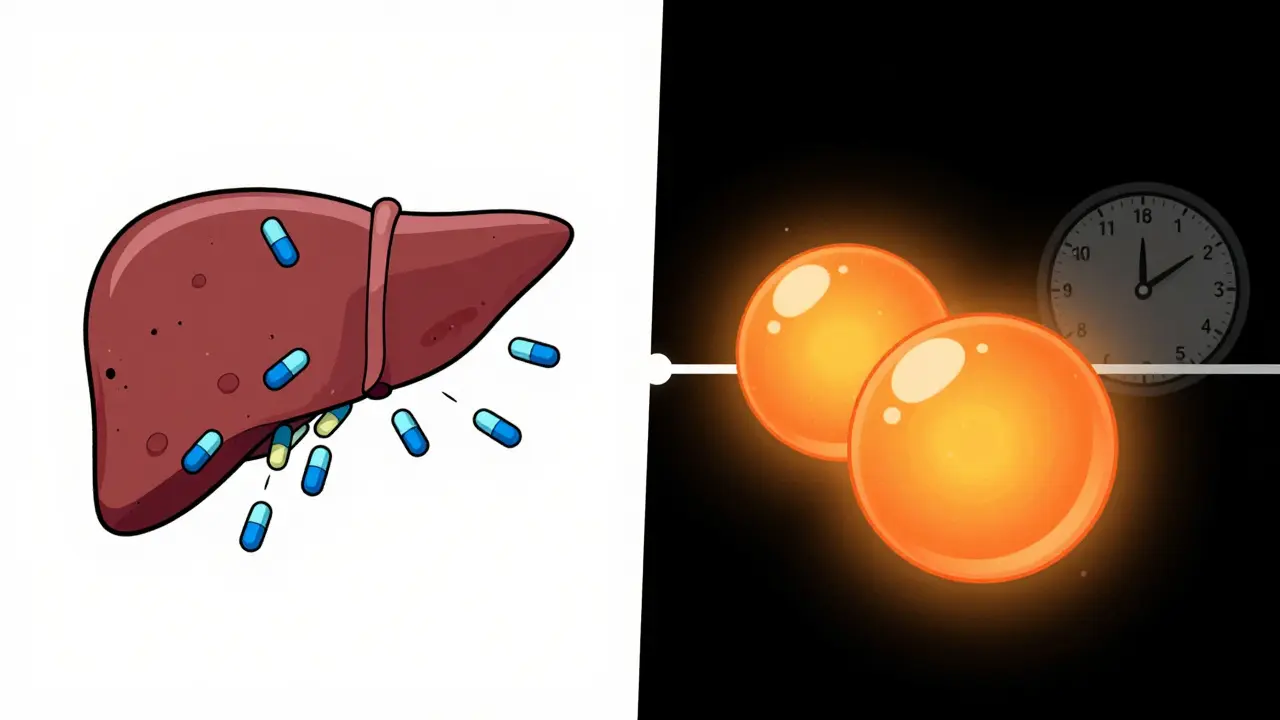
If LDL reduction is comparable, why bother changing the schedule? The answer lies in side effects, specifically Statin-Associated Muscle Symptoms (SAMS), muscle pain, weakness, or cramps associated with statin use, affecting 10-15% of patients. Muscle complaints are the number one reason patients stop taking statins. When you stop, your cardiovascular risk skyrockets. Alternate-day dosing offers a middle ground. By reducing the cumulative exposure to the drug over time, many patients find their muscles recover enough to tolerate the therapy. In a cohort of 23 patients who could not tolerate daily atorvastatin or rosuvastatin, a combination strategy involving twice-weekly statin dosing plus ezetimibe resulted in 87% tolerance. Compare that to 0% tolerance on daily dosing for the same group. While individual responses vary, studies suggest myopathy incidence can drop by 30% to 50% with alternate-day regimens. Other potential benefits include:
- Cost Savings: Generic atorvastatin costs roughly $0.10-$0.50 per tablet. Taking it every other day cuts your annual pharmacy bill in half.
- Pill Burden: For patients managing diabetes, hypertension, and high cholesterol, cutting one daily pill to every-other-day simplifies the routine.
Who Is a Candidate for Alternate-Day Dosing?
This strategy isn't for everyone. It requires careful patient selection. You are likely a good candidate if:
- You have documented statin intolerance: You experience muscle pain, weakness, or fatigue that resolves when you stop the statin, but returns when you restart it.
- Your creatine kinase (CK) levels are normal or mildly elevated: If CK is more than 10 times the upper limit of normal, this indicates serious muscle damage, and alternative therapies should be explored immediately.
- You are on atorvastatin or rosuvastatin: As noted, shorter-acting statins do not work well with this schedule.
- You have failed daily dosing attempts: Most guidelines recommend trying at least two different daily statins before switching to off-label strategies.
Implementation: How to Start Safely
Switching to alternate-day dosing is not something you should do alone. It requires coordination with your cardiologist or primary care provider. Here is a practical roadmap for implementation: Step 1: Baseline Assessment Before making changes, ensure your current LDL-C and triglyceride levels are documented. Note any ongoing muscle symptoms using standardized tools like the Statin Treatment-Related Adverse Effects Self-Assessment Tool (STREAS). Step 2: The Switch Your doctor may switch you from daily atorvastatin 20 mg to atorvastatin 20 mg every other day. Alternatively, they might increase the dose slightly (e.g., to 40 mg) every other day to compensate for the missed days, though evidence shows standard doses often suffice. Step 3: Monitoring Timeline
- Weeks 4-6: Check LDL-C again. This is crucial to confirm you are still within your target range.
- Month 3: Reassess muscle symptoms. If pain persists, further adjustments or combination therapies (like adding ezetimibe) may be needed.
- Ongoing: Monitor lipids every 3-6 months until stable.

Limitations and Risks
While promising, alternate-day dosing has caveats. First, it is off-label. The FDA has not approved any statin for every-other-day use. This means insurance companies usually cover it fine (since you're buying fewer pills), but there is no official labeling guidance. Second, there is a lack of long-term cardiovascular outcome data. We know alternate-day dosing lowers LDL similarly to daily dosing. We also know LDL lowering reduces heart attacks. However, no large-scale randomized controlled trial has yet proven that alternate-day dosing directly prevents heart attacks or strokes to the same degree as daily dosing. The American College of Cardiology notes this gap, advising that this strategy be reserved for those who cannot tolerate conventional dosing. Finally, adherence can be tricky. Remembering to take a pill "every other day" is cognitively harder than taking it "every morning with breakfast." Some patients miss doses or get confused, leading to erratic drug levels. Using a visual calendar or a pill organizer marked with specific days (e.g., Mon/Wed/Fri/Sun) can help mitigate this.
Alternatives to Consider
If alternate-day dosing doesn't work for you, other options exist for statin-intolerant patients:
- Ezetimibe: A non-statin drug that blocks cholesterol absorption in the gut. It has minimal muscle side effects but is less potent than statins.
- Bempedoic Acid: A newer agent that acts upstream in the cholesterol synthesis pathway. It has shown promise in reducing LDL without the muscle toxicity of statins.
- PCSK9 Inhibitors: Injectable drugs that dramatically lower LDL. They are highly effective but expensive ($5,000-$14,000 annually) and require shots.
Can I switch to alternate-day dosing on my own?
No. You should always consult your healthcare provider before changing your medication schedule. They need to assess your cardiovascular risk profile, choose the appropriate statin (atorvastatin or rosuvastatin), and monitor your lipid levels to ensure the new regimen is effective.
Which statins work best for every-other-day dosing?
Atorvastatin and rosuvastatin are the best candidates because they have long half-lives (14-30 hours and 19 hours, respectively). Shorter-acting statins like simvastatin or pravastatin clear the body too quickly to be effective with alternate-day dosing.
Does alternate-day dosing significantly reduce LDL cholesterol?
Yes. Studies show that alternate-day dosing achieves 92% to 95% of the LDL reduction seen with daily dosing. For most patients, this slight difference is clinically negligible and outweighed by improved tolerability.
Is alternate-day statin dosing FDA-approved?
No, it is considered off-label use. While major medical organizations recognize its efficacy and safety for statin-intolerant patients, the FDA has not updated statin labels to include this dosing schedule. However, it is widely practiced by lipid specialists.
How do I remember to take my statin every other day?
Use a visual aid such as a wall calendar where you mark the days you take the pill. Alternatively, set a recurring alarm on your phone for every 48 hours. Consistency is key to maintaining stable drug levels in your bloodstream.
What if I still have muscle pain on alternate-day dosing?
If symptoms persist, your doctor may try further reducing the frequency (e.g., twice weekly) or combining a lower-dose statin with non-statin agents like ezetimibe. In some cases, switching to bempedoic acid or PCSK9 inhibitors may be necessary.
Does alternate-day dosing save money?
Yes. Since you are purchasing half the number of tablets, your out-of-pocket costs or insurance copays typically decrease by approximately 50%. For generic atorvastatin or rosuvastatin, this can result in significant annual savings.
