 Jun, 14 2026
Medication Interaction Checker
Click on a medication to see specific risks.
Tetracyclines
Doxycycline, MinocyclineFluoroquinolones
Ciprofloxacin, LevofloxacinBisphosphonates
Alendronate (Fosamax)Thyroid Hormones
Levothyroxine (Synthroid)Antifungals
KetoconazoleOther Meds?
Check labels for warningsSafe Separation Window
Wait this long between your pill and the juice:
Why it matters:
Select a medication
Choose from the list to see how calcium-fortified juice affects absorption.
You reach for that carton of orange juice because it says "High Calcium" on the front. It feels like a smart move-getting your vitamins without the dairy, especially if you’re lactose intolerant or just trying to boost your bone health. But if you take prescription medication, that morning glass might be quietly sabotaging your treatment. This isn’t about grapefruit juice, which has its own well-known reputation for interfering with drugs. This is about calcium-fortified juice, a seemingly harmless beverage that can bind to certain medications in your stomach, preventing them from ever reaching your bloodstream.
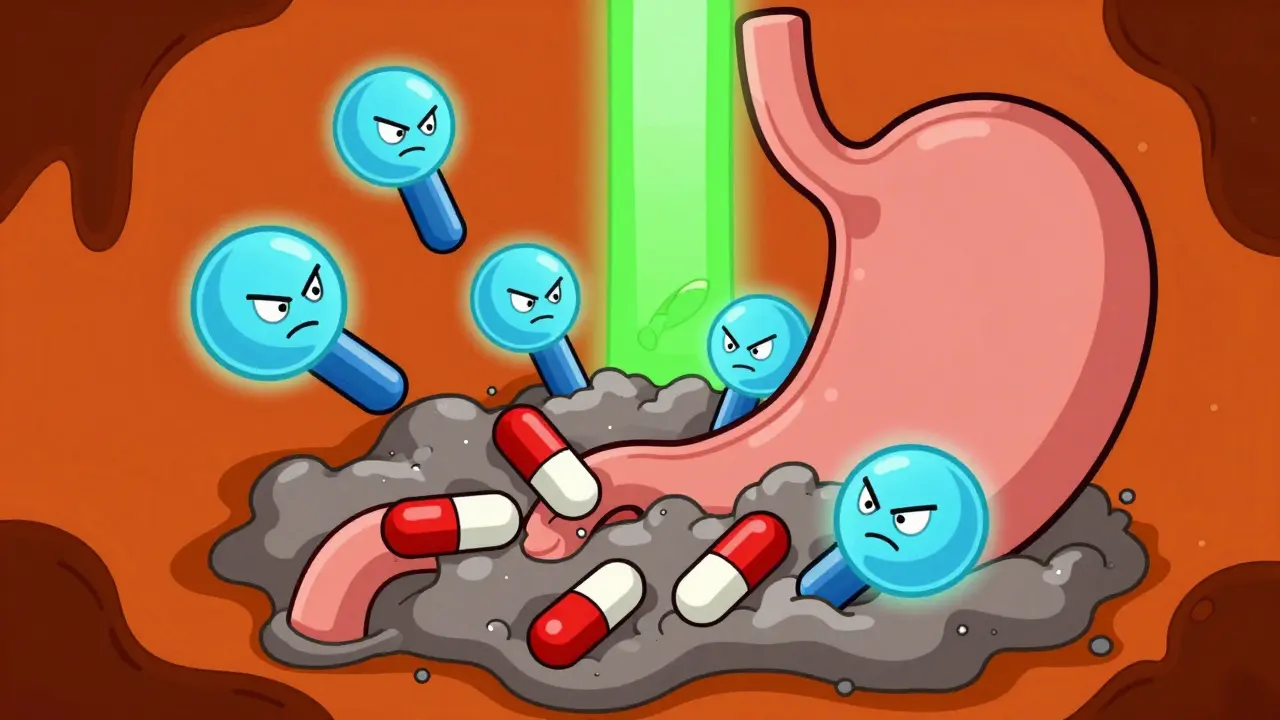
We often think of food-drug interactions as rare exceptions, but the reality is far more common. When calcium ions meet specific drug molecules, they form insoluble complexes. Think of it like locking two puzzle pieces together so tightly that your body’s digestive system can’t break them apart. The result? The drug passes right through you, unused and ineffective. For some conditions, this doesn’t just mean a slightly weaker effect; it means total therapeutic failure.
How Calcium Binds to Medication
To understand why this happens, we need to look at what’s actually in that juice. Most calcium-fortified beverages use calcium carbonate or calcium citrate. These are salts that dissolve in your stomach acid, releasing free calcium ions. While your body needs these ions for muscle function and nerve signaling, they are also chemically reactive.
Certain medications have chemical structures that act like magnets to these calcium ions. When you drink fortified juice alongside one of these drugs, the calcium binds to the drug molecule via electrostatic interactions. This creates a large, heavy complex. Your intestinal lining is designed to absorb small, soluble molecules. It cannot absorb these bulky, insoluble clumps. Consequently, the drug stays in your gut and is excreted rather than entering your circulation.
Research published in the Journal of Pharmaceutical Sciences highlights the severity of this mechanism. In vitro studies showed that when exposed to calcium concentrations similar to those found in fortified juices (around 300 mg/L), the dissolution of certain drugs dropped by up to 80%. That means only a fraction of your prescribed dose is actually available to fight infection or regulate hormones. This is classified as a Class 1 food-drug interaction by the U.S. Pharmacopeia, marking it as clinically major.
Medications at Highest Risk
Not every pill is affected by calcium. However, several critical classes of drugs are highly susceptible to this binding effect. If you take any of the following, you need to pay close attention to your breakfast choices.
- Tetracycline Antibiotics: Drugs like doxycycline and minocycline are notorious for binding with calcium. This class is often used for acne, Lyme disease, and various bacterial infections.
- Fluoroquinolone Antibiotics: Ciprofloxacin and levofloxacin fall into this category. They are frequently prescribed for urinary tract infections (UTIs) and respiratory issues.
- Bisphosphonates: Medications such as alendronate (Fosamax) are used to treat osteoporosis. Ironically, taking these bone-strengthening drugs with calcium can prevent them from working.
- Thyroid Hormones: Levothyroxine (Synthroid) is the standard treatment for hypothyroidism. It requires precise absorption levels to maintain metabolic balance.
- Certain Antifungals: Ketoconazole and other azole antifungals can also see reduced absorption when mixed with high-calcium foods or drinks.
The clinical consequences here are real. A prospective observational study published in Antimicrobial Agents and Chemotherapy looked at patients treating UTIs with ciprofloxacin. Those who consumed calcium-fortified orange juice concurrently had a treatment failure rate of 25-30%, compared to just 8-10% for those who separated their intake. That’s a threefold increase in the risk of your infection not clearing up properly.
The Double Whammy of Orange Juice
If you choose calcium-fortified orange juice over apple juice or water, you face an additional layer of complexity. Orange juice contains citric acid, which alters the pH level in your stomach. Drug dissolution is heavily dependent on gastric pH. Some drugs dissolve better in acidic environments, while others prefer neutral ones.
A comparative study in the European Journal of Drug Metabolism and Pharmacokinetics analyzed this specific combination. They found that calcium-fortified orange juice reduced ciprofloxacin absorption by 42%. Plain calcium-fortified water only reduced it by 31%. The acidity of the orange juice created an additive effect, making the binding issue worse than calcium alone would cause. So, while the calcium is the primary culprit, the fruit base itself can exacerbate the problem depending on the medication.
Timing Is Everything: Separation Windows
You don’t necessarily have to give up calcium-fortified juice entirely, nor do you have to stop your medication. The key strategy is separation. By spacing out the ingestion of the drug and the calcium source, you allow each to be absorbed independently before the other enters the system.
| Medication Class | Examples | Minimum Separation Time | Source/Guideline |
|---|---|---|---|
| Tetracyclines | Doxycycline, Minocycline | 2-3 hours before OR after | FDA Label (Doxycycline) |
| Bisphosphonates | Alendronate (Fosamax) | 30 minutes - 2 hours before | Merck Prescribing Info |
| Thyroid Hormones | Levothyroxine (Synthroid) | 4 hours before OR after | American Thyroid Association |
| Fluoroquinolones | Ciprofloxacin | 2-6 hours before OR after | Drug Interaction Facts |
For levothyroxine, the window is particularly strict. The American Thyroid Association recommends a minimum four-hour gap. Why so long? Because thyroid hormone absorption is incredibly sensitive. A double-blind crossover study involving hypothyroid patients showed that concurrent consumption could reduce absorption by 35-55%. To compensate, patients often need dose increases of 25-50 mcg, which complicates management and increases costs unnecessarily.

The Awareness Gap
Here is the frustrating part: most people don’t know this is happening. A 2023 national survey by the National Consumers League found that 81% of calcium-fortified juice consumers were unaware of potential medication interactions. Even more concerning, a survey by the National Community Pharmacists Association revealed that 68% of patients mistakenly believe fortified juices are "safe" to consume with their meds, assuming they are healthier than soda or regular juice.
This lack of awareness leads to real-world harm. On patient forums like Drugs.com, stories abound of individuals whose TSH levels skyrocketed because they drank two glasses of calcium OJ with their morning Synthroid for months. One user noted, "My doctor never mentioned calcium OJ would interfere... I was drinking two glasses daily with my morning pill." This highlights a significant gap in patient counseling. While pharmacists are trained to warn about dairy, the "hidden" calcium in juice often slips through the cracks.
The economic impact is staggering. An analysis in the Journal of Managed Care & Specialty Pharmacy estimated that therapeutic failures due to these interactions cost the U.S. healthcare system approximately $417 million annually. These costs come from repeat prescriptions, diagnostic testing to figure out why treatments aren't working, and hospitalizations for worsening conditions.
Practical Steps to Protect Your Health
So, how do you navigate this without giving up your favorite breakfast routine? Start by checking your medication labels. The FDA requires warnings about calcium-containing products for affected drug classes, though enforcement varies. Look for phrases like "avoid antacids or dairy products"-remember, calcium-fortified juice counts as a dairy alternative in this context.
Second, create a buffer zone. If you take levothyroxine first thing in the morning, wait at least four hours before having your fortified juice. If you take antibiotics with lunch, ensure your juice is either well before or well after that meal. Water is always the safest bet during the immediate pre- and post-medication window.
Finally, talk to your pharmacist. Don’t just ask about other drugs; ask about food. Specifically mention that you drink calcium-fortified beverages. Pharmacists are increasingly aware of this issue, with the Institute for Safe Medication Practices adding these beverages to its list of high-alert combinations in 2023. They can help you tailor a schedule that fits your lifestyle while ensuring your medication works as intended.
Does regular milk have the same interaction as calcium-fortified juice?
Yes, absolutely. Regular milk contains natural calcium, which interacts with the same medications in the exact same way. The issue is the calcium ion itself, regardless of whether it comes from dairy or fortification. Many patients switch to fortified juice thinking they are avoiding the "dairy problem," but they are inadvertently introducing the same amount of calcium, sometimes even more per serving.
Can I take calcium supplements with these medications?
No, you must apply the same timing rules. Calcium supplements (like Tums or Caltrate) contain concentrated doses of calcium carbonate or citrate. Taking them within the recommended separation windows (2-4 hours depending on the drug) is crucial. The concentration in supplements is often higher than in juice, making the binding effect potentially stronger.
Why does grapefruit juice get all the attention if calcium juice is risky?
Grapefruit juice interferes with drug metabolism in the liver by inhibiting enzymes called CYP3A4. This affects a different set of drugs (like statins and blood pressure meds) and works through a different mechanism. Calcium-fortified juice causes physical binding in the stomach/intestines, preventing absorption. Both are serious, but they affect different medications and operate differently. Grapefruit's risks are more widely publicized, leading to less awareness about calcium's binding risks.
Is apple juice safer than orange juice for medication interactions?
If the apple juice is NOT calcium-fortified, then yes, it is generally safer regarding this specific binding interaction. Plain fruit juices do not typically contain high levels of calcium. However, always check the nutrition label. If the apple juice is fortified with calcium, it poses the same risk as fortified orange juice. The risk comes from the added calcium, not the fruit flavor itself.
What should I do if I accidentally took my med with fortified juice?
Don’t panic, but don’t ignore it. Do not take an extra dose immediately. Contact your pharmacist or doctor. They may advise you to monitor for symptoms of low efficacy (e.g., return of infection symptoms or fatigue for thyroid patients). In many cases, missing one dose or having reduced absorption once won’t cause catastrophic failure, but consistent errors will. They might recommend re-testing your levels (like TSH for thyroid patients) sooner than scheduled.
