 Mar, 22 2026
Opioid Nausea Relief Calculator
Your Opioid Profile
Your Habits
Medication Options
When you're taking opioids for chronic pain, the last thing you want is to feel sick every day. But for 20-33% of people on long-term opioid therapy, nausea doesn’t go away - even after weeks or months. It’s not just discomfort. It’s a barrier to pain relief, sleep, and daily life. And it’s more common than most doctors admit.
Unlike acute nausea that fades after a few days, chronic opioid-induced nausea (OINV) sticks around. It doesn’t respond to simple fixes like skipping breakfast or drinking ginger tea alone. This isn’t just "feeling queasy." It’s a physiological response tied to how opioids interact with your brain and gut. And if you’ve tried everything and still feel awful, you’re not alone - and there are real, evidence-backed ways to fight it.
Why Your Opioids Are Making You Sick
Opioids don’t just block pain signals. They also trigger nausea through three main pathways. First, they activate the chemoreceptor trigger zone in your brainstem - a region that acts like a poison detector. Second, they slow down your gut, causing bloating and delayed emptying. Third, and often overlooked, they mess with your inner ear’s balance system. That’s why turning your head or standing up too fast can make you feel like the room is spinning.
Not all opioids are created equal. If you’re on oxymorphone or high-dose morphine, your risk of nausea is much higher than if you’re on tapentadol or a fentanyl patch. Research shows oxycodone has about 60 times lower nausea risk than oxymorphone. That’s not a typo. The difference isn’t just in dose - it’s in how each drug binds to receptors in your body. Some opioids are simply more likely to trigger nausea, even at the same pain-relieving dose.
Medication Options: What Actually Works
There’s no one-size-fits-all antiemetic for opioid-induced nausea. But some drugs have stronger proof behind them.
Prochlorperazine (Compazine) and promethazine (Phenergan) are phenothiazines - older drugs, but still first-line for many. In clinical trials, they reduce nausea in 65-70% of patients. They’re cheap (under $5 per month), and they work fast. But they can cause drowsiness or muscle stiffness, especially if you’re older.
Metoclopramide (Reglan) is the only prokinetic drug approved in the U.S. It speeds up stomach emptying - which helps when opioids are slowing digestion. It works for about 60% of users. But here’s the catch: if you take it for more than 12 weeks, you risk developing tardive dyskinesia - uncontrollable facial movements. That’s why the FDA added a black box warning. It’s useful short-term, but not ideal for long-term use.
Ondansetron (Zofran) is popular because it’s effective for breakthrough nausea. But it’s expensive - around $35 per dose - and studies show it’s not consistently better than generic phenothiazines. It’s worth considering if other drugs fail, but don’t assume it’s the "best" just because it’s advertised.
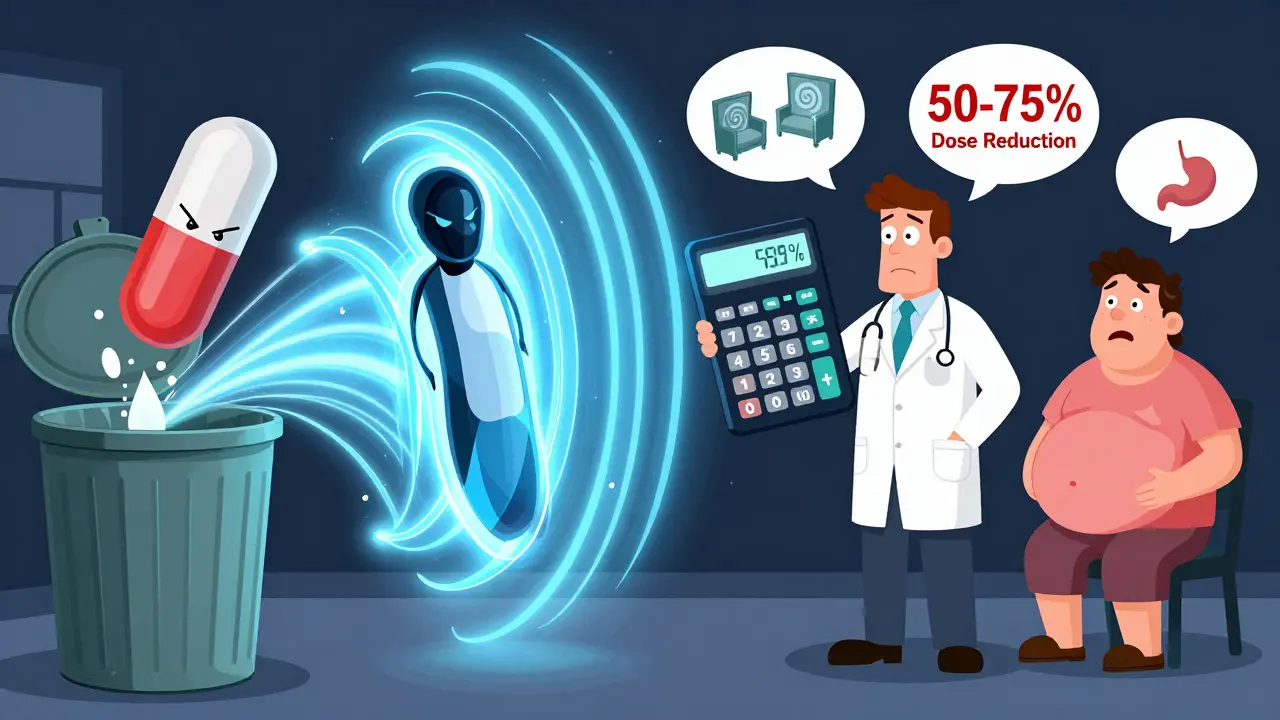
Methadone can be a game-changer. If you’re on morphine or oxycodone and can’t tolerate the nausea, switching to methadone may help. But you can’t just swap doses. You need to reduce the methadone dose by 50-75% because it stays in your system longer and builds up. This requires careful monitoring by a pain specialist.
Diet That Reduces Nausea - Not Just "Eat Bland Food"
Forget the old advice: "Stick to crackers and toast." That works for a stomach bug, not opioid-induced nausea.
What actually helps? Small, frequent meals. Instead of three big meals, aim for six to eight smaller ones, each around 150-200 calories. A 2022 survey from the University of Washington pain clinic found that 55% of patients reported less nausea with this approach. Why? Large meals stretch your stomach, which triggers more nausea signals. Smaller meals keep your gut calm.
Protein-rich snacks are better than carbs. Patients on PatientsLikeMe reported better results with hard-boiled eggs, Greek yogurt, or peanut butter on rice cakes than with plain toast. Protein helps stabilize blood sugar, which can reduce nausea spikes.
And yes - ginger works. Not as a cure, but as a reliable helper. In one study, 78% of users on PainNewsNetwork.org reported moderate to significant relief from ginger chews (like Briess Ginger Chews). Take one every 2-3 hours. It’s safe, cheap, and has no known interactions with opioids.
Hydration: Sip, Don’t Chug
Drinking 8 glasses of water a day might make sense for general health - but for opioid nausea, it backfires. Chugging fluids stretches your stomach and triggers more nausea.
The smarter approach? Sip 2-4 ounces of fluid every 15-20 minutes. That’s about half a cup every 20 minutes. Electrolyte drinks like Pedialyte or even diluted coconut water help more than plain water. Opioids can cause mild dehydration through reduced fluid intake and sweating, and electrolyte imbalance worsens nausea.
Some people swear by ice chips or popsicles. They hydrate slowly and keep your mouth fresh, which reduces the urge to vomit. Avoid sugary sodas - they’re worse than water.
Opioid Rotation: The Secret Weapon
If your nausea doesn’t improve after 2-3 weeks, even with antiemetics and diet changes, it’s time to consider switching opioids.
Studies show that 52% of patients who switched from morphine or oxycodone to fentanyl patches reported major improvement. Fentanyl has a different chemical structure that binds less aggressively to nausea-triggering receptors. The patch also delivers a steady dose, avoiding the spikes that cause nausea.
Other good candidates for rotation include tapentadol (3-4 times lower nausea risk than oxycodone) or hydrocodone. Tramadol is not recommended - it has a high nausea rate and can cause seizures in some people.
Never switch opioids on your own. You need a doctor to calculate the right conversion dose. Too much can cause overdose. Too little can cause withdrawal.
What Doesn’t Work - And Why
Many patients try everything before giving up:
- Acupuncture: Some studies show mild benefit for chemotherapy nausea, but not opioid-induced. No strong evidence.
- Essential oils: Peppermint or lavender may help with relaxation, but they don’t affect the brainstem receptors causing OINV.
- Staying still: Resting your head helps - 35-40% reduction in nausea, according to Heuser’s 2017 study. But closing your eyes? Only adds 5-7%. So focus on keeping your head stable, not on darkness.
- Antihistamines (Dramamine): They’re designed for motion sickness, which shares some pathways with OINV. But they’re not as effective as phenothiazines and cause more drowsiness.
The Hidden Trap: The Nausea-Anxiety Cycle
Here’s something no one talks about enough: fear of nausea makes nausea worse.
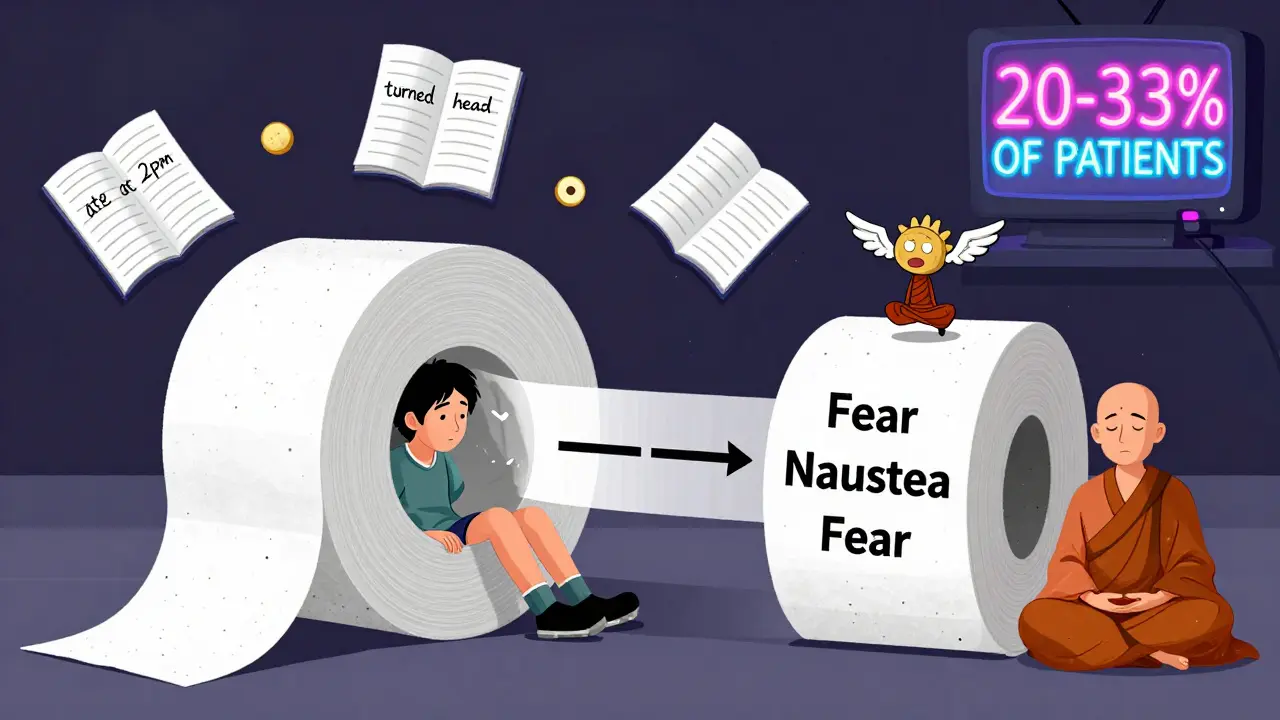
When you’ve been sick every morning for months, your brain starts anticipating it. That anxiety activates the same brain areas as the opioid-triggered nausea. It’s a loop: nausea → fear → more nausea.
Patients in Mallick-Searle’s 2017 study showed that 38% of those with chronic OINV had this cycle. Cognitive behavioral techniques - like controlled breathing, mindfulness, or even just keeping a nausea journal - can break it. You don’t need a therapist. Just write down: "What were you doing before you felt sick? Did you eat? Move your head?" Patterns emerge.
What to Do Next
If you’re stuck with opioid-induced nausea, here’s your action plan:
- Track your nausea for 7 days. Note time of day, meals, movement, and dose timing.
- Try ginger chews (1 every 2-3 hours) and sip electrolyte fluid every 15-20 minutes.
- Switch from 3 meals to 6-8 small meals. Add protein.
- Ask your doctor about prochlorperazine or promethazine - they’re safe, cheap, and effective.
- If no improvement after 2 weeks, discuss opioid rotation. Fentanyl patch or tapentadol are top choices.
- Never stop opioids cold. Always taper under supervision.
Chronic opioid-induced nausea isn’t a sign you’re doing something wrong. It’s a biological side effect - and it’s treatable. You don’t have to live with it. With the right combination of medication, diet, and smart opioid choices, relief is possible.
Can opioid-induced nausea go away on its own?
For most people, nausea improves within 3-7 days as tolerance builds. But about 15-20% of patients develop chronic opioid-induced nausea that lasts beyond 14 days, even with stable doses. If your nausea persists past two weeks, it won’t likely resolve without intervention. Don’t wait - talk to your doctor.
Is metoclopramide safe for long-term use?
No. The FDA warns that metoclopramide (Reglan) can cause tardive dyskinesia - permanent, involuntary movements - after 12 weeks of use. It’s best used only for short-term relief (2-4 weeks) while other treatments are tried. For chronic nausea, avoid long-term use unless no other options exist.
Why does fentanyl cause less nausea than morphine?
Fentanyl binds differently to opioid receptors in the brainstem and gut. It has lower affinity for the areas that trigger nausea, especially the chemoreceptor trigger zone. Plus, the patch delivers a steady, slow release - avoiding the peaks and valleys in blood levels that cause nausea spikes. Clinical data and patient reports confirm lower nausea rates with fentanyl patches compared to oral morphine.
Can I use CBD or cannabis to treat opioid-induced nausea?
Some patients report relief, but there’s no strong clinical evidence yet for CBD or cannabis specifically for opioid-induced nausea. Most studies focus on chemotherapy-induced nausea. Also, combining cannabinoids with opioids increases sedation risk. Until more research is done, it’s not a recommended treatment. Talk to your doctor before trying it.
How long does it take to see results from an antiemetic?
Most antiemetics like prochlorperazine or promethazine start working within 30-60 minutes. You should notice improvement within 24 hours. If there’s no change after 3-5 days, the drug likely isn’t working for you. Don’t keep taking it - talk to your doctor about switching options.

peter vencken
March 23, 2026 AT 08:37Also, small meals? 100%. I started eating peanut butter on rice cakes every 3 hours and boom - less bloating. Don't listen to doctors who say 'just tough it out.'
Chris Crosson
March 24, 2026 AT 22:05Linda Foster
March 25, 2026 AT 16:19Rama Rish
March 26, 2026 AT 22:37Kevin Siewe
March 27, 2026 AT 04:21Chris Farley
March 29, 2026 AT 03:18Darlene Gomez
March 30, 2026 AT 14:02Katie Putbrese
March 30, 2026 AT 14:30Jacob Hessler
March 31, 2026 AT 05:08Alex Arcilla
April 1, 2026 AT 04:33Jefferson Moratin
April 1, 2026 AT 09:04Caroline Dennis
April 2, 2026 AT 00:01