 Jul, 25 2026
Imagine taking a pill for your anxiety and another for your insomnia. You might think you are just treating two different problems. But in your brain, those two pills aren't working separately. They are teaming up to slow down your vital functions in ways that can be unpredictable-and dangerous.
This is the reality of combining sedating medications, also known as central nervous system (CNS) depressants. It’s not just about feeling sleepy. It’s about how these drugs interact at a chemical level to suppress the very systems that keep you breathing and alert. With millions of people managing chronic pain, anxiety, or sleep disorders, understanding this risk isn't just medical jargon; it's a matter of survival.
How Sedatives Work Together: The Synergy Trap
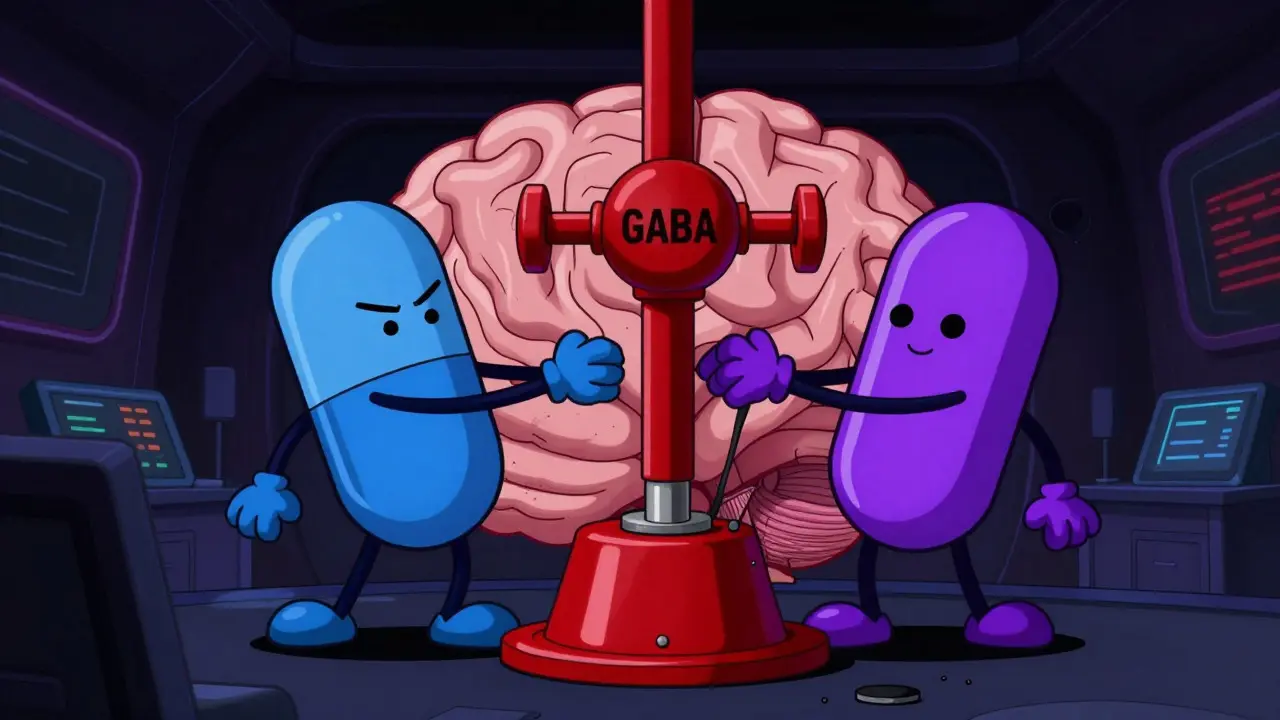
To understand the danger, you first need to know what happens inside your head when you take these drugs. Most sedating medications work by boosting a neurotransmitter called gamma-aminobutyric acid, or GABA. Think of GABA as the brain’s brake pedal. When you press it, things slow down. That’s why you feel calm or drowsy after taking a single dose.
The problem arises when you combine multiple drugs that hit this same brake pedal. This isn't simply 1 + 1 = 2. In pharmacology, we call this synergistic effect. The combined impact is often much stronger than the sum of individual effects. For example, opioids depress the brainstem-the part of your brain that controls automatic breathing. Benzodiazepines enhance GABAergic inhibition, which quiets overall brain activity. When you mix them, they create a multiplicative effect on respiratory depression.
Research published in JAMA Internal Medicine highlights this starkly: patients receiving both opioids and benzodiazepines had a 154% higher risk of overdose compared to those taking opioids alone. The odds ratio was 2.54, meaning the risk more than doubled. Your body doesn't distinguish between "prescribed" and "recreational" sedation; it only sees the cumulative load on its receptors.
The Most Dangerous Combinations to Watch
Not all drug pairs are created equal. Some combinations carry a significantly higher mortality risk than others. Knowing which ones to avoid is the first step in protecting yourself or a loved one.
| Combination | Primary Risk | Mechanism | Risk Multiplier | |
|---|---|---|---|---|
| Opioids + Benzodiazepines | Fatal Respiratory Depression | Brainstem suppression + GABA enhancement | HR=3.86 for fatal overdose | |
| Alcohol + Zolpidem (Ambien) | Impaired Reaction Time | Cortical function impairment | 70% reduction in reaction time | |
| SSRIs + MAOIs | Serotonin Syndrome | Excessive serotonergic activity | 14-16% occurrence rate in cases | |
| Benzodiazepines + Antihistamines | Falls & Cognitive Decline | Additive sedation | 50% increased fall risk in elderly |
Opioids and Benzodiazepines: This is the deadliest pairing. UCLA Health reports that these combinations account for approximately 30% of all prescription medication-related deaths. The CDC noted that in 2020, about 16% of opioid overdose deaths also involved benzodiazepines. Dr. Janet Woodcock, former FDA Director, warned that this combination "substantially increases the risk of serious adverse outcomes, including death."
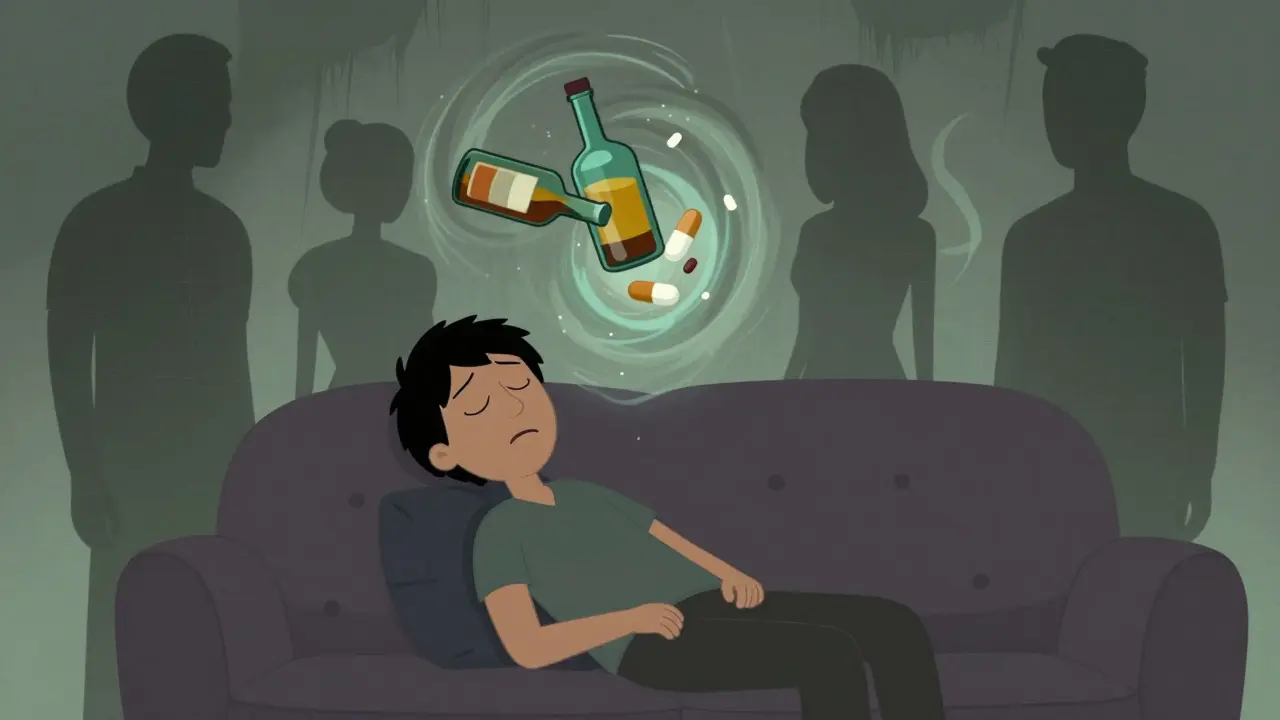
Alcohol and Sedatives: Alcohol is a CNS depressant itself. Combining even two standard drinks with therapeutic doses of zolpidem can reduce reaction time by 70%, compared to 40% with either substance alone. This unpredictability makes activities like driving extremely hazardous.
SSRIs and MAOIs: While not always causing immediate sedation, mixing Selective Serotonin Reuptake Inhibitors (like Prozac) with Monoamine Oxidase Inhibitors can trigger serotonin syndrome. This condition occurs when serotonin levels exceed safe thresholds (typically >500 nmol/L), leading to agitation, high fever, and potentially organ failure.
Red Flags: Recognizing the Warning Signs
You don't need a medical degree to spot trouble. Your body sends clear signals when it is struggling to process too many sedatives. If you or someone else experiences these symptoms after starting a new medication or increasing a dose, seek help immediately.
- Respiratory Distress: A respiratory rate dropping below 12 breaths per minute is a critical warning sign. Normal breathing is typically 12-20 breaths per minute. If breathing becomes shallow, irregular, or accompanied by gurgling sounds, oxygen saturation may drop below 90%.
- Extreme Drowsiness: Feeling unable to stay awake despite needing to be alert. This goes beyond normal tiredness; it is a heavy, unshakeable lethargy.
- Confusion and Disorientation: Inability to recognize familiar people or places. This indicates significant cortical impairment.
- Physical Instability: Slurred speech, lack of coordination, or frequent stumbling. As Dr. George Ashkar from UCLA Health notes, these side effects drastically increase the risk of falls, especially in older adults.
- Blue-Tinged Lips or Fingertips: This is a late-stage sign of hypoxia (low oxygen). It requires emergency intervention immediately.
If you cannot wake someone up, or if they are unresponsive to verbal stimuli, call emergency services right away. Do not wait to see if they "sleep it off."
Who Is Most at Risk?
While anyone can experience adverse effects, certain groups face heightened dangers due to physiological changes or lifestyle factors.
Older Adults: Aging affects how the liver and kidneys metabolize drugs. Medications stay in the system longer, leading to accumulation. The American Geriatrics Society Beers Criteria® lists 53 medication combinations to avoid in seniors, with 19 involving sedating drugs. Why? Because sedatives increase the risk of falls by 50%. A fall for an older adult can mean a hip fracture, loss of independence, or even death.
Patients with Sleep Apnea: People with obstructive sleep apnea already struggle with airway collapse during sleep. Adding sedatives relaxes throat muscles further, worsening the apnea and reducing oxygen intake.
Those with Liver or Kidney Issues: Since most sedatives are processed by the liver and excreted by the kidneys, impaired function in these organs leads to toxic buildup of the drug in the bloodstream.

Safe Practices: How to Manage Multiple Medications
Avoiding risks doesn't always mean stopping treatment. It means managing it smarter. Here is how to stay safe if you must take multiple medications.
- Maintain a Master List: Keep an updated list of every medication you take, including over-the-counter drugs (like diphenhydramine/Benadryl) and supplements. Show this list to every doctor and pharmacist. Many dangerous interactions happen because specialists don't know what the general practitioner prescribed.
- Use One Pharmacy: Having all prescriptions filled at the same pharmacy allows the pharmacist to run automated interaction checks. However, note that a 2020 study found only 17.3% of potentially dangerous combinations triggered appropriate alerts in major electronic health record systems. Don't rely solely on technology; ask questions.
- Follow the "One Change at a Time" Rule: When adjusting dosages, change only one medication at a time. This helps you identify which drug is causing side effects. Tapering should be gradual-typically reducing a dose by 10-25% every 1-2 weeks under medical supervision.
- Understand Morphine Milligram Equivalents (MME): If you are on opioids, ask your doctor about your MME score. This metric helps quantify the total opioid load, accounting for potency differences between drugs. Higher MME scores correlate with higher overdose risks.
- Schedule Regular Reviews: The START criteria suggest that patients over 65 taking three or more sedating medications should have their regimen reassessed within 30 days. For others, an annual comprehensive medication review is wise.
The Role of Technology and Regulation
The healthcare industry is waking up to this crisis. In 2016, the FDA issued its first specific warning about opioid-benzodiazepine combinations. By 2022, boxed warnings were required on all opioid and benzodiazepine medication guides. The Electronic Prescribing for Controlled Substances (EPCS) mandate, implemented in all 50 states by 2023, includes cross-checking for dangerous combinations.
New tools are emerging too. The FDA-approved DETERMINE platform, launched in July 2022, uses AI to predict individual patient risk for adverse sedative interactions with 87.4% accuracy in trials. However, adoption is still slow. Only 28% of primary care providers consistently screen for these combinations, according to a 2023 Government Accountability Office report.
Until universal screening becomes standard, the responsibility falls heavily on patients. Be proactive. Ask your doctor: "Does this new medication interact with my current sedatives?" and "What are the specific warning signs I should watch for?"
Can I drink alcohol while taking sedating medications?
Generally, no. Alcohol is a central nervous system depressant. Combining it with sedatives like benzodiazepines, opioids, or sleep aids multiplies the sedative effect. Even small amounts of alcohol can lead to severe respiratory depression, extreme drowsiness, and blackouts. For example, combining alcohol with zolpidem can reduce reaction time by 70%, making driving nearly impossible.
What is serotonin syndrome, and does it involve sedatives?
Serotonin syndrome is a potentially life-threatening condition caused by excessive serotonin activity. While often associated with antidepressants (SSRIs and MAOIs), some sedatives and migraine medications (triptans) can contribute. Symptoms include agitation, confusion, rapid heart rate, high blood pressure, and dilated pupils. It requires immediate medical attention.
How long should I wait between taking different sedatives?
There is no universal waiting period because it depends on the half-life of each drug. However, doctors often recommend spacing out doses to avoid peak concentration overlap. Always follow your prescriber's specific instructions. For switching between SSRIs and MAOIs, a 14-day washout period is typically required to prevent severe interactions.
Are natural supplements safe to mix with prescription sedatives?
Not necessarily. Supplements like valerian root, kava, and melatonin have sedative properties. Mixing them with prescription benzodiazepines or opioids can enhance sedation and increase fall risk. Always disclose all supplements to your healthcare provider.
What should I do if I suspect an overdose?
Call emergency services immediately. Look for signs like slow or stopped breathing, unresponsiveness, blue lips/fingernails, and pinpoint pupils (in opioid overdoses). If naloxone (Narcan) is available and an opioid overdose is suspected, administer it while waiting for help. Stay with the person until paramedics arrive.
