 Aug, 23 2026
That muffled feeling when you try to hear your partner talk? It’s not just bad acoustics. For millions of people, it’s a hard plug of earwax is a natural substance produced by the ears that protects against dirt, bacteria, and water but can cause blockage when excessive. Also known as cerumen, this waxy material usually moves out on its own. But sometimes, it gets stuck. This condition, called cerumen impaction is a medical state where hardened earwax blocks the ear canal, leading to symptoms like hearing loss and pain, affects about 6% of the general population. While it sounds minor, ignoring it can lead to serious issues like infection or permanent hearing damage. The good news? You don’t need fancy tools or risky DIY hacks to fix it. You just need the right approach.
Key Takeaways
- Cerumen impaction is common (6% of people) and often caused by using cotton swabs, which push wax deeper.
- Symptoms include hearing loss, fullness, tinnitus, and earache; if you have these, see a doctor rather than guessing.
- Safe home care involves softening the wax with oil drops for several days before professional removal.
- Professional methods like microsuction are highly effective (96%) and safer than irrigation for many patients.
- Avoid ear candles and unregulated suction devices, which cause thousands of injuries yearly.
Why Does Earwax Get Stuck?
Your ears are actually self-cleaning. The skin in your ear canal slowly migrates outward, carrying old wax with it. Think of it like a conveyor belt. So why does it jam? Usually, we mess with the system. Cotton swabs are the biggest culprit. According to NHS England data, 60-70% of impacted cases are iatrogenic-meaning they’re caused by medical or personal interventions, mostly from swabbing. When you stick a Q-tip in there, you don’t just wipe away the wax; you pack the rest deeper toward the eardrum.
Other factors play a role too. If you wear hearing aids, the device itself can trap wax, affecting 35-40% of users. Older adults are more prone to it because their skin becomes drier and the wax harder. People with narrow ear canals or excessive ear hair also face higher risks. Interestingly, age matters significantly. Prevalence jumps from 5% in adults aged 20-40 to 14% in those over 65, according to CDC data. So if you’re older or use hearing aids, pay extra attention to what goes into your ears.
How to Spot the Problem: Symptoms and Diagnosis
You might not realize you have an impaction until it starts bothering you. The most common symptom is hearing loss, reported in 65% of cases. It feels like someone turned down the volume knob. Other signs include a sense of fullness (58%), earache (42%), ringing in the ears or tinnitus (29%), and itching (33%). Some people even experience dizziness or a persistent cough, though these are less common.
Here’s the tricky part: asymptomatic wax buildup is normal. Up to 40% of routine ear exams show some wax, but it doesn’t count as "impaction" unless it causes symptoms or blocks the doctor’s view. That’s why diagnosis isn’t just about looking at the ear. Doctors use a pneumatic otoscope to check both the wax level and how well your eardrum moves. This visual check has 98.7% accuracy when done by a trained professional. If you think you have impaction, don’t just assume. A quick visit to your GP or an ENT specialist can rule out other issues like ear infections or TMJ disorders, which mimic wax symptoms in about 22% of cases.
Safe Home Care: Soften Before You Remove
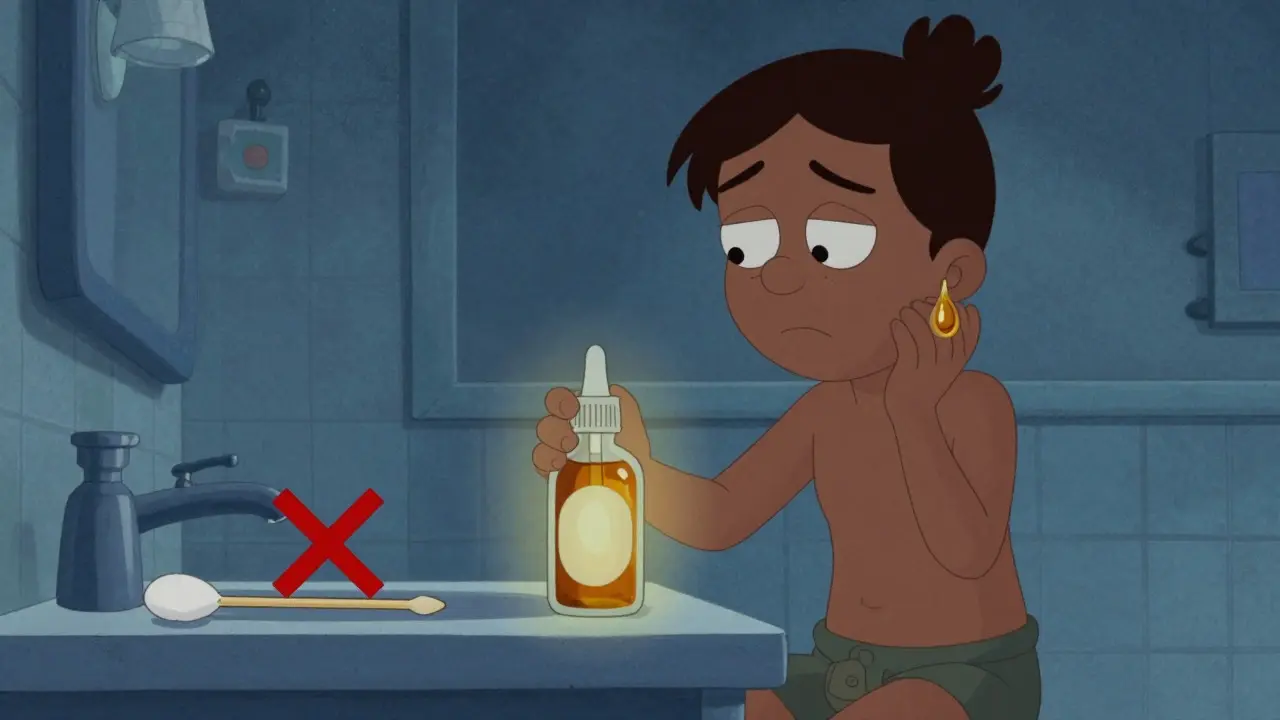
If your symptoms are mild, you might be able to manage it at home first. But here’s the rule: never dig. Instead, focus on softening the wax so it can move out naturally. The NHS recommends a simple protocol. Lie on your side with the affected ear up. Put 2-3 drops of olive oil, almond oil, or mineral oil into the ear. Stay still for 5-10 minutes to let it soak. Repeat this 3-4 times a day for 3-5 days. After that, gently wipe the outer ear with a damp cloth. That’s it. No cotton buds, no hair dryers, no suction cups.
Over-the-counter drops like carbamide peroxide solutions (found in brands like Debrox) are also popular. Studies show they work in about 65% of cases after four days. However, hydrogen peroxide can be irritating, with 15% of users reporting discomfort. If you have a history of eardrum perforation or ear surgery, skip home remedies entirely and go straight to a professional. The risk of pushing debris behind a hole in the eardrum is real and dangerous.
Professional Removal Options Compared
When home care fails, or if your symptoms are severe, it’s time for professional help. There are three main methods doctors use. Each has its pros and cons.
| Method | Effectiveness | Risks/Contraindications | Best For |
|---|---|---|---|
| Manual Instrumentation | 92% (single visit) | Requires high skill; risk of scratching canal | Hard, visible wax without deep impaction |
| Irrigation (Water/Saline) | 85% | Contraindicated if eardrum is perforated; pressure sensitivity | Soft wax; standard cases |
| Microsuction | 96% | Minimal; requires specialized equipment | Precise removal; patients with sensitive ears or perforations |
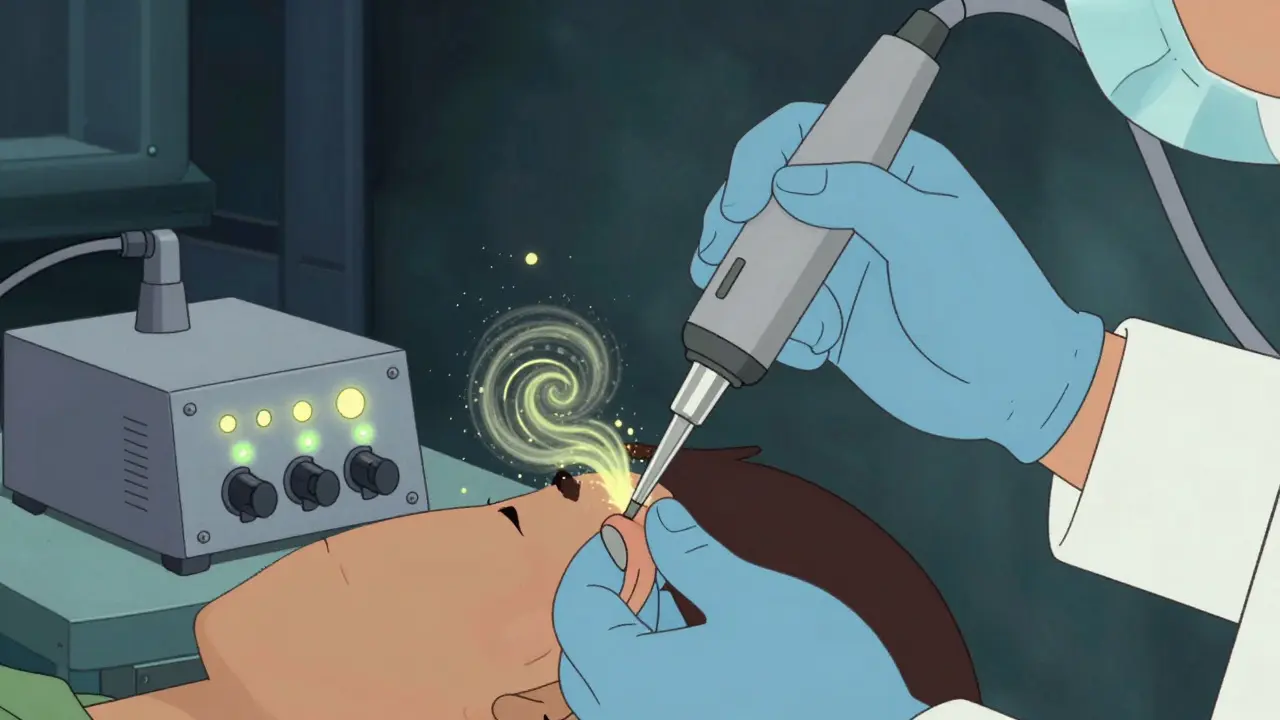
Microsuction is gaining popularity for good reason. It uses a small vacuum tip under direct vision to suck out the wax. It’s precise, quiet, and avoids the pressure changes associated with water irrigation. Patient satisfaction is high, with 92% rating it positively compared to 85% for irrigation. Manual instrumentation, where a doctor uses a curette to scoop out the wax, is fast but depends heavily on the doctor’s skill. Irrigation is the oldest method, but it’s not suitable for everyone. If you’ve ever had a ruptured eardrum, water in the middle ear can cause severe vertigo or infection. Always tell your doctor your medical history before choosing a method.
Myths and Dangers to Avoid
Let’s bust some myths. First, ear candling. It looks mystical, but it’s useless and dangerous. The FDA classifies ear candles as misbranded devices. They don’t create a vacuum strong enough to pull out wax. Instead, hot wax drips and burns are common. Between 2018 and 2022, FDA reports documented 12,500 ear injuries from improper removal attempts, including 3,000 cases of eardrum perforation. Second, home suction devices. Those little battery-operated vacuums sold online? They lack the control professionals have. You can easily damage the delicate skin of the ear canal. Third, the idea that you need to clean your ears daily. You don’t. In fact, frequent cleaning disrupts the natural pH balance and leads to more wax production. Your ears only need occasional maintenance, not daily scrubbing.
Prevention and Long-Term Health
The best treatment is prevention. Stop using cotton swabs inside your ear canal. Use them only on the outer ear. If you wear hearing aids, clean them regularly according to the manufacturer’s instructions and have your ears checked every six months. Keep your ears dry after swimming, especially if you’re prone to infections. If you notice hearing changes, don’t wait. Early intervention prevents complications. The global market for earwax removal is growing, projected to reach $521.8 million by 2028, reflecting how common this issue is. But health is more important than cost. A simple drop regimen or a professional appointment is far cheaper than treating an infection or hearing loss later.
Frequently Asked Questions
Is it safe to remove earwax at home?
It is generally safe to soften earwax at home using oil drops, provided you do not insert objects into the canal. However, if you have a history of eardrum perforation, ear surgery, or severe pain, consult a doctor first. Avoid digging with cotton swabs or pins, as this pushes wax deeper and increases injury risk.
What is the difference between earwax and cerumen impaction?
Earwax (cerumen) is a normal, protective substance. Cerumen impaction is a medical condition where the wax accumulates excessively and hardens, blocking the ear canal and causing symptoms like hearing loss or pain. Not all earwax is impaction; only symptomatic blockages require treatment.
Which is better: microsuction or irrigation?
Microsuction is often preferred for precision and safety, especially if you have a sensitive ear or previous eardrum issues. It has a 96% success rate. Irrigation is effective (85%) but contraindicated for patients with perforated eardrums. Your doctor will recommend the best option based on your specific anatomy and medical history.
Do I need to clean my ears every day?
No. The ear is a self-cleaning organ. Daily cleaning can irritate the skin and push wax deeper. Only clean the outer ear with a damp cloth. If you wear hearing aids, follow their specific cleaning schedule, but avoid deep canal cleaning unless advised by a specialist.
Can earwax cause permanent hearing loss?
Impacted earwax typically causes temporary conductive hearing loss. Once removed, hearing usually returns to normal. However, if left untreated for a long time, it can lead to chronic infections or pressure damage, which might affect hearing longer-term. Prompt treatment prevents these complications.

Thhomas Fox
August 25, 2026 AT 07:56Finally some sensible advice on this. The cotton swab myth needs to die a fiery death. My ears have never felt so light since I stopped poking around in there like a kid with a pencil.
Owen John
August 25, 2026 AT 10:50They don't want you to know that the 'natural' process is actually a slow poison. The NHS data? Conveniently selected to fit their narrative. I've seen too many people trust these corporate medical guidelines only to end up with 'treatable' conditions that turn into lifelong dependencies. Stay vigilant. The real danger isn't wax, it's the system pushing you toward more and more interventions under the guise of care.
Maneesh kv
August 25, 2026 AT 18:39Bro just stop digging!! 🤦♂️🔥 My dad had to go to the doctor because he used a hairpin (yes a hairpin) to clean his ear. Total disaster. Oil drops work best if u ask me. Don't be a hero 😤
John Park
August 25, 2026 AT 18:48The irony here is palpable. We are taught to fear the unknown yet we blindly insert foreign objects into our most sensitive sensory organs. It is a testament to human hubris that we believe we can outsmart evolution with a Q-tip. The 'self-cleaning' mechanism is not a suggestion, it is a biological imperative. To interfere is to invite chaos. Yet here we are, creating our own problems and then seeking professional validation for our mistakes. A perfect cycle of modern incompetence.
Kathleen McGrath
August 26, 2026 AT 22:19I was so scared to try the oil drops but my mom told me to just give it a shot. Turns out it really does help! Just make sure you tilt your head right. So glad I read this before going to the ER last week.
Lemuel Gomez
August 28, 2026 AT 09:52Agreed... completely. The part about the eardrum perforation risk is crucial... and often overlooked. I have a friend who thought he could just suck the wax out with a vacuum cleaner nozzle... let's just say it did not go well... at all.
Emmanuel Umana
August 30, 2026 AT 01:57In Nigeria, we often use warm water from a kettle to flush ears after bathing. Works wonders if done gently. But yes, no cotton buds inside. They push it deeper. Simple logic.
Lilian Binda
August 31, 2026 AT 08:47typo alert lol but whatever. its obvious they dont care about us regular folks. doctors just want money. i know a guy who lost hearing from a bad irrigation job. its all a scam to keep you coming back. trust your gut not them. also stop using those stupid candles they burn ya face off
Fabian Saldana
September 2, 2026 AT 00:22A very comprehensive guide indeed. It is essential that we prioritize preventative measures over reactive treatments. The statistical evidence provided regarding microsuction efficacy is particularly compelling. I recommend sharing this with your colleagues and family members to ensure widespread awareness of proper ear hygiene protocols.
Colin Finch
September 3, 2026 AT 14:46Ooh, scary stuff! I remember when my little brother tried to use an ear candling thingy at a party. He cried for an hour! Glad we know better now. Thanks for the info!
Betty Childers
September 4, 2026 AT 10:46I still think we should just ignore it until it hurts. Nature knows best. But okay, maybe a little oil is fine. Who knew ears were such a high maintenance organ?
Amy Zalkin
September 4, 2026 AT 12:43lol the 'conveyor belt' analogy is genius. makes sense why poking it breaks the system. my ears feel like a dusty attic right now so im trying the olive oil trick tonight. fingers crossed 🤞✨
Alex Brown
September 5, 2026 AT 20:23The distinction between normal cerumen accumulation and pathological impaction is critical to understanding the condition. Many individuals suffer from unnecessary anxiety due to a lack of clear diagnostic criteria. By emphasizing the self-regulating nature of the ear canal, we can reduce the incidence of iatrogenic complications. Furthermore, the data supporting microsuction over irrigation aligns with the principle of minimal intervention. This approach respects the physiological integrity of the patient while ensuring effective treatment outcomes. It is a model of evidence-based practice that deserves wider adoption in primary care settings.
Kaylyn Mello
September 7, 2026 AT 16:51just wanted to say thanks for posting this. i always thought earwax was bad news but turns out its just doing its job. gonna stop buying those fancy ear sprays and just use plain old oil instead. saves money too