 Mar, 29 2026
The Myth of Cheap Medicine
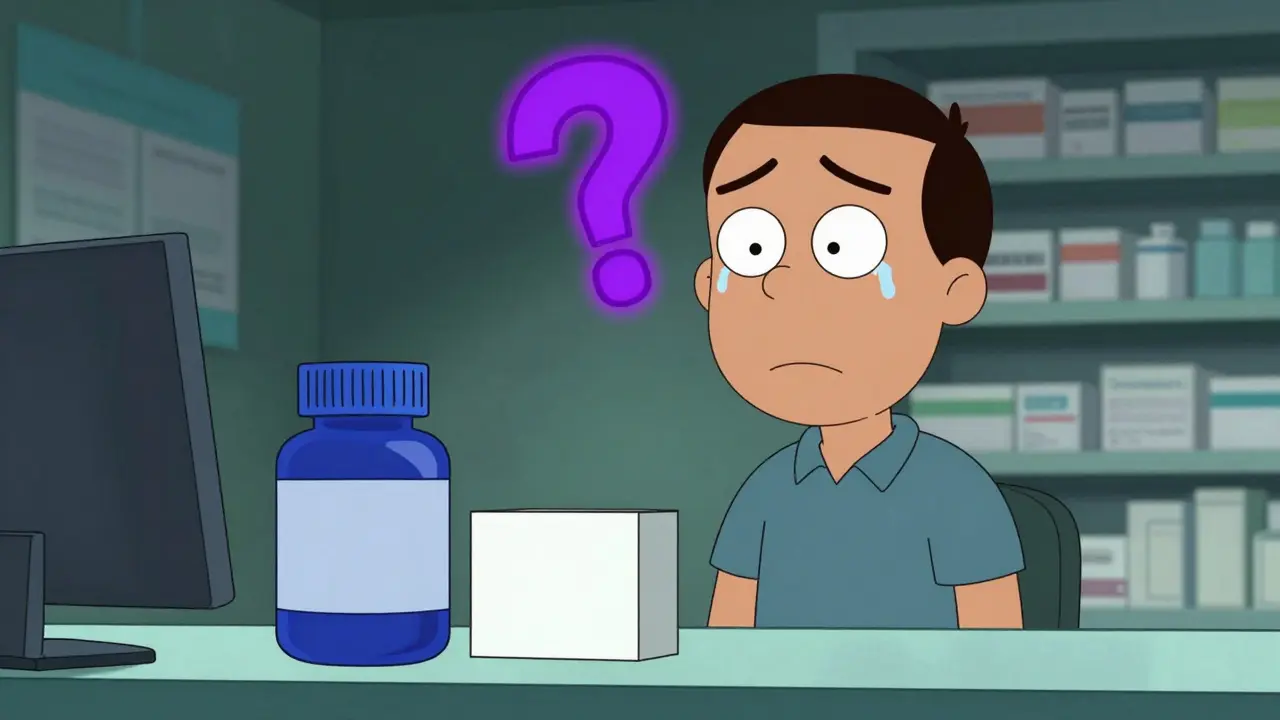
You walk into the pharmacy. The pharmacist hands you a box. It looks slightly different from the blue bottle you remember getting last year. The price tag is a fraction of the old one. Your mind races: Is this safe? Will it work the same way? These doubts are common. In fact, 43% of patients believe generics are less effective than their brand-name counterparts. Yet, the reality is starkly different. Generics dominate the market, accounting for 90% of prescriptions filled in the United States alone. The hesitation often stems from marketing myths rather than medical necessity. Understanding the science behind the label can give you confidence to choose what’s best for your wallet and your health.
What Makes Them Equivalent?
Generic Drugs are pharmaceutical equivalents to branded versions that become available after patent expiration. They contain the identical active ingredients, dosage forms, strengths, and routes of administration as the original product. This identity is non-negotiable. If the core medicine isn’t the same, it’s not an approved generic. The modern system relies on the Drug Price Competition and Patent Term Restoration Act of 1984, known as the Hatch-Wawman Act. This legislation created a pathway allowing manufacturers to prove safety through bioequivalence testing instead of repeating massive clinical trials. Essentially, once the innovator company’s patent expires, other manufacturers can step in. This competition drives prices down significantly without changing the molecule working inside your body.However, confusion often arises regarding the inactive ingredients-fillers, dyes, and binders. These can differ between brands. While these components must still meet safety standards, they account for variations in pill size, color, or taste. Some patients notice side effects like stomach upset more with one version than another due to these excipients, even if the therapeutic effect remains the same.
Decoding Bioequivalence Standards
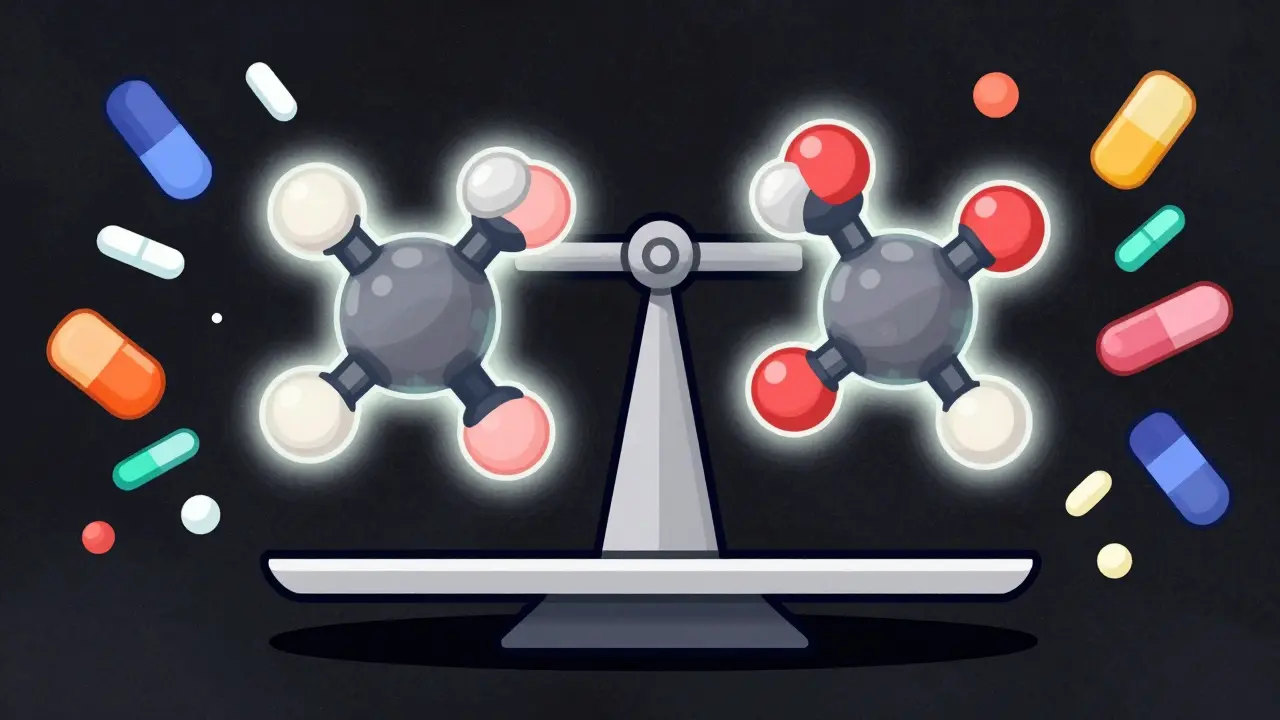
The term "bioequivalence" sounds technical, but it essentially means the generic enters your bloodstream at the same rate and reaches the same peak levels as the brand name. Regulatory bodies set strict boundaries for this comparison. For a generic to be approved, the 90% confidence intervals for maximum peak concentration (Cmax) and area under the curve (AUC) must fall within 80% to 125% of the brand-name drug's values.
It is crucial to correct a widespread misunderstanding here: This range refers to blood concentration curves, not the amount of active ingredient inside the pill. The active ingredient percentage is effectively 100%. Between 1996 and 2007, analysis of 2,070 single-dose studies showed average differences of only 4.35% for peak concentration. In the vast majority of cases, the variation is minimal enough that it produces no noticeable clinical difference for the patient.
| Feature | Brand Name Drug | Approved Generic Drug |
|---|---|---|
| Active Ingredient | Identical | Identical |
| Blood Absorption Rate | Reference Standard | Within 80-125% |
| Dosage Form | Specific (tablet/injection) | Identical Type |
| Clinical Efficacy | Proven in Trials | Demonstrated via Equivalence |
Real-World Financial Impact
The primary driver for switching to generics is financial relief. On average, generic drugs cost 80-85% less than their brand-name counterparts. In the U.S. healthcare system, this translates to approximately $373 billion in annual savings. To put this in perspective, look at cholesterol management. A 30-day supply of Lipitor (atorvastatin) was listed at $335.37 for the brand name versus $0.00 for the generic version through coupon programs as recently as late 2023. Similar disparities exist with heart medications. Plavix (clopidogrel) averages around $450 for the brand, while the generic can cost nothing out-of-pocket depending on insurance coverage.
This price gap widens when considering long-term maintenance therapy. Conditions like hypertension, diabetes, and high cholesterol require daily medication for years or decades. Paying full price for brand names becomes unsustainable for most families. Market data shows that Medicare Part D scripts are 92% generic, reflecting how formulary designs prioritize these lower-cost options to manage overall spending. Despite the lower cost, adoption patterns vary. For statins, generics capture 97% of the market share, whereas antiepileptic drugs see lower penetration at 68%, largely due to lingering concerns about seizure control stability.
When Caution Is Necessary
While the data supports broad equivalence, exceptions exist. Certain medications are classified as having a Narrow Therapeutic Index (NTI). These are drugs where small changes in blood concentration can lead to serious side effects or treatment failure. Digoxin, used for heart failure, is a classic example requiring careful monitoring during substitution. Levothyroxine, commonly used for thyroid function, also warrants attention. Studies indicate that about 28% of patients have described issues specifically with levothyroxine generics, often linked to individual absorption differences.
For drugs like warfarin, the risk involves bleeding complications if the dose is off. Consequently, guidelines suggest monitoring blood tests within 7-14 days after switching products for these specific classes. This doesn't mean the generic is unsafe, but rather that your body may need a short period of adjustment to the new manufacturer's profile. The FDA provides an "Orange Book" updated quarterly, which helps pharmacists identify AB-rated generics. Products rated "AB" demonstrate the highest bioequivalence and are considered interchangeable with fewer risks.
Addressing Patient Skepticism
Skepticism is persistent. A survey found that 27% of patients refused generic substitution when offered. Conversely, a GoodRx survey showed 89% reported identical therapeutic effects. Why the disconnect? Often, it comes down to expectation management. Some brand companies have successfully marketed doubt. Dr. Arthur Caplan, a bioethicist, noted that marketing efforts have sown doubt despite overwhelming evidence to the contrary.
Patient reports often highlight "perceived" differences. For example, if a generic capsule dissolves differently than a brand tablet, some people feel they are absorbing less. Large-scale research counters this. A landmark Austrian study analyzing 1.2 million patients found that generic medications were at least similar, and in some cases superior, regarding mortality and major cardiovascular events. Specifically, generic formulations were associated with fewer deaths in 10 of 17 drug classes studied. This evidence suggests that the fear of reduced efficacy is statistically unfounded for the vast majority of users.
Moving Forward with Confidence
The landscape of pharmaceuticals continues to evolve. The FDA is implementing GDUFA III through 2027, allocating over $1.23 billion to accelerate complex generic approvals. We are seeing growth in biosimilars for biologic drugs, which offer further cost reductions of 15-30% against reference products. As manufacturing precision improves, the gap in consistency narrows further. Next-generation analytics are already reducing bioequivalence variation to under 2% for difficult-to-manufacture drugs. Supply chain vulnerabilities remain, with shortages increasing in sterile injectables, but this affects both generic and brand lines equally.
If you are managing chronic health conditions, the goal is adherence. Whether you take the brand or the generic matters less than taking the medication consistently. For NTI drugs, simply inform your prescriber if you wish to stick with one manufacturer. Otherwise, trusting the regulatory framework ensures you get safe care without the premium price tag.
Can I substitute a generic for a brand name drug without asking my doctor?
For most standard medications, yes. Pharmacists are authorized by law to dispense an FDA-approved generic equivalent unless the prescription explicitly states "Dispense as Written." However, for Narrow Therapeutic Index drugs like warfarin or levothyroxine, it is advisable to consult your doctor before accepting a swap to ensure consistent monitoring.
Do generics contain 80% to 125% of the active ingredient?
No. That is a common myth. The 80-125% rule applies to the rate and extent of absorption in the bloodstream (pharmacokinetics), not the physical amount of powder in the pill. Generics must contain 100% of the same active ingredient strength.
Why do some people feel worse on generic versions?
Inactive ingredients like fillers, dyes, or binders can differ between manufacturers. While the active drug is the same, these inert components can affect how the tablet breaks down in the stomach, potentially causing mild sensitivity in some individuals, though this does not necessarily mean reduced efficacy.
Are biosimilars the same as generic drugs?
They are similar concepts but apply to different medicines. Generics copy smaller chemical molecules (like aspirin), while biosimilars copy large protein-based biologics (like insulin or antibodies). Biosimilars undergo slightly more extensive testing due to the complexity of biological manufacturing.
Which organizations regulate the approval process?
In the United States, the FDA regulates approvals. Internationally, agencies like the Therapeutic Goods Administration (TGA) in Australia or the EMA in Europe follow strict bioequivalence pathways. All rely on the principle established by acts like the Hatch-Waxman Act of 1984 to ensure safety without redundant testing.

Katie Riston
March 31, 2026 AT 18:02It really makes you wonder about the nature of trust in modern healthcare systems. We spend so much time worrying about the label instead of the mechanism. The idea that a different colored pill changes the internal chemistry is fascinating. Yet the statistics show us something else entirely regarding safety outcomes. People cling to brand names like security blankets even when evidence contradicts it. Marketing plays a massive role in shaping these fears beyond medical reality. I suppose it is easier to blame the molecule than question our spending habits. The regulatory process seems designed to catch real differences effectively enough. Still the human element always introduces variables that spreadsheets cannot capture fully. Excipients matter for comfort even if they do not alter the cure itself significantly. Maybe the psychological impact of switching brands affects perceived efficacy rates. We need more dialogue between patients and pharmacists about these nuances specifically. Fear often drives behavior much more strongly than data does unfortunately. Education could shift the narrative away from skepticism toward understanding. Ultimately health decisions rely on balancing cost against peace of mind daily. We all want the same outcome regardless of the packaging.
Jonathan Sanders
April 2, 2026 AT 02:30Sure, because trusting the paperwork always worked out great historically didn't it? You can quote all the stats you want but the placebo effect of a fancy box is real. Most people just feel better paying the premium for the blue bottle. I guess the savings don't matter as much as the warm feeling of being scammed correctly.
Beccy Smart
April 2, 2026 AT 14:03I still don't trust them 🙄💊
emma ruth rodriguez
April 3, 2026 AT 09:38Actually! The FDA standards are clear!!; You should trust the science!; It is proven! Generics undergo rigorous testing protocols! There is no ambiguity regarding safety! Please review the AB ratings!
Christopher Curcio
April 3, 2026 AT 10:18The pharmacokinetic profiles demonstrate equivalent bioavailability curves with negligible deviation in AUC metrics. Therapeutic equivalence is maintained through strict adherence to the 80-125% confidence interval parameters set by regulatory frameworks. Clinical endpoints remain unchanged across both formulations.
Ruth Wambui
April 4, 2026 AT 01:18There is always a shadowed agenda lurking beneath these convenient savings schemes. Why would corporations suddenly release such potent formulas without a sinister motive? The timing aligns suspiciously well with global budget shifts. They feed us cheap pills to weaken the population subtly.
Angel Ahumada
April 4, 2026 AT 20:18you know i read this and i see a lot of people missing the point that money moves the needle more than medicine ever does and i bet most folks dont even know who signs off on these things but who cares really
sanatan kaushik
April 6, 2026 AT 05:32Why pay extra? Same stuff. My doctor tells me brands are useless waste. Just get the cheap ones and save cash for food.
Rick Jackson
April 7, 2026 AT 16:58Totally agree with the cost breakdown. Logic holds up.
Debbie Fradin
April 7, 2026 AT 23:14Look on the bright side you won't go broke at least. Imagine paying full price forever and wondering what the difference was.