 May, 9 2026
Medication Side Effect Risk Calculator
Your Medical Profile
Risk Assessment Results
Select your profile options to see your risk assessment.
You take a pill for your headache, and suddenly you feel nauseous. Or maybe you start a new antibiotic, and your stomach turns. We often blame the medicine itself, but the real culprit might be hidden in your past. Your medical history is a comprehensive record of your health background, including genetic traits, past illnesses, previous medication responses, and lifestyle factors that influence how your body processes drugs today isn't just paperwork for your doctor. It’s a biological map that dictates how your body reacts to every pill you swallow.
If you’ve ever wondered why a friend can handle a strong painkiller while you get dizzy after half a dose, the answer lies in these invisible variables. Understanding how your history shapes your risk of adverse drug reactions (ADRs)-unintended harmful effects from medication-can mean the difference between a safe treatment plan and a hospital visit. Let’s look at exactly which parts of your history raise the stakes and what you can do about it.
The Polypharmacy Trap: Why More Pills Mean Higher Risk
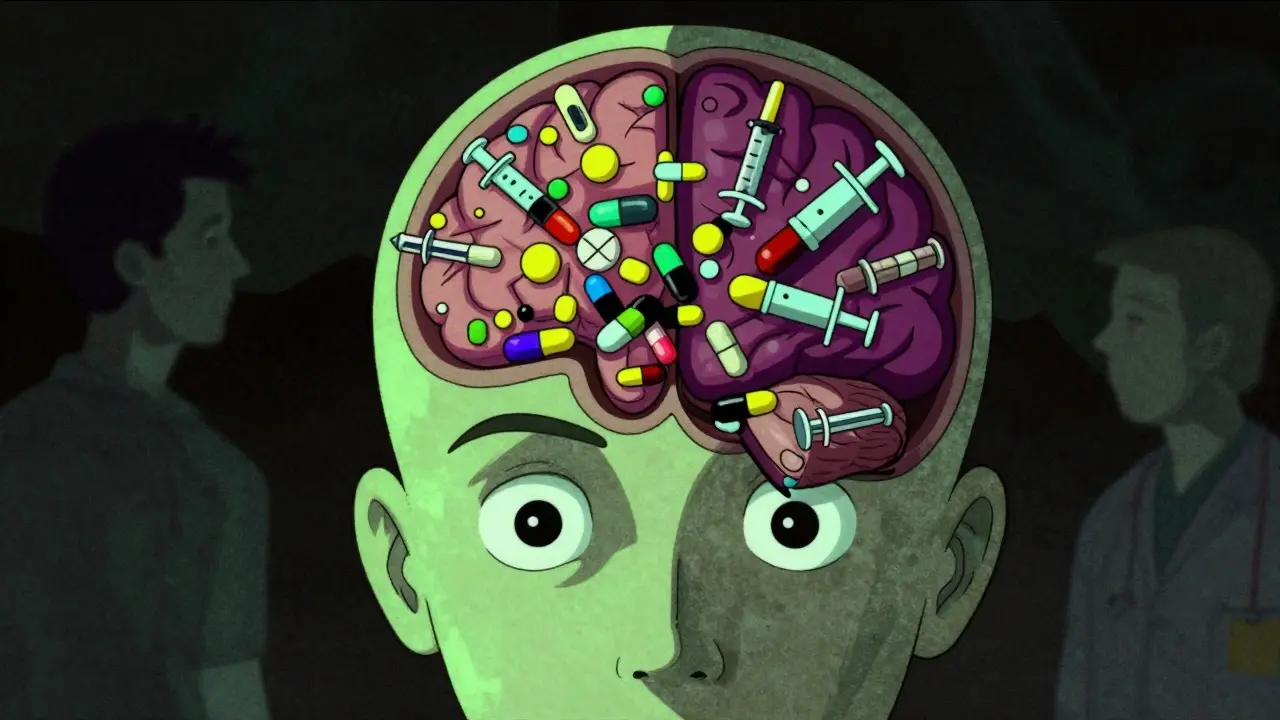
One of the biggest drivers of medication side effects is simply taking too many drugs at once. This phenomenon, known as polypharmacy, occurs when a patient uses multiple medications simultaneously. It’s not just about having several chronic conditions; it’s about the complex web of interactions those drugs create in your bloodstream.
Data from the British Heart Foundation’s 2023 analysis paints a stark picture. Patients taking between five and nine medications are almost twice as likely (a 100% increased risk) to experience an adverse reaction compared to those on fewer than five. If you’re on ten or more medications, that risk skyrockets by over 300%. The American Hospital Association’s Patient Safety Network confirms this, noting that each additional medication increases your ADR risk by approximately 7-10%.
This isn’t just theoretical. In the US alone, high-risk combinations like warfarin (a blood thinner) and NSAIDs (common anti-inflammatories for arthritis) cause roughly 34,000 emergency department visits annually. These aren’t minor inconveniences; they are life-threatening events rooted in historical prescribing patterns that weren’t properly managed.
- 5-9 medications: 100% increased risk of adverse reactions.
- 10+ medications: Over 300% increased risk.
- Each additional drug: Adds 7-10% to your overall risk profile.
Genetics: The Hidden Blueprint of Drug Metabolism
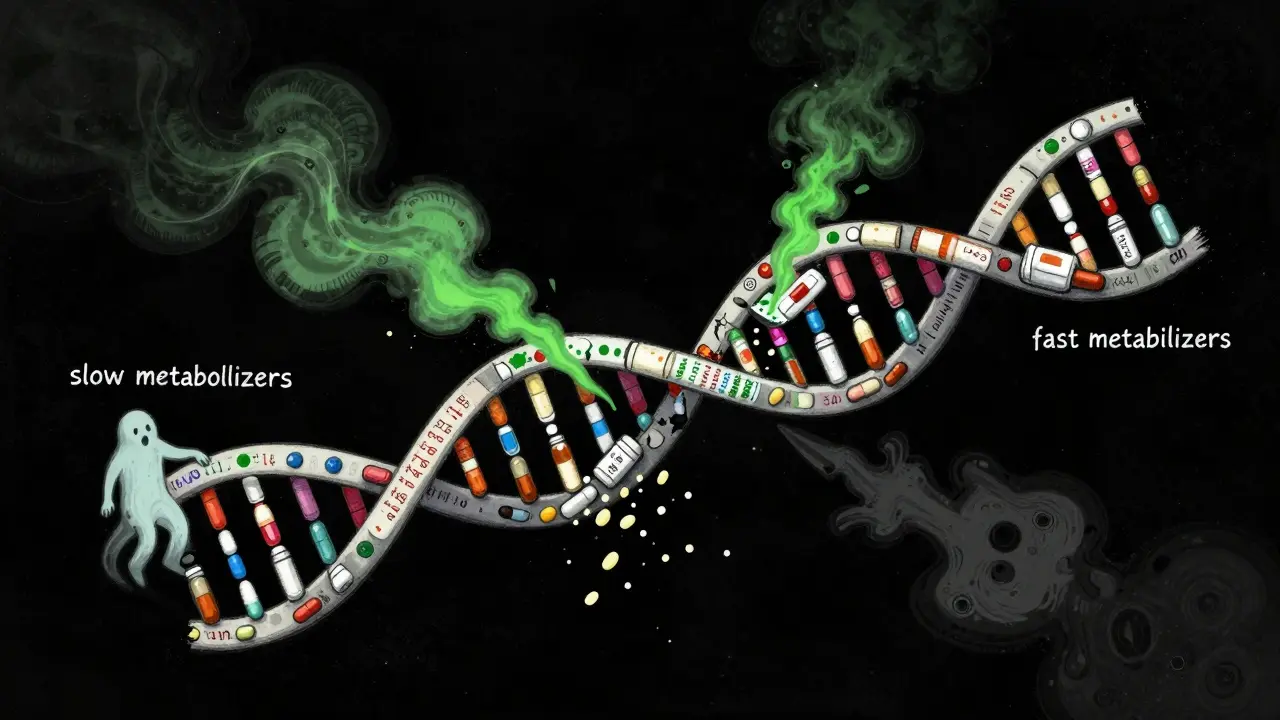
Your DNA plays a massive role in how quickly or slowly your liver breaks down medications. This field, called pharmacogenomics, studies how genetic variations affect drug response. Specifically, variations in the CYP450 enzyme family-which handles the metabolism of most drugs-can change medication levels in your body by 30% to 500%.
If you have a "slow metabolizer" genotype, a standard dose of a drug might build up to toxic levels because your liver can’t process it fast enough. Conversely, "fast metabolizers" might break down the drug so quickly that it never works, leading them to increase the dose unnecessarily, which then causes side effects later. The Merck Manual highlights these hereditary factors as critical components of medical history that elevate ADR risk.
New tools are emerging to help here. The FDA cleared platforms like YouScript in 2023, which analyze 27 gene-drug interactions. For patients with relevant genetic variants, this approach has been shown to reduce ADRs by 34%. However, adoption is still low, with only 5.7% of US healthcare systems using these tests routinely. Until this becomes standard, knowing if you had unexpected reactions to past drugs is your best clue.
Age and Physiology: How Your Body Changes Over Time
Aging changes how your body absorbs, distributes, and eliminates drugs. According to the American Geriatrics Society, patients over 65 experience 3 to 5 times more adverse drug reactions than younger adults. This isn’t just about being older; it’s about physiological shifts documented in your medical history.
Two major organs are key here: the kidneys and the liver. Chronic kidney disease (CKD), which affects 15% of US adults over 60, reduces renal clearance by 50-75%. The American Medical Association notes that dosage adjustments are required for 40% of commonly prescribed medications in CKD patients. Yet, a 2021 JAMA Internal Medicine audit found that these necessary adjustments were overlooked in 45% of prescribing decisions.
Hepatic impairment also matters. Liver issues require modifications for 25% of drugs. When electronic health records fail to flag these historical risk factors during e-prescribing-as happens in 65% of cases according to a 2022 Johns Hopkins study-the result is often an overdose relative to the patient’s current ability to process the drug.

Gender Disparities: Why Women Face Higher Risks
Your sex is a significant part of your medical history when it comes to drug safety. Older women experience adverse drug reactions at least 50% more frequently than men. This disparity stems partly from historical underrepresentation in clinical trials. Between 2010 and 2020, women comprised only 22% of participants in cardiovascular drug trials, according to FDA data.
Because dosing protocols were largely developed based on male physiology, they often don’t account for sex-specific pharmacokinetics. Women generally have different body fat percentages, water content, and hormone levels, all of which alter how drugs are distributed and eliminated. If your medical history includes being female, especially post-menopause, your provider should be extra vigilant about starting doses and monitoring for side effects.
Past Allergies and Cross-Reactivity
If you’ve had a bad reaction to a drug in the past, you’re not done worrying about it. A 2009 study in BMC Family Practice showed that patients with a history of adverse reactions to one drug class have a 30-40% higher likelihood of cross-reactivity with pharmacologically similar medications.
A classic example is penicillin allergy. Patients with this history face an 8-fold higher risk of reacting to cephalosporins, a related class of antibiotics. While not all penicillin-allergic patients will react to cephalosporins, the historical link is strong enough that doctors must weigh the risk carefully. Ignoring this part of your history can lead to severe allergic reactions, ranging from rashes to anaphylaxis.
Cognitive Decline and Medication Errors
Impaired cognition is a historical neurological factor that drastically increases the risk of preventable medication errors. A JAMA Internal Medicine study found that impaired cognition carried an extraordinary 13.0 odds ratio for such errors. This doesn’t just mean forgetting to take a pill; it means taking the wrong dose, mixing up medications, or failing to recognize early signs of side effects.
For patients with dementia or mild cognitive impairment, the medical history must include assessments of their ability to manage complex regimens. Simplifying schedules, using blister packs, or involving caregivers are essential strategies. Without these adjustments, the risk of harm escalates rapidly.
Cost and Adherence: The Danger of Intermittent Use
Your financial history matters too. Cost-related nonadherence affects 25% of patients. When people skip doses because they can’t afford medication, they create a dangerous pattern. A 2022 Annals of Internal Medicine study of 12,450 Medicare beneficiaries found that intermittent use leads to 37% higher rates of treatment failure and a 28% increased risk of adverse drug reactions when patients restart medications without proper dose titration.
Restarting a drug after a break can shock your system. Your body may have lost its tolerance, or the underlying condition may have worsened, making the original dose inappropriate. Always tell your doctor if you’ve skipped doses due to cost; there are often generic alternatives or assistance programs that can keep you safe and adherent.
| History Factor | Risk Increase / Impact | Key Statistic |
|---|---|---|
| Polypharmacy (10+ drugs) | Over 300% increased ADR risk | British Heart Foundation 2023 |
| Age 65+ | 3-5x more ADRs than younger adults | American Geriatrics Society 2022 |
| Chronic Kidney Disease | Dose adjustment needed for 40% of drugs | AMA Steps Forward 2023 |
| Female Sex (Older) | 50% higher ADR frequency than men | British Heart Foundation |
| Impaired Cognition | 13.0 odds ratio for medication errors | JAMA Internal Medicine |
| Penicillin Allergy History | 8x higher risk of cephalosporin reaction | BMC Family Practice 2009 |
How to Protect Yourself: Actionable Steps
You can’t change your genetics or your age, but you can control how your medical history is communicated. Here’s how to lower your risk of side effects:
- Maintain a Master Medication List: Include every prescription, over-the-counter drug, supplement, and herb. Update it immediately when changes occur. Bring this list to every appointment.
- Demand a Medication Review: Ask for a structured medication review with deprescribing consideration. Cochrane Reviews show this reduces ADRs by 22% in patients with polypharmacy. Only 18% of eligible patients currently receive these reviews, so you may need to ask specifically.
- Ask About Pharmacogenomic Testing: If you’ve had unexplained side effects in the past, ask your doctor if genetic testing could help tailor future prescriptions.
- Report Past Reactions Clearly: Don’t just say “I’m allergic.” Describe what happened. Did you get a rash? Vomiting? Difficulty breathing? Specific details help doctors distinguish true allergies from intolerances.
- Monitor for Symptoms: Be aware that medications can mimic disease symptoms. Beta-blockers can mask tachycardia in hemorrhage, and corticosteroids can suppress pain in perforated ulcers. If you feel “off,” mention it, even if it seems unrelated.
What is the single biggest risk factor for medication side effects?
Polypharmacy, or taking multiple medications simultaneously, is the strongest risk factor. Each additional medication increases the risk of an adverse drug event by 7-10%, and taking ten or more drugs increases the risk by over 300%.
How does my age affect my risk of drug interactions?
Patients over 65 are 3 to 5 times more likely to experience adverse drug reactions than younger adults. This is due to age-related declines in kidney and liver function, which slow down the body's ability to clear medications from the system.
Why are women at higher risk for medication side effects?
Women, particularly older women, experience adverse drug reactions 50% more frequently than men. This is partly due to historical underrepresentation in clinical trials, leading to dosing protocols that may not account for sex-specific differences in body composition and drug metabolism.
Can my genetics determine how I react to medication?
Yes. Genetic variations in enzymes like CYP450 can alter medication levels in your body by 30-500%. Pharmacogenomic testing can identify these variations, helping doctors choose drugs and doses that are safer and more effective for your specific biology.
What should I do if I can't afford my medication?
Never skip doses silently. Intermittent use increases the risk of treatment failure by 37% and adverse reactions by 28% when restarting. Talk to your doctor about generic alternatives, patient assistance programs, or adjusting the regimen to ensure continuous, safe therapy.
How can I reduce my risk of adverse drug reactions?
The most effective strategy is a structured medication review with potential deprescribing, which reduces ADRs by 22%. Additionally, maintain an accurate master medication list, report all past reactions in detail, and ask your provider about genetic testing if you have a history of unexplained side effects.
