 Jul, 26 2026
Why Safety Checks Don't End at Approval
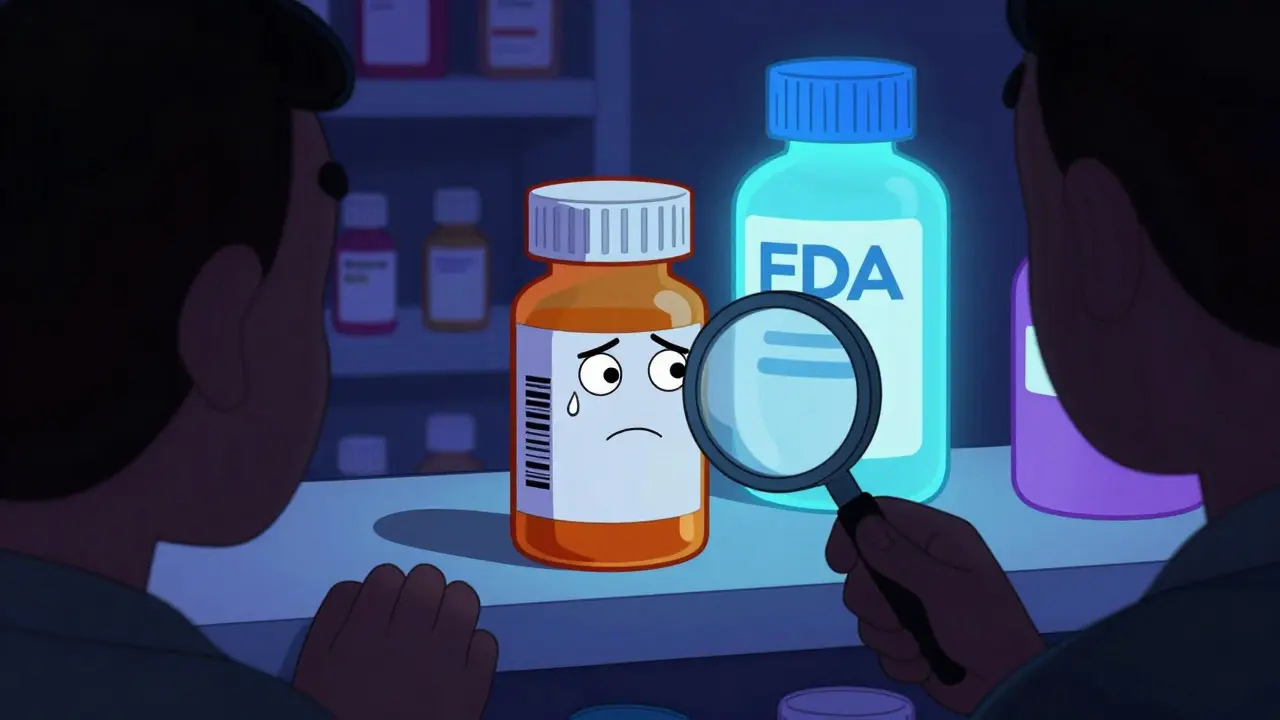
You might assume that once a generic drug gets the green light from the U.S. Food and Drug Administration (FDA), it is completely safe. The reality is more complex. Clinical trials before approval usually involve only a few hundred to a few thousand patients. That group is too small to catch rare side effects or long-term risks that might show up when millions of people start taking the medication.
This is where post-market surveillance comes in. It is the ongoing process the FDA uses to watch over drugs after they hit the pharmacy shelves. For generics, which make up about 90% of all prescriptions filled in the United States today, this monitoring is critical. Because generics are approved based on their similarity to an existing brand-name drug rather than fresh clinical trials, the FDA relies heavily on real-world data to ensure they perform as expected.
The Foundation: How Generics Get Approved
To understand how the FDA monitors generics, you first need to know how they get approved in the first place. Under the Hatch-Waxman Act of 1984, manufacturers do not need to repeat expensive and time-consuming clinical trials for every new generic version of a drug. Instead, they must prove bioequivalence.
Bioequivalence means the generic drug delivers the same amount of active ingredient into your bloodstream at the same rate as the original brand-name product, known as the Reference Listed Drug (RLD). If the bioequivalence check passes, the FDA assumes the generic will have the same safety and efficacy profile as the brand name. However, assumptions can be wrong, especially with "complex generics" like inhalers, topical creams, or modified-release pills, where formulation differences can subtly affect how the drug works in the body.
Three Pillars of FDA Monitoring
The FDA does not rely on a single method to track drug safety. Instead, it uses a layered approach involving three main systems: spontaneous reporting, electronic health data analysis, and physical inspections.
| System Name | Data Source | Primary Function | Limitations |
|---|---|---|---|
| FAERS | Voluntary reports from doctors, patients, and pharmacists | Detects unexpected adverse events and signals | Relies on voluntary submission; may miss mild issues |
| Sentinel Initiative | Electronic health records (EHRs) and insurance claims | Proactive analysis of large populations for safety trends | Dependent on quality of electronic record-keeping |
| MedWatch | Public-facing portal for consumer and professional reports | Captures medication errors, quality problems, and side effects | Can be influenced by patient perception or nocebo effects |
1. FAERS: The Adverse Event Database
The FDA Adverse Event Reporting System (FAERS) is the backbone of passive surveillance. It is a computerized database where healthcare providers, patients, and consumers submit reports of negative reactions to drugs. The FDA’s Center for Drug Evaluation and Research (CDER) employs epidemiologists and safety evaluators to scan this data for "signals"-patterns that suggest a potential link between a drug and a harmful event. While FAERS is vast, it has a major flaw: it only captures what people choose to report. Mild side effects often go unreported, meaning the system might miss subtle but widespread issues.
2. The Sentinel Initiative: Real-Time Data Mining
To overcome the limitations of voluntary reporting, the FDA launched the Sentinel Initiative. Unlike FAERS, Sentinel is proactive. It connects to massive databases of electronic health records and insurance claims from hundreds of millions of Americans. This allows the FDA to run queries without waiting for reports to come in. For example, if there is a concern that a specific generic blood pressure medication causes kidney issues, researchers can instantly analyze the medical histories of everyone who took that drug compared to those who didn’t. In 2023, the FDA expanded Sentinel to cover over 200 million people, making it one of the most powerful safety nets in the world.
3. MedWatch and Patient Voices
MedWatch is the public interface for reporting safety concerns. It captures not just side effects, but also medication errors (like confusing two similar-looking generic bottles) and product quality issues (such as a pill crumbling apart). A unique challenge here is the "nocebo effect." Studies have shown that some patients expect generics to work worse than brand names. When they experience normal side effects, they attribute them to the generic being "inferior," even if the drug is chemically identical. The FDA has to carefully filter these perception-based reports from genuine safety signals.

The Challenge of Complex Generics
Not all generic drugs are created equal. Simple tablets that dissolve quickly in water are easy to monitor because bioequivalence tests are highly reliable. But complex generics pose a bigger problem. These include:
- Inhalers for asthma and COPD
- Topical creams and gels
- Patches that deliver drugs through the skin
- Modified-release capsules that dissolve slowly over hours
For these products, small differences in inactive ingredients (fillers, binders, coatings) can change how the drug is absorbed. The National Academies of Sciences, Engineering, and Medicine noted in a 2021 report that standard bioequivalence studies might not fully predict therapeutic equivalence for these complex forms. As a result, the FDA has intensified its focus on them, creating specialized surveillance protocols to detect if a specific manufacturer's version performs differently than others.
From Signal to Action: What Happens Next?
When the FDA detects a potential safety issue, it doesn't just file the data away. The Office of Generic Drugs (OGD) investigates the signal. Depending on the severity, several actions can follow:
- Labeling Updates: The FDA may require the manufacturer to add new warnings or contraindications to the drug's package insert.
- Dear Healthcare Provider Letters: These are direct communications sent to doctors and pharmacists alerting them to new risks.
- Product Recalls: If a manufacturing defect or serious safety risk is confirmed, the FDA can order a voluntary recall of the specific batch or product line.
- Manufacturing Inspections: FDA investigators conduct unannounced visits to factories to check for compliance with Good Manufacturing Practices (GMP).
The Future: AI and Machine Learning
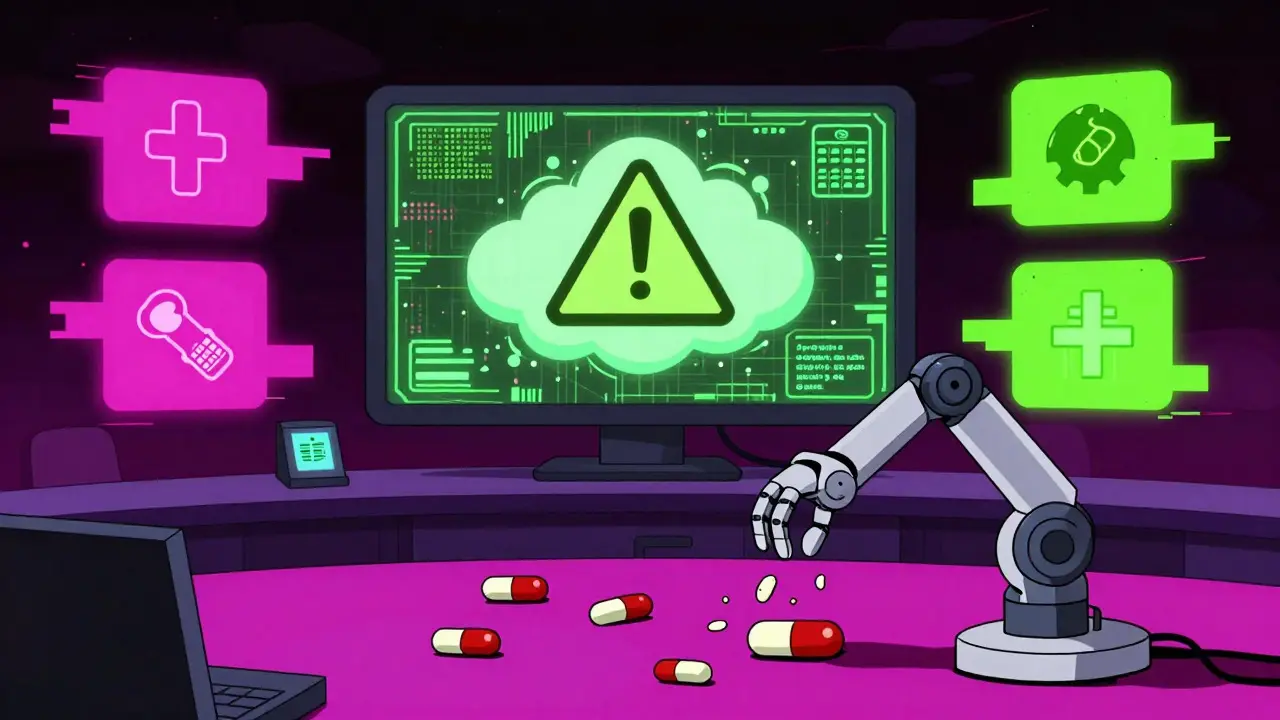
The volume of data coming from FAERS and Sentinel is overwhelming for human analysts alone. To keep up, the FDA is investing heavily in Artificial Intelligence (AI) and Machine Learning (ML). In fiscal year 2023, the agency allocated $5.2 million specifically for AI-driven postmarket surveillance research.
The goal is to build automated systems that can sift through millions of records to find hidden patterns much faster than current methods. Industry analysts predict that by 2027, AI-enhanced tools could reduce the time it takes to detect safety signals for complex generics by 60-70%. Imagine catching a dangerous interaction in weeks instead of months. This shift represents a move from reactive monitoring to predictive safety management.
How You Can Help Monitor Drug Safety
The FDA’s surveillance system depends on you. If you take a generic medication and notice something unusual, your voice matters. Here is how to contribute effectively:
- Keep a Log: Write down when you started the medication, the dose, and any symptoms you experience.
- Report via MedWatch: Use the FDA’s online portal to submit a report. You don’t need to be a doctor to do this.
- Talk to Your Pharmacist: Pharmacists are trained to spot patterns and can help determine if a reaction is likely drug-related.
- Don’t Assume It’s Just You: Even if your symptom seems minor, it might be part of a larger trend that hasn’t been detected yet.
Post-market surveillance is a shared responsibility. By understanding how the FDA monitors generics, you become a more informed participant in your own healthcare. The system isn't perfect, but with tools like Sentinel and emerging AI technologies, it is becoming smarter, faster, and more responsive to the needs of patients.
Does the FDA test generic drugs as rigorously as brand-name drugs?
No, not in the same way. Brand-name drugs undergo extensive clinical trials to prove safety and efficacy. Generic drugs only need to demonstrate bioequivalence, meaning they deliver the same active ingredient into the body at the same rate as the brand-name version. However, the FDA conducts rigorous post-market surveillance to ensure generics remain safe once they are widely used.
What is the difference between FAERS and Sentinel?
FAERS is a passive system that relies on voluntary reports from doctors and patients about adverse events. Sentinel is an active system that analyzes existing electronic health records and insurance claims data to proactively identify safety trends across large populations without waiting for individual reports.
Why are complex generics harder to monitor?
Complex generics, such as inhalers, patches, and modified-release pills, have formulations that affect how the drug is absorbed. Small differences in inactive ingredients or manufacturing processes can impact performance in ways that standard bioequivalence tests might not fully capture, requiring more specialized surveillance methods.
Can I report a side effect from a generic drug directly to the FDA?
Yes. You can use the MedWatch program to submit a safety report online. You can report unexpected side effects, medication errors, or product quality issues. Your report helps the FDA detect potential safety signals that might not appear in clinical trials.
What happens if the FDA finds a safety issue with a generic drug?
The FDA may take several actions, including updating the drug's labeling with new warnings, issuing Dear Healthcare Provider letters, ordering product recalls, or conducting inspections of the manufacturing facility. In severe cases, the drug may be withdrawn from the market entirely.

Angie Lara
July 27, 2026 AT 19:12hey there, just wanted to add a little bit of context from my experience working in pharmacy for a few years.
the part about bioequivalence is super important but often misunderstood by the general public. people think generic means 'cheap knockoff' but it really just means chemically identical active ingredients.
i've seen so many patients switch back to brand name because they felt different, even though the drug was the same. it's usually the inactive ingredients like dyes or fillers that cause issues for sensitive stomachs.
also, the sentinel initiative sounds amazing on paper but in practice, data quality varies wildly between hospitals. some places have terrible ehr systems. so while the fda has access to millions of records, not all of them are clean or useful for deep analysis.
hope this helps clarify things! let me know if you want more details on specific drugs.
Ed Ostrego
July 28, 2026 AT 14:27This is such an eye-opening read! I never realized how much work goes into keeping us safe after we leave the doctor's office.
It’s empowering to know that our voices matter through MedWatch. We shouldn't just be passive recipients of medication; we are part of the safety net too!
Let's keep each other informed and look out for any weird side effects. Together we can help make healthcare safer for everyone. You got this!
Ambarish Pal
July 29, 2026 AT 06:07Absolutely ridiculous that we still rely on voluntary reporting in this day and age! It is pathetic that the FDA expects doctors, who are overworked and underpaid, to take time out of their busy schedules to report every minor side effect.
The whole system is broken. They approve these generics based on flimsy bioequivalence studies that don't account for real-world variables like diet, lifestyle, or genetic differences. And then they act surprised when things go wrong.
Complex generics? Please. Most of these manufacturers cut corners everywhere else. The fact that they are expanding Sentinel to 200 million people is a band-aid on a bullet hole. They need mandatory real-time monitoring, not some AI dream that might not work for another decade. It is a disaster waiting to happen.
Andrew Donovan
July 30, 2026 AT 12:33Fascinating insight into the bureaucratic machinery behind our pill bottles. One must ponder the philosophical implications of 'bioequivalence.' Is a thing truly itself if only its active essence remains, while the vessel changes?
In the realm of complex generics, particularly inhalers, the delivery mechanism is as crucial as the payload. A slight variance in particle size can mean the difference between relief and suffocation. The FDA’s reliance on statistical averages ignores the individual human experience, which is inherently messy and non-linear.
The integration of AI is promising, yet one wonders if algorithms can truly grasp the nuance of human suffering. Perhaps the future lies not in colder machines, but in warmer, more attentive human observation. Still, progress is progress, no matter how imperfect.
Patrick Meyer
July 31, 2026 AT 16:03look, most people here dont understand the nuances of pharmacokinetics. the article oversimplifies the hatch-waxman act. it is not just about saving money, it is about regulatory efficiency.
but let's be honest, the faers database is a mess of noise. half the reports are from people who blame the drug for everything from bad hair days to existential dread. the nocebo effect mentioned is huge, especially with generics. people are programmed to believe cheap equals bad.
the ai investment is fine, but until they fix the data entry standards at the hospital level, it is all garbage in, garbage out. typical government waste of funds.
Prashant Shishodia
July 31, 2026 AT 21:35Simple point: trust the process but stay alert. If you feel sick, say something. Do not wait. The system works better when we help it. Keep your logs. Talk to your pharmacist. It is easy to do. Stay healthy.
Autumn LW
July 31, 2026 AT 23:47Oh, please. Another article trying to reassure the masses that the giant corporation-state machine is looking out for you. How quaint.
The reality is that post-market surveillance is a joke. By the time a signal is detected in FAERS, thousands may have already been harmed. The lag time is unacceptable. And don't get me started on 'complex generics.' The FDA allows manufacturers to swap excipients without full clinical trials, leading to subtle but significant therapeutic failures.
Patients are guinea pigs. Always have been. Until we demand stricter pre-market requirements for generics, especially those with narrow therapeutic indices, we are just hoping for the best. It is negligent at best, criminal at worst.
Scott Colter
August 2, 2026 AT 17:40I find myself contemplating the nature of safety in a probabilistic universe. The FDA tries to impose order on chaos, using data as its compass. But is true safety possible, or is it merely the absence of known danger?
The shift towards AI feels like humanity outsourcing its moral responsibility to silicon. Can a machine care about our well-being? Probably not. But it can see patterns we miss. Perhaps that is enough. We must walk the line between trusting the algorithm and trusting our own intuition. It is a delicate dance, friends.
Paul Lyons
August 3, 2026 AT 16:47Typical American bureaucracy. Spending millions on AI while the basic infrastructure crumbles. Meanwhile, countries with single-payer systems monitor their drugs far more effectively because they have centralized data.
We are lucky to have this patchwork system at all. But let's not pretend it is perfect. The pharmaceutical lobby has too much power. They push generics to cut costs, and the FDA rubber-stamps it. When something goes wrong, they hide behind 'voluntary reporting.' Shameful. We need stronger regulations and less corporate influence. That is the only way to protect real Americans.
Deva Vidya
August 4, 2026 AT 05:24This is a very helpful breakdown! I appreciate the clear explanation of FAERS vs Sentinel. It makes sense why both are needed.
I have personally experienced the nocebo effect with a generic antidepressant. I knew it was generic, so I expected worse results, and sure enough, I felt anxious. Once I switched to a different manufacturer's generic, it was fine. So mindset matters!
Let's keep sharing our stories. It helps others feel less alone. Great article overall.
ANINDA GHOSH
August 6, 2026 AT 02:09In the rich tapestry of Indian medicine, we have long understood that herbs and formulations vary by source. This modern dilemma mirrors ancient wisdom. The body is a temple, and what we introduce into it must be pure.
The FDA's efforts are commendable, yet the soul of healing lies in the practitioner-patient relationship. Technology aids, but it does not replace the intuitive understanding of a skilled healer. Let us embrace the new tools while honoring the old ways. Namaste. :)
MiMi Stanley
August 6, 2026 AT 10:20I quietly observed the discussion above and noticed a lot of passion. I tend to keep to myself, but this topic resonates.
The idea that we are all part of the surveillance network is comforting yet slightly eerie. It puts the responsibility on us, the end-users. I suppose that is fair. If we notice something off, we should speak up.
I will start keeping a log next time I switch medications. Better safe than sorry, right?