 Mar, 21 2026
When your doctor or pharmacist gives you advice about your medications, it’s not just a quick chat. It’s a critical piece of your health story - one that could save your life later. Whether it’s a new prescription, a change in dosage, or a warning about side effects, medication documentation is the only way to make sure that advice doesn’t get lost. And it’s not just for you. Every nurse, pharmacist, or specialist who touches your care down the line needs to know exactly what was said, what was prescribed, and what you were told to do.
Why This Matters More Than You Think
Every year in the U.S., about 7,000 people die because of medication errors. Many of these aren’t caused by bad drugs or faulty prescriptions. They happen because someone didn’t know what was said during a previous visit. Maybe the nurse didn’t see the note. Maybe the pharmacist didn’t know you were told to take the pill with food. Maybe you forgot the exact instructions and guessed wrong. The truth is, memory fails. Stress clouds judgment. Life gets busy. But your medical record doesn’t. A well-documented note becomes your safety net. It’s what a new doctor reads when you show up at the ER with a reaction. It’s what a pharmacist checks before filling a refill. It’s what a court sees if something goes wrong.What Exactly Needs to Be Written Down
Not every detail matters. But certain things absolutely do. Here’s what you need to make sure gets recorded - whether you’re the provider or the patient:- Medication name - Brand and generic, if applicable. Don’t write “the blue pill.” Write “metformin 500 mg.”
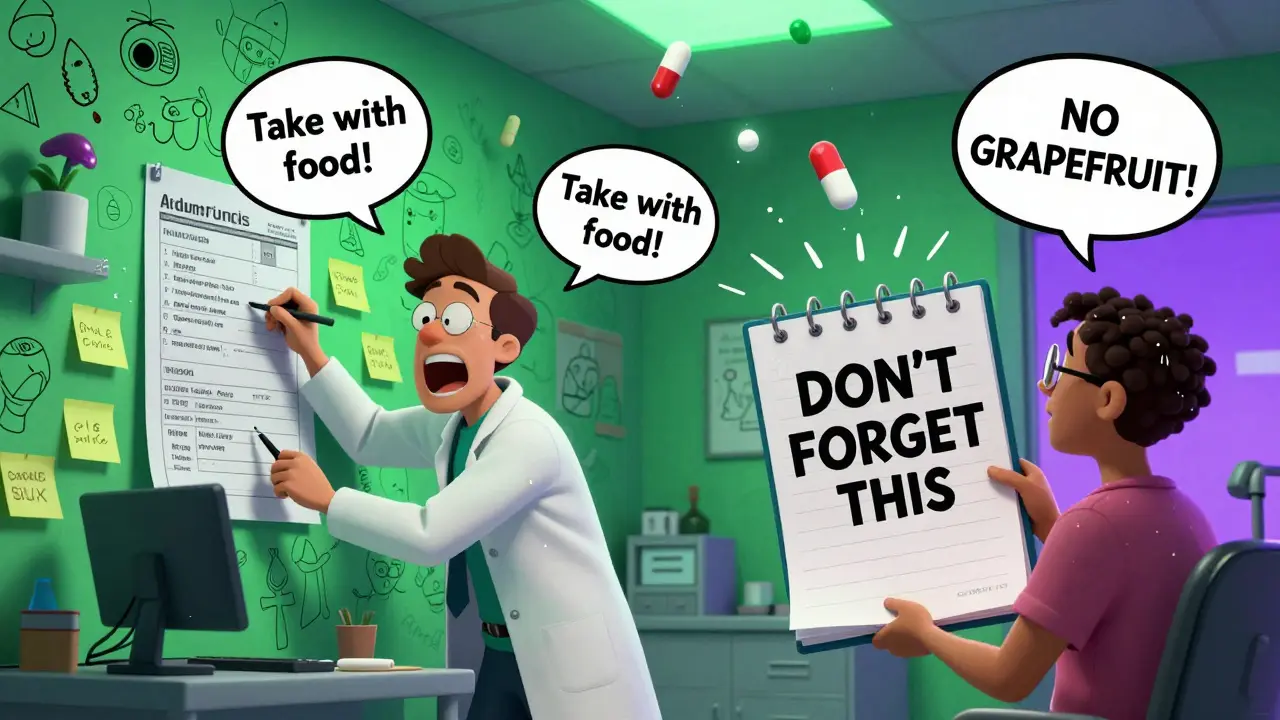
- Dose and frequency - “Take one tablet by mouth twice daily with food.” Not “take it twice a day.”
- Duration and refills - “30-day supply, two refills.” If there are no refills, say so.
- Reason for use - “For type 2 diabetes.” Not just “for high blood sugar.”
- Special instructions - “Avoid alcohol.” “Take on empty stomach.” “May cause dizziness - do not drive.”
- Allergies and reactions - “Penicillin: rash, swelling.” Not just “allergic to penicillin.”
- Patient education given - “Explained risk of liver damage with acetaminophen. Patient acknowledged understanding.”
- Refusals or noncompliance - “Patient declined blood work. Discussed risks. Patient signed refusal form.”
How to Document It Right
It’s not enough to write it down. It has to be written the right way. Here’s how:- Date and time every entry - Every note must say when it was made. A note without a date is useless.
- Sign or initial every note - Your initials or electronic ID must be attached. No anonymous notes.
- Use clear, objective language - Avoid opinions like “Patient seemed confused.” Say instead: “Patient asked three questions about timing of dose.”
- Document conversations, not just orders - If you called the patient to explain a change, write: “Called patient on March 15, 2026, to clarify dosing schedule. Patient confirmed understanding.”
- Don’t rely on macros - Pre-filled templates are fine if they’re customized. But if you copy-paste the same note for 10 patients without changing the details? That’s not documentation. That’s a liability.
- Document telehealth advice too - Phone calls, video visits, even texts about meds? All need to be recorded. The ADA now requires it.
What Happens If You Don’t Document
It’s easy to think, “I’ll remember.” Or, “They’ll know.” But they won’t. And if something goes wrong, you’ll be the one explaining why it wasn’t written down. - 38% of medical malpractice claims involve medication errors - and most are tied to poor documentation.- 22% of preventable drug reactions in outpatient settings happen because the record didn’t reflect what was told to the patient.
- Medicare and Medicaid will deny payment if the record doesn’t clearly show what was done and why. In dental offices, clinics, hospitals, and private practices, auditors check records. If they find missing medication details, the provider gets flagged. If a patient sues, and there’s no note saying you warned them about the interaction with grapefruit juice? The court assumes you didn’t warn them.
Electronic Records Are the New Normal
By 2025, 95% of medication documentation will happen through electronic health records (EHRs). That’s not a prediction - it’s already happening. In 2022, 89% of U.S. doctors used certified EHR systems. And it’s not just about convenience. EHRs help prevent errors. They flag drug interactions. They show you what a patient took last week. They send alerts when refills are due. But they only work if you use them right. - Don’t just click “add medication” and leave it at that. Fill in every field. - Use the patient portal. If you told the patient to take their pill at night, write it in the portal note. That way, they can see it too. - If your system lets you attach patient education handouts, do it. A printed sheet you handed them? Scan it. Upload it. The FDA is pushing for a new standard too: a one-page, easy-to-read Patient Medication Information sheet for every new prescription. It’s not law yet, but it’s coming. And when it is, every provider will need to give it out - and document that they did.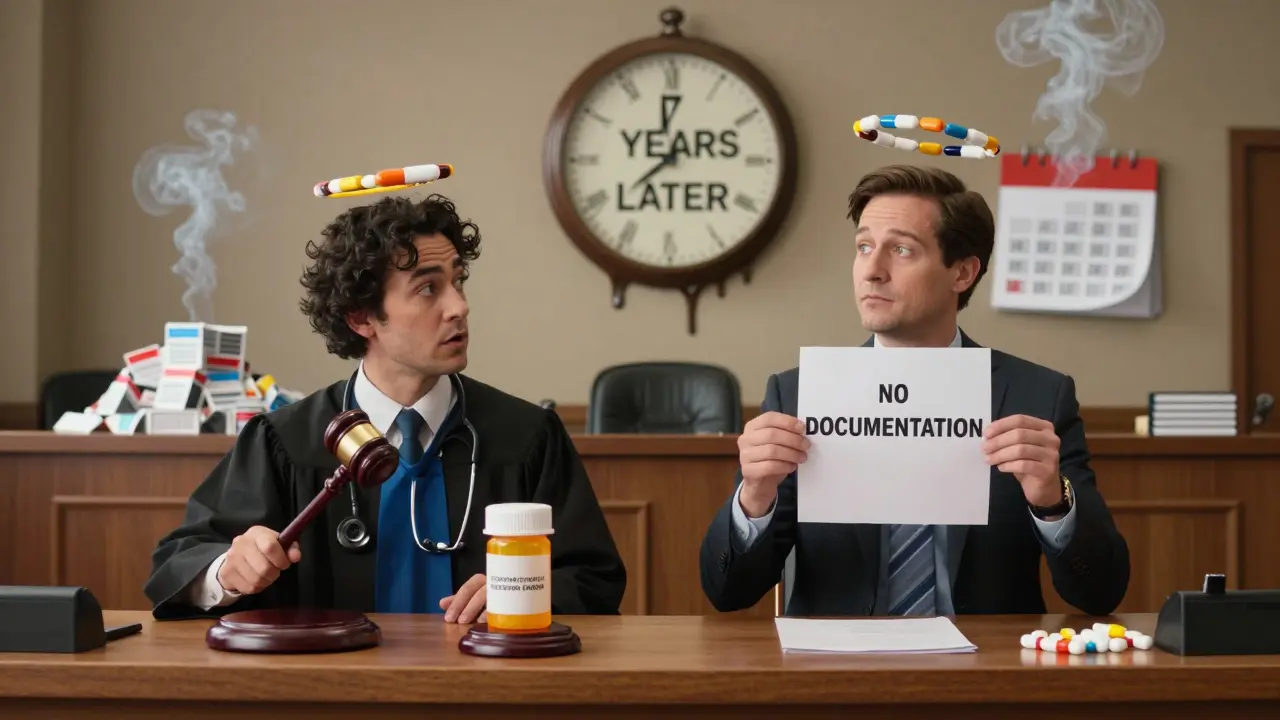
What Patients Can Do
You don’t have to wait for your provider to document everything. You can help:- Ask: “Can you write that down so I don’t forget?”
- Ask: “Can I get a copy of the note?”
- Check your patient portal. If the medication details are wrong, say so.
- Keep your own list: medication name, dose, reason, and what you were told. Update it every time something changes.
What to Do If Something Wasn’t Documented
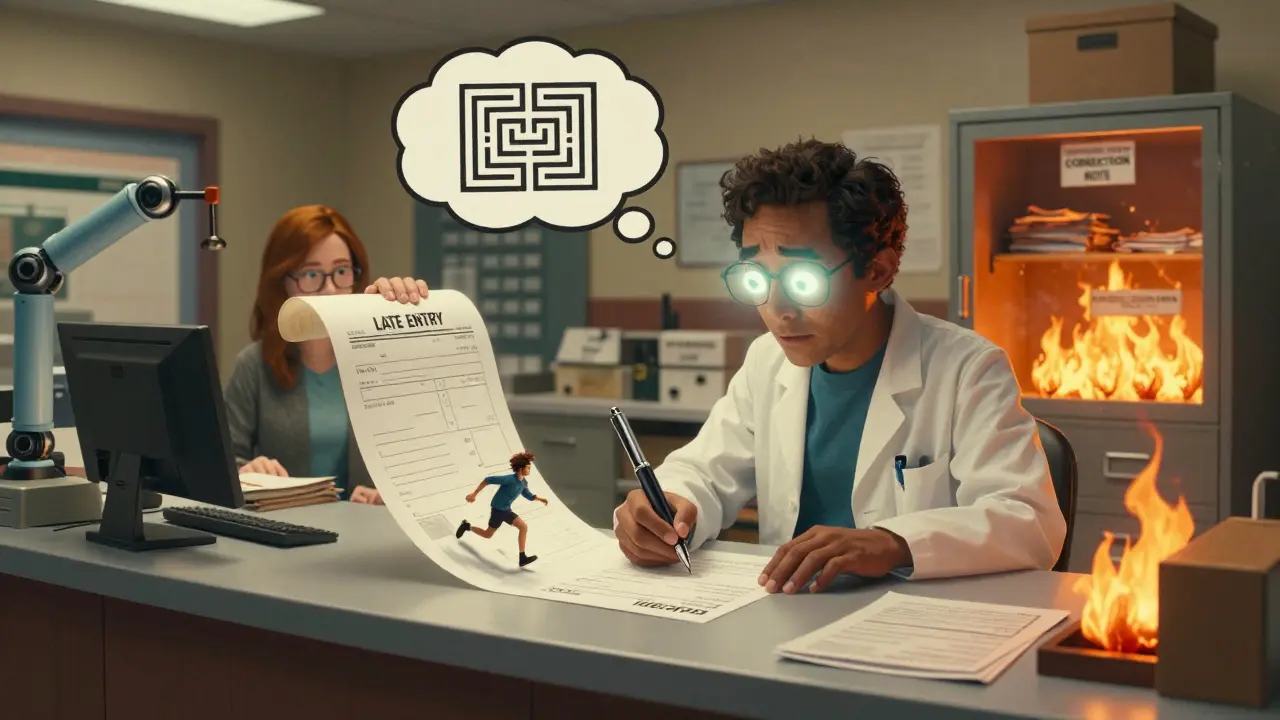
If you realize a conversation wasn’t recorded - even if it happened yesterday - act fast. - Add a late entry: “Added on March 21, 2026: Patient advised to avoid NSAIDs while on warfarin. Patient acknowledged.” - Never backdate. Date it when you add it. - Never erase or overwrite. Add a correction note. - If you’re a patient and you think something was missed, call the office. Say: “I need to confirm what was discussed about my blood pressure med. Can you add that to my record?”Final Thought: Your Record Is Your Shield
Documentation isn’t busywork. It’s protection. For the patient. For the provider. For everyone involved. A well-documented note means fewer mistakes. Fewer trips to the ER. Fewer lawsuits. Fewer deaths. So next time you give or receive advice about a medication - don’t just say it. Write it. And make sure it’s clear, complete, and dated. Because in healthcare, if it wasn’t written down… it never happened.What happens if I don’t document medication advice properly?
Poor documentation increases the risk of medication errors, which can lead to hospitalizations, adverse reactions, or even death. Legally, it leaves providers vulnerable - 38% of malpractice claims involve medication errors tied to incomplete records. Insurance companies may deny payment, and regulatory bodies like CMS or The Joint Commission can penalize clinics. In court, if it wasn’t written, it’s assumed you didn’t say it.
Do I need to document phone calls about medications?
Yes. Any communication about medications - whether in person, over the phone, or via video - must be documented. The American Dental Association and other health authorities now require this. Even if you called a patient to clarify a dose, write: “Called patient on [date] to confirm dosing instructions. Patient confirmed understanding.”
Can I use templates or macros to document medications?
Templates are fine - if you customize them. Copying the same note for every patient without changing details like name, dose, or reason is dangerous and violates documentation standards. A macro that says “Patient educated on medication use” without specifics is not enough. Each entry must reflect what was said to this patient.
What’s the difference between a prescription and documentation of advice?
A prescription is a legal order for a medication. Documentation of advice is the record of what you told the patient about that prescription - how to take it, what to watch for, what to avoid, and why. Both are required. You can have a perfect prescription but still be at risk if the patient wasn’t properly educated - and that education wasn’t written down.
How long should medication documentation be kept?
Most states require medical records, including medication documentation, to be kept for 7 to 10 years after the last visit. For minors, records must be kept until they turn 21 or longer, depending on state law. Some providers keep them longer, especially for chronic conditions. Always follow your state’s rules and your organization’s policy.

Allison Priole
March 23, 2026 AT 05:44man i just got off a 3-hour dr visit and they wrote down literally everything - even how i said i 'kinda forgot' to take my pill last week. i thought it was overkill, but now i get it. last month i ended up in the er because my old doc missed the grapefruit warning. this time? they printed it out, i signed it, and it’s in my portal. felt like a superhero.
Paul Cuccurullo
March 23, 2026 AT 16:15The gravity of this cannot be overstated. In healthcare, documentation isn’t administrative overhead - it’s the scaffolding of trust between patient and provider. Every timestamp, every initial, every carefully worded note is a thread in the safety net that catches us when we fall. I’ve seen lives saved because someone wrote down ‘patient declined lab work’ - not because they were stubborn, but because they were scared. That note? It became the bridge to empathy, not judgment.
When we treat documentation as a chore, we betray the very purpose of medicine: to care, not just to cure.
Casey Tenney
March 25, 2026 AT 12:44if you don’t write it down, you didn’t do your job. period.
Sandy Wells
March 26, 2026 AT 11:04you know what’s worse than bad documentation? fake documentation. i’ve seen notes that look copied from a textbook. same phrasing for 12 patients. same ‘patient understood’ line. no one’s checking. and now we’re all paying for it. lawsuits, audits, dead people. it’s not negligence. it’s negligence on autopilot.
Thomas Jensen
March 28, 2026 AT 02:39they’re hiding something. the FDA’s pushing that one-page med sheet? it’s a tracking system. they’re gonna link every pill you take to your phone, your bank, your insurance. next thing you know, your ‘allergy’ to ibuprofen gets flagged as ‘noncompliant behavior’ and your premiums go up. i got my meds from a doc who wrote everything down - and now i’m on a watchlist. don’t believe me? check your portal. how many times has it said ‘patient educated’? that’s not education. that’s data harvesting.
trudale hampton
March 28, 2026 AT 11:15i’ve been doing this for 18 years. i used to scribble notes on sticky notes. then i got an ehr. now i type it all out - even the stuff i think doesn’t matter. turns out, it matters. last week, a patient came in with a rash. the old note said ‘advised to stop turmeric supplement.’ she didn’t remember. but the note did. saved her a trip to the hospital. documentation isn’t paperwork. it’s memory. and memory? it’s the only thing that doesn’t lie.
Natali Shevchenko
March 28, 2026 AT 22:11there’s a quiet poetry in writing down what someone told you about their body. it’s not just data - it’s a fragment of their story. ‘Take with food’ isn’t a rule. it’s a plea from a person who learned the hard way that pain isn’t abstract. ‘Avoid alcohol’ isn’t a warning. it’s a prayer whispered over a glass of wine they’ll never drink again. we call it documentation. but really, we’re archiving dignity. and if we stop doing it? we stop seeing each other as human.
Nicole James
March 29, 2026 AT 12:50you think they’re documenting for safety? no. they’re documenting to cover their butts. every note is a shield. every ‘patient acknowledged’ is a lawsuit deterrent. they don’t care if you understand - they care if they can prove they tried. and the worst part? the system rewards the most verbose, least accurate notes. the ones with 17 bullet points and zero truth. i’ve seen a note that said ‘patient was educated on 12 drug interactions’ - but the patient had only one med. that’s not care. that’s performance art.
Nishan Basnet
March 30, 2026 AT 11:20as someone from a country where healthcare access is still a luxury, I’m struck by how much we take for granted here. In my hometown, if a nurse writes down your meds? that’s a miracle. No EHR. No portal. Just a paper ledger, shared across three clinics. And yet - people survive. Because someone, somewhere, took the time to write ‘take with rice, not tea’ - and passed it on. Documentation isn’t about technology. It’s about care. And care? It doesn’t need a server. It just needs a hand that remembers.
Bryan Woody
March 31, 2026 AT 11:57let me guess - you’re the type who writes ‘patient seemed confused’ in the chart? yeah. that’s why you’re getting audited. stop being a poet. start being a data entry ninja. every word matters. ‘took pill’? no. ‘took metformin 500mg at 7am with scrambled eggs’? yes. if you’re too lazy to type it right, you’re not a provider. you’re a liability with a stethoscope. and yes - i’ve seen your notes. they’re all the same. and yes - i’m not mad. i’m just disappointed.
Chris Dwyer
April 2, 2026 AT 04:04you know what’s beautiful? when a patient sends you a screenshot of their portal note saying ‘this saved my life.’ i had one last month - a guy with kidney disease who’d been told to avoid NSAIDs. he didn’t remember. but his portal did. he showed it to the ER doc. they didn’t give him ibuprofen. he went home. that’s the power of writing it down. not for the system. not for the audit. for the person who forgot. just write it. then check back. then write it again. that’s how we keep each other alive.