 Aug, 9 2026
You find an old bottle of painkillers in your bathroom cabinet. The date on the label says they expired six months ago. You have a headache right now, and getting to the pharmacy seems like too much effort. Do you take them? Before you pop that pill, you need to know what actually happens to medicine after its expiration date. More importantly, you need to know how to ask a professional for help without feeling judged.
Most people think expired medicine turns into poison overnight. That is a myth. However, it also doesn't mean the drug is still perfectly safe or effective. The reality sits somewhere in between, and pharmacists are healthcare professionals who provide expert guidance on medication safety, efficacy, and proper storage are the best people to bridge that gap. They can tell you if your specific medication is dangerous, useless, or just slightly less potent than it used to be.
Why Expiration Dates Exist (And What They Mean)
The Food and Drug Administration (FDA) requires manufacturers to test their drugs to ensure they stay stable for a certain period. This usually ranges from 12 to 60 months. But here is the catch: the FDA does not require companies to test what happens *after* that date. The expiration date is essentially a guarantee of full potency up until that day. It is not necessarily a cliff edge where the drug suddenly becomes toxic.
According to Yasmin Sepehrar, PharmD, at Sharp Rees-Stealy Medical Group, the FDA explicitly recommends against using expired medications. Yet, a 2022 Consumer Reports survey found that 76% of Americans have taken at least one expired drug. Why? Because we are confused by the labels. When you talk to your pharmacist, start by understanding that most solid tablets lose strength over time rather than turning into toxins. However, this rule has major exceptions.
Which Medications Are Dangerous When Expired?
Not all drugs are created equal. Some medications degrade in ways that make them ineffective, which can be worse than taking nothing at all. If you are considering using an expired drug, you must first identify if it falls into the high-risk category. James Reissig, PharmD, MS, BCPS, at University Hospitals, notes that certain life-saving drugs lose critical effectiveness quickly.
| Medication Type | Risk Level | Potential Consequence |
|---|---|---|
| Antibiotics | High | Sub-potent doses may fail to kill bacteria, leading to antibiotic resistance. |
| Insulin | Critical | Loss of potency can lead to uncontrolled blood sugar levels. |
| Nitroglycerin | Critical | May fail to relieve chest pain during a heart attack. |
| Epinephrine Pens | Critical | Ineffective response to severe allergic reactions (anaphylaxis). |
| Tetracycline | Toxic | Can break down into harmful compounds that damage kidneys. |
| Liquid Antibiotics | High | Liquids degrade faster; risk of bacterial growth or loss of efficacy. |
| Ibuprofen/Acetaminophen | Low | May be slightly less effective but generally safe for minor pain. |
If you have any of the "Critical" or "Toxic" items listed above, do not guess. Throw them away. For everyday pain relievers like ibuprofen, the risk is lower, but you still need to check the condition of the pills.
What to Ask Your Pharmacist
Walking into a pharmacy to ask about expired meds can feel awkward. You might worry they will lecture you. In reality, pharmacists see this every day. They want to keep you safe. Here are the specific questions you should ask to get clear, actionable advice.
- "Is this specific medication dangerous when expired, or just less effective?"
As mentioned, very few medications become toxic. Most just lose power. Knowing the difference helps you decide if you need to rush to get a new prescription or if you can wait. - "How does the formulation affect stability?"
Solid tablets last longer than liquids or injectables. Ask your pharmacist if the form of your drug (pill vs. syrup) makes it more prone to degradation. - "Did my storage conditions ruin this batch?"
This is crucial. A pill stored in a cool, dry drawer is different from one kept in a humid bathroom. Pharmacists can assess if heat or moisture likely accelerated the breakdown. - "Can I use this temporarily while waiting for a refill?"
If you are out of a non-critical medication and the refill takes three days, your pharmacist might give you permission to use a slightly expired dose as a bridge. - "Are there visual signs I should look for?"
Ask them what degradation looks like for your specific drug. Cloudiness in liquids, strange odors, or crumbled tablets are red flags.
When you discuss prescription medications, always disclose your medical history. If you have heart disease, seizures, or mental health conditions, even a small drop in potency can have serious consequences. As Yasmin Sepehrar points out, consistency is key for these conditions. An expired antipsychotic or seizure med isn't just 'less strong'; it could trigger a relapse or a seizure.
Signs Your Medicine Has Gone Bad
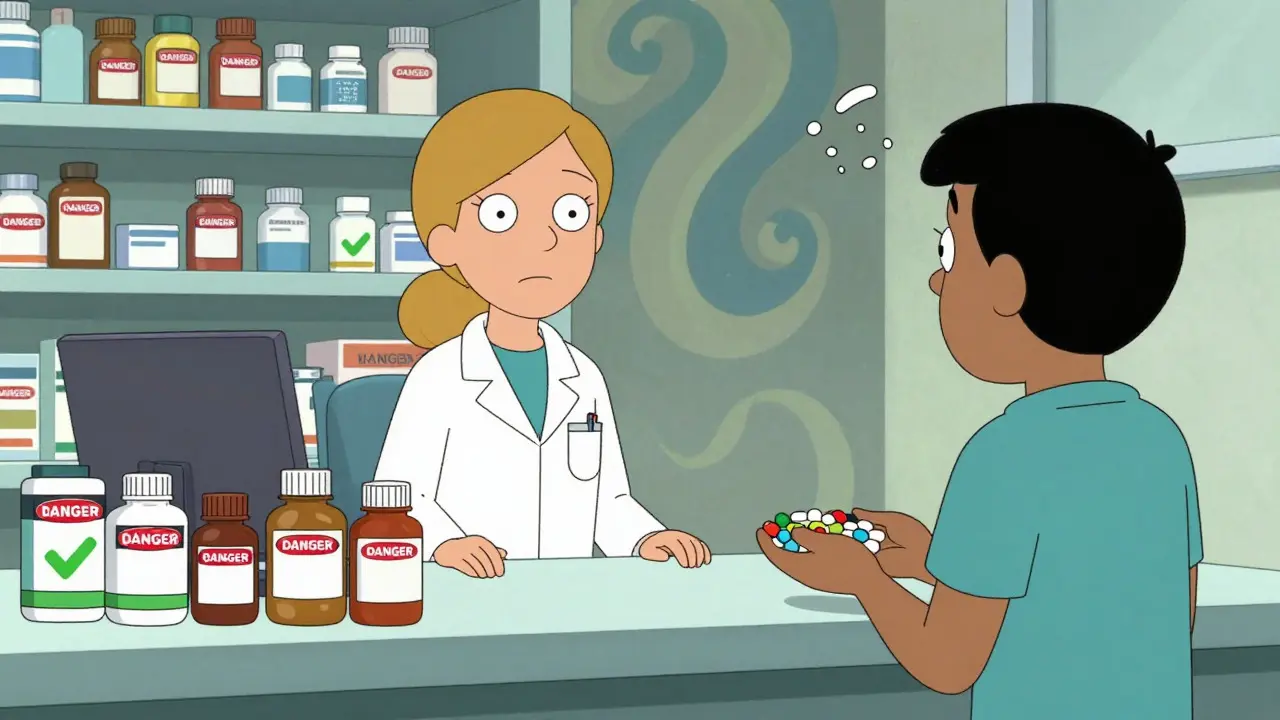
Sometimes the date isn't the only indicator. Even if a drug hasn't technically expired, poor storage can ruin it. Conversely, some drugs past their date might look fine but are chemically degraded. Trust your senses. If a liquid antibiotic looks cloudy, smells sour, or has changed color, toss it. If a tablet has cracked, discolored, or developed spots, it’s time to replace it.
For insulin, check the clarity. If it looks clumpy or stringy, it has precipitated out of solution and won’t work properly. For nitroglycerin tablets, they often turn brownish as they lose potency. These physical changes are your body’s warning system before you even consult a professional.
How to Dispose of Expired Drugs Safely
Once you’ve decided not to use the expired medication, don’t just flush it down the toilet. Flushing contaminates water systems and harms wildlife. The FDA states that the best way to dispose of most unused medicines is to use a take-back option. Many pharmacies, including Walgreens and CVS, offer in-store disposal kiosks. As of 2023, 90% of Walgreens locations nationwide provided this service.
If you don’t have access to a take-back program, follow these steps:
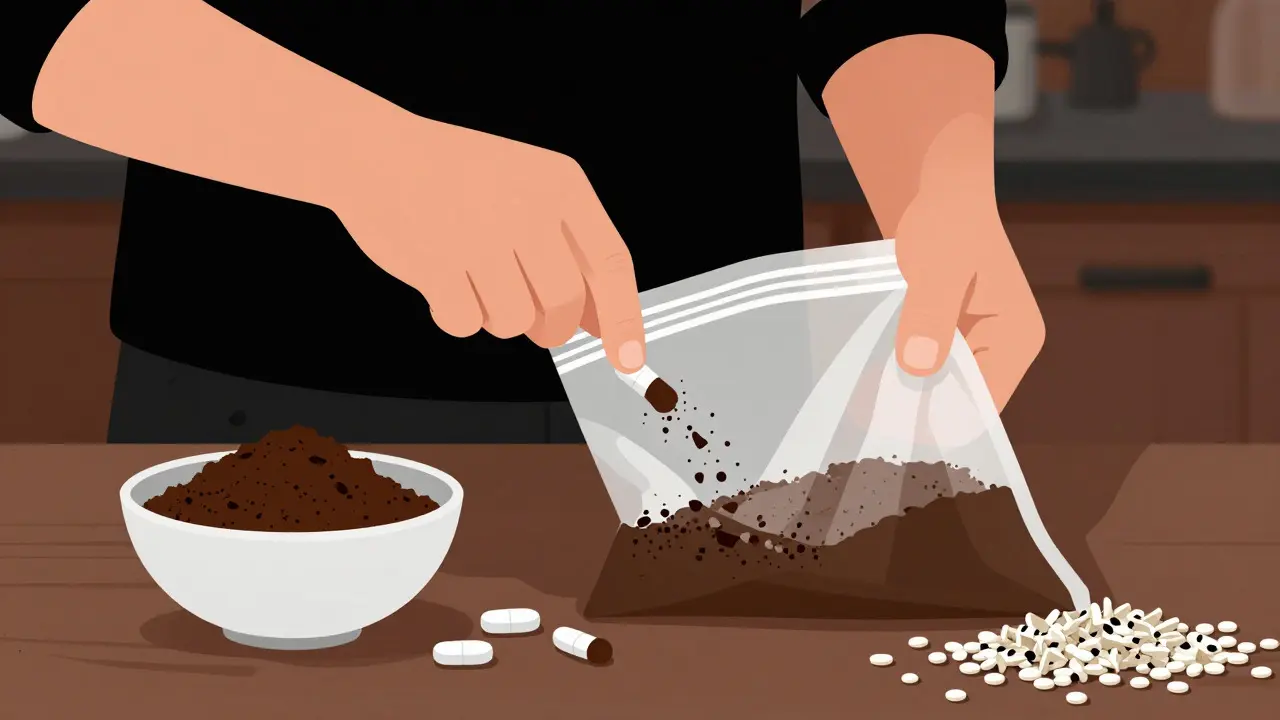
- Mix the medications with an undesirable substance like coffee grounds, cat litter, or dirt.
- Place the mixture in a sealed container or plastic bag.
- Throw the container in your household trash.
- Scratch out or tear off all personal information on the empty pill bottles before recycling or trashing them.
This method prevents children or pets from finding the drugs and reduces the chance of environmental contamination. Remember, protecting your privacy is part of the process. No one needs to know exactly what medications you were taking.
Preventing Future Dilemmas
The best way to handle expired drugs is to avoid having them in the first place. Pharmacists recommend keeping a simple inventory of your medications. Write down the expiration dates on a calendar or use a digital app. Some pharmacies use color-coded stickers to indicate expiration years, a practice adapted from military stockpile management. You can try this at home with colored pens.
Adopt the "first in, first out" rule. When you buy new supplies, put them behind the older ones. Use the older stock first. Also, schedule refills before you run out. If you know you need a monthly prescription, set a reminder for two weeks prior. This buffer gives you time to deal with insurance issues or pharmacy shortages without resorting to expired backups.
For over-the-counter items, buy smaller quantities. There is no need to hoard six months' worth of allergy pills. Buy what you need for the season. If you travel frequently, ask your pharmacist about carrying smaller, single-use doses to minimize waste if plans change.
Common Myths About Expiration Dates
Let’s clear up some confusion. One common myth is that expiration dates are arbitrary deadlines designed to make you buy more. While profit is a factor in business, the dates are based on rigorous stability testing required by regulatory bodies. Another myth is that all expired drugs are deadly. As noted earlier, most just lose potency. The National Institutes of Health’s Shelf Life Extension Program found that 88% of military stockpile drugs remained effective years past expiration. However, those drugs were stored under perfect, controlled conditions. Your bathroom cabinet is rarely that perfect.
Don’t rely on internet forums or well-meaning friends for advice. Every drug behaves differently. Tetracycline becomes toxic; ibuprofen just gets weaker. Only a pharmacist can give you the nuanced answer you need for your specific situation.
What If You Already Took an Expired Drug?
If you accidentally took an expired pill, don’t panic. For most solid OTC medications expired within six months, the main issue is reduced effectiveness. You might just need to take a fresh dose later. However, if you took an expired antibiotic and your infection symptoms persist or worsen, contact your doctor immediately. Incomplete treatment leads to antibiotic-resistant infections, a serious public health crisis.
If you used an expired life-saving drug like insulin or epinephrine and didn’t get the expected result, seek medical attention right away. Monitor your symptoms closely. Pharmacists document these incidents to improve safety databases, so reporting your experience helps others in the future.
Do expired antibiotics become toxic?
Generally, no. Most expired antibiotics simply lose potency, meaning they may not fully kill the bacteria causing your infection. This can lead to treatment failure and antibiotic resistance. However, tetracycline is a notable exception; it can break down into harmful compounds that may damage the kidneys. Always check with your pharmacist about specific types.
Can I take expired ibuprofen for a headache?
In many cases, yes. Ibuprofen and acetaminophen are solid tablets that tend to retain stability for a while after expiration. If the pills look normal and were stored properly, they are likely safe, though possibly slightly less effective. Consult your pharmacist if you are unsure, especially if you have sensitive stomach issues.
How should I store medications to extend their life?
Store medications in a cool, dry place away from direct sunlight and humidity. Avoid bathrooms and kitchens where temperature and moisture fluctuate. Keep them in their original containers with tight lids. Proper storage is key to maintaining potency until the expiration date.
Where can I dispose of expired medications near me?
Look for drug take-back locations at local pharmacies, hospitals, or law enforcement agencies. Many chains like Walgreens and CVS have disposal kiosks. If none are available, mix the drugs with coffee grounds or cat litter, seal them in a bag, and throw them in the trash. Never flush unless specifically instructed on the label.
Is it safe to use expired insulin?
No. Insulin is a critical medication that degrades relatively quickly. Using expired insulin can lead to uncontrolled blood sugar levels, which can be life-threatening. Always use fresh insulin and consult your pharmacist or doctor if you are running low before your supply expires.
Do expiration dates apply to pharmacy-repackaged drugs?
Yes, but differently. When a pharmacy repackages drugs into amber vials or bags, they assign a new expiration date, typically one year from the fill date. This is because the drug is exposed to air and light during dispensing. Always follow the date stamped by the pharmacy, not the manufacturer's original date on the box.
What if my expired medication looks and smells fine?
Appearance and smell are not reliable indicators of chemical stability. A drug can look perfect but have lost significant potency. Conversely, some drugs may change color slightly without becoming toxic. Rely on the expiration date and pharmacist advice rather than sensory checks alone.
