 Jul, 8 2026
Workplace Medication Safety Risk Calculator
Safety Assessment Inputs
Based on NIOSH data regarding opioids, benzodiazepines, and hazardous drug exposure.
Risk Analysis
Select options and click Calculate to see your risk profile.
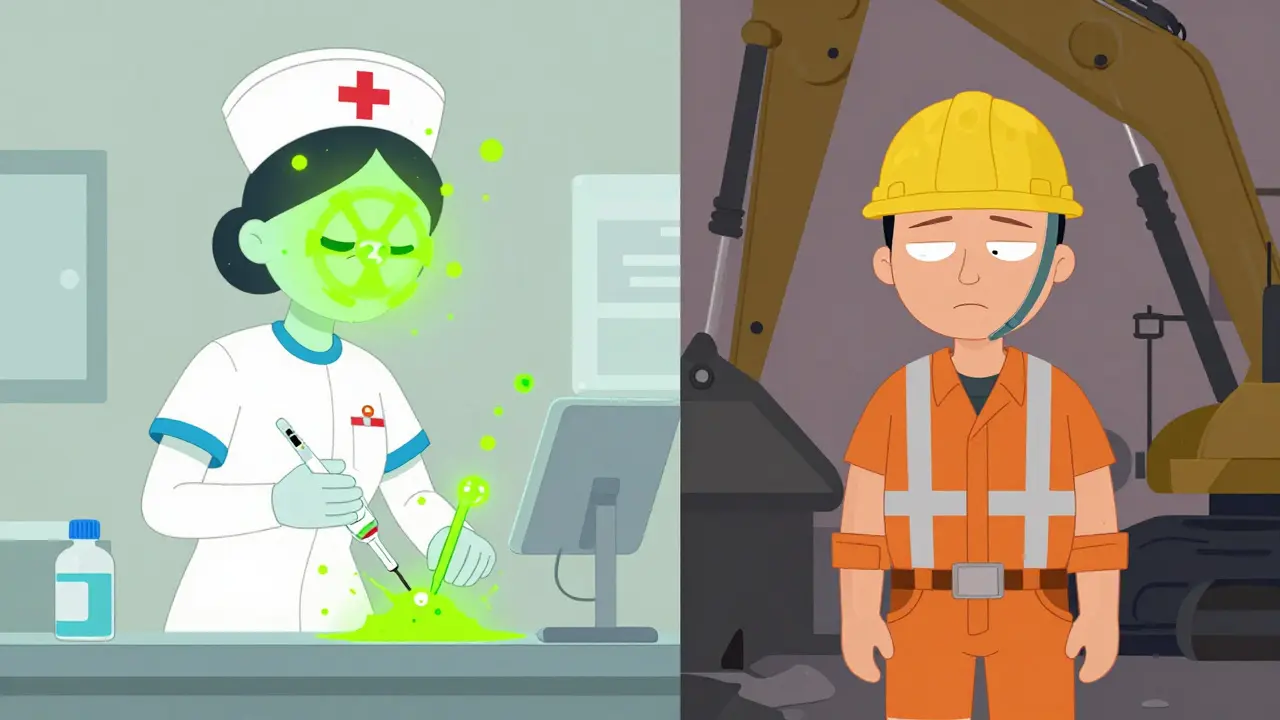
Imagine you are a nurse preparing chemotherapy for a patient. You follow every protocol, wear your gloves, and double-check the dosage. Yet, invisible particles of antineoplastic agents cancer-fighting drugs that pose significant health risks to handlers linger in the air or settle on surfaces. Now picture a construction worker taking prescribed opioids for back pain, feeling slightly drowsy but determined to finish the shift. Both scenarios highlight a critical, often overlooked aspect of workplace safety: how medications affect us and how we handle them.
The intersection of medication use and occupational safety is complex. It involves two distinct but equally dangerous paths. First, there is the risk posed by workers taking prescription drugs that impair their cognitive or physical abilities. Second, there is the danger faced by employees who handle hazardous substances as part of their job duties. Understanding these dynamics is not just about compliance; it is about protecting lives, livelihoods, and long-term health.
When Medication Impairs Performance
Prescription medications are vital for managing chronic conditions and acute injuries. However, many common drugs carry side effects that can compromise safety at work. The most concerning classes are opioids pain-relieving medications derived from opium poppies and benzodiazepines sedative medications used for anxiety and sleep disorders.
Data from the National Institute for Occupational Safety and Health (NIOSH) reveals that 18.7% of U.S. workers with musculoskeletal disorders are prescribed opioids. Meanwhile, 7.2% of workers experiencing high stress levels use benzodiazepines. The danger spikes when these drugs are combined. A study published in the Journal of Occupational and Environmental Medicine found that using both opioids and benzodiazepines increases the risk of falls by 84%. For workers operating heavy machinery, driving vehicles, or working at heights, this statistic is alarming.
Workers taking prescription opioids face a 2.1 times higher risk of workplace injuries compared to those who do not take them. This isn't just about clumsiness. These medications slow reaction times, blur judgment, and cause drowsiness. An anesthesiologist shared a harrowing account on Medscape's Physician Forum, describing how prescribed opioids for a work-related back injury led to dizziness and nausea, resulting in a near-miss incident during surgery. Such stories underscore that impairment doesn't always look like obvious intoxication; it can manifest as subtle lapses in concentration that have severe consequences.
Hazardous Drugs in Healthcare Settings
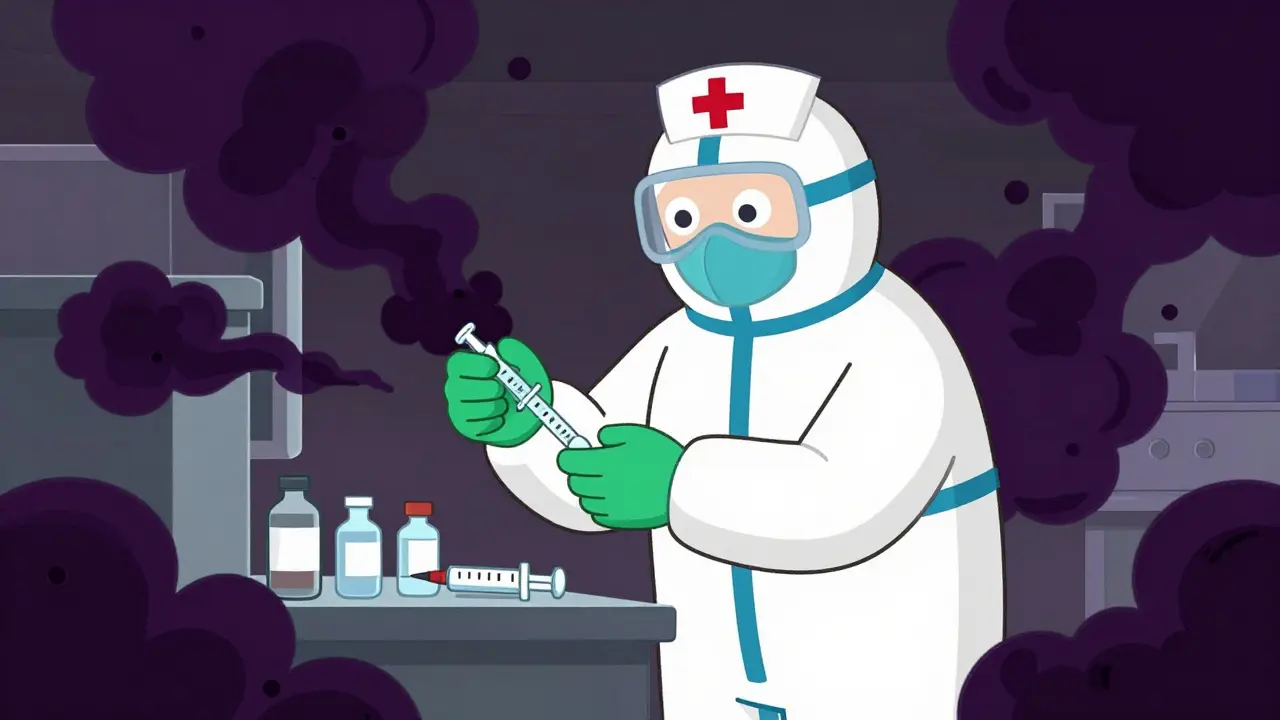
On the flip side, healthcare workers face direct exposure to toxic substances. Hazardous drugs medications classified as dangerous due to carcinogenicity, teratogenicity, or organ toxicity are handled daily in hospitals, pharmacies, and clinics. According to CDC data from 2023, approximately 8 million U.S. healthcare workers are potentially exposed to these agents.
NIOSH updated its List of Hazardous Drugs in January 2024, identifying 370 such drugs. The majority-267-are antineoplastic agents used in cancer treatment. Another 78 are non-antineoplastic drugs with similar risks, and 25 have specific reproductive effects. Exposure happens through multiple routes. Inhalation of aerosols accounts for 38% of exposures, while skin contact with contaminated surfaces makes up 22%. Even small amounts matter. Chronic exposure correlates with a 2.3 times higher risk of adverse reproductive outcomes, according to a CDC meta-analysis.
A chemotherapy nurse on Reddit’s r/nursing community reported developing chronic skin rashes after three years of handling these drugs, despite following protocols. Surface contamination tests in her facility showed detectable levels in 68% of work areas. This highlights a gap between policy and practice. Without proper engineering controls, even careful workers remain at risk.
Regulatory Frameworks and Standards
Understanding the rules is essential for mitigation. The Occupational Safety and Health Administration (OSHA), established by the Occupational Safety and Health Act of 1970, enforces the Hazard Communication Standard (29 CFR 1910.1200). This standard requires employers to inform workers about hazardous chemicals and provide training. However, its scope is limited. It applies to approximately 6.2 million U.S. facilities, leaving 1.8 million healthcare workers in non-covered settings potentially unprotected.
For compounding pharmacies, the U.S. Pharmacopeial Convention General Chapter 800 provides more comprehensive guidelines. Implemented in December 2019, it mandates strict containment procedures. But it only covers about 58,000 workers. The patchwork nature of regulations means many gaps exist. Dr. Robert Gotlin noted in the Journal of Occupational Rehabilitation that current policies often fail to balance safety with the needs of workers requiring legitimate medical treatment.
Mitigation Strategies That Work
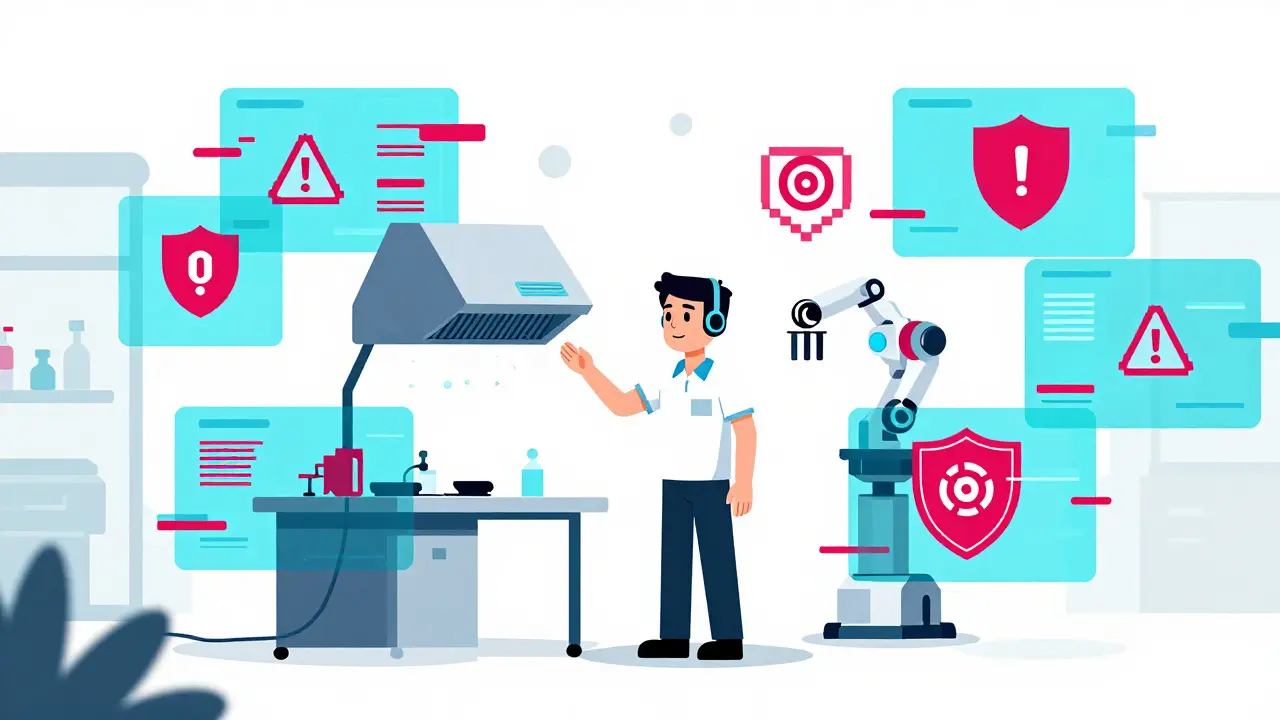
Reducing risks requires a multi-layered approach. Engineering controls are the most effective. Closed-system transfer devices (CSTDs) reduce surface contamination by 94.7%, according to field tests by WorkSafeBC. Facilities that implemented NIOSH’s 2024 guidelines saw surface contamination drop from 42% to 4.7% within six months. This proves that technology, when properly deployed, works.
Administrative controls also play a crucial role. Drug-free workplace policies reduce prescription medication incidents by 42%, based on SureHire’s analysis of over 1,200 workplaces. However, these policies must be nuanced. Blanket bans can lead to job loss for workers with legitimate medical needs. Instead, focus should be on functional capacity assessments and reasonable accommodations.
Training is another pillar. Proper handling of hazardous drugs requires 16-24 hours of initial training plus annual refreshers. Workers need to understand exposure routes, donning and doffing personal protective equipment (PPE), and recognizing early symptoms. After eight hours of targeted training, PPE usage success rates jump to 92%, per NIOSH validation studies.
| Control Type | Effectiveness Metric | Implementation Challenge |
|---|---|---|
| Closed-System Transfer Devices | Reduces surface contamination by 94.7% | High upfront cost; incompatible with some cabinets |
| Drug-Free Workplace Policies | Reduces incidents by 42% | Risk of penalizing legitimate medical use |
| PPE Training Programs | 92% success rate after 8 hours | Worker non-compliance (43% observed) |
| Engineering Ventilation Systems | Reduces inhalation exposure significantly | Inadequate systems in 27% of facilities |
Economic Impact and Future Trends
The cost of ignoring these risks is steep. The economic burden of occupational medication incidents totals $4.7 billion annually. This includes $2.1 billion in direct healthcare costs, $1.8 billion in lost productivity, and $0.8 billion in workers' compensation claims. Investing in prevention pays off. Mayo Clinic’s program, which combined engineering controls with behavioral interventions, reduced hazardous drug exposures by 89%.
Looking ahead, technology will play a bigger role. AI-powered exposure monitoring systems are being piloted at Johns Hopkins Hospital, showing 92% accuracy in predicting high-exposure scenarios. OSHA is also proposing new Permissible Exposure Limits for hazardous drugs, aiming for stricter surface contamination thresholds. As new biologics and targeted therapies emerge, keeping pace with safety data remains a challenge. Currently, 42% of new oncology drugs approved in 2023 lack established occupational exposure limits.
Practical Steps for Employers and Workers
If you manage a team, start with a risk assessment. Identify all hazardous drugs using NIOSH’s 2024 list. Evaluate exposure potential through air and surface sampling. Implement controls, verify their effectiveness, and maintain documentation. If you are a worker, know your rights. Ask for training. Report unsafe conditions. And if you are taking medication that affects alertness, communicate openly with your supervisor and healthcare provider. Safety is a shared responsibility.
What are the most common hazardous drugs in healthcare?
The most common hazardous drugs are antineoplastic agents used in cancer treatment. NIOSH’s 2024 list identifies 267 such drugs. Other categories include non-antineoplastic hazardous drugs and those with reproductive effects. Examples include cisplatin, cyclophosphamide, and methotrexate.
How do opioids affect workplace safety?
Opioids can cause drowsiness, slowed reaction times, and impaired judgment. Workers taking opioids face a 2.1 times higher risk of workplace injuries. Combining opioids with benzodiazepines increases fall risk by 84%, making tasks involving machinery or heights particularly dangerous.
What is NIOSH’s role in medication safety?
NIOSH researches and recommends ways to prevent work-related injury and illness. They publish the annual List of Hazardous Drugs, provide guidelines for handling these substances, and conduct studies on exposure risks and control measures.
Are there legal requirements for handling hazardous drugs?
Yes. OSHA’s Hazard Communication Standard requires employers to train workers and label hazardous chemicals. Additionally, USP General Chapter 800 sets strict standards for compounding pharmacies. Compliance varies by setting, with healthcare facilities facing the highest regulatory scrutiny.
How can employers reduce medication-related incidents?
Employers should implement closed-system transfer devices, enforce rigorous PPE training, and establish clear drug policies that accommodate legitimate medical needs. Regular risk assessments and open communication channels help identify and mitigate issues before they lead to accidents.
What are the signs of hazardous drug exposure?
Acute symptoms include nausea, vomiting, skin rashes, and hair loss. Chronic exposure may lead to increased cancer risk, reproductive issues, and organ damage. Early recognition and reporting are critical for preventing long-term health effects.
Does insurance cover medication-related workplace injuries?
Workers' compensation typically covers injuries occurring on the job, including those exacerbated by medication side effects. However, coverage depends on whether the employer knew or should have known about the risk. Documentation of training and safety measures is crucial for claims.
How often should hazardous drug handling training be repeated?
Initial training should last 16-24 hours, followed by 4-8 hours of annual refresher courses. This ensures workers stay updated on new protocols, emerging risks, and best practices for minimizing exposure.
Can remote work eliminate medication safety risks?
Remote work eliminates exposure to hazardous drugs in healthcare settings but does not address risks from prescription medications taken at home. Cognitive impairment from drugs like opioids or benzodiazepines remains a concern regardless of location, especially for roles requiring focused attention.
What future regulations are expected for hazardous drugs?
OSHA is proposing stricter Permissible Exposure Limits, including a target of 0.1 ng/cm² for surface contamination. New FDA warnings require boxed labels for 27 antineoplastic drugs. These changes aim to close gaps in current protections and align standards with evolving scientific evidence.
