 Aug, 8 2026
Orthostatic Hypotension Risk Estimator
Select the factors that apply to you to calculate your estimated risk level.
Your Risk Estimate
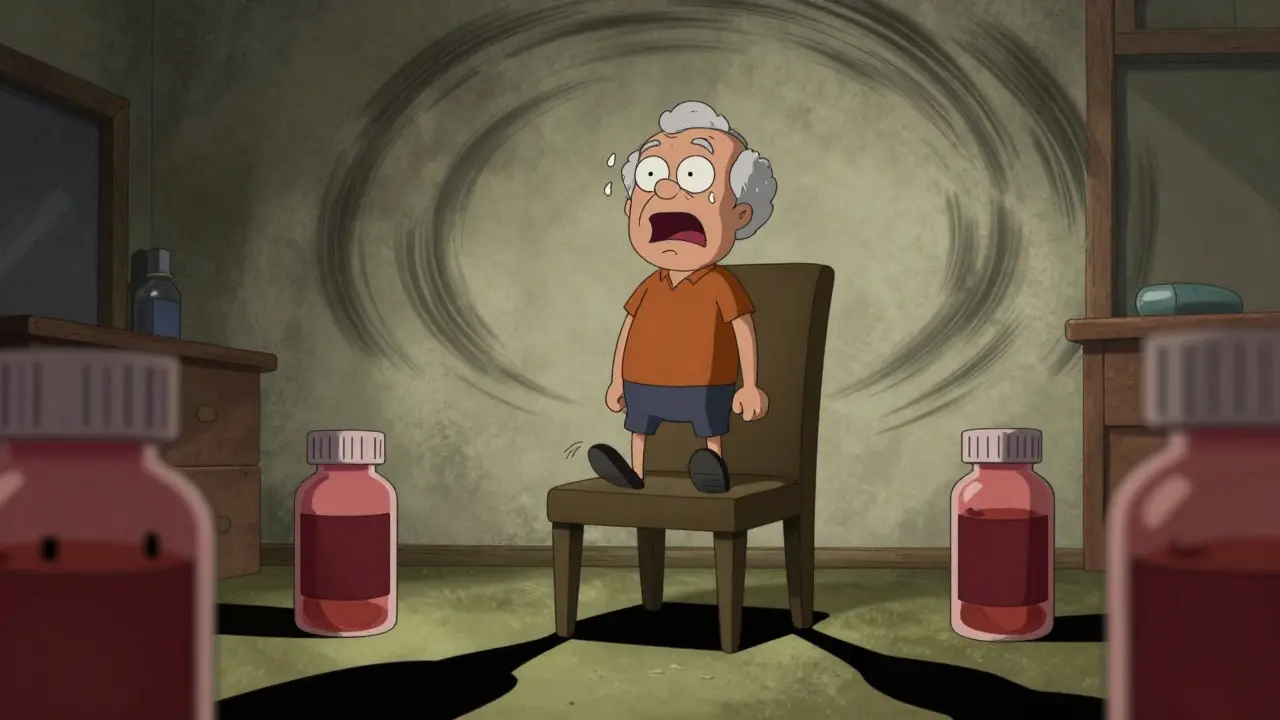
Have you ever stood up quickly and felt the room spin, or worse, nearly blacked out? It’s a jarring sensation that many people brush off as just getting older. But if it happens regularly, especially after starting a new prescription, your body might be signaling something specific: orthostatic hypotension is a sudden drop in blood pressure when standing up, often triggered by medications. This isn't just a minor inconvenience; it's a significant health risk that leads to falls, injuries, and even long-term cognitive issues. For millions of patients, particularly those managing chronic conditions, this dizziness is not a mystery-it's a known side effect of the very drugs meant to help them.
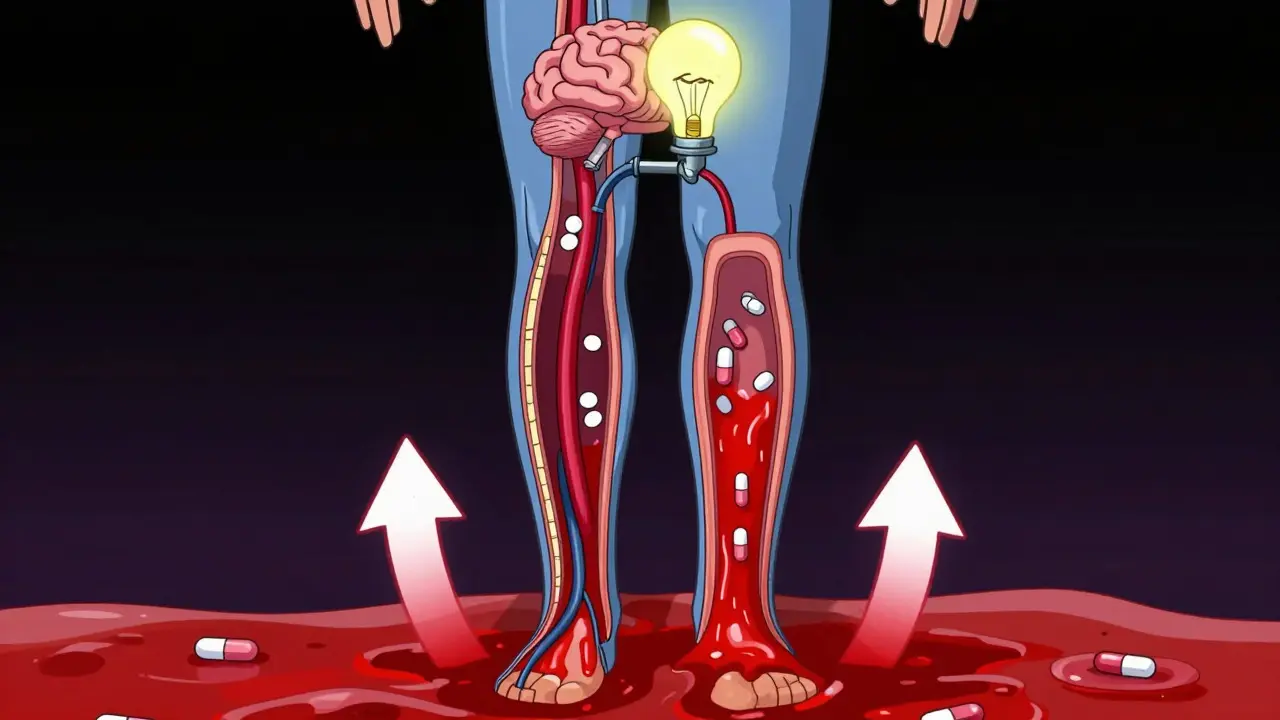
The core problem lies in how certain medications interfere with your body's natural ability to regulate blood flow. When you stand up, gravity pulls blood into your legs. Normally, your nervous system tightens blood vessels and speeds up your heart to push blood back to your brain. Some drugs block this reflex. The result? A dangerous dip in cerebral perfusion. Understanding which medications cause this and how to manage it can mean the difference between living independently and suffering a debilitating fall.
What Is Orthostatic Hypotension?
To understand why you feel dizzy, you first need to know what is happening inside your body. Orthostatic hypotension (OH), also called postural hypotension, is defined by a specific medical threshold. According to cardiovascular consensus standards, it occurs when your systolic blood pressure drops by more than 20 mm Hg, or your diastolic pressure drops by more than 10 mm Hg, within three minutes of standing up. These numbers come from rigorous clinical guidelines, including those found in the Merck Manual's Professional Edition.
This condition has been recognized since the 1930s, but our understanding of its causes has evolved. Today, we know that while aging plays a role, medication is one of the biggest culprits. In fact, drug-related OH accounts for up to 30% of all cases. It affects roughly 5-30% of elderly patients, depending on their other health issues and what they are taking. If left unchecked, it doesn't just cause embarrassment; it increases the risk of falls by 15-30% and raises mortality risk significantly over time.
How Medications Trigger Blood Pressure Drops
Your body relies on a delicate balance of signals from your autonomic nervous system to keep blood pressure stable. Many common medications disrupt this system through several mechanisms:
- Alpha-adrenergic blockade: Some drugs block the receptors that tell blood vessels to constrict. Without this signal, vessels stay wide open, letting blood pool in the legs.
- Vasodilation: Certain medications actively widen blood vessels to lower overall blood pressure, which can overshoot when you change positions.
- Volume depletion: Diuretics reduce fluid volume in your body, leaving less blood to pump around.
- Central nervous system depression: Sedatives and opioids can dampen the brain's response to posture changes, slowing down the corrective reflexes.
When these mechanisms kick in, the baroreceptor reflex-which usually acts like an automatic thermostat for your blood pressure-fails to react fast enough. Your brain momentarily starves of oxygen-rich blood, leading to lightheadedness, blurred vision, or syncope (fainting).
High-Risk Medication Classes
Not all drugs carry the same risk. Some classes are notorious for causing orthostatic hypotension. If you are taking any of the following, you should be extra cautious when standing up.
| Medication Class | Common Examples | Estimated OH Incidence | Key Risk Factor |
|---|---|---|---|
| Antipsychotics | Clozapine, Quetiapine, Chlorpromazine | 20-45% | Strong alpha-blockade effects |
| Opioids | Morphine, Oxycodone | 15-25% | CNS depression; risk doubles with alcohol/benzos |
| Parkinson’s Disease Meds | Levodopa | 30-50% | Dopaminergic effects on vascular tone |
| Tricyclic Antidepressants | Amitriptyline, Nortriptyline | Significant risk (OR 3.2) | Anticholinergic and alpha-blocking properties |
| Diuretics | Hydrochlorothiazide, Furosemide | Moderate risk (OR 1.9) | Fluid volume reduction |
| Alpha-Blockers | Tamsulosin, Doxazosin | High risk (OR 2.8) | Direct vasodilation |
Notice the high incidence rates for antipsychotics like clozapine, which can affect up to 45% of users at higher doses. Even newer agents have risks, though generally lower. For instance, ziprasidone carries a 5-10% incidence rate compared to clozapine’s much higher profile. Opioids present a unique danger because their risk spikes dramatically-by 2.3 times-if combined with benzodiazepines or alcohol.
Risk Factors Beyond Medication
While medication is the trigger, your personal health profile determines how vulnerable you are. Age is the most significant factor. Patients aged 70 and older face a 3.2 times higher risk of developing OH compared to younger adults. This is partly because aging naturally stiffens arteries and dulls nerve responses.
Polypharmacy is another major amplifier. Taking four or more medications simultaneously increases your risk by 5.7 times. This is common in elderly care, where the average patient with OH takes about 6.2 different drugs. Other conditions like diabetes, Parkinson’s disease, or existing autonomic dysfunction compound the problem. If you have neurogenic OH (caused by nerve damage), medications can make it much worse because your body already lacks the backup systems to compensate.
Recognizing the Symptoms
Symptoms usually appear within seconds to minutes of standing up. They don’t always look dramatic. Sometimes it’s just a vague sense of unease. More commonly, you might experience:
- Dizziness or lightheadedness: The most frequent complaint, often described as feeling faint.
- Blurred vision: Caused by reduced blood flow to the eyes.
- Nausea: A sudden wave of sickness upon standing.
- Fatigue: Feeling unusually tired after moving from sitting to standing.
- Syncope (Fainting): Loss of consciousness, which is the most dangerous outcome due to fall risk.
Here’s a tricky part: up to 40% of cases are asymptomatic. You might have a massive blood pressure drop without feeling anything until you trip or fall. This silent nature makes regular screening crucial, especially for those on high-risk meds.
Diagnosis and Measurement
You can’t guess your blood pressure response; you have to measure it. Doctors use a standardized protocol to diagnose OH accurately. Here is how it works:
- Resting Phase: You lie down (supine) for five minutes to let your blood pressure stabilize.
- Standing Phase: You stand up.
- Measurement Points: Blood pressure is taken immediately, then at one minute, two minutes, and three minutes after standing.
If your systolic BP drops >20 mm Hg or diastolic drops >10 mm Hg during this window, and you have symptoms, the diagnosis is confirmed. This precise timing matters. A single check right after standing might miss the peak drop, which often happens around the three-minute mark. Documentation standards require recording these exact intervals to ensure accuracy.
Managing Drug-Induced Orthostatic Hypotension
The good news? Medication-induced OH is largely reversible. Studies show that 70-85% of cases resolve after adjusting the offending drugs. Here is a practical approach to managing it:
1. Medication Review
This is the first line of defense. Work with your doctor to review every pill you take. Ask specifically: "Could this cause dizziness?" Often, doctors can switch you to a safer alternative. For example, replacing a tricyclic antidepressant with an SSRI, or choosing an antipsychotic with lower alpha-blocking activity. Never stop medication abruptly on your own, as this can cause withdrawal or worsen your primary condition.
2. Non-Pharmacological Interventions
While adjusting meds, you can adopt lifestyle changes to support your blood pressure:
- Hydration: Aim for 2-2.5 liters of water per day unless restricted. Fluid volume helps maintain blood pressure.
- Slow Transitions: Don’t jump up. Sit on the edge of the bed or chair for a minute before standing. Flex your calf muscles to pump blood upward.
- Compression Stockings: These prevent blood from pooling in your legs. Look for waist-high stockings for best results.
- Salt Intake: If your doctor approves, slightly increasing salt can help retain fluid and boost volume. Consult them first, especially if you have heart failure.
3. Pharmacological Treatment (If Needed)
If non-drug methods fail, doctors may prescribe medications like midodrine (10mg three times daily). Midodrine is an alpha-agonist that tightens blood vessels. Clinical trials show it reduces symptoms in 65% of patients. However, this is usually a last resort after trying to eliminate the causative drug.
Real-World Impact and Patient Stories
The impact of OH goes beyond discomfort. Consider the case shared by a medical student on the Cleveland Clinic forums: a 78-year-old patient on six medications, including hydrochlorothiazide (a diuretic) and lisinopril, suffered recurrent falls. After removing the diuretic, the orthostatic hypotension resolved completely within 72 hours. This highlights how critical identifying the specific culprit is.
Conversely, delayed recognition is common. A Mayo Clinic survey found that 55% of patients waited over two months before linking their dizziness to their meds. During that time, they likely faced unnecessary fear, limited mobility, and fall risk. Economic data underscores this urgency: OH-related falls cost Medicare $31 billion annually, with 30-40% attributed directly to medication side effects.
Prevention and Future Directions
Prevention starts with awareness. The American Geriatrics Society Beers Criteria now lists 12 high-risk medications for OH in the elderly. Over 68% of U.S. primary care practices now screen for OH routinely, up 45% since 2018. As the population ages-with 80.8 million Americans expected to be 65+ by 2040-this screening will become even more vital.
Research is also moving toward personalized medicine. Scientists are exploring genetic markers for autonomic function to predict who will develop OH before prescribing high-risk drugs. Pharmaceutical companies are developing "OH-safer" medications, such as selective alpha-1A agonists, designed to treat conditions without wrecking blood pressure control. Until then, vigilance remains your best tool.
How long does dizziness from orthostatic hypotension last?
The immediate dizzy spell usually lasts only a few seconds to a couple of minutes as your body attempts to compensate. However, if caused by medication, the tendency to have these episodes will persist as long as you take the drug. Once the medication is adjusted or stopped, symptoms typically resolve within 1-2 weeks, though full stabilization can take up to a month depending on the drug's half-life.
Can dehydration make medication-induced OH worse?
Yes, significantly. Dehydration reduces your total blood volume. When you combine low volume with medications that dilate blood vessels or block nerve signals, there is simply not enough blood to reach your brain when you stand. Staying well-hydrated is one of the most effective non-drug ways to mitigate this risk.
Is orthostatic hypotension dangerous?
It can be. While the dizziness itself is uncomfortable, the real danger is falling. Falls in older adults can lead to hip fractures, head trauma, and loss of independence. Additionally, chronic severe OH is linked to a 24-32% increased risk of mortality over 10 years due to associated cardiovascular strain and cognitive decline.
Which blood pressure medications are safest regarding OH?
Generally, ACE inhibitors (like lisinopril) and ARBs (like losartan) have a lower risk of causing severe orthostatic drops compared to alpha-blockers, diuretics, or central-acting agents like clonidine. However, individual responses vary. Always consult your doctor before switching, as the goal is to balance hypertension control with orthostatic stability.
Should I stop taking my medication if I feel dizzy?
Do not stop abruptly without medical advice. Sudden cessation can cause rebound effects or return of the original condition (e.g., uncontrolled pain or psychosis). Instead, contact your provider immediately. They may advise lowering the dose temporarily or switching to a different agent to manage the side effect safely.
