 Aug, 30 2026
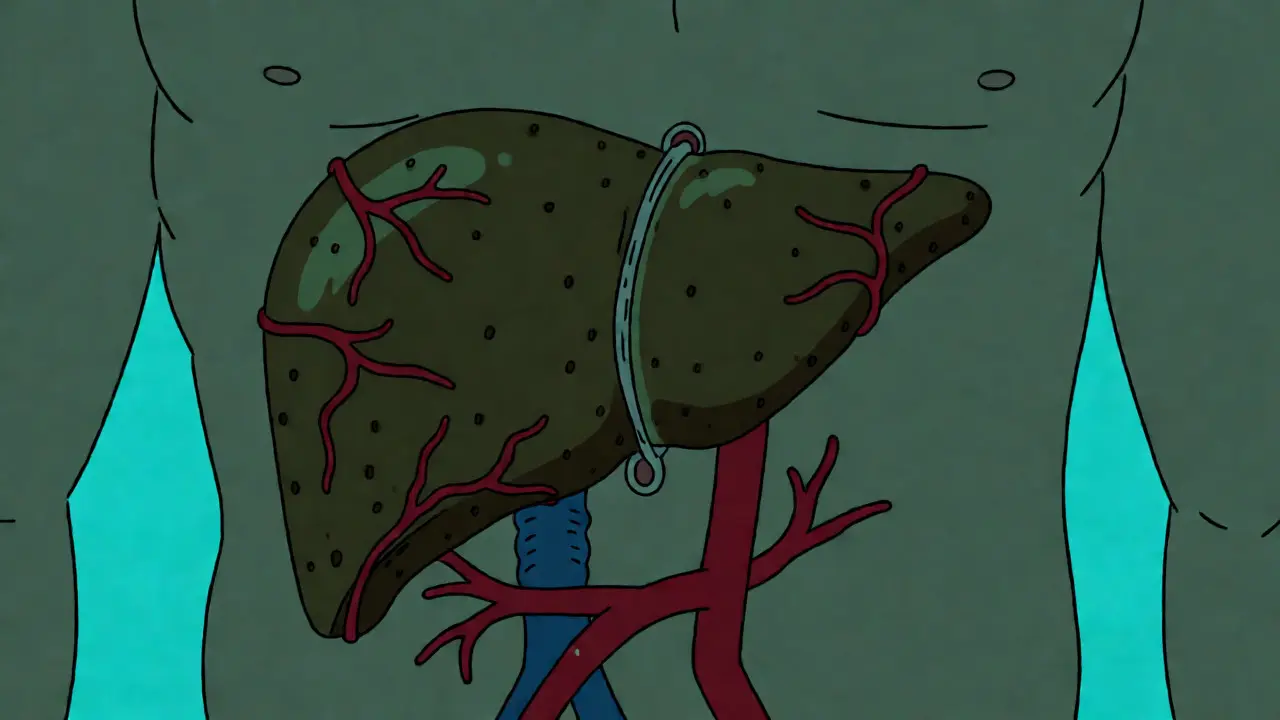
Imagine your liver is a sponge. When it’s healthy, blood flows through it easily. But when scar tissue builds up from years of alcohol use, viral hepatitis, or fatty liver disease, that sponge hardens. Blood can’t get through. It backs up into the portal vein, the main highway bringing blood from your gut to your liver. This backup creates pressure-portal hypertension is a condition where pressure in the portal venous system exceeds normal limits, typically defined as a hepatic venous pressure gradient (HVPG) greater than 5 mmHg. If you’re reading this, you or someone you care about might be dealing with this silent but serious complication of liver cirrhosis. It’s not just a number on a chart; it’s the root cause of scary complications like vomiting blood and a swollen belly.
What Actually Happens Inside Your Body?
Think of your liver as a filter. In cirrhosis, which causes about 90% of all portal hypertension cases, healthy liver cells are replaced by stiff scar tissue. This scarring squeezes the tiny channels inside the liver, making it harder for blood to pass through. To compensate, your body widens other blood vessels, sending more blood toward the liver, but it hits a wall. The pressure rises. Doctors measure this using a test called HVPG. Normal is under 5 mmHg. Once you hit 10 mmHg, things get dangerous. This threshold is critical because it marks the point where complications like varices and ascites become likely. According to the American Association for the Study of Liver Diseases (AASLD), about 70% of people with cirrhosis will develop clinically significant portal hypertension within five years of their diagnosis.
The Big Threat: Esophageal Varices
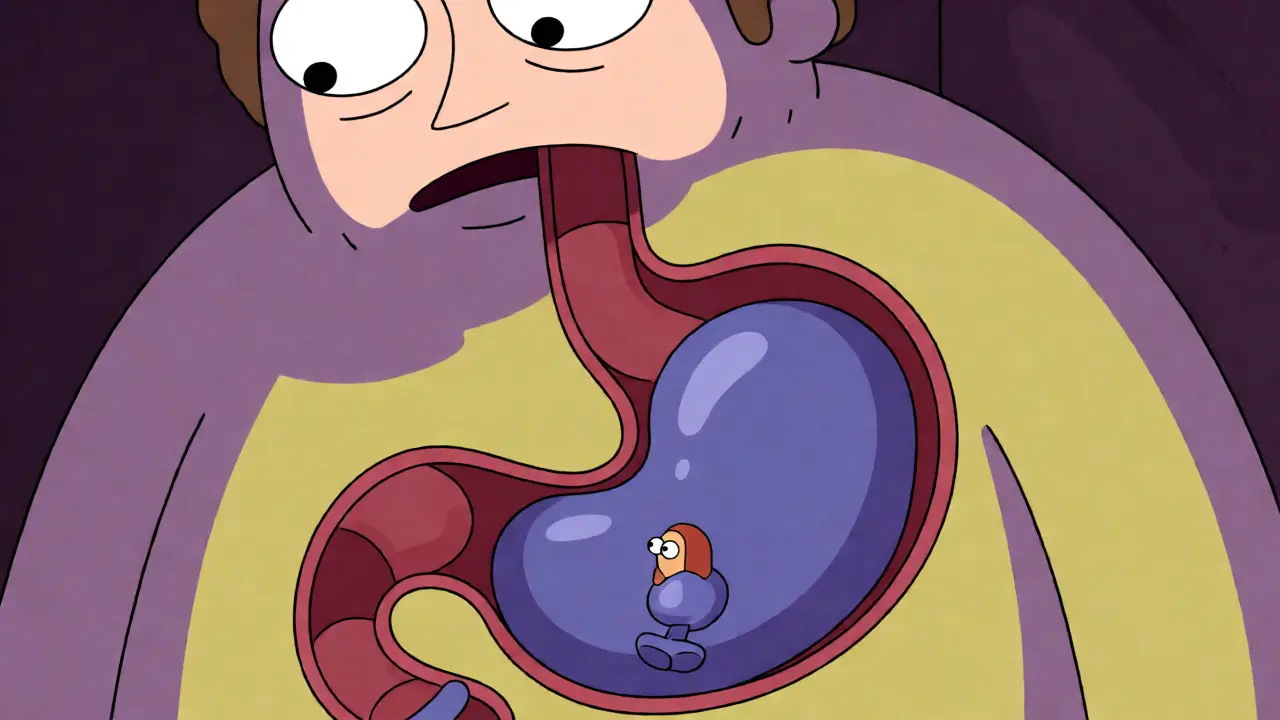
When blood can’t go through the liver, it looks for detours. It finds smaller veins in your esophagus and stomach. These veins aren’t built for high pressure. They balloon out, becoming varices. About half of people with cirrhosis develop these within ten years. The real fear? Rupture. If a varix bursts, you vomit bright red blood. It’s a medical emergency. The annual risk of bleeding from medium-to-large varices is between 5% and 15%. Without treatment, the mortality rate from a first bleed is shockingly high-up to 20% within six weeks. That’s why prevention is everything. Doctors often prescribe non-selective beta-blockers, like propranolol, to lower heart rate and reduce pressure. Or they perform endoscopic band ligation, where small rubber bands pinch off the varices during an endoscopy. Studies show banding reduces rebleeding rates to 20-30%, much better than older methods like sclerotherapy.
Ascites: The Swelling That Won’t Go Away
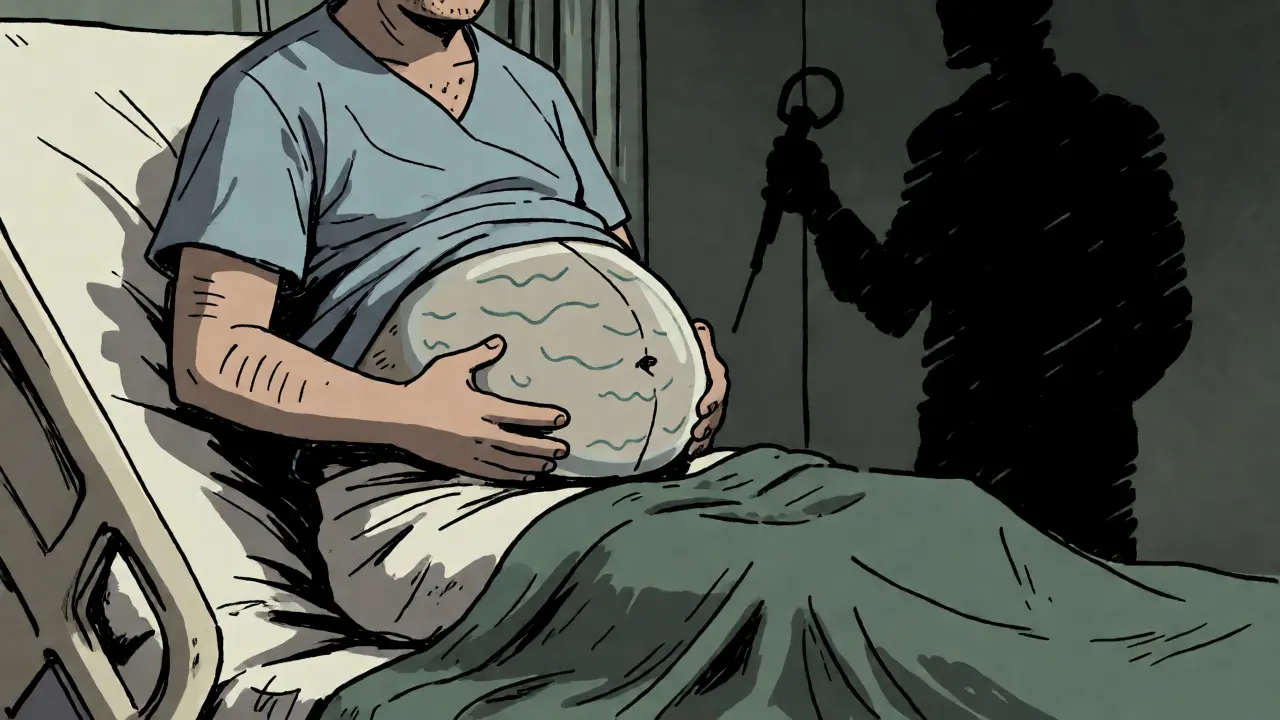
Ascites is fluid buildup in the abdomen. It happens in 60% of cirrhotic patients over ten years. Why? High pressure forces fluid out of blood vessels into the belly cavity. Plus, low albumin levels (a protein made by the liver) make it even worse. Imagine wearing a tight belt around your waist that gets tighter every day. You feel full, short of breath, and uncomfortable. Management starts simple: restrict sodium to under 2,000 mg a day and take diuretics like spironolactone and furosemide. For many, this works. But if the fluid keeps coming back despite medication, it’s called refractory ascites. Then, doctors might drain the fluid directly with a needle-a procedure called paracentesis. If you remove more than 5 liters, you need IV albumin to prevent kidney stress. For stubborn cases, a TIPS procedure might be suggested.
| Complication | Primary Cause | Key Risk Factor | First-Line Treatment |
|---|---|---|---|
| Esophageal Varices | Collateral circulation due to blockage | HVPG ≥ 10 mmHg | Beta-blockers or Band Ligation |
| Ascites | Sodium/water retention + low oncotic pressure | Child-Pugh B/C status | Sodium restriction + Diuretics |
| Hepatic Encephalopathy | Toxins bypassing liver filtration | Prior GI Bleed or Infection | Lactulose + Rifaximin |
TIPS: The Plumbing Fix
If medications and banding fail, there’s a structural fix called TIPS (Transjugular Intrahepatic Portosystemic Shunt). Interventional radiologists insert a stent through the neck into the liver, creating a new pathway for blood to bypass the scarred liver and flow directly into the systemic circulation. It’s highly effective at lowering pressure-technical success rates are 90-95%. However, it’s not perfect. Because toxins now skip the liver’s filtering step, 20-30% of patients develop hepatic encephalopathy (confusion or drowsiness) within a year. Still, for those with life-threatening bleeds or uncontrollable ascites, it’s a lifeline. A recent multicenter study showed 78% of patients reported significant improvement in ascites control after TIPS.
Living With the Diagnosis: Quality of Life Matters
Numbers don’t tell the whole story. Patients report a massive drop in quality of life. One nurse shared how recurrent ascites forced her to quit her job because she couldn’t stand for more than twenty minutes without severe pain. Another patient described the terror of vomiting liters of blood. Beyond the physical toll, mental health suffers. Cognitive side effects from beta-blockers affect 65% of users, leading to fatigue and brain fog. Frequent hospital visits for paracentesis are exhausting. But there is hope. New non-invasive tools, like spleen stiffness measurement via elastography, are getting closer to 85% accuracy in predicting severity, potentially sparing patients from invasive HVPG tests. And emerging drugs targeting liver fibrosis are in clinical trials, offering hope for reversing some damage rather than just managing symptoms.
When to Seek Help and What’s Next
If you have cirrhosis, regular screening is non-negotiable. Endoscopies should happen every 1-2 years to check for varices. If you notice sudden weight gain, abdominal swelling, black stools, or confusion, call your doctor immediately. Early intervention saves lives. While current treatments manage complications well, the rise of non-alcoholic fatty liver disease (NAFLD) means more people are facing this challenge. Staying informed, adhering to medication schedules, and maintaining open communication with your hepatologist are your best defenses against the unpredictable nature of portal hypertension.
Can portal hypertension be cured?
Generally, no. Portal hypertension is usually a consequence of irreversible liver scarring (cirrhosis). Treatments focus on managing complications like bleeding and fluid buildup. However, if the underlying cause is treated early (e.g., stopping alcohol or curing Hepatitis C), progression can slow or sometimes reverse slightly. Liver transplantation is the only definitive cure for advanced cases.
How is portal hypertension diagnosed?
The gold standard is measuring the Hepatic Venous Pressure Gradient (HVPG) via a catheter inserted into the jugular vein. Non-invasive methods include ultrasound with Doppler to assess blood flow speed and elastography to measure liver stiffness. An endoscopy is also used to visually confirm the presence of varices.
What foods should I avoid with ascites?
Sodium is the main enemy. Avoid processed meats, canned soups, salty snacks, and fast food. Aim for less than 2,000 mg of sodium per day. Also, limit fluids if your doctor advises it, though this is more common in advanced stages. Focus on fresh fruits, vegetables, lean proteins, and whole grains.
Is TIPS safe for everyone?
No. TIPS carries risks, particularly worsening hepatic encephalopathy (confusion) and heart failure due to increased blood return to the heart. It is generally avoided in patients with severe liver failure (high MELD scores), active infection, or right-sided heart failure. A specialist must evaluate each case individually.
Why do I feel confused with liver problems?
This is called hepatic encephalopathy. When the liver can't filter toxins like ammonia from the blood, they build up and affect the brain. Symptoms range from mild forgetfulness and sleep disturbances to severe confusion and coma. It's often triggered by constipation, dehydration, or infection.

Lolo Del
August 31, 2026 AT 23:30Look, I appreciate the effort to simplify this, but let's be real for a second. Most people reading this aren't going to remember what an HVPG is or care about mmHg thresholds when they're scared out of their minds. You need to focus on the immediate 'what do I do now' factor instead of burying the lead under pathophysiology. If you can't keep it simple enough for someone in crisis to grasp, you've already lost them.
Sarah Kinch
September 1, 2026 AT 16:14ugh honestly who has time for all this medical jargon?? its like they want us to feel stupid for not knowing what a TIPS procedure is. i tried reading it twice and my brain just shut off. seems like overkill for something that mostly just means your liver is messed up. whatever. 🙄
larry williams
September 2, 2026 AT 11:08I completely understand the frustration with complex medical terminology, especially when you are dealing with the sheer terror of a diagnosis that feels like it changes everything overnight. It is vital to remember that while the science behind portal hypertension involves intricate details regarding pressure gradients and collateral circulation, the human experience of living with cirrhosis is deeply personal and often overwhelming. We must ensure that our communication bridges the gap between clinical precision and patient empathy, acknowledging that every individual processes fear and information differently.
For those navigating this journey, please know that support systems are available, and taking things one step at a time is not only acceptable but encouraged. Your health journey is valid, and seeking clarity from your healthcare providers is a sign of strength, not weakness.
Crystal Torres
September 3, 2026 AT 16:23The correlation between NAFLD prevalence and rising portal hypertension cases is particularly alarming given the lack of public awareness. While the article correctly identifies beta-blockers as first-line treatment, recent data suggests that early intervention with lifestyle modifications may delay progression more effectively than previously thought. It is crucial to consider how socioeconomic factors impact access to these preventative measures.
Pearl Richardson
September 4, 2026 AT 18:58🚨 Wait a minute... why is nobody talking about the fact that TIPS shunts bypass the liver's filtration system entirely? 🤔 This isn't just a plumbing fix; it's a massive biological hack that floods the brain with toxins! 😱 The pharmaceutical industry loves these procedures because they create lifelong dependencies on lactulose and rifaximin. 💊 Are we sure this isn't designed to keep patients in a cycle of management rather than cure? 🕵️♀️📉 #FollowTheMoney #LiverGate
Tobi Oyewole
September 5, 2026 AT 09:30I believe we should approach these discussions with a spirit of mutual respect and open-mindedness. While there are certainly concerns regarding the long-term implications of procedures like TIPS, it is important to acknowledge the significant relief many patients experience from refractory ascites. Balancing skepticism with gratitude for modern medicine allows us to have more productive conversations about health outcomes.
Stephen Horn
September 7, 2026 AT 04:49It is frankly disappointing to see such a superficial overview of hemodynamics presented to a lay audience without proper context. The distinction between sinusoidal and post-sinusoidal causes is glossed over, which is a critical error for anyone attempting to truly understand the pathology. One cannot simply equate all portal hypertension with cirrhosis without addressing the nuances of Budd-Chiari syndrome or portal vein thrombosis, which require entirely different management strategies. This oversimplification does a disservice to the intelligence of the reader.
hareesh kumar
September 7, 2026 AT 19:58omg wait stop!!! everyone is missing the BIGGER PICTURE here!! 🌍 What if the scar tissue isn't just from alcohol or fat?? What if it's environmental?? 🤯 My cousin had perfect bloodwork until he moved near that industrial zone and BAM cirrhosis in 5 years!! They don't tell you about the microplastics in the water supply clogging up the liver filters!! 🚰💀 It's not just lifestyle, it's poison!! Wake up sheeple!! The doctors are hiding the truth because they profit from the pills!! 💊💸 Don't let them gaslight you into thinking it's YOUR fault!! 🛑✋
Gurjit Singh
September 8, 2026 AT 15:30It is morally imperative to recognize that much of this burden stems from personal choices regarding diet and alcohol consumption. Instead of complaining about the complexity of the treatment, individuals should take responsibility for their health habits before reaching the stage of decompensated cirrhosis. Prevention is always superior to management, and society would benefit greatly from less entitlement and more discipline regarding lifestyle factors.