 Aug, 16 2026
Imagine waking up with stiff fingers that look like sausages and red, scaly patches on your elbows. It’s not just a bad night’s sleep or a minor rash; it could be Psoriatic Arthritis is a chronic autoimmune condition where the immune system attacks healthy joints and skin, causing inflammation, pain, and potential long-term damage. Also known as PsA, this disease often develops in people who already have Psoriasis is a common skin disorder characterized by red, inflamed patches covered with silvery scales. While many view psoriasis as a cosmetic issue, for those with PsA, it signals a systemic battle within the body. Understanding the link between these two conditions is crucial for early detection and effective management.
The Connection Between Skin and Joints
Psoriasis and PsA are deeply intertwined. Research indicates that approximately 30% of people living with psoriasis will eventually develop psoriatic arthritis. In about 85% of cases, the skin symptoms appear first, serving as an early warning sign. However, in 5-10% of cases, joint pain strikes before any visible skin changes occur. This timeline matters because catching PsA early can prevent permanent structural damage to the bones.
The root cause lies in the immune system. Instead of fighting off invaders like viruses or bacteria, the immune cells mistakenly target healthy tissues. This triggers a cascade of inflammatory responses. Key genetic factors, such as specific HLA alleles (HLA-B27, HLA-B38, and HLA-B39), increase susceptibility. Environmental triggers, including stress, infections, or injuries to the skin (known as the Koebner phenomenon), can also spark flare-ups. When you understand that this is a systemic inflammatory disorder, it becomes clear why treatment must address both the skin and the joints simultaneously.
Recognizing the Signs and Symptoms
Identifying PsA requires looking beyond simple joint pain. The presentation varies significantly from person to person, but several hallmark symptoms stand out. Here is what to watch for:
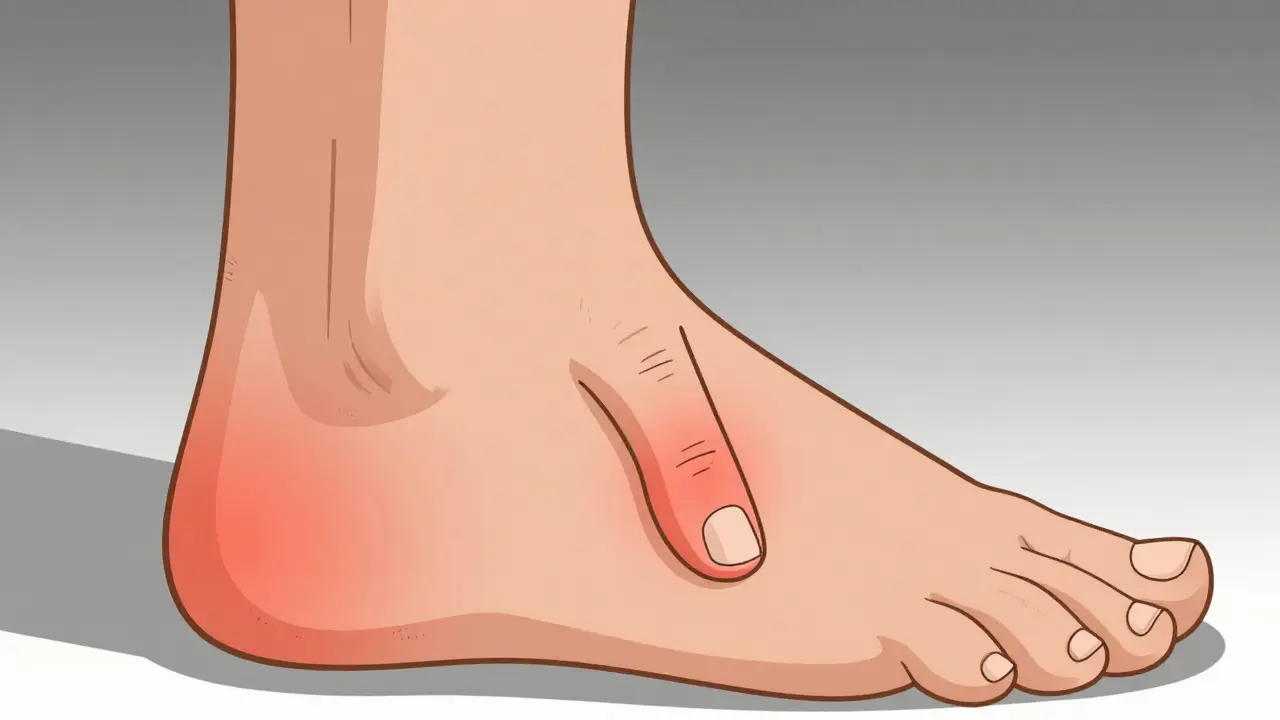
- Dactylitis: Often called "sausage digits," this is the swelling of an entire finger or toe. It affects roughly 40% of PsA patients and feels hot and tender to the touch.
- Enthesitis: Inflammation at the points where tendons or ligaments attach to bone. Common sites include the Achilles tendon at the heel or the plantar fascia at the bottom of the foot. About 35-50% of patients experience this type of pain.
- Nail Changes: Look for pitting (tiny dents), thickening, or nails separating from the nail bed. These changes occur in up to 80% of individuals with PsA and are a strong predictor of joint involvement.
- Axial Involvement: Pain and stiffness in the lower back, neck, or sacroiliac joints. This can mimic other spinal conditions but is distinct in its association with psoriasis.
Unlike rheumatoid arthritis, which typically affects joints symmetrically (both hands or both knees), PsA can affect joints asymmetrically. You might have one swollen knee while the other remains fine. This asymmetry is a key diagnostic clue for rheumatologists.
How Doctors Diagnose Psoriatic Arthritis
Diagnosing PsA isn't always straightforward because there is no single blood test that confirms it instantly. Doctors use a combination of clinical evaluation and standardized criteria. The CASPAR (Classification of Psoriatic Arthritis) criteria are widely used, offering high accuracy with a sensitivity of 91.4% and specificity of 99.1%. To meet these criteria, a patient usually needs evidence of inflammatory arthritis plus a score of at least 3 points from specific indicators: current psoriasis (3 points), history of psoriasis (2 points), psoriatic nail dystrophy (1 point), negative rheumatoid factor (1 point), or characteristic X-ray findings (1 point).
Your healthcare provider will likely perform a physical exam to check for joint tenderness and swelling. They may order blood tests to measure inflammatory markers like C-reactive protein (CRP) and erythrocyte sedimentation rate (ESR). While these don't diagnose PsA directly, they help gauge the level of inflammation in your body. Imaging plays a critical role too. X-rays can show bone erosion or new bone formation, while ultrasounds and MRIs are superior for detecting early soft tissue inflammation and enthesitis before permanent damage occurs.
Treatment Options and Management Strategies
Managing PsA involves a stepwise approach tailored to your specific symptoms. The goal is to achieve minimal disease activity, which means keeping pain, swelling, and skin involvement under strict control. Treatment plans often combine medications with lifestyle adjustments.
| Medication Class | Examples | Primary Use Case | Key Considerations |
|---|---|---|---|
| NSAIDs | Ibuprofen, Naproxen | Mild pain and inflammation | Short-term relief; monitor stomach health |
| Conventional DMARDs | Methotrexate | Persistent joint disease | Requires regular blood monitoring; weekly dosing |
| TNF Inhibitors | Adalimumab, Etanercept | Axial disease and enthesitis | Injections; effective for spine involvement |
| IL-17 Inhibitors | Secukinumab, Ixekizumab | Severe skin and joint symptoms | High efficacy for plaques; monitor for infections |
| JAK Inhibitors | Tofacitinib | Alternative when biologics fail | Oral tablets; different side effect profile |
For mild cases, nonsteroidal anti-inflammatory drugs (NSAIDs) might suffice to manage pain. However, for most patients, disease-modifying antirheumatic drugs (DMARDs) like methotrexate are necessary to stop progression. If conventional treatments aren't enough, biologic agents step in. These powerful medications target specific parts of the immune system. TNF inhibitors are often preferred if you have significant back pain or heel issues, while IL-17 inhibitors show superior results for clearing skin plaques. The choice depends heavily on which part of your body is suffering the most.

Living with Comorbidities
PsA doesn't stay contained to your joints and skin. Because it is a systemic inflammatory condition, it increases the risk of other health issues. Cardiovascular disease is a major concern, affecting 40-50% of PsA patients. The chronic inflammation contributes to plaque buildup in arteries, raising the risk of heart attack and stroke. Metabolic syndrome, which includes high blood pressure, high blood sugar, and excess waist circumference, is also more common in this population.
Mental health is another often-overlooked aspect. Living with chronic pain and visible skin changes can lead to anxiety and depression, affecting up to 30% of patients. Quality of life scores are typically lower than those of age-matched controls without the disease. Therefore, comprehensive care must include screening for cardiovascular risks and mental health support. Managing your weight, staying active within your comfort zone, and maintaining a healthy diet are not just general advice-they are critical components of PsA management to reduce overall inflammation and protect your heart.
Future Directions and Emerging Therapies
Research into PsA is moving rapidly toward precision medicine. Scientists are identifying biomarkers, such as matrix metalloproteinase-3 (MMP-3) and calprotectin, which may help predict how well you will respond to specific treatments. New drug classes are entering the market, including TYK2 inhibitors like deucravacitinib, which offer oral alternatives to injections. Additionally, studies on the gut-skin-joint axis suggest that gut microbiome composition plays a role in disease activity, opening doors for probiotic-based interventions. With improved imaging techniques allowing for earlier detection, the hope is that more patients will receive targeted therapy sooner, preventing the irreversible joint damage that was once considered inevitable.
Can you have psoriatic arthritis without psoriasis?
Yes, although it is less common. In about 5-10% of cases, joint symptoms appear before any visible skin lesions. However, a history of psoriasis or family history of the condition is still a strong indicator for diagnosis.
Is psoriatic arthritis curable?
Currently, there is no cure, but it is highly manageable. With modern treatments like biologics and targeted therapies, many patients achieve remission or minimal disease activity, allowing them to live active, pain-free lives.
What foods should I avoid with psoriatic arthritis?
There is no single universal diet, but reducing processed foods, sugar, and excessive alcohol can help lower systemic inflammation. An anti-inflammatory diet rich in omega-3 fatty acids, fruits, and vegetables is generally recommended.
How does psoriatic arthritis differ from rheumatoid arthritis?
RA typically affects joints symmetrically and rarely involves the spine or nails. PsA often affects joints asymmetrically, frequently involves the spine (axial skeleton), causes nail changes, and is associated with skin plaques.
Does smoking make psoriasis worse?
Yes. Smoking is a known trigger for psoriasis flares and can reduce the effectiveness of certain treatments. Quitting smoking is one of the most impactful lifestyle changes you can make for both skin and joint health.
