 May, 30 2026
Your eyes are delicate, and when they get inflamed, the relief from Steroid Eye Drops is potent anti-inflammatory medication used to treat conditions like uveitis and severe allergies by suppressing the immune response in the eye. Also known as corticosteroid ophthalmic solutions, these drops can clear up redness and pain faster than almost anything else. But there is a catch that many patients overlook until it’s too late. These powerful drugs carry serious risks if you don’t monitor them correctly.
We often think of eye drops as harmless-just a little liquid for dry or itchy eyes. Steroid drops are different. They are pharmaceutical agents that change how your eye functions. Used correctly, they save vision. Used incorrectly, they can damage it permanently. This guide breaks down exactly what these drops do, who needs them, and how to stay safe while using them.
What Are Steroid Eye Drops and How Do They Work?
To understand the risk, you first need to understand the tool. Corticosteroids are synthetic hormones that mimic cortisol, the body's natural stress hormone, to reduce inflammation throughout the body. When applied to the eye, they block the production of prostaglandins and other chemicals that cause swelling, redness, and pain.
The most common types you’ll encounter include:
- Prednisolone Acetate: Often sold under brand names like Pred Forte or Omnipred. This is a high-potency steroid frequently used for acute inflammation.
- Dexamethasone: Another potent option often found in suspension forms.
- Loteprednol Etabonate: A newer generation steroid designed to be safer with a lower risk of raising eye pressure, though not zero risk.
These medications have been around since the mid-20th century. Ophthalmologists like Charles B. Knapp pioneered their use in the 1950s, revolutionizing how we treat sight-threatening inflammation. Today, they remain the gold standard for conditions where rapid control of inflammation is critical to preserving vision.
When Are Steroid Eye Drops Necessary?
You won’t get these drops for simple dry eye or minor irritation from dust. Doctors prescribe them for specific, often serious conditions where inflammation poses a threat to your eye structure.
| Condition | Why Steroids Help | Typical Duration |
|---|---|---|
| Uveitis | Reduces swelling in the middle layer of the eye to prevent scarring and vision loss. | Weeks to months (tapered) |
| Non-Infectious Allergies | Calms severe allergic reactions that antihistamines can't touch. | Short term (days to weeks) |
| Post-Surgical Inflammation | Controls swelling after cataract or refractive surgery to ensure proper healing. | 2-4 weeks |
| Chemical Burns | Reduces tissue damage and prevents secondary complications. | Variable based on severity |
For example, in acute anterior uveitis, inflammation can cause the iris to stick to the lens or raise pressure dangerously high. As Dr. Daniel Bintz, an optometrist and member of the American Optometric Association's Health Promotions Committee, noted, "Uveitis patients I have treated over the years typically respond very well when steroids are needed." The goal is to stop the fire before it burns down the house.
The Hidden Dangers: Glaucoma and Cataracts
Here is where the conversation gets serious. The two biggest risks associated with prolonged use of steroid eye drops are Steroid-Induced Glaucoma is a condition where elevated intraocular pressure caused by steroid use damages the optic nerve and Posterior Subcapsular Cataracts are clouding of the back part of the eye's lens, directly in the line of sight, caused by long-term steroid exposure.
Steroid-Induced Glaucoma
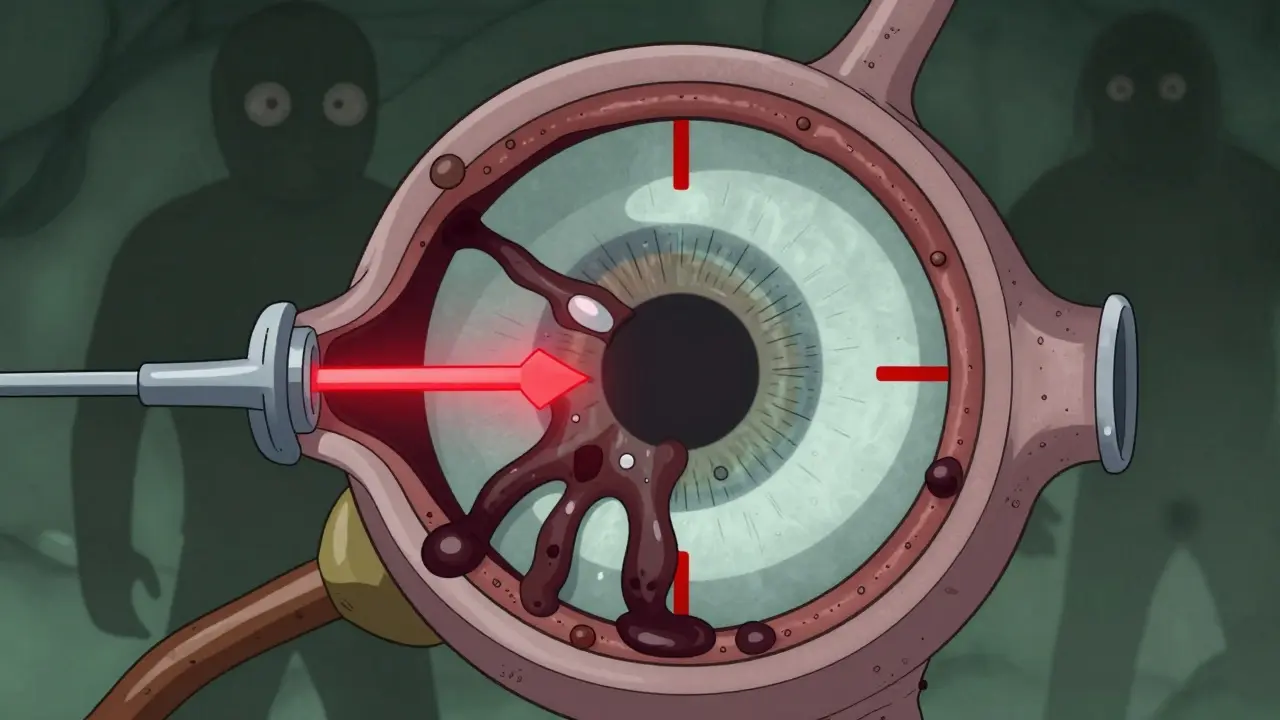
Your eye has fluid that flows in and out to maintain pressure. Steroids can clog the drainage system (the trabecular meshwork), causing fluid to build up. This raises your Intraocular Pressure (IOP) is the fluid pressure inside the eye, normally between 10-21 mmHg; high pressure can damage the optic nerve.
Not everyone reacts this way. About 30-40% of people see some mild increase in pressure. But 4-6% of the population are "steroid responders." For these individuals, pressure can spike dramatically-more than 15 mmHg above normal. If left unchecked, this pressure crushes the optic nerve, leading to permanent vision loss. The scary part? You usually feel nothing. Glaucoma is called the "silent thief of sight" because you lose peripheral vision gradually without pain.
Cataracts
If you use steroid drops for more than 10 days continuously, your risk of developing cataracts goes up. Specifically, posterior subcapsular cataracts form at the back of the lens. Unlike age-related cataracts that start at the edges, these form right in the center, causing glare and blurry vision much earlier than expected. Savaglio Vision notes that this accelerated formation can bring forward the need for cataract surgery by 5-10 years in susceptible individuals.
Who Is at Higher Risk?
Some people are naturally more vulnerable to these side effects. According to PubMed Central studies and clinical guidelines, you should be extra cautious if you have:
- A personal history of glaucoma
- A family history of open-angle glaucoma
- Diabetes (which already affects eye health)
- High myopia (severe nearsightedness)
- Asthma or certain autoimmune disorders
If any of these apply to you, your doctor will likely choose a milder steroid like Loteprednol or monitor you much more closely.
Monitoring Protocols: What Your Doctor Needs to Check
You cannot manage what you do not measure. Using steroid eye drops requires a strict monitoring schedule. Here is the standard protocol recommended by the American Academy of Ophthalmology:
- Baseline Exam: Before starting treatment, your doctor must measure your current IOP and examine your lens for early cataracts.
- Regular Checks: If you are using drops for more than 2 weeks, you need IOP checks every 2-4 weeks.
- High-Risk Frequency: If you are a known steroid responder or using high-potency drops like Pred Forte, checks may be needed every 1-2 weeks.
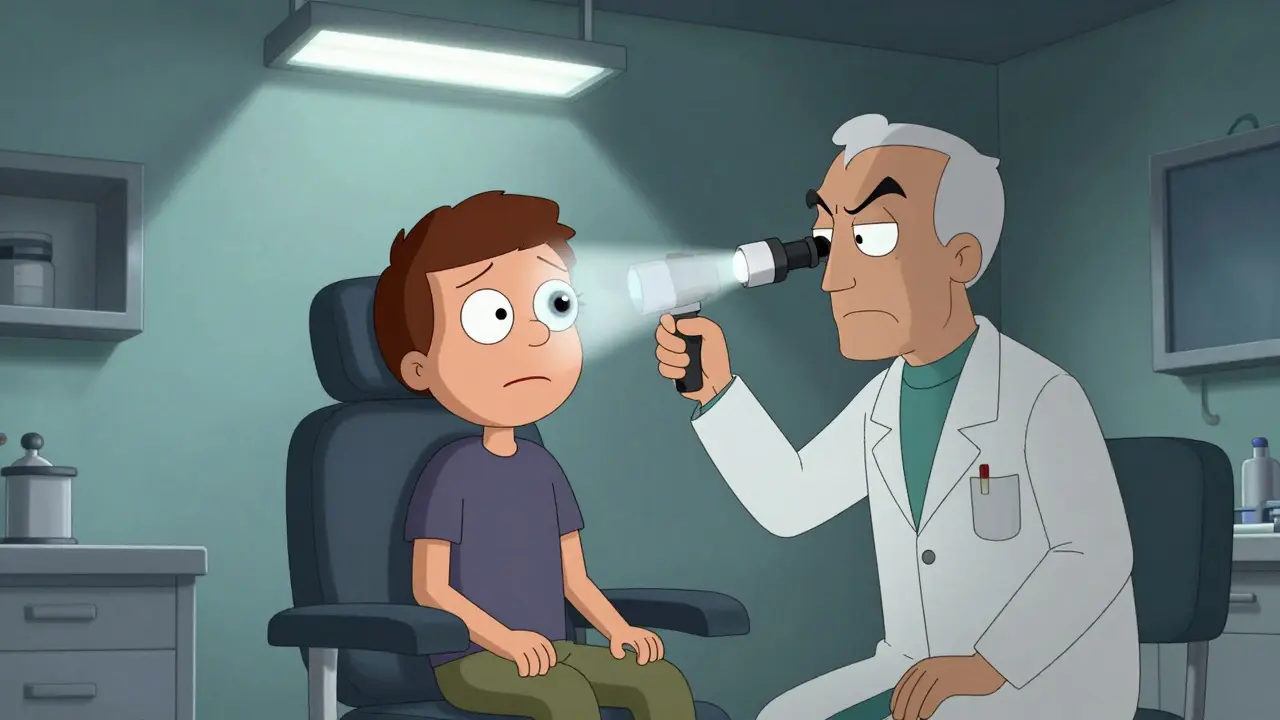
- Slit-Lamp Examination: To look for cataract formation and corneal thinning.
The Mayo Clinic emphasizes that "your eye doctor will want to examine your eyes at regular visits... especially if you will be using this medicine for 10 days or longer." Do not skip these appointments. Elevated IOP can go unnoticed for months, and the resulting optic nerve damage is irreversible.
Safe Usage Guidelines and Alternatives
How do you balance the benefit of clearing inflammation with the risk of damage? The key is duration and dosage.
The Two-Week Rule: Side effects are rare if you use low-dose steroids for less than two weeks. The risk climbs significantly after four weeks of continuous use. Most uveitis treatments last one to two months, which is generally considered the upper limit of safety for most patients.
Tapering Off: Never stop steroid eye drops suddenly. Abrupt cessation can cause rebound inflammation, making the original problem worse. Your doctor will create a tapering schedule, slowly reducing the frequency of drops over several weeks.
Alternatives: For chronic conditions that require long-term management, doctors may switch you to Nonsteroidal Anti-Inflammatory Drugs (NSAIDs) like ketorolac. As the American Optometric Association notes, "They don't have the 'punch' of a steroid but also don't have the side effects." Immunosuppressants like cyclosporine are another option for allergic conjunctivitis, offering long-term relief without the glaucoma risk.
Signs You Need Immediate Medical Attention
While many complications are silent, some symptoms indicate urgent issues. Contact your eye doctor immediately if you experience:
- Sudden blurry vision
- Eye pain or tenderness
- Halos around lights
- Nausea accompanying eye discomfort
- Increased redness despite using the drops
Remember, steroids suppress the immune response in your eye. This means you are more susceptible to infections, including herpes simplex keratitis or fungal infections. If your eye gets infected while on steroids, it can progress rapidly and severely.
How long can I safely use steroid eye drops?
Generally, short-term use of less than two weeks carries low risk. Use beyond 10 days increases the risk of cataracts, and use beyond 4 weeks significantly raises the risk of glaucoma. Most treatment courses last 1-2 months, but this requires strict medical monitoring.
Can steroid eye drops cause blindness?
Yes, indirectly. If steroid-induced glaucoma is not detected and treated, the high pressure can permanently damage the optic nerve, leading to irreversible vision loss. Similarly, advanced cataracts can cause significant visual impairment if not surgically corrected.
Are all steroid eye drops the same strength?
No. Potency varies widely. Prednisolone acetate 1% is high potency and carries higher risk. Loteprednol etabonate is a "soft" steroid with lower systemic absorption and lower risk of raising eye pressure, making it safer for longer use.
Do I need eye pressure tests if I only use drops for a week?
Usually, no. For very short courses (under 10 days) in healthy eyes, the risk of immediate pressure spikes is low. However, if you have a history of glaucoma or are a known steroid responder, your doctor may still check your baseline pressure before starting.
What happens if I stop steroid drops suddenly?
You may experience rebound inflammation, where the original condition flares up worse than before. Always follow your doctor's tapering schedule to gradually reduce the dose before stopping completely.

Aswin Ashokan
June 1, 2026 AT 13:41typical western medical propaganda. in india we use natural remedies that do not cause blindness or glaucoma. you are just scaring people to sell more tests. the body heals itself if you let it. stop relying on chemicals.
William Storm
June 2, 2026 AT 19:20One must consider the ontological implications of pharmaceutical intervention, wherein the artificial suppression of inflammation creates a paradoxical state of vulnerability; indeed, the very act of healing becomes an act of potential destruction, a dialectic of sight and blindness that haunts the modern ophthalmologist, who stands as a gatekeeper between clarity and chaos, wielding steroids like a double-edged sword that cuts both the symptom and the substance of vision itself, leaving us to ponder whether we are truly treating the eye or merely masking its cry for help with a chemical silence that is deafening in its consequences.
Wendy Engelmann
June 3, 2026 AT 19:26I found this really helpful because I was worried about my mom using her drops too long. It is good to know there are safer options like Loteprednol. Thanks for sharing this info. It makes me feel better knowing doctors check pressure regularly.
Lisa Thomas
June 4, 2026 AT 05:06OMG this is so scary!! :O I have been using these for months and never thought about cataracts. My eyes feel fine but maybe they are lying to me? I need to call my doctor tomorrow no wait today! This is terrifying information but thank you for posting it seriously wow
Nicholas Bowling
June 6, 2026 AT 00:12everyone is overreacting. i used them for a year and nothing happened. why are you all so dramatic about pressure checks? it is just eye drops come on people get a grip. the article is fear mongering at its finest. typical clickbait health advice designed to make you panic and book appointments you do not need. relax already
Jay Foreman
June 7, 2026 AT 01:17It is absolutely morally reprehensible how many people ignore their eye health until it is too late. You see these folks complaining about blurry vision when they could have prevented it by simply following the tapering schedule. It is lazy and selfish to risk your own sight and then burden the healthcare system with preventable damage. We need more accountability in personal health management. The fact that steroid-induced glaucoma is silent makes it even more critical that you respect the monitoring protocols. Do not be that person who ruins their optic nerve through negligence. It is avoidable and frankly unacceptable given how much information is available right now.
Cathy N
June 7, 2026 AT 09:40i had uveitis last year and my doc put me on pred forte. he checked my pressure every two weeks like the article says. it was annoying but i trusted him. glad to read that loteprednol is an option for less potent needs. thanks for the clear explanation
Adelaide Motata
June 7, 2026 AT 21:12u ppl r stupid if u think steroids r safe. ive seen too many cases where docs just prescribe without checking history. its a disaster waiting to happen. the whole medical industry is broken and relies on these drugs to keep patients dependent. wake up sheeple. also spelling matters but i dont care enough to fix mine lol
Mike Crump
June 7, 2026 AT 21:31G'day everyone! Just wanted to chime in from Down Under. We reckon keeping an eye on your eye pressure is pretty crucial, no pun intended! If you're feeling a bit apprehensive about the 'silent thief' aspect, remember that knowledge is power. Chatting with your optometrist about your specific risks, like diabetes or family history, can really tailor the plan for you. Let's look after those peepers together!
Samantha Arbuckle
June 9, 2026 AT 09:07This is such important info! 💖 I always forget to ask about side effects when picking up prescriptions. The part about tapering off slowly is key. So many people just stop when they feel better. Keep spreading awareness y'all! 🌟👀 #EyeHealth #StaySafe
Stephanie Francis
June 9, 2026 AT 21:25It is imperative that we address the systemic failure in patient education regarding corticosteroid usage. The statistics provided here are alarming yet predictable given the current state of medical communication. Patients must demand baseline exams. It is not optional. It is a fundamental right to informed consent. Stop accepting vague instructions from providers who are too busy to explain the risks of posterior subcapsular cataracts. Stand up for your health. :)
Jonathan Paul
June 11, 2026 AT 01:19look i know what im doing ok? i stopped my drops early because i felt better and now my eye hurts again. classic rebound effect as mentioned. but why does nobody talk about the emotional toll of having to go to the doctor every week? its intrusive and stressful. i just want to be left alone with my medicine. also i might be a responder but who cares right? lets ignore the science and trust our gut feelings instead
Roderick Gooden
June 11, 2026 AT 02:20While it is certainly true that the risks associated with prolonged steroid use are significant and well-documented within the ophthalmological community, one must also acknowledge the complex interplay between immediate therapeutic relief and long-term ocular integrity, which often forces patients into a difficult position where they must weigh the benefits of clearing acute inflammation against the potential for developing secondary conditions such as glaucoma or cataracts, thereby necessitating a rigorous adherence to monitoring protocols that are frequently overlooked due to patient non-compliance or provider oversight, ultimately leading to a scenario where the initial treatment success is undermined by subsequent complications that could have been mitigated through stricter adherence to the established guidelines regarding intraocular pressure checks and lens examinations.