 Jun, 6 2026
Telepharmacy Safety Readiness Checker
Assess Your Telepharmacy Environment
Check all factors that apply to your typical consultation setup.
Your Safety Readiness Score
Research-Based Recommendation:
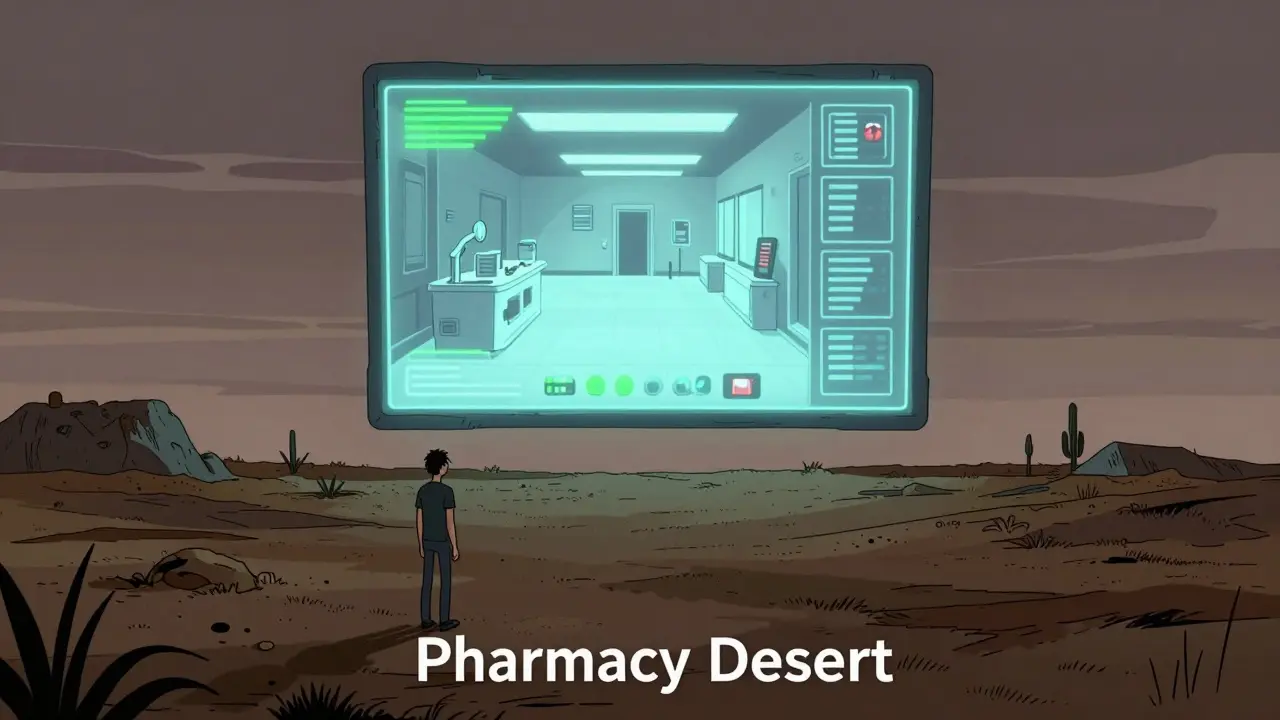
Imagine living in a rural town where the nearest pharmacy is two hours away. You need your insulin adjusted or have questions about a new prescription, but driving across state lines just isn't an option. This is the reality for millions of people in "pharmacy deserts." Telepharmacy-delivering pharmaceutical care through video and digital tools-promises to bridge this gap. But here is the big question everyone is asking: Is it actually safe? Does talking to a pharmacist on a screen put you at risk compared to walking up to a counter?
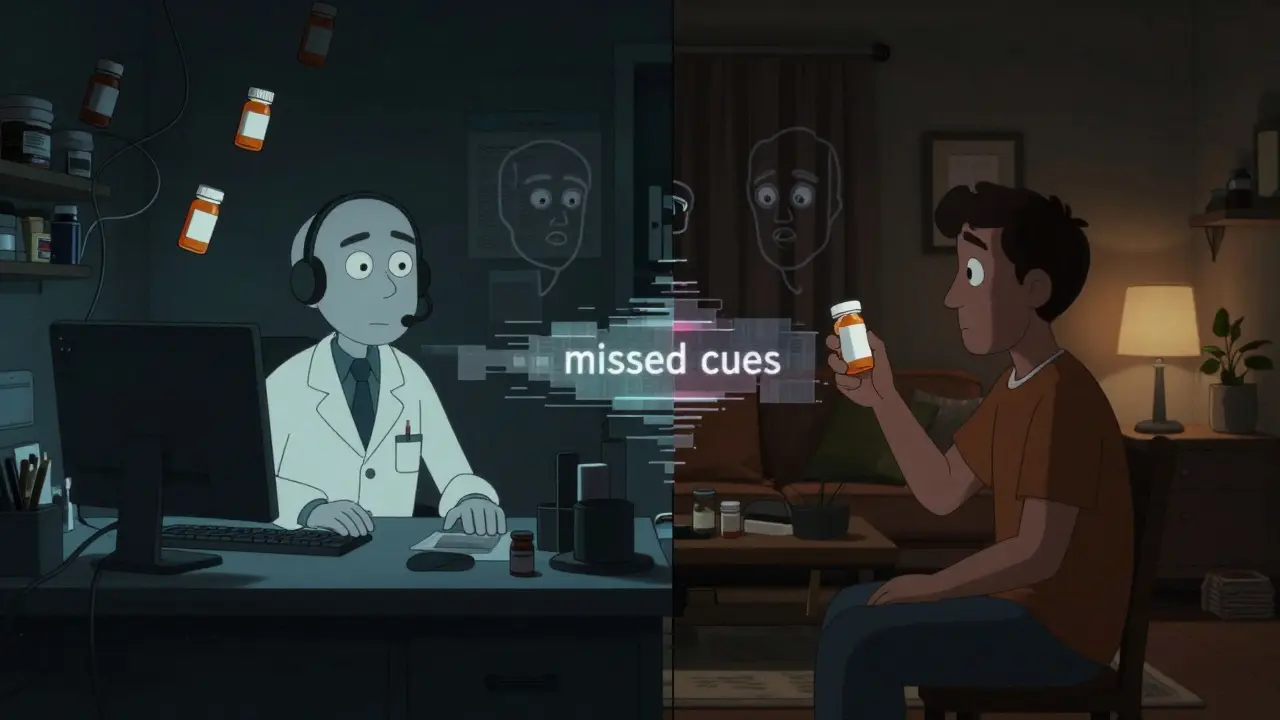
The short answer from current research is yes, it is generally safe. In fact, studies suggest it might even be safer in specific metrics like dispensing accuracy. However, the data comes with caveats. Technology fails, connections drop, and pharmacists miss non-verbal cues when they can’t see you in person. If you are relying on remote pharmacy services, understanding what the science says-and what it doesn’t-can help you protect your health.
How Telepharmacy Works in Practice
To understand the safety outcomes, we first need to look at how these services operate. Telepharmacy is a healthcare delivery model that uses telecommunications technology to provide pharmacy services remotely. It is not just about mailing pills. It involves real-time interactions between patients and licensed pharmacists.
Most systems use one of two models. The first is the hub-and-spoke model. Imagine a large central pharmacy (the hub) connected via high-definition video to smaller satellite locations (the spokes) in rural clinics or hospitals. A pharmacist at the hub verifies prescriptions and consults with patients who are physically present at the spoke location. The second model is direct-to-patient, where the patient interacts with the pharmacist entirely online, often from their home, without any physical intermediary site.
Feature
Hub-and-Spoke Model
Direct-to-Patient Model
Physical Presence
Patient visits a local clinic/store
Patient stays at home
Equipment Needed
Video kiosks, automated dispensers at site
Smartphone or computer with camera
Primary Use Case
Rural hospital support, underserved clinics
Chronic disease management, follow-ups
Safety Control
Technician assists locally; pharmacist verifies remotely
Patient self-reports symptoms; pharmacist assesses digitally
For safety to work, the technology must meet strict standards. According to regulatory guidelines, systems typically require at least 720p video resolution so pharmacists can read labels clearly and see facial expressions. They also need secure, HIPAA-compliant data transmission to protect your medical records. Without this infrastructure, the service is just a chat app, not a clinical tool.
What Studies Say About Medication Errors
The biggest fear people have is making a mistake with their meds because no one is watching closely. Surprisingly, the data suggests telepharmacy might reduce certain types of errors. A systematic review by Pathak et al., published in the Journal of Health Care for the Poor and Underserved in 2021, analyzed six major studies conducted between 2010 and 2020. The findings were reassuring.
Telepharmacies achieved medication dispensing accuracy rates between 99.2% and 99.8%. Compare that to traditional brick-and-mortar pharmacies, which hover around 99.3% to 99.9%. There is no statistically significant difference in overall safety. In some cases, telepharmacy was better. One key metric was after-hours drug approval times. In traditional settings, waiting for a pharmacist’s sign-off could take hours. With telepharmacy, those times dropped to 14-20 minutes. Faster approvals mean less pressure on staff to rush during peak hours, which indirectly reduces errors.
However, we need to be careful here. The Pathak review noted a "high risk of bias" in these studies. Most were not randomized controlled trials. They often relied on self-reported error tracking, which varies wildly from one pharmacy to another. Just because a system reports fewer errors doesn’t always mean it caught them all. Some facilities might simply not report near-misses as rigorously as others.
Accessibility vs. Safety: The Rural Advantage
Safety isn’t just about counting pill errors. It’s also about whether people actually get their medicine. If a pharmacy closes down, patients skip doses. That is a massive safety risk. Here is where telepharmacy shines. A 2023 study by Benjamin Urick in JAMA Network Open looked at states that passed pro-telepharmacy laws. Within one year, those states saw a 4.5% decrease in the number of pharmacy deserts. More importantly, the population living in those deserts dropped by 11.1%.
This means more people had access to professional care. When you can video chat with a pharmacist instead of driving two hours, you are more likely to ask questions. You are more likely to fill your prescription. And you are more likely to adhere to your treatment plan. Adherence is one of the biggest predictors of health outcomes. If telepharmacy keeps you taking your blood pressure meds consistently, it has improved your safety profile significantly.
But there is a flip side. Dr. Jerry Fahrni, writing in the Journal of the American Pharmacists Association in 2022, raised a valid concern. He pointed out that pharmacists rely heavily on non-verbal cues. When you walk into a store, a pharmacist might notice you look dizzy, confused, or like you are struggling to breathe. On a grainy video call, especially if the connection lags, those subtle signs can disappear. Missing a cue about potential medication misuse or an adverse reaction is a safety gap that current literature hasn’t fully solved.
User Experiences: The Human Element
Numbers tell part of the story, but patient experiences reveal the day-to-day reality. A survey published in the International Journal of Telemedicine and Applications in 2022 asked 450 users about their satisfaction. Over three-quarters (76.4%) reported high satisfaction. They loved the convenience. One user from rural Montana shared a powerful anecdote: being able to discuss warfarin dosing via video saved them from two potential emergency room visits. That is a tangible safety benefit.
Yet, concerns remain. In that same survey, nearly 30% of users worried that the pharmacist couldn’t fully assess their condition remotely. Anecdotal evidence supports this anxiety. On pharmacy forums, users have reported issues like poor video quality leading to missed allergies. One patient in North Dakota described a technician missing an insulin allergy because the audio cut out during the initial consultation. While rare, these incidents highlight a critical vulnerability: technology failure equals safety failure.
Pharmacists working in these hubs also share mixed feelings. An anonymous pharmacist in South Dakota noted that while they catch about 1.2 errors per 100 prescriptions remotely-a rate comparable to traditional sites-complex cases are stressful. When a patient presents with ambiguous symptoms, the inability to touch, examine, or observe closely forces the pharmacist to err on the side of caution, often transferring care to a physical location. This transfer process itself introduces delays and coordination risks.
Training and Protocols: The Hidden Safeguards
You cannot just put a pharmacist in front of a webcam and expect magic. Safety depends heavily on training. The American Society of Health-System Pharmacists (ASHP) recommends 16-24 hours of specialized training for telepharmacy providers. This covers not just how to use the software, but how to conduct a remote assessment. How do you check a rash via video? How do you verify identity securely?
Research shows that training matters. Sites with comprehensive technician training programs saw 22% fewer dispensing errors than those with minimal training. Technicians at the spoke locations are the eyes and ears. They need to know when to escalate an issue to the remote pharmacist. The University of Arizona College of Pharmacy documented a case study where setting up a rural telepharmacy took 3-4 months of preparation. They didn’t just install cameras; they developed strict safety protocols for handling complex medication issues. For example, high-risk medications like opioids or anticoagulants required dual verification. This rigorous approach resulted in a medication error rate of 0.45%, lower than the national average of 0.67%.
Common challenges include maintaining secure connections. A 2022 survey found that 35% of telepharmacy sites experienced problematic video connections regularly. Bandwidth issues in rural areas are not just an inconvenience; they are a safety hazard. If the video freezes while discussing dosage instructions, the patient might misunderstand. Successful programs, like the Indian Health Service serving Navajo Nation communities, mitigate this by having immediate backup plans to transfer care in-person if technology fails.
The Future of Safety Standards
We are still in the early stages of evaluating long-term safety. As of 2023, only 28 U.S. states had specific telepharmacy regulations. Twenty-two states lacked clear guidelines. This fragmentation makes it hard to compare safety outcomes nationwide. However, momentum is building. The Centers for Medicare & Medicaid Services expanded reimbursement for telepharmacy in late 2022, which will drive adoption but also demand stricter monitoring.
New technologies aim to plug the safety gaps. Artificial intelligence is entering the mix. Companies like MedsAI are developing AI-powered tools that predict adverse drug events. Early trials showed an 18.7% improvement in prediction accuracy. Imagine an AI flagging a potential interaction before the pharmacist even finishes the consultation. Additionally, the FDA’s Sentinel Initiative launched a project in January 2023 to specifically track adverse drug events linked to telepharmacy. This data will be crucial for refining safety standards.
Industry analysts predict that by 2026, telepharmacy will achieve full parity with traditional pharmacy safety outcomes. But this assumes broadband infrastructure improves. Rural areas with poor internet will continue to face disparities. Until then, telepharmacy is a powerful tool, but it requires active participation from patients and rigorous oversight from providers to ensure it remains safe.
Is telepharmacy as safe as going to a physical pharmacy?
Current studies indicate that telepharmacy is comparable to traditional pharmacies in terms of medication dispensing accuracy, with error rates below 1% for both. However, telepharmacy may lack the ability to detect non-verbal cues, which could pose risks in complex cases. Overall, for routine medication management, it is considered safe.
What are the main risks associated with telepharmacy?
The primary risks include technical failures such as poor video or audio quality, which can lead to miscommunication. There is also the risk of missed non-verbal cues indicating adverse reactions. Additionally, cybersecurity threats to patient data are a concern, though mitigated by HIPAA-compliant systems.
Does telepharmacy improve access for rural patients?
Does telepharmacy improve access for rural patients?
Yes, significantly. Research shows that states implementing telepharmacy policies saw an 11.1% reduction in populations living in pharmacy deserts within one year. It eliminates travel barriers, allowing patients in remote areas to receive timely pharmaceutical care.
Are there regulations governing telepharmacy?
Regulations vary by state. As of early 2023, 28 U.S. states had specific telepharmacy laws, while 22 did not. Federal agencies like CMS are expanding reimbursement, and organizations like ASHP provide guidelines for training and safety protocols to standardize practices.
How do I ensure my telepharmacy experience is safe?
Ensure you have a stable internet connection and a quiet environment for consultations. Verify that the service uses HIPAA-compliant platforms. Do not hesitate to ask for clarification if the audio or video cuts out. If you feel your condition is complex or worsening, request an in-person evaluation.
