 Mar, 7 2026
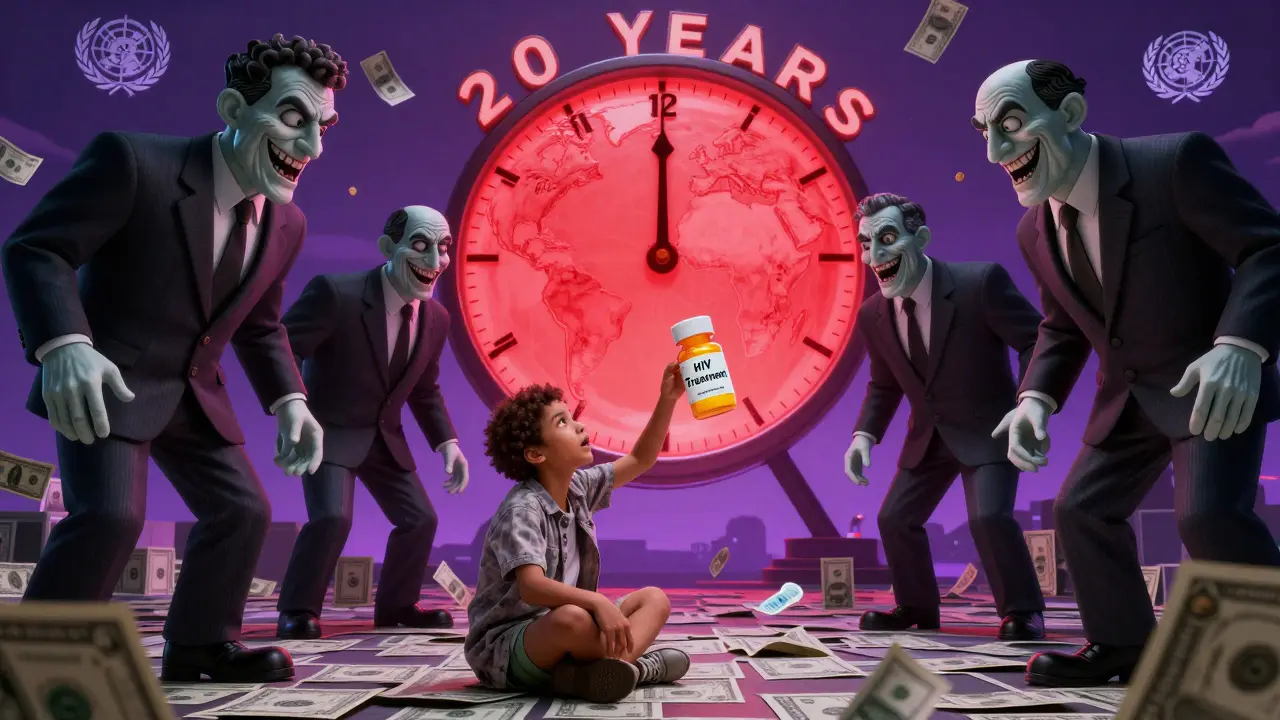
When a person in Malawi needs HIV medicine, they shouldn’t have to wait years for a legal workaround just to get a pill that costs $1 in India. Yet that’s exactly what happens because of the TRIPS Agreement - a global patent rulebook that was meant to protect innovation but has ended up blocking access to life-saving drugs for billions.
What Is the TRIPS Agreement?
The TRIPS Agreement is a binding international treaty under the World Trade Organization (WTO) that sets minimum standards for intellectual property protection, including pharmaceutical patents. It came into force on January 1, 1995, after being negotiated as part of the Uruguay Round of global trade talks.
Before TRIPS, countries like India, Brazil, and Thailand could legally make generic versions of patented drugs. They didn’t recognize product patents for medicines - only process patents. That meant if a company patented how to make a drug, another manufacturer could use a different method to produce the same pill. This kept prices low. In the 1990s, generic antiretrovirals in India cost about 5-10% of the branded version. A year’s supply of HIV treatment that cost $10,000 in the U.S. was available for $600 in India.
TRIPS changed that. It forced every WTO member - including low-income countries - to grant 20 years of patent protection on medicines, starting from the date the patent was filed. No more shortcuts. No more local manufacturing unless you had the original patent. Suddenly, countries that once produced 80% of the world’s generic drugs were forced to stop. The result? Millions couldn’t afford treatment.
How TRIPS Blocks Generic Access
TRIPS doesn’t just say "patents are good." It includes specific rules that make it hard for generics to enter the market.
- Article 27 requires patents on all pharmaceutical products, even if they’re just modified versions of existing drugs - a practice called "evergreening."
- Article 33 mandates 20-year patent terms. That means even after a drug’s patent expires, companies can file new ones on minor changes, delaying generics for years.
- Article 31 allows compulsory licensing - where a government can force a patent holder to let someone else make the drug - but only if it’s "predominantly for the domestic market." That shuts out countries without factories.
Imagine a country like Rwanda - no drug factories, no capacity to produce medicines. It needs HIV drugs. It can’t make them. It can’t import them from India because TRIPS says the license must be for domestic use only. So, even though India can produce the drug for $20 a year, Rwanda can’t buy it. That’s not a market failure. That’s a rule failure.
The Doha Declaration and the Broken Workaround
In 2001, after global outrage over AIDS deaths in Africa, the WTO issued the Doha Declaration on TRIPS and Public Health. It said: "The TRIPS Agreement does not and should not prevent members from taking measures to protect public health." That was a win. But words don’t save lives - procedures do.
So in 2005, the WTO created a fix: Article 31bis. This allowed countries without manufacturing capacity to import generic drugs made under compulsory license by another country. Sounds simple. It wasn’t.
The system requires:
- The importing country must prove it has no manufacturing capacity.
- The exporting country must issue a compulsory license specifically for export.
- Both countries must notify the WTO 15 days before shipment.
- The patent holder must be paid "adequate remuneration" - a vague term that often leads to long negotiations.
- Each shipment requires separate paperwork - no bulk approvals.
It took four years for one country - Rwanda - to use this system. In 2007, Rwanda asked Canada’s Apotex to make a generic HIV combo drug. The process involved 78 steps, legal teams from both countries, and help from Médecins Sans Frontières. The final price? Still 30% higher than if Rwanda had its own factory.
Since then? Zero other uses. Not one. Not for Ebola. Not for malaria. Not for cancer. Just one case, in 17 years.
Why No One Uses the Flexibilities
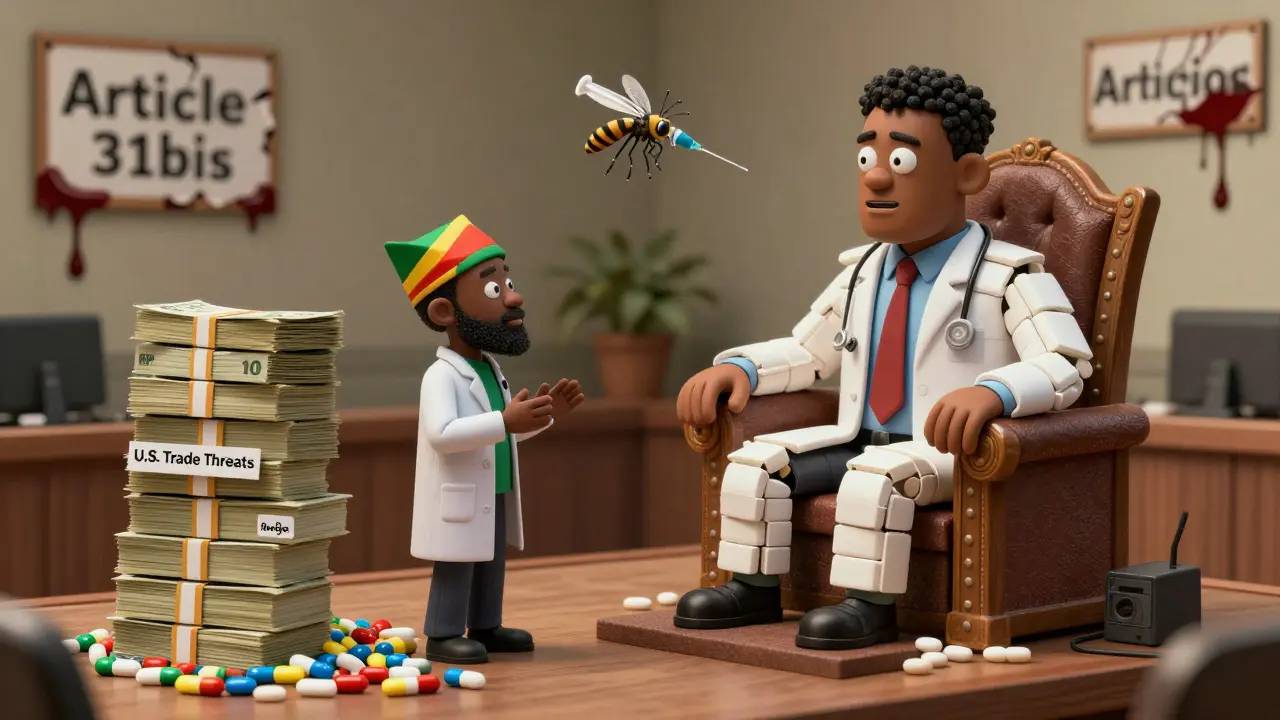
There’s a reason no country dares to use TRIPS flexibilities - fear.
Thailand tried in 2006. It issued compulsory licenses for three drugs: efavirenz (HIV), clopidogrel (heart), and imatinib (cancer). Prices dropped by 30-80%. Then the U.S. pulled Thailand’s trade benefits. Lost exports: $57 million a year.
Brazil did the same in 2007. The U.S. Trade Representative put Brazil on its "Priority Watch List" for two years. Pressure worked. Brazil backed down.
A 2017 study of 105 low- and middle-income countries found that 83% had never issued a single compulsory license - not because they didn’t need to, but because they were scared of retaliation. Trade threats. Sanctions. Diplomatic isolation. The message was clear: protect patents, or lose your economy.
Even when countries try, they’re often blocked by legal challenges. In 2001, 39 pharmaceutical companies sued South Africa over its generic drug law. The case was dropped only after global protests. That’s how powerful the industry is.
What About Voluntary Licenses? The Medicines Patent Pool
Pharmaceutical companies don’t always fight. Sometimes, they offer "voluntary licenses" - allowing generic makers to produce their drugs for a fee. The Medicines Patent Pool (MPP) is the main platform for this. It’s run by the UN and works with companies like Gilead and Merck.
Since 2010, MPP has licensed 44 patented medicines for use in 118 low-income countries. That sounds good - until you look closer. Those 44 drugs cover only 1.2% of all patented medicines worldwide. And 73% of those licenses are limited to sub-Saharan Africa, even though diseases like hepatitis C and diabetes affect people everywhere.
Voluntary licenses are a band-aid. They’re not a right. Companies can pull them anytime. They don’t have to share technology. They don’t have to allow local production. And they only cover a tiny fraction of what’s needed.
The Real Cost of TRIPS
It’s not just about ethics. It’s about numbers.
- 2 billion people lack regular access to essential medicines. 80% of that gap is because of patent barriers.
- Generic drugs make up 89% of prescriptions in the U.S. But only 28% in low-income countries.
- A single year’s supply of HIV treatment can cost $10,000 in the U.S. and $87 in South Africa after generics - a 115-fold difference.
- Patented drugs account for 68% of global pharmaceutical revenue - but only 12% of prescriptions.
That’s not innovation. That’s monopoly pricing.
The global drug market hit $1.42 trillion in 2022. The top 10 companies made $110 billion in profit. Meanwhile, 1.5 million people died in 2023 from preventable HIV, TB, and hepatitis because they couldn’t afford treatment. TRIPS doesn’t just protect profits - it protects deaths.
TRIPS-Plus: The Hidden Rules
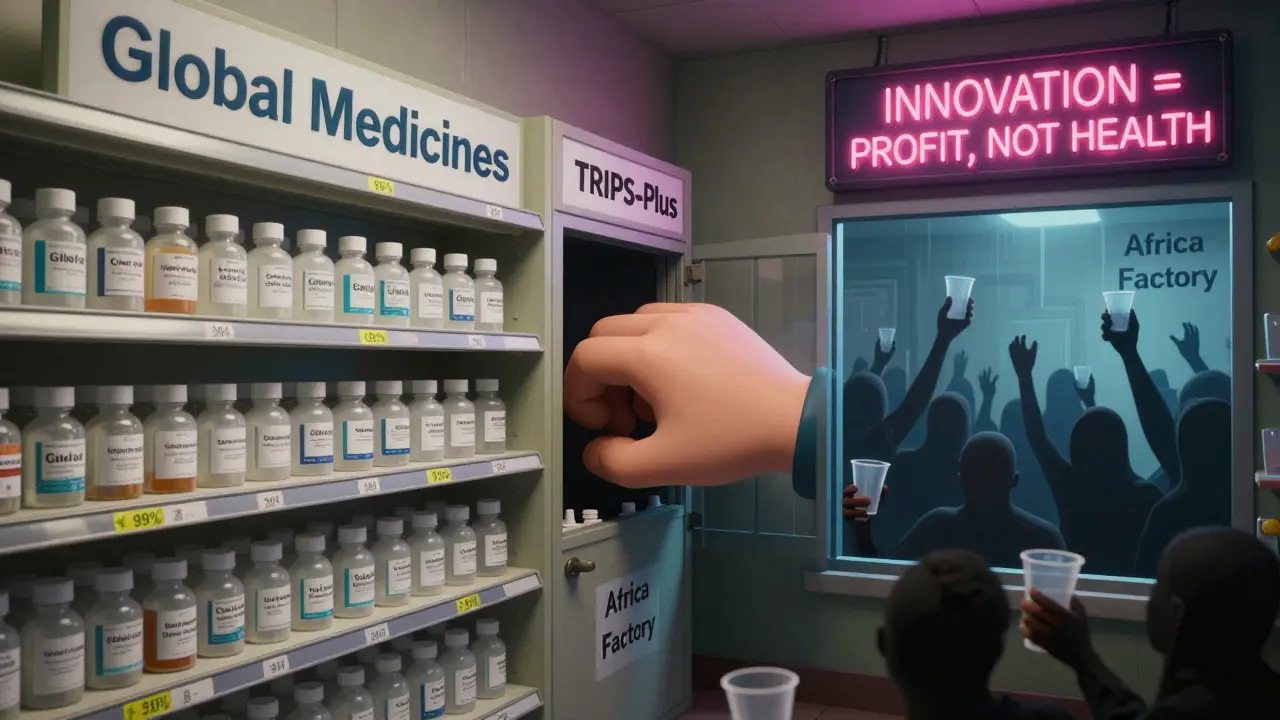
Even worse than TRIPS are the "TRIPS-plus" rules hidden in bilateral trade deals.
The U.S.-Jordan Free Trade Agreement (2001) extended patent terms beyond 20 years. It blocked regulatory approval of generics until the patent expired - even if the patent was invalid. Other deals do the same. The WTO found that 86% of its 164 members have added these extra restrictions.
These aren’t accidental. They’re negotiated in secret. Low-income countries, desperate for trade deals, agree to them. Then they’re stuck.
A 2019 study estimated that TRIPS-plus provisions cost LMICs $2.3 billion a year in lost savings from generic competition. That’s enough to treat 11 million people with HIV every year.
Is There Hope?
Yes - but it’s fragile.
In 2020, India and South Africa proposed a TRIPS waiver for COVID-19 vaccines and treatments. After two years of pressure, the WTO agreed - but only partially. The waiver covers vaccines only. No diagnostics. No treatments. No future pandemics.
Then, in September 2024, the UN held a global meeting on pandemic preparedness. Its final statement called for "reform of the TRIPS Agreement to ensure timely access to health technologies during health emergencies." That’s the first time a global body has openly said TRIPS is broken.
But reform isn’t coming fast. The pharmaceutical industry still spends billions lobbying against change. The U.S. and EU continue to block broader waivers. And 58 countries are still negotiating new trade deals that include TRIPS-plus clauses.
Without real change, the UN predicts that by 2030, 3.2 billion people - nearly 40% of the world - will still be locked out of life-saving medicines.
What Needs to Change
It’s not about eliminating patents. It’s about fixing the system.
- Make Article 31bis automatic - no paperwork, no delays. If a country needs medicine, it can import it.
- Allow regional production hubs - like a generic drug factory in Africa, supported by technology transfer.
- End TRIPS-plus clauses in trade deals. No country should be forced to give up public health rights for a trade deal.
- Require patent holders to disclose all data used to get approval - so generics can be approved faster.
- Make compulsory licensing a legal right, not a political risk.
India and South Africa showed what’s possible. In 2008, South Africa’s generic antiretrovirals dropped the cost of HIV treatment from $10,000 to $87 a year. That saved millions of lives. That’s not charity. That’s justice.
The TRIPS Agreement was supposed to make trade fair. Instead, it made health unfair. The question now isn’t whether we can change it. It’s whether we’re willing to.
Can low-income countries still make generic drugs under TRIPS?
Yes - but only if they have the legal framework and political will. Countries like India and Brazil still produce generics, but they face trade pressure and legal threats. Most low-income countries lack the capacity to do so. The TRIPS Agreement doesn’t ban generic production - it bans it without a patent license. That’s why only a few countries can do it.
Why hasn’t the Article 31bis system been used more?
Because it’s too slow, too complicated, and too risky. The system requires 78 steps, government coordination between two countries, and approval from the WTO. It takes years. And countries that try risk trade retaliation. The only successful use - Rwanda in 2008 - took four years and cost millions in legal and technical help. No country wants to go through that again.
Do pharmaceutical companies really block access to medicines?
Not always directly - but their lobbying and legal actions do. Companies sue governments that issue compulsory licenses. They pressure trade partners to withdraw benefits. They lobby to extend patent terms through TRIPS-plus deals. And they refuse to share technology, even during pandemics. Their business model depends on monopolies. That’s why they fight access.
Is the Medicines Patent Pool a good solution?
It’s better than nothing - but it’s not enough. The MPP covers only 44 drugs out of thousands of patented medicines. It doesn’t allow local production in most cases. Companies can end licenses at any time. And it only works for drugs they’re willing to license. It’s a voluntary system in a world that needs mandatory rights.
What’s the difference between a patent and a monopoly on medicine?
A patent gives temporary exclusive rights to make a product - that’s normal. But when that patent blocks access to a life-saving drug, and the company refuses to license it or share technology, it becomes a monopoly. When a company charges $10,000 for a drug that costs $2 to make, and prevents others from making it, it’s not innovation - it’s control.
Can a country ignore TRIPS?
Technically, no - because it’s a binding treaty. But in practice, some countries have. India continued making generics before TRIPS was fully enforced. Brazil issued compulsory licenses despite U.S. pressure. South Africa passed its law and survived the lawsuit. TRIPS isn’t unbreakable - but breaking it costs politically and economically. Most countries can’t afford that cost.

APRIL HARRINGTON
March 8, 2026 AT 10:08Leon Hallal
March 9, 2026 AT 17:15Janelle Pearl
March 11, 2026 AT 00:40Peter Kovac
March 11, 2026 AT 06:26Neeti Rustagi
March 12, 2026 AT 14:57Nicholas Gama
March 13, 2026 AT 07:42Mary Beth Brook
March 14, 2026 AT 00:26Judith Manzano
March 14, 2026 AT 18:18Dan Mayer
March 16, 2026 AT 07:57Katy Shamitz
March 18, 2026 AT 05:31Robert Bliss
March 18, 2026 AT 20:09Ray Foret Jr.
March 19, 2026 AT 18:44Melba Miller
March 20, 2026 AT 11:19rafeq khlo
March 20, 2026 AT 23:44Samantha Fierro
March 22, 2026 AT 01:49