 Apr, 12 2026
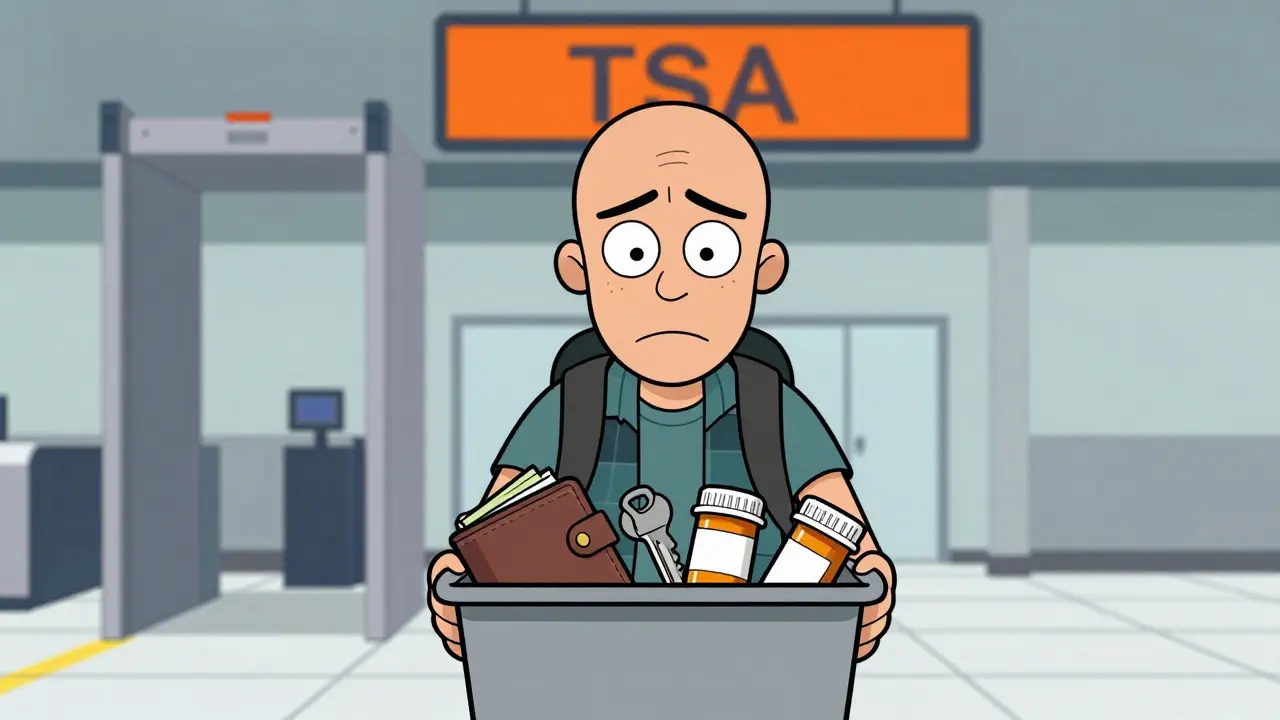
Ever felt that spike of anxiety at the security bin, wondering if the officer is going to pull your medication out for a secondary search? You aren't alone. For the 66% of American adults who take at least one prescription drug, the airport checkpoint is often the most stressful part of the journey. The good news is that TSA medication guidelines is a set of federal security protocols managed by the U.S. Department of Homeland Security that allows travelers to carry necessary medical supplies through checkpoints without strict quantity limits. While the rules are generally passenger-friendly, a small mistake in how you pack or label your meds can lead to long delays or, in some cases, confiscation.
The Golden Rule: Carry-On Only
If there is one piece of advice to memorize, it is this: never put your medication in checked luggage. Airlines like United Airlines have made this a strict policy because bags get lost, handlers make mistakes, and cargo holds can reach extreme temperatures that ruin the chemistry of your drugs. If your life-sustaining medication is lost in a suitcase, you can't just stop at a pharmacy in a foreign city and get a replacement without a local prescription.
Keep everything in your carry-on. This ensures you have immediate access to your meds during flight delays or emergencies and keeps them under your direct control. Whether it's a pill bottle, an inhaler, or an injection, if you need it to stay healthy, it stays with you in the cabin.
Understanding the Liquid Exception (The 3-1-1 Rule)
You've probably heard of the 3-1-1 liquid rule, which limits you to 3.4-ounce (100ml) containers in a single quart-sized bag. Here is the part most people miss: medically necessary liquids are exempt from this limit. You can bring larger quantities of liquid medications, creams, and gels as long as they are for medical use.
This exemption applies to a wide range of items, including:
- Insulin in pre-filled pens and Omnipod delivery systems.
- Prescription creams for conditions like psoriasis or eczema.
- Saline solution for contact lenses.
- Over-the-counter cough syrups like DayQuil.
- Antibiotic ointments such as Neosporin or hydrocortisone creams.
When you reach the checkpoint, just remove these liquids from your bag and tell the TSA officer you have medical liquids. They will inspect them, and in most cases, you'll be on your way in a few minutes. If you have TSA PreCheck, you might not even need to remove them, depending on the current airport configuration.
| Medication Form | Quantity Limit | 3-1-1 Rule Applies? | TSA Action Required |
|---|---|---|---|
| Pills/Tablets | Unlimited | No | Keep in bag |
| Liquids/Gels | Unlimited (Medical) | Exempt | Declare to officer |
| Injectables/Pens | Unlimited | Exempt | Declare to officer |
| CBD Oil (<0.3% THC) | Limited | Exempt | Verify THC label |
Packing Strategy: Labels vs. Convenience
Many frequent flyers use pill organizers to save space. While convenient, this is where a lot of trouble starts. According to the CDC, decanting medications into unlabeled containers contributed to over 30% of misidentification issues at international borders in 2023. If a TSA officer or a customs agent can't tell what a white powder or a blue pill is, they may flag it for further testing.
The safest bet is to keep medications in their original pharmaceutical packaging. If you absolutely must use a travel organizer, carry a copy of your prescription or a doctor's note. A critical tip: ensure the name on your prescription matches your government-issued ID exactly. United Airlines reported that nearly 80% of medication-related security delays in 2023 were caused by simple name mismatches-like using a nickname or omitting a middle name-which makes it harder for officers to verify the meds belong to you.
Special Considerations for Medical Devices and Cooling
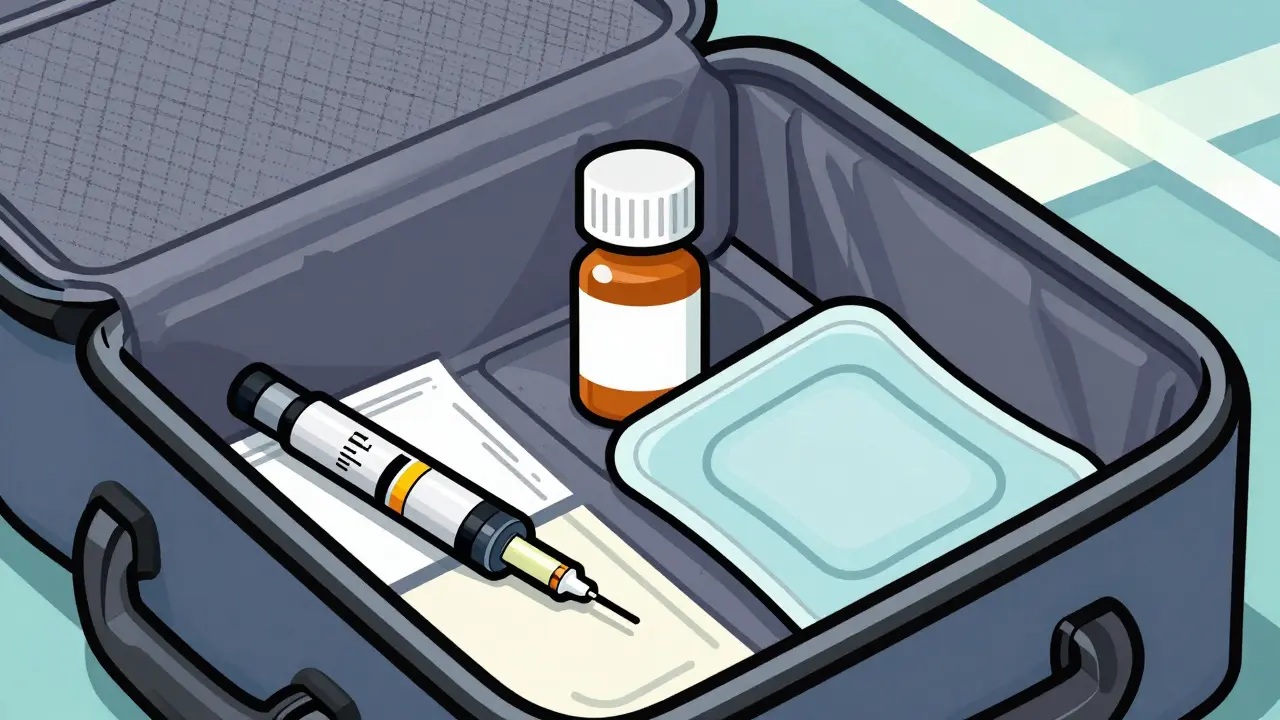
If you use a Continuous Glucose Monitor (CGM) or an insulin pump, you have specific rights. You can request a visual inspection of these devices instead of putting them through an X-ray machine if you are concerned about the equipment. For the best experience, contact the TSA Cares program at least 72 hours before your flight to arrange specialized assistance.
What about temperature-sensitive meds that need to stay cold? You are allowed to bring frozen gel packs. TSA officers are instructed to allow these through security after a quick visual inspection, provided they are completely frozen. If they are slushy or melted, they might be treated as standard liquids, so freeze them solid right before you leave for the airport.
The CBD and Marijuana Grey Area
This is the most common area for confiscations. While many states have legalized marijuana, the Transportation Security Administration follows federal law. This means that medical marijuana and CBD products containing more than 0.3% THC are strictly prohibited, regardless of whether you have a valid prescription.
Even if your CBD oil is labeled as having less than 0.3% THC, some officers may still confiscate it due to inconsistent enforcement. A GAO report found over 14,000 compliant products were wrongly confiscated in 2023. If you choose to travel with CBD, be prepared for the possibility that it may be taken away, and ensure the labeling is crystal clear.
International Travel: Beyond the TSA
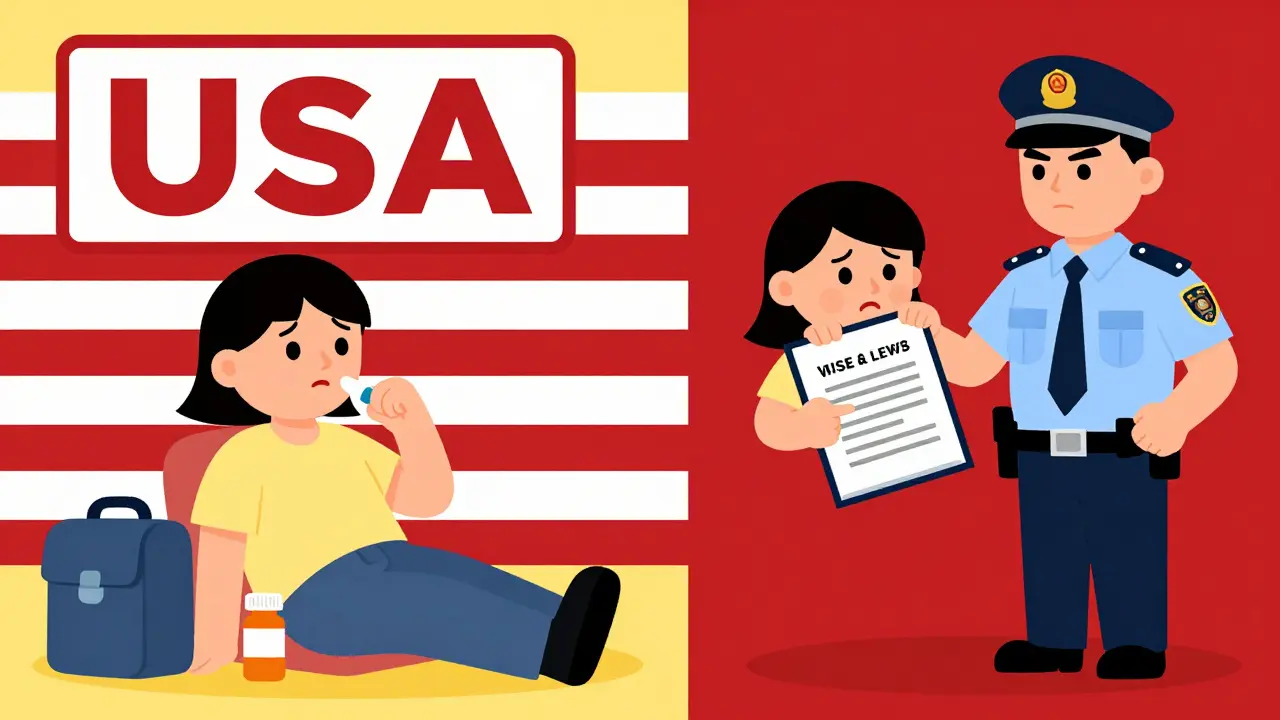
Once you leave the U.S., TSA rules no longer apply, and you enter the world of Customs and Border Protection (CBP) and foreign laws. A medication that is legal in the U.S. could get you arrested in another country. For example, stimulants like Adderall or anxiety meds like Xanax are strictly controlled in Japan, South Korea, and the UAE.
Before you fly internationally, check the destination country's laws. The International Society of Travel Medicine suggests bringing no more than a 90-day supply and carrying a formal physician's letter explaining the medical necessity of the drug. Failure to do this can lead to your medication being seized or, in severe cases, denial of entry into the country.
Do I need to bring my original prescription to the airport?
While not strictly required for every medication, it is highly recommended. Having the original pharmacy label or a written prescription helps avoid delays, especially if you are using a pill organizer or traveling with controlled substances. It proves the medication is legally prescribed to you.
Can I bring a large bottle of prescription liquid through security?
Yes. Prescription liquids are exempt from the 3.4-ounce (100ml) limit. You can bring as much as you need for your trip, but you must declare it to the TSA officer at the start of the screening process so they can inspect it.
What happens if my medication is confiscated?
If a TSA officer confiscates an item, you can usually ask them to hold it for you to pick up after your flight, or you can arrange for it to be mailed to your home. However, for CBD or illegal substances, the item is typically destroyed. This is why it's vital to check THC levels before packing.
Are gel packs for medicine allowed?
Yes, frozen gel packs are permitted through security. To ensure a smooth process, make sure they are completely frozen when you reach the checkpoint, as this makes the visual inspection easier for the officer.
Do I need to notify TSA about my insulin pump or CGM?
It is a good idea to notify the officer before screening. You can request a visual inspection instead of X-ray screening if you have concerns about the device. For complex setups, call the TSA Cares line 72 hours in advance.
Next Steps for a Stress-Free Trip
To make your next trip seamless, start your prep a week before you leave. First, audit your medications to ensure you have enough for the entire trip plus a few extra days in case of delays. Second, check your IDs to make sure the name matches your prescription labels perfectly. Finally, if you're heading abroad, spend thirty minutes researching the specific drug laws of your destination country using a reliable medical travel database. Following these steps removes the guesswork and lets you focus on your vacation rather than the security line.

Mary Johnson
April 15, 2026 AT 18:21It's all a giant power trip by the government to see how much we'll put up with while they rummage through our most private medical needs. They don't care about your health they just want to establish a precedent where they can touch everything you own without a warrant
absoluta madness!
Rim Linda
April 16, 2026 AT 03:32OMG I literally HAD A PANIC ATTACK last time because the agent looked at my meds with such a judgey face 😭😭😭 it was the most traumatic experience of my entire life!!
mimi clouet
April 17, 2026 AT 07:50Actually, just a pro tip here! Always keep a digital copy of your prescriptions on your phone 📱 it makes the whole process way smoother if they ask for verification ✨😊
Sam Dyer
April 19, 2026 AT 07:22Typical bureaucratic nonsense but hey it's still the land of the free baby! 🇺🇸 Just shove the stuff in your bag and walk through like you own the place, those TSA clowns can't do squat if you follow the basic rules (^_^)v
Tabatha Pugh
April 20, 2026 AT 14:02You should also specify that the original pharmacy bottle is the only acceptable form of containment because anything else is just asking for a secondary search and frankly most people are just too lazy to label things correctly which causes the line to back up for everyone else.
Shaylia Helland
April 20, 2026 AT 19:21i usually just bring a little extra in case the airline loses my bag which happens way too often these days anyway it's just a bit of extra weight in the carry on and it gives me such peace of mind knowing i wont be stranded in some random city without my stuff just floating around in some warehouse somewhere
S.A. Reid
April 21, 2026 AT 16:17One must consider the profound absurdity of a system that permits the transport of volatile liquids yet subjects the infirm to such rigorous scrutiny. It is quite a fascinating paradox of the modern security state, though I maintain that the entire apparatus is merely a theatrical performance designed to pacify the masses into a state of compliant submission while the true vulnerabilities of our airspace remain entirely unaddressed by the current administration's simplistic approach to safety.
Princess Busaco
April 22, 2026 AT 17:56Honestly it is just laughable that people still stress over this when the real issue is the sheer lack of common sense in airport staffing today. I've seen agents who can't even identify a standard insulin pen and it's absolutely pathetic how we've devolved into a society where people need a written guide just to bring their basic survival meds on a plane without getting interrogated like a criminal in their own country, which is just a symptom of the wider systemic failure we are all ignoring because we're too busy buying overpriced airport water.
Mark Dueben
April 22, 2026 AT 19:04I think it's helpful for everyone to remember that the agents are just doing their jobs, so being patient with them usually helps the process go a lot faster for everyone in line.
Ikram Khan
April 24, 2026 AT 16:00This is so helpful! I always get so nervous about the liquids part but this makes it way clearer 🤩’ Just gotta stay organized!!