 Jul, 3 2026
Your eyes feel gritty. Your lashes are stuck together in the morning with crusty debris. You rub them, hoping for relief, but the burning sensation just gets worse. If this sounds familiar, you aren't dealing with a random allergy or tiredness. You likely have blepharitis, which is a chronic inflammation of the eyelid margins that causes redness, swelling, and irritation. It affects nearly half of all patients visiting eye care professionals, making it one of the most common reasons people seek help for their eyes.
The good news? Blepharitis isn't contagious, and it rarely damages your vision permanently. The bad news? It's stubborn. About 89% of cases require ongoing management rather than a quick cure. But there is a proven way to take control. The cornerstone of treatment isn't expensive medication-it's simple, consistent warm compress therapy done correctly.
What Is Blepharitis and Why Does It Happen?
To fix the problem, you first need to understand what's going on under the surface. Blepharitis is an inflammation of the eyelid edges where your eyelashes grow. Think of it like dandruff, but on your eyelids. It usually affects both eyes at once and tends to flare up, especially in the morning when secretions build up overnight.
Doctors classify blepharitis into two main types based on where the inflammation occurs:
- Anterior Blepharitis: This affects the outer front edge of the eyelid where the eyelashes attach. It often involves bacteria (like Staphylococcus) or skin conditions like seborrheic dermatitis. It accounts for about 37% of cases.
- Posterior Blepharitis (Meibomian Gland Dysfunction): This is more common, making up 63% of cases. It involves the inner eyelid edge and the meibomian glands. These tiny glands produce oil that keeps your tears from evaporating too quickly. When they get clogged or produce thick, waxy oil, your eyes dry out and become irritated.
You might notice specific signs that point to blepharitis rather than general eye strain. Look for these clinical markers:
- Redness and Swelling: The eyelid margins look inflamed and feel tender.
- Crusting: Dried secretions glue your lashes together, especially after sleep.
- Scaling: Flakes resembling dandruff sit at the base of your eyelashes.
- Gritty Sensation: It feels like sand or dust is constantly in your eye.
- Foamy Tears: Your tear film becomes unstable and bubbly.
If you've had these symptoms for weeks, don't ignore them. While not dangerous, untreated blepharitis can lead to complications like styes, chalazia (painful lumps), or even damage to the cornea in severe cases.
Why Warm Compresses Are the Gold Standard
Many people reach for antibiotic drops or steroid creams first, but experts agree that warm compresses are the single most effective initial intervention. According to the National Eye Institute and the American Academy of Ophthalmology, properly executed warm compress therapy resolves up to 80% of mild-to-moderate cases without needing pharmaceuticals.
So, why do they work? Heat liquefies the thickened oils trapped in your meibomian glands. Imagine trying to squeeze cold honey out of a bottle versus warm honey. The warm oil flows easily, clearing the blockage and restoring a healthy tear film. Studies show that consistent warm compress application for 21 days can improve gland secretion quality by 68%.
However, "warm" is a tricky word. Temperature precision matters immensely. Research from UVA Health indicates that compresses below 38°C (100°F) have minimal therapeutic effect because they don't melt the hardened oil. On the other hand, temperatures above 48°C (118°F) risk burning your delicate eyelid skin. The sweet spot is between 40-45°C (104-113°F).

How to Do Warm Compresses Correctly
Most people fail with warm compresses not because the method doesn't work, but because they do it wrong. A common mistake is using a washcloth that cools down after three minutes. Here is the step-by-step protocol recommended by eye care specialists:
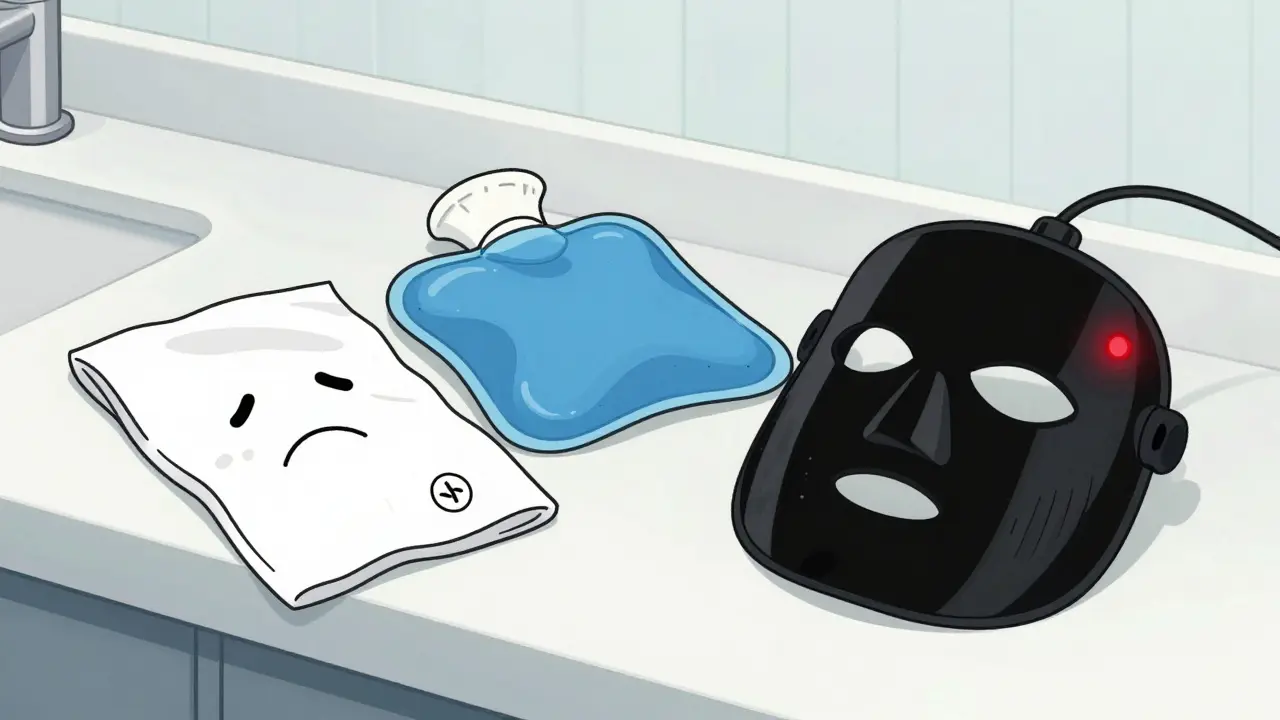
- Choose the Right Tool: Traditional washcloths lose heat quickly. Microwavable gel packs or electric warming masks maintain therapeutic temperature longer. Data shows microwavable packs stay effective for about 12 minutes, while washcloths drop below useful temps in under 9 minutes.
- Apply Heat for 10 Minutes: Close your eyes and place the compress over them. You must keep it there for the full 10 minutes. If it cools down, reheat it immediately. Consistency is key-do this twice daily.
- Massage Your Eyelids: Immediately after removing the heat, gently massage your lids. Use your index finger to apply light pressure. For the upper lid, stroke downward toward the lash line. For the lower lid, stroke upward. This "windshield wiper" motion helps express the melted oils from the glands.
- Cleanse the Lids: Use a preservative-free lid scrub solution or diluted baby shampoo to clean away the debris and bacteria loosened by the heat and massage. Rinse thoroughly.
- Moisturize if Needed: Apply artificial tears if your eyes still feel dry or irritated.
This routine takes about 15-20 minutes initially. After 4-6 weeks, you may reduce it to once daily for maintenance. The University of Michigan Health notes that patients who stick to this regimen for 30 days see a 67% improvement in symptoms, compared to only 22% for those who are inconsistent.
Tools of the Trade: Washcloths vs. Commercial Devices
You don't need expensive gear to treat blepharitis, but the right tool can make a huge difference in compliance. Let's compare the options:
| Feature | Traditional Washcloth | Microwavable Gel Pack | Electric Warming Mask |
|---|---|---|---|
| Cost | $0 - $5 | $15 - $30 | $30 - $60 |
| Heat Retention | Poor (cools in ~8 mins) | Good (~12 mins) | Excellent (consistent temp) |
| Convenience | Low (requires reheating) | Medium | High (wearable) |
| User Adherence Rate | 46% beyond 90 days | Higher than washcloths | 73% beyond 90 days |
If you struggle to remember to reheat a washcloth, investing in a commercial device like the Bruder Moist Heat Eye Compress or a newer FDA-cleared system like TearCare might be worth it. These devices ensure you hit that critical 40-45°C range consistently. However, studies confirm that traditional methods work just as well if you are diligent about timing and temperature.
Tips for Long-Term Management
Blepharitis is a chronic condition, which means it comes and goes. To keep it under control long-term, integrate these habits into your life:
- Be Consistent: Don't stop treatment just because you feel better. Keep up with warm compresses and lid hygiene even during quiet periods to prevent flare-ups.
- Check Your Diet: Some research suggests that taking omega-3 supplements (2,000 mg EPA/DHA daily) can boost the effectiveness of warm compresses by improving the quality of your meibomian gland oil.
- Avoid Makeup Irritants: Replace eye makeup regularly, especially mascara. Old products harbor bacteria. Consider switching to hypoallergenic brands if you're sensitive.
- Manage Demodex Mites: Tiny mites called Demodex live on eyelashes and can worsen blepharitis. Tea tree oil-based cleansers can help manage their population.
- See a Specialist if Needed: If home care doesn't help after 3-4 weeks, see an ophthalmologist. They might prescribe topical antibiotics, steroids, or oral medications like doxycycline to reduce inflammation.
Remember, the goal isn't necessarily to "cure" blepharitis forever, but to manage it so it doesn't disrupt your life. With the right technique and patience, you can clear up the grit, reduce the redness, and get comfortable again.
How long does it take for warm compresses to work for blepharitis?
Most patients notice improvement within 14 to 21 days of consistent, proper use. However, significant symptom reduction often takes up to 30 days. Compliance is key; doing it sporadically will yield poor results.
Can blepharitis go away on its own?
Rarely. Blepharitis is a chronic condition. While symptoms may fluctuate, the underlying tendency for inflammation remains. Without ongoing hygiene and management, symptoms typically return.
Is blepharitis contagious?
No, blepharitis itself is not contagious. You cannot catch it from someone else. However, if it's caused by a bacterial overgrowth, sharing towels or eye makeup could potentially spread the bacteria, so it's best to avoid sharing personal items.
What temperature should a warm compress be for blepharitis?
The ideal temperature is between 40°C and 45°C (104°F to 113°F). Temperatures below 38°C are ineffective at melting blocked oils, while anything above 48°C risks burning the skin.
Should I massage my eyelids before or after the warm compress?
Always massage after the warm compress. The heat softens the hardened oils in the meibomian glands, making them easier to express. Massaging without heat can be uncomfortable and less effective.
